 Developer Tools
Templ
Type-safe HTML templating language for Go with compile-time safety
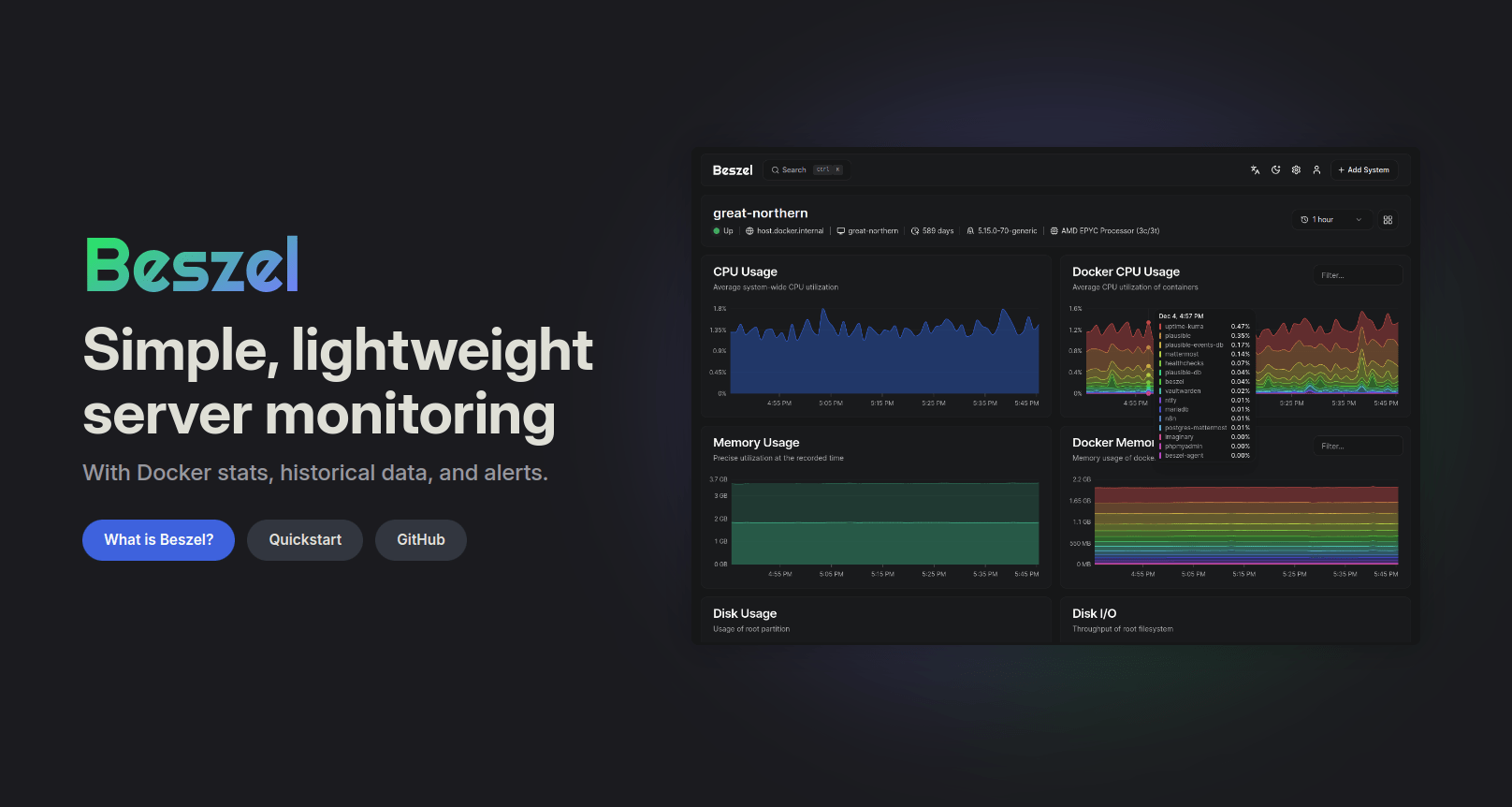
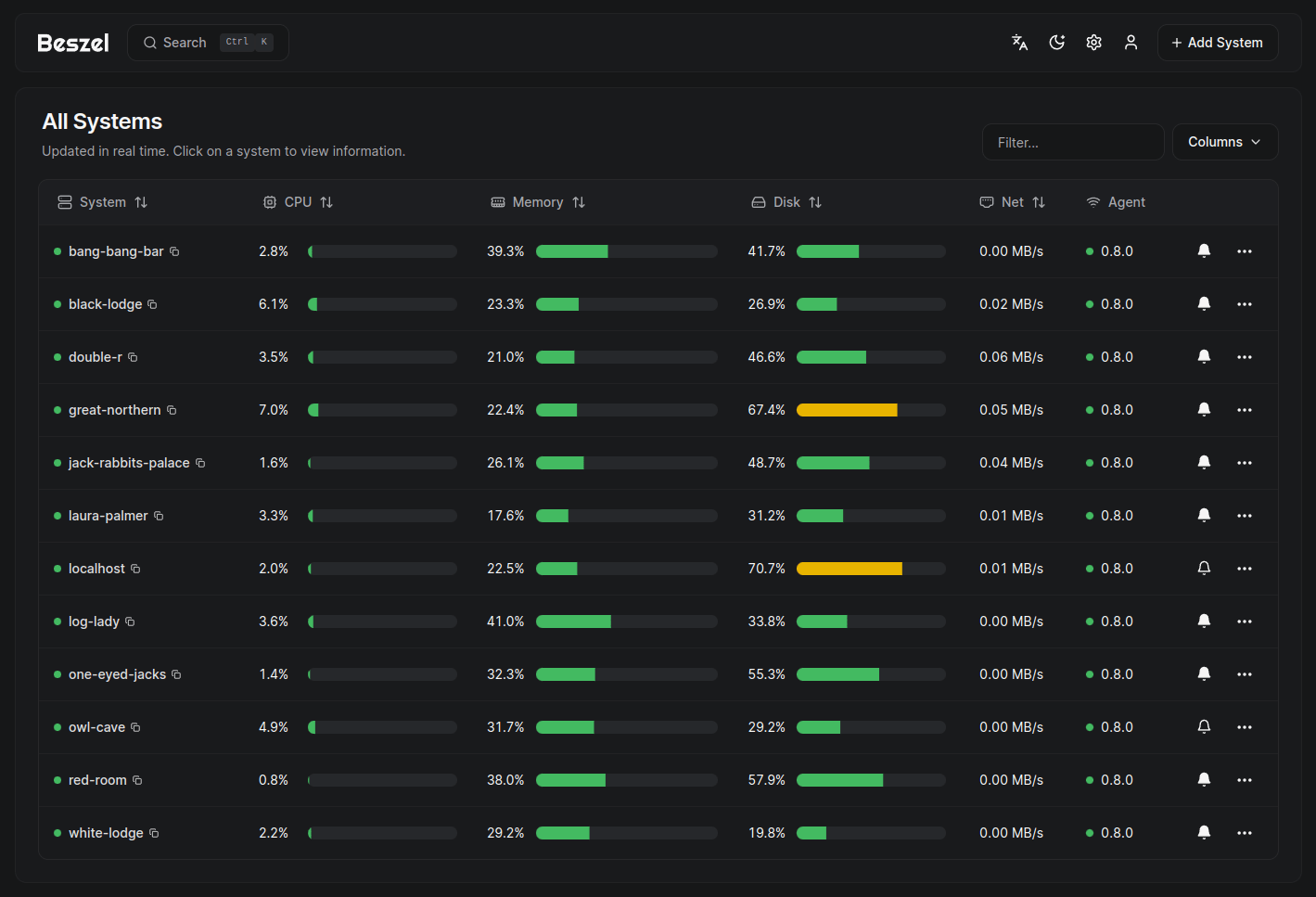
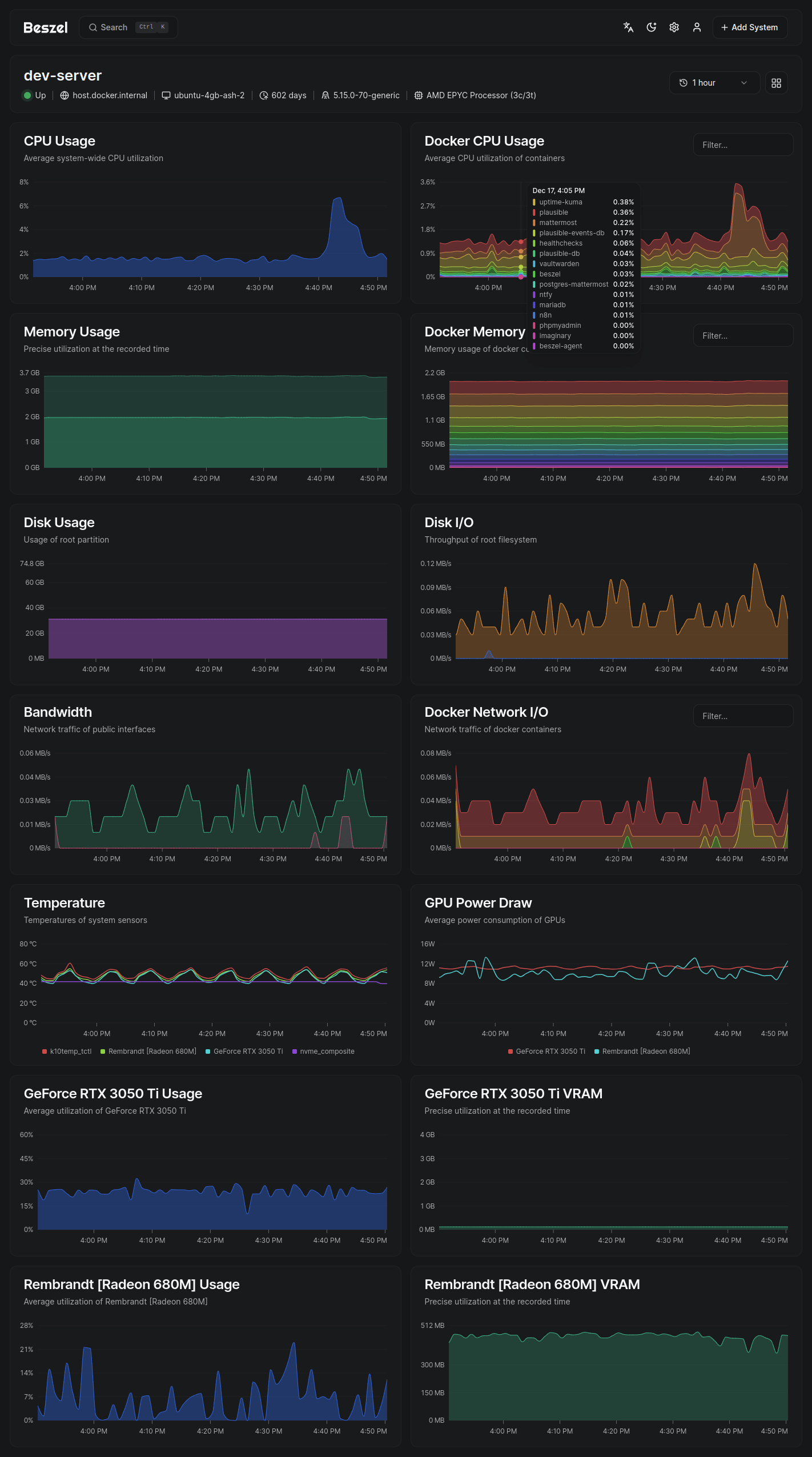
Beszel is an open-source, MIT-licensed server monitoring platform that gives you Netdata-style dashboards in a single Docker container with no external database. It is the leanest self-hosted option for homelabs and small fleets in 2026.
Beszel is an open-source, MIT-licensed server monitoring platform that delivers Netdata-style dashboards from a single Docker container — no Prometheus, no Grafana, no external database. We rate it 90/100 — for homelabbers, indie sysadmins, and small teams who want a "set and forget" view of their boxes, it is the most polished self-hosted option you can deploy in 2026.
Beszel is a lightweight server monitoring stack written in Go and built on top of PocketBase by solo developer Henry G. (henrygd). The first commit landed on , and as of the project sits at 21,298 GitHub stars, 746 forks, and version v0.18.7 (released ). It is officially listed under the GitHub topics homelab, monitoring, and self-hosted.
The architecture is deliberately simple: a hub (the web dashboard, a single Go binary that bundles a SQLite-backed PocketBase) plus a tiny agent binary that runs on every machine you want to monitor. The agent connects outbound to the hub over an SSH-style key-pair channel, so you do not need to expose any of your servers to the public internet. That single design choice is why Beszel is winning hearts that previously belonged to Prometheus + Grafana stacks: you can stand up the entire monitoring system in under five minutes with one docker run command.
Sentiment in the self-hosting community is unusually warm. The recurring praise on r/selfhosted and r/homelab is variations of "I replaced my entire Prometheus + Grafana + Node Exporter stack with this and it just works." The Hacker News reaction has been overwhelmingly positive — commenters specifically call out the lightweight resource footprint (the agent typically uses under 25 MB of RAM) and the lack of operational overhead.
The most common complaints, repeated across GitHub issues and the Matrix room #beszel:matrix.org, are: (1) the alert thresholds are still per-system rather than templated across groups of systems, so configuring 50 hosts is a slog; (2) there is no native multi-tenant org model, only multi-user; and (3) anyone needing custom Prometheus exporters or PromQL queries should look elsewhere — Beszel intentionally does not speak that protocol. Henry has been responsive on issues but has explicitly said he wants to keep the scope tight.
Beszel is free and open source under the MIT License. There is no paid tier, no hosted SaaS, no per-system fee, and no telemetry phoning home. The only costs are the server you self-host the hub on and the (negligible) resources the agent consumes on each monitored machine.
| Plan | Price | Key Limits |
|---|---|---|
| Self-hosted (only option) | $0 | Unlimited systems, users, containers, and history. MIT licensed. No commercial restrictions. |
For homelabs, the practical floor is roughly $5/month on a small VPS (Hetzner CX11, DigitalOcean basic droplet) for the hub itself, and zero marginal cost per agent.
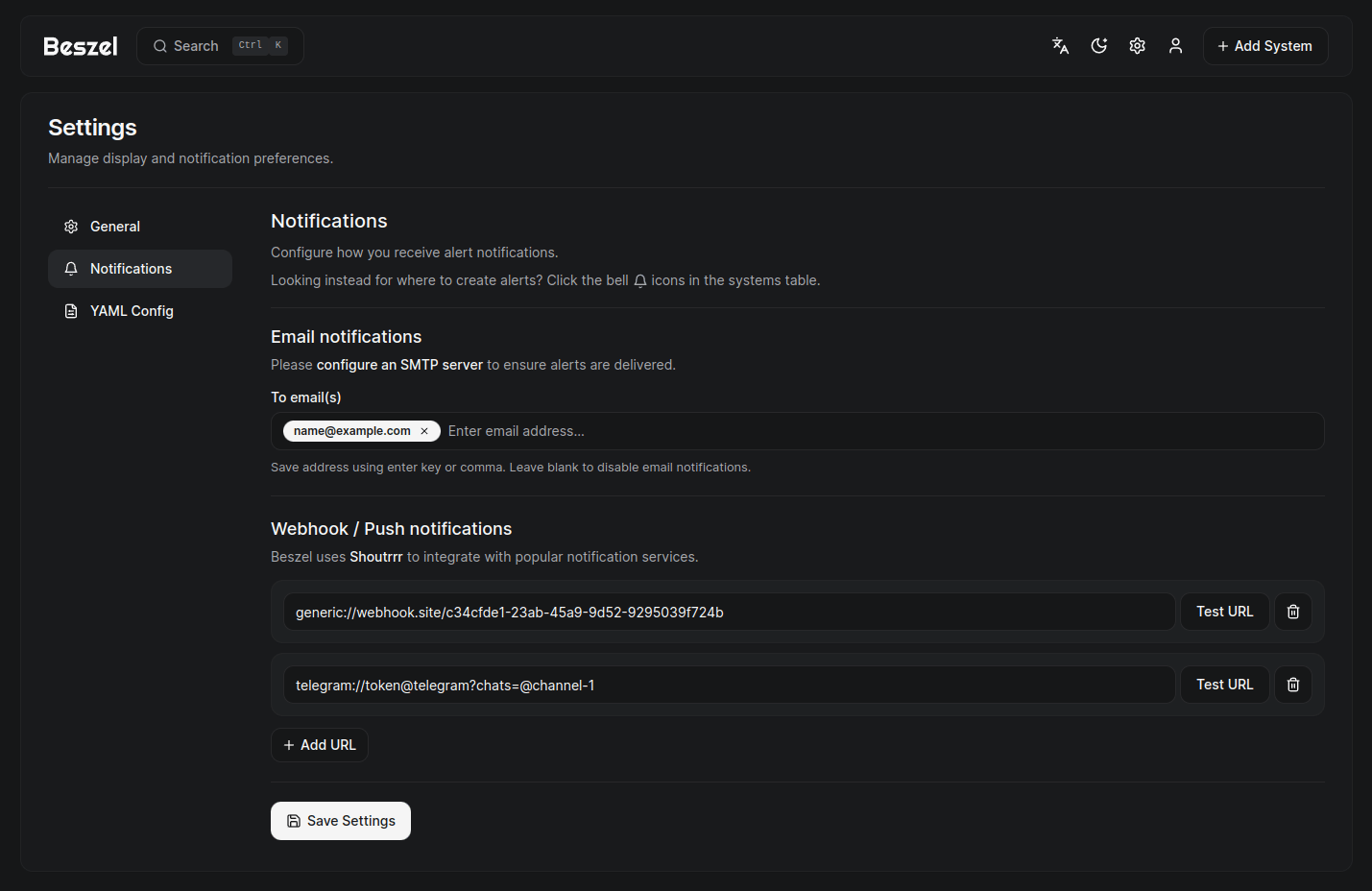
Best for: Homelab operators, indie SaaS founders running 1–50 servers, agencies who manage a small fleet of client VPS boxes, and platform teams that want a lightweight "did anything die overnight?" dashboard alongside their bigger observability tools. If you have ever installed Netdata and felt it was too heavy, Beszel is exactly what you want.
Not ideal for: Large enterprises with hundreds of nodes that need PromQL, alert routing trees, or SLO-style burn-rate alerts — keep Prometheus or Grafana Cloud. Also skip Beszel if your monitoring requirements include log aggregation or distributed tracing; Beszel is metrics-only by design.
Pros:
Cons:
The closest comparison is Netdata — far more granular per-second metrics and a slicker UI, but heavier on resources and more complex to self-host across multiple nodes. Prometheus + Grafana is the enterprise-grade default but takes hours to set up properly and is overkill for a 10-server homelab. Uptime Kuma is a great companion (it does HTTP/TCP/Ping checks and status pages) but it does not collect host metrics, so many users run both. For Chinese-language users, Nezha is the most-cited alternative with a similar agent/hub architecture.
For self-hosters and small teams, Beszel is one of the easiest wins of the year. It earns a 90/100 because it does one thing — lightweight, multi-host server and Docker monitoring — almost flawlessly. The 10 points it loses are for the absence of alert templates and the deliberate decision not to support Prometheus exporters, which keeps it out of the running for larger fleets. If you maintain anywhere from 1 to 50 servers, install the hub today; you will likely retire two or three other tools by the end of the week.
ServiceNow and Accenture Launch Forward Deployed Engineering Program to Scale Agentic AI in the Enterprise (May 6, 2026)
At Knowledge 2026, ServiceNow and Accenture announced a joint forward deployed engineering program that drops co-located engineer pods into customer environments to ship agentic AI workflows natively on the ServiceNow AI Platform — with access to 300+ pre-built agent skills and the AI Control Tower as the governance backbone.
May 7, 2026
ReFiBuy Raises $13.6M Seed to Help Brands Get Recommended by AI Shopping Agents (May 5, 2026)
ReFiBuy, the Raleigh-based agentic commerce platform from ChannelAdvisor founder Scot Wingo, closed an oversubscribed $13.6M seed led by NewRoad Capital Partners on May 5, 2026 — betting that the next billion-dollar e-commerce moat is being chosen by ChatGPT, Claude and Perplexity.
May 7, 2026
OpenAI Replaces ChatGPT's Default Model With GPT-5.5 Instant — 52.5% Fewer Hallucinations, 30% Shorter Answers (May 5, 2026)
OpenAI on May 5 swapped GPT-5.3 Instant for the new GPT-5.5 Instant as ChatGPT's default model, claiming 52.5% fewer hallucinated claims on high-stakes prompts and 30% more concise answers. The model also rolls into the API as chat-latest and adds personalization from Gmail and past chats for Plus and Pro web users.
May 7, 2026
Is this product worth it?
Built With
Compare with other tools
Open Comparison Tool →