 Developer Tools
Templ
Type-safe HTML templating language for Go with compile-time safety
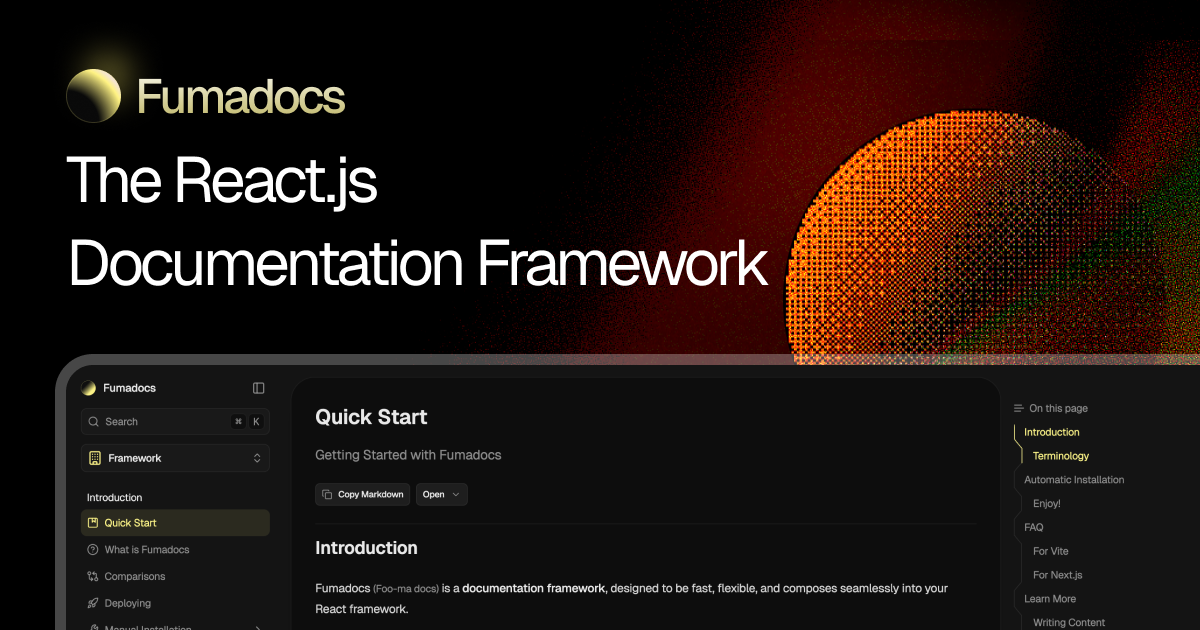
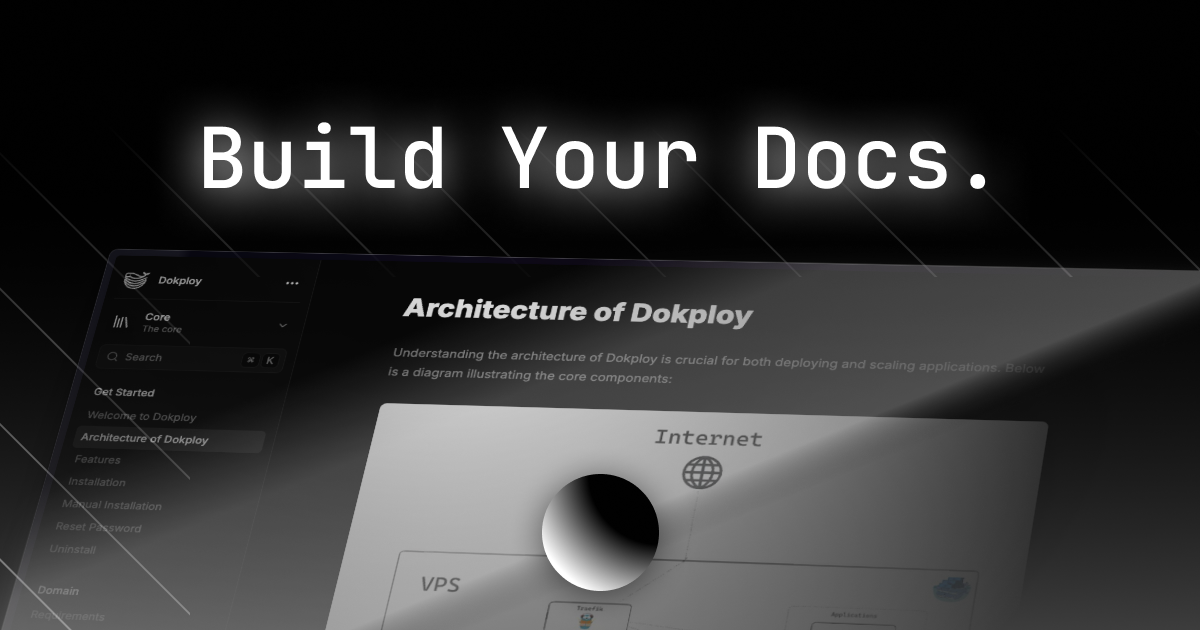
Fumadocs is a React.js documentation framework that ships beautiful default UI, native MDX, OpenAPI rendering and Twoslash out of the box. It is the fastest-growing alternative to Nextra and Starlight in 2026, used by v0 and Ultracite.
Fumadocs is a React.js documentation framework that gives you a Next.js-grade docs site with native MDX, full-text search, OpenAPI rendering and Twoslash code blocks in the time it would take you to scaffold a single page in Docusaurus. We rate it 88/100 — if you are building documentation for a developer product on Next.js, React Router, TanStack Start or Waku, Fumadocs is the framework with the best balance of beautiful defaults and headless customisation in the entire React ecosystem.
Fumadocs is an open-source documentation framework, MIT-licensed, written by independent developer Fuma Nama. The project's first commit landed on , and the team shipped the major v16 release on , with the 16.2 follow-up landing in early 2026. It now sits at over 11,750 stars on GitHub and is one of the canonical references in the React docs space alongside Nextra and Astro Starlight.
What makes Fumadocs different is its layered architecture. Instead of shipping a single opinionated theme, it splits cleanly into fumadocs-core (data, search, navigation primitives), fumadocs-mdx (a content collection layer for MDX), and fumadocs-ui (a polished default theme built on Shadcn UI patterns). You can drop in the full UI for a five-minute setup, or treat it as headless and rebuild every component — both paths are first-class. Public adopters now include v0 by Vercel, Ultracite and the Next.js docs themselves.
fumadocs-mdx package generates a typed content layer at build time. Every frontmatter field becomes a TypeScript type — misspelt slugs fail the build, not in production.fumadocs-openapi converts a Swagger or OpenAPI 3 spec into full reference pages with try-it consoles, schema viewers and code samples in seven languages. Nextra has nothing equivalent.useShiki Suspense-based.fumadocs-core alone, ignore the UI package, and compose every component yourself with Tailwind, vanilla CSS or your own design system.
Sentiment on Product Hunt and the Next.js subreddit is consistently positive, with two recurring themes. The most-upvoted Product Hunt comments call out the visual polish — multiple commenters describe it as "the prettiest docs theme out of the box" — and the OpenAPI integration, which devs say replaces Stoplight or Redoc setups they had previously cobbled together. On Reddit's r/nextjs, threads about converting existing Next.js sites to Fumadocs report 5-minute setups and praise the typed MDX content layer.
The recurring complaints are real. Migration pain across major versions is the biggest one: the v16 upgrade deprecated and removed the fumadocs-core/sidebar module, renamed several APIs (Algolia's document option became indexName) and required a Next.js 16 baseline — users with older sites describe non-trivial upgrades. The second complaint is documentation depth: with three packages and dozens of plugins, finding the right entry point takes effort. The third is bus factor — despite the growing contributor list, the core is still mostly one developer, which makes some teams nervous.
Fumadocs is fully free and open source under the MIT license. There is no hosted product, no paid tier, no telemetry and no sign-up. You install it from npm, run it on your own infrastructure, and own everything — including search indexes and analytics.
| Plan | Price | What's Included |
|---|---|---|
| Open Source (MIT) | $0 | Every package: fumadocs-core, fumadocs-ui, fumadocs-mdx, fumadocs-openapi, fumadocs-twoslash, fumadocs-typescript and all CLI tooling. |
According to the npm download charts, the project pulls roughly 150,000 downloads per month as of early 2026 — smaller than Nextra (about 800K) but growing roughly 3× year-over-year, the fastest of the major React docs frameworks.
Best for: Teams shipping a developer product on Next.js, React Router, TanStack Start or Waku that need beautiful default docs without writing CSS from scratch — especially anyone documenting an HTTP API, where the OpenAPI module pays for itself in a single afternoon. Solo devs and small teams will get the most leverage because the headless option scales down to a one-page guide as cleanly as it scales up to a 500-page reference.
Not ideal for: Sites that need zero JavaScript on content pages — Astro Starlight still wins on Core Web Vitals because it ships nothing client-side by default. Also overkill for a single README-style guide where a Markdown file in your repo would do.
Pros:
fumadocs-core if you want full UI control.Cons:
The closest alternatives are Nextra v4, the more opinionated Next.js docs framework with about 5× the npm volume but no built-in OpenAPI support, and Astro Starlight, which wins decisively on raw performance because it ships zero JavaScript by default. Docusaurus remains the safe enterprise choice but feels dated next to Fumadocs's UI. If you're already on the React-Router stack, the Astro ecosystem is the main contender; if you're on Next.js and care about visual polish, Fumadocs is the one to beat.
For developer product teams on Next.js or any modern React framework, Fumadocs is genuinely the easiest way to ship a docs site that looks like it was designed by Vercel — because, in v0's case, it literally was. The 88/100 score reflects that the defaults are best-in-class and the OpenAPI story is unmatched, but the breaking-change cadence and one-developer bus factor keep it out of the 90+ tier reserved for libraries with multi-year stability. If you can live with annual migration work in exchange for the prettiest docs in the ecosystem, switch to Fumadocs today.
fumadocs-openapi package converts an OpenAPI 3 or Swagger spec into full reference documentation with try-it consoles, schema viewers and multi-language code samples — a feature that competitors like Nextra do not ship out of the box.ServiceNow and Accenture Launch Forward Deployed Engineering Program to Scale Agentic AI in the Enterprise (May 6, 2026)
At Knowledge 2026, ServiceNow and Accenture announced a joint forward deployed engineering program that drops co-located engineer pods into customer environments to ship agentic AI workflows natively on the ServiceNow AI Platform — with access to 300+ pre-built agent skills and the AI Control Tower as the governance backbone.
May 7, 2026
ReFiBuy Raises $13.6M Seed to Help Brands Get Recommended by AI Shopping Agents (May 5, 2026)
ReFiBuy, the Raleigh-based agentic commerce platform from ChannelAdvisor founder Scot Wingo, closed an oversubscribed $13.6M seed led by NewRoad Capital Partners on May 5, 2026 — betting that the next billion-dollar e-commerce moat is being chosen by ChatGPT, Claude and Perplexity.
May 7, 2026
OpenAI Replaces ChatGPT's Default Model With GPT-5.5 Instant — 52.5% Fewer Hallucinations, 30% Shorter Answers (May 5, 2026)
OpenAI on May 5 swapped GPT-5.3 Instant for the new GPT-5.5 Instant as ChatGPT's default model, claiming 52.5% fewer hallucinated claims on high-stakes prompts and 30% more concise answers. The model also rolls into the API as chat-latest and adds personalization from Gmail and past chats for Plus and Pro web users.
May 7, 2026
Is this product worth it?
Built With
Compare with other tools
Open Comparison Tool →