 Developer Tools
Templ
Type-safe HTML templating language for Go with compile-time safety
Ghostty is a free, open-source terminal emulator by HashiCorp co-founder Mitchell Hashimoto that combines Alacritty-level speed with native macOS/Linux UI and best-in-class protocol support. It launched in December 2024 and has since become one of the most-starred terminal projects on GitHub.
Ghostty is a free, open-source terminal emulator built for developers who refuse to choose between speed, features, and a truly native UI. We rate it 84/100 — the best zero-config terminal available today for macOS and Linux power users who want performance without compromise.
Ghostty was created by Mitchell Hashimoto, co-founder of HashiCorp (the company behind Terraform and Vault), as a personal passion project. After nearly two years of private development, Ghostty 1.0 launched publicly on under the MIT open-source license. Within days it had amassed over 10,000 GitHub stars; by early 2026 the repository sits at nearly 50,000 stars — making it one of the fastest-growing developer tools of the past year.
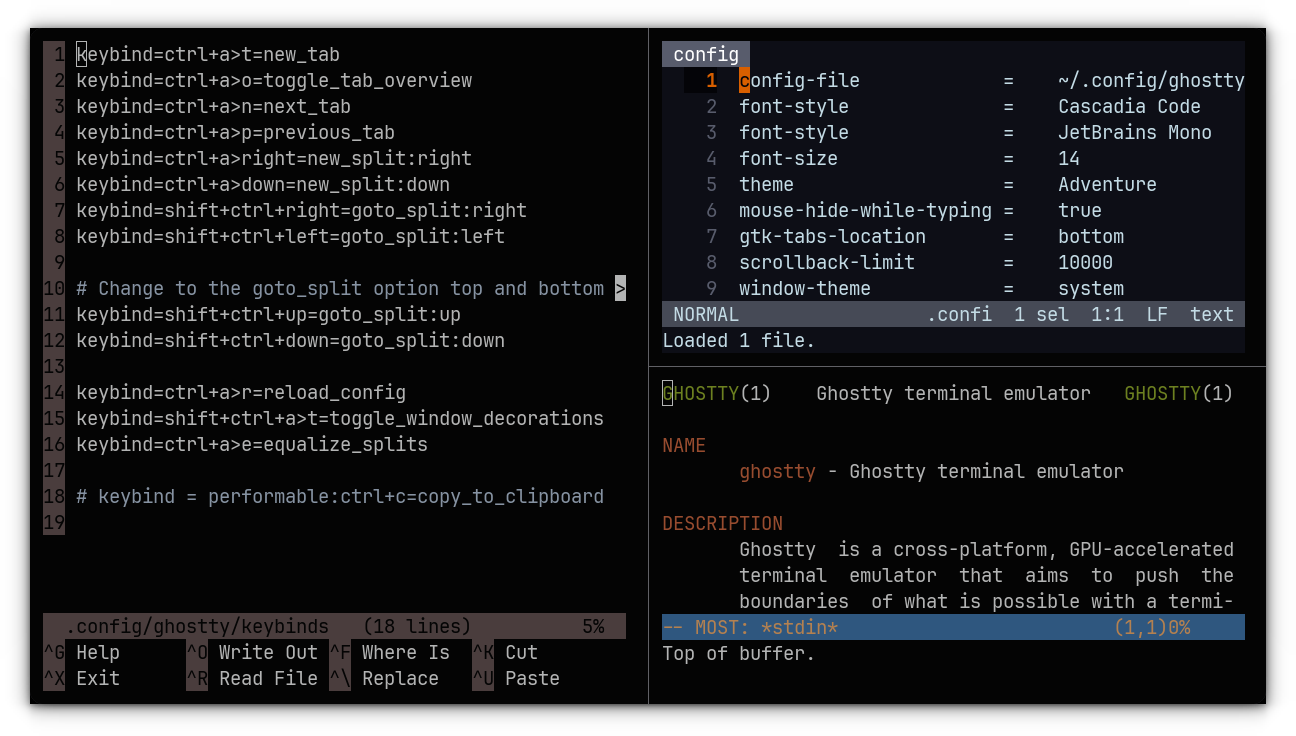
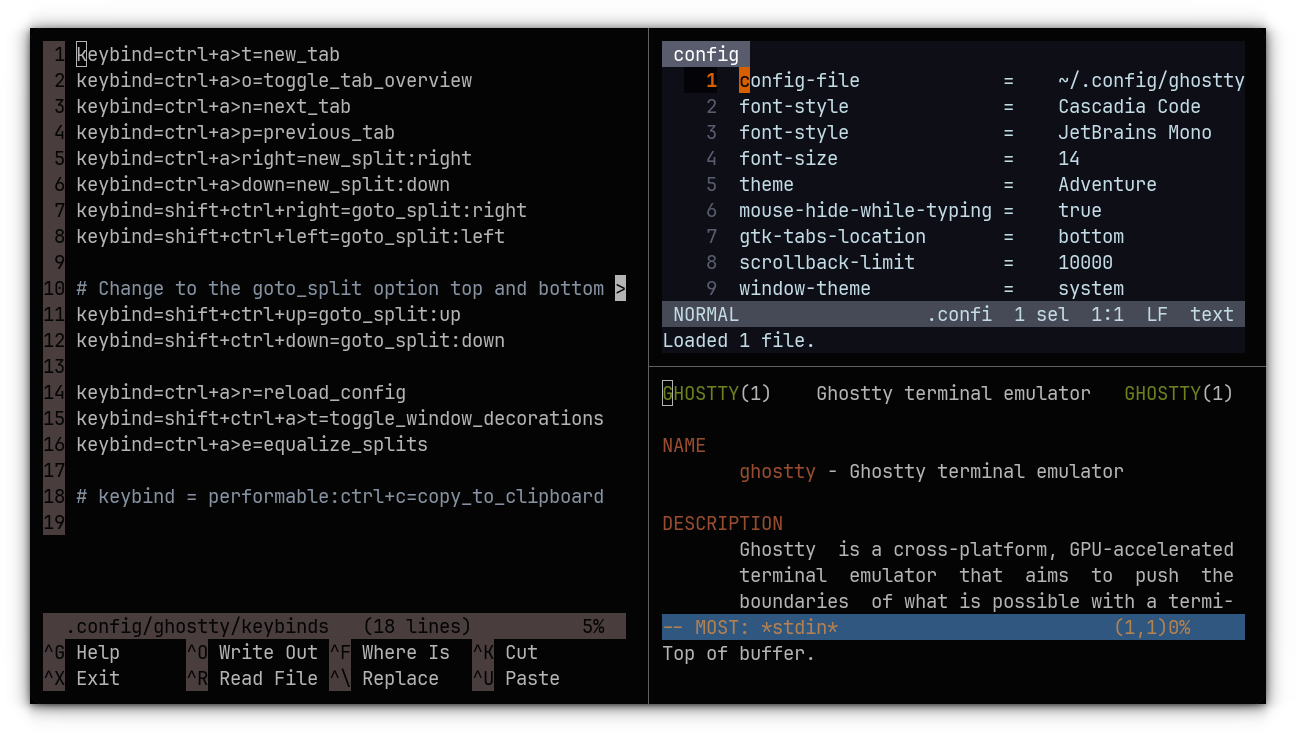
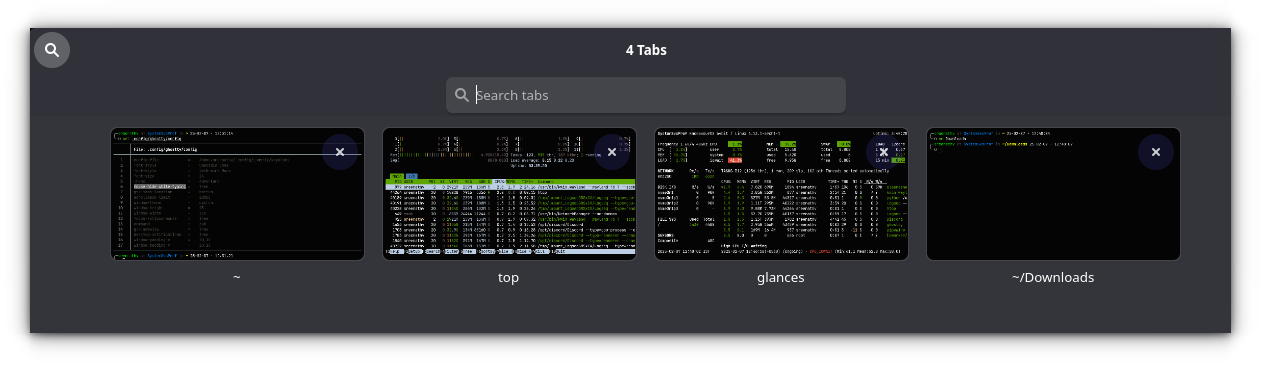
The core insight driving Ghostty is that every existing terminal emulator forces a tradeoff: Alacritty is fast but feature-light; Kitty is feature-rich but not natively integrated on macOS; iTerm2 is feature-complete but heavy. Ghostty solves this with a unique dual-layer architecture — a high-performance shared core written in Zig (libghostty), wrapped by platform-native GUIs (SwiftUI on macOS, GTK4 on Linux). The result: a terminal that renders at 60fps via GPU acceleration, supports hundreds of terminal protocols, and behaves like a first-class macOS or Linux citizen.
On Hacker News, the Ghostty 1.0 launch thread became one of the most-discussed developer posts of late 2024. Antirez (Redis creator) wrote: "for development of systems it makes a big difference…printed half million of results in the blink of an eye." Jarred from the Bun team praised the "very well-written Zig code." Mitchell's humility — explicitly acknowledging that Ghostty "has different design goals" from WezTerm and Kitty, not that it's strictly better — earned significant goodwill in the community.
On Reddit's r/unixporn and r/macapps, the dominant theme is how well the defaults work. Common praise: "I downloaded it and everything just worked." The main complaints are specific and fair: no built-in multiplexer (users need tmux or zellij), and Windows support is still in progress as of 2026. Some power WezTerm users found the feature set insufficient to justify switching. One Medium reviewer called it "a great but overhyped terminal emulator" — real gains, but incremental for those already in a mature terminal setup.
Ghostty is completely free and open source under the MIT license. There are no tiers, subscriptions, or premium features. In a notable move, Mitchell Hashimoto transferred fiscal sponsorship of the project to Hack Club, a non-profit organization, ensuring Ghostty remains community-driven. Download from ghostty.org or build from source.
| Plan | Price | Includes |
|---|---|---|
| Free (only plan) | $0 | All features, all platforms, MIT license, no limits |
Best for: macOS developers who want a beautiful, fast, native terminal with excellent defaults. Linux developers who want a GTK4-native experience. Anyone migrating away from Terminal.app or iTerm2. Developers who care about terminal protocol compliance and want cutting-edge features like in-terminal image rendering.
Not ideal for: Windows developers (support still pending as of early 2026). Power users who depend on WezTerm's built-in multiplexer. Teams that want GUI-based terminal configuration — Ghostty's config is file-based only.
Pros:
Cons:
WezTerm is the closest rival — it has a built-in multiplexer, Lua-based configuration, and Windows support, but is 2–5× slower in throughput benchmarks. Kitty is excellent on Linux with strong protocol support, but lacks macOS native integration. Alacritty matches Ghostty's raw speed but has no built-in tabs or splits. iTerm2 is the macOS incumbent — feature-complete but significantly heavier (207MB RAM vs 129MB for Ghostty).
If you're on macOS or Linux, Ghostty is almost certainly worth switching to — especially from Terminal.app or a lagging iTerm2. It's free, the defaults are impeccable, and the protocol support makes TUI apps look and behave better than in most terminals. We rate it 84/100: excellent, with the only meaningful gaps being the missing built-in multiplexer and absent Windows support. One of the most thoughtfully engineered open-source tools released in recent years.
ServiceNow and Accenture Launch Forward Deployed Engineering Program to Scale Agentic AI in the Enterprise (May 6, 2026)
At Knowledge 2026, ServiceNow and Accenture announced a joint forward deployed engineering program that drops co-located engineer pods into customer environments to ship agentic AI workflows natively on the ServiceNow AI Platform — with access to 300+ pre-built agent skills and the AI Control Tower as the governance backbone.
May 7, 2026
ReFiBuy Raises $13.6M Seed to Help Brands Get Recommended by AI Shopping Agents (May 5, 2026)
ReFiBuy, the Raleigh-based agentic commerce platform from ChannelAdvisor founder Scot Wingo, closed an oversubscribed $13.6M seed led by NewRoad Capital Partners on May 5, 2026 — betting that the next billion-dollar e-commerce moat is being chosen by ChatGPT, Claude and Perplexity.
May 7, 2026
OpenAI Replaces ChatGPT's Default Model With GPT-5.5 Instant — 52.5% Fewer Hallucinations, 30% Shorter Answers (May 5, 2026)
OpenAI on May 5 swapped GPT-5.3 Instant for the new GPT-5.5 Instant as ChatGPT's default model, claiming 52.5% fewer hallucinated claims on high-stakes prompts and 30% more concise answers. The model also rolls into the API as chat-latest and adds personalization from Gmail and past chats for Plus and Pro web users.
May 7, 2026
Is this product worth it?
Built With
Compare with other tools
Open Comparison Tool →