 Developer Tools
Templ
Type-safe HTML templating language for Go with compile-time safety
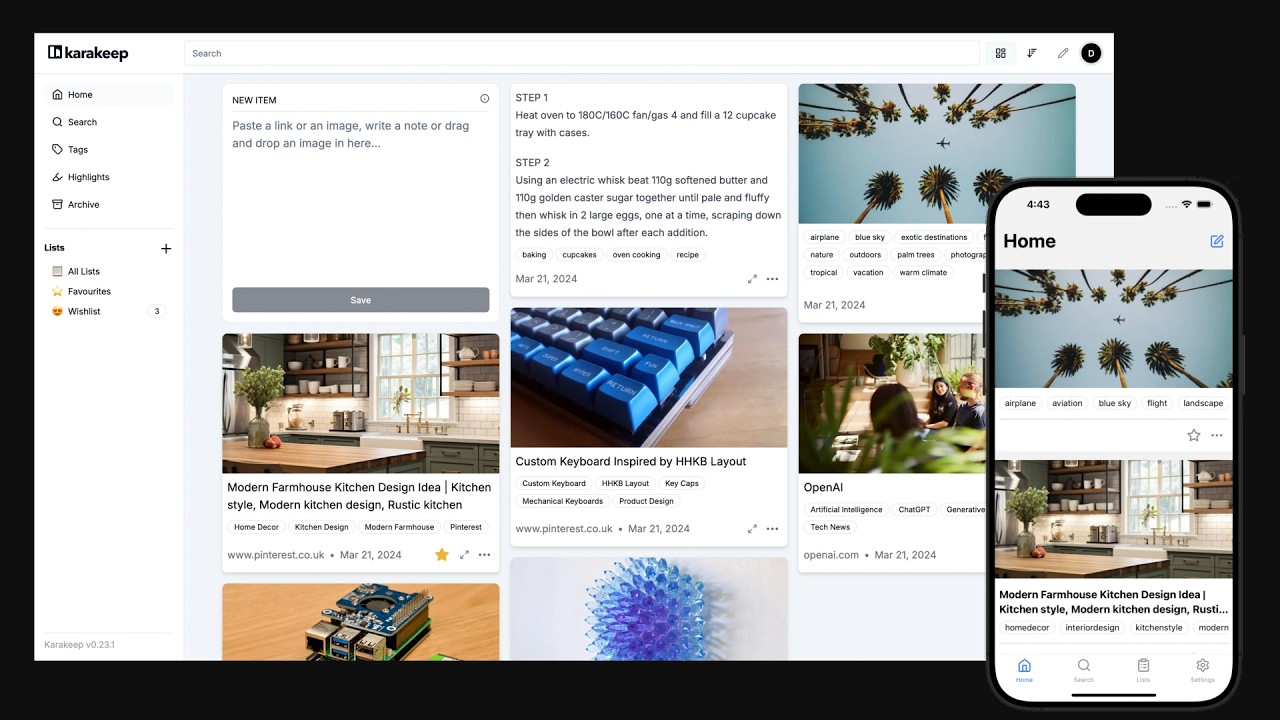
Karakeep (formerly Hoarder) is a self-hostable bookmark manager that saves links, notes, images and PDFs and auto-tags them with AI. Free when self-hosted, $4/month on the cloud beta, AGPL-3.0.
Karakeep is a self-hostable, open-source bookmark-everything app that captures links, notes, images and PDFs and lets an LLM (OpenAI or your own Ollama model) tag and summarize them automatically. We rate it 84/100 — the most credible successor to the now-defunct Pocket in 2026 if you are comfortable running a Docker container, with a new paid cloud beta that finally gives non-technical users a sensible way in.
Karakeep is an AGPL-3.0 bookmark manager created by Mohamed Bassem and maintained by Localhost Labs Ltd. The project lives at github.com/karakeep-app/karakeep, has crossed 24,800+ GitHub stars, 1,200 forks, and 192 contributors, and ships a real paid cloud service at cloud.karakeep.app. It was launched as Hoarder in , rebranded to Karakeep in 2025 to avoid the baggage of that earlier name, and the latest stable release at time of writing is v0.31.0, published on .
The pitch is specific: one Docker Compose file, one browser extension, and every link, screenshot, PDF and Twitter thread you throw at it is archived, OCR'd, full-text indexed in Meilisearch, and automatically tagged. For anyone burned by Pocket shutting down in 2025, it is the most direct open-source replacement on the market.
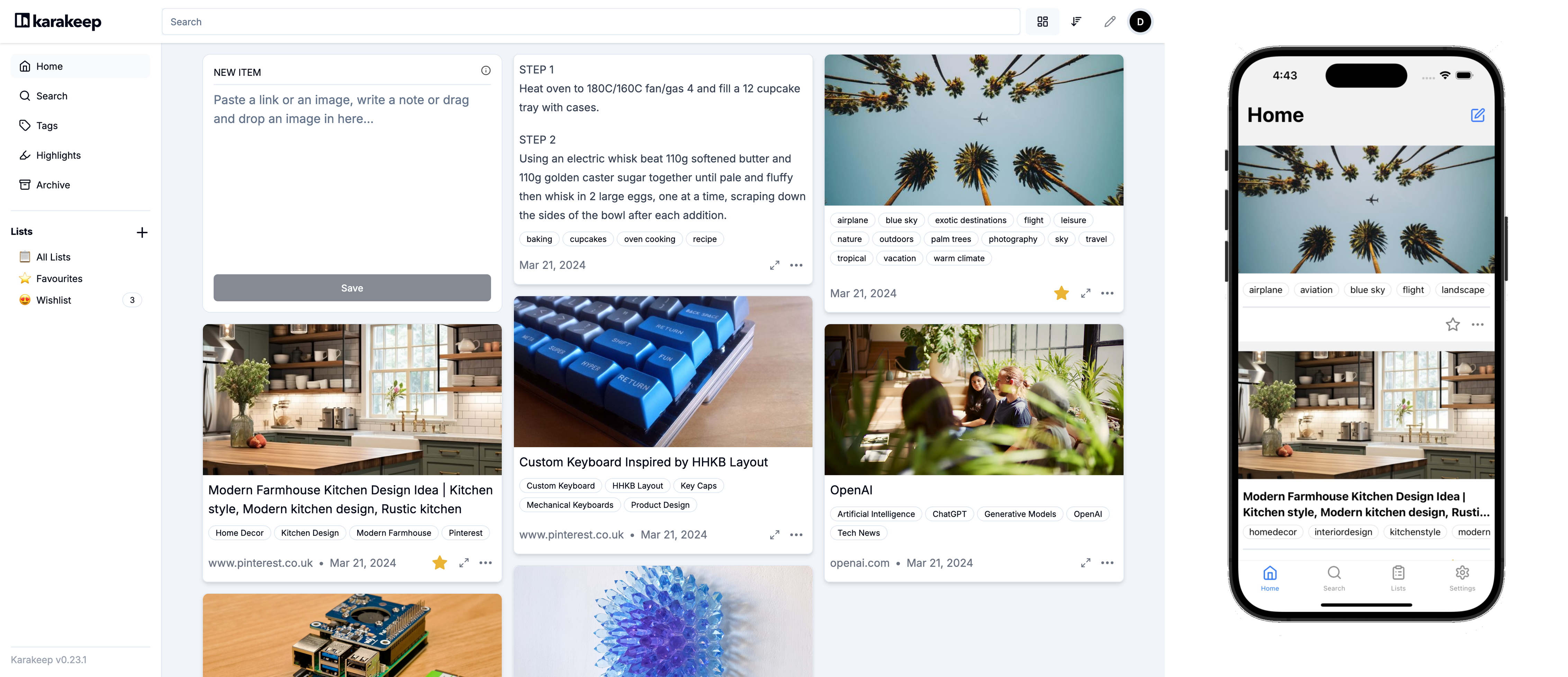
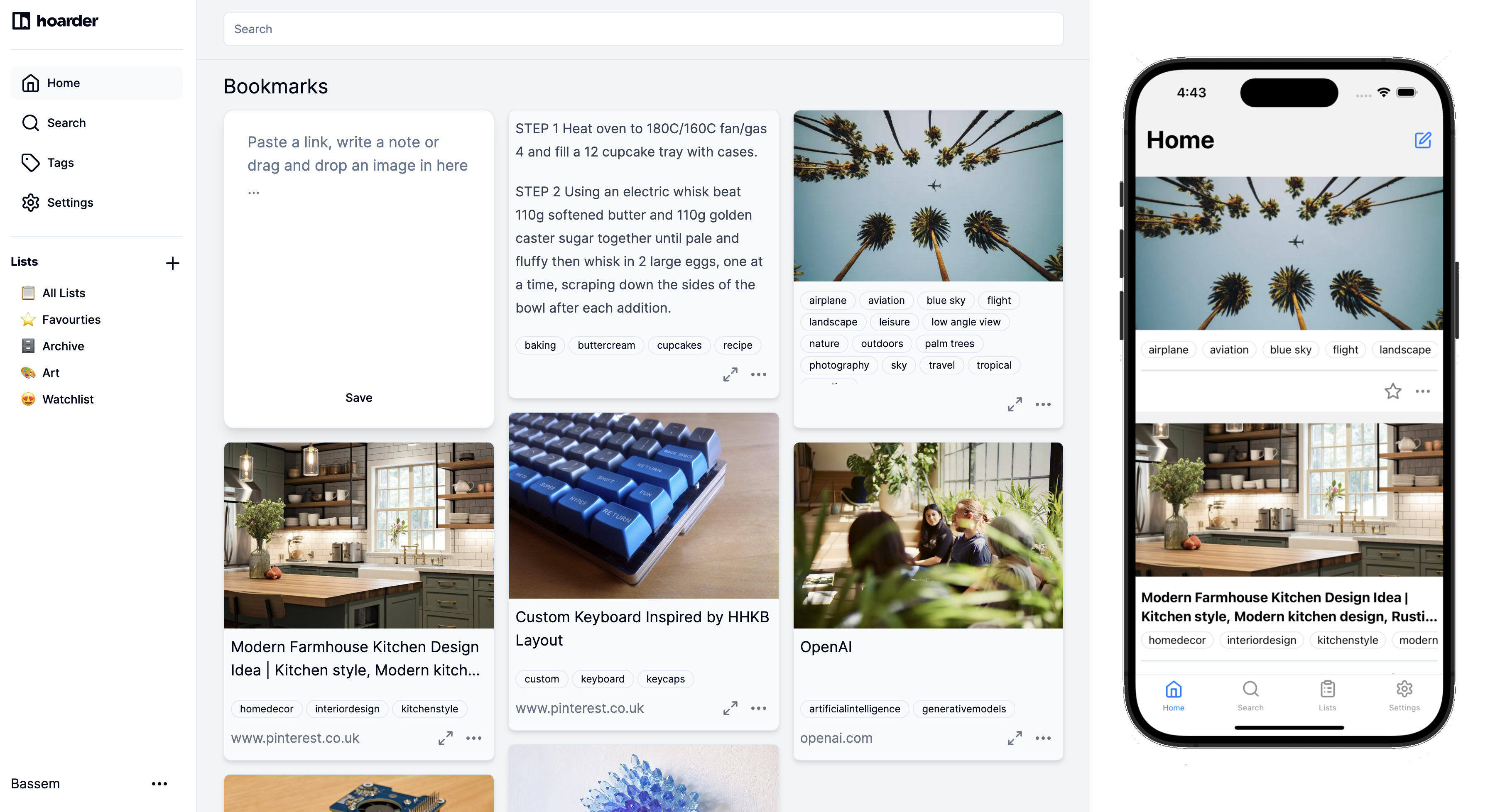
On Hacker News, the top-voted self-hosted-bookmarking thread of 2025 (item 44064701) repeatedly singles out Karakeep as "the one I actually stuck with," praising its one-click browser extension and Notion-esque UI. A XDA Developers review highlights that it is the rare self-hosted tool that makes use of local LLMs out of the box.
The recurring complaints are also consistent: a "dealbreaker cookie problem" where some logged-in pages don't archive cleanly, the fact that clicking a saved item opens the live source URL rather than the local archive by default, and an initial Docker setup that non-technical users still find intimidating despite the official Compose files. Linkwarden fans tend to prefer that project's screenshot-and-PDF-first archival model; Karakeep fans tend to prefer Karakeep's speed, metadata quality and AI pipeline.
Karakeep is free forever if you self-host. The cloud service launched in public beta in 2026 with three paid tiers; a 7-day money-back guarantee and 30-day export window after cancellation apply.
| Plan | Price | Key Limits |
|---|---|---|
| Free (Cloud) | $0/month | 10 bookmarks, 20MB storage — trial only |
| Pro (Cloud) | $4/month, billed monthly (17% off annual) | 50,000 bookmarks, 50GB storage, AI tagging, full-text search |
| Self-Hosted | $0 forever | Unlimited everything — you supply the server and OpenAI/Ollama key |
| Corporate | Custom per-seat | SSO, user management, priority support, custom deployment |
Best for: developers, researchers, students and "digital hoarders" who save 50+ items a week and refuse to feed that stream to Pocket's successor du jour. The self-hosted tier is especially compelling for anyone who already runs a home server, NAS or single-node VPS and wants an AI-powered archive with zero per-seat cost.
Not ideal for: non-technical users who want a one-tap mobile experience without any setup — in that case the $4/month cloud Pro plan is the better fit, and even then Raindrop.io or the remaining freemium bookmark apps may feel more polished.
Pros:
Cons:
Linkwarden — also self-hostable and open-source, with first-class screenshot and PDF archiving; better if your priority is surviving link-rot, weaker on AI. Linkding — the minimalist option; no AI, no archival, but a 40MB Docker image that never breaks. Raindrop.io — the polished hosted alternative if you do not want to self-host anything and are happy with a closed-source app. See our review of the similar self-hostable note system Obsidian for a local-first knowledge-base pairing.
Yes — with one caveat. If you are comfortable running a Docker container and have (or want) an Ollama setup, Karakeep is the bookmark manager to beat in 2026: fast, private, actively maintained, and genuinely smart about tagging. If you are not, the new $4/month cloud Pro plan is a reasonable Pocket replacement, but you should also seriously consider Raindrop.io before committing. 84/100 reflects a project that is already excellent at its job and only loses points on setup friction and a handful of known archival rough edges that the team is actively working through.
ServiceNow and Accenture Launch Forward Deployed Engineering Program to Scale Agentic AI in the Enterprise (May 6, 2026)
At Knowledge 2026, ServiceNow and Accenture announced a joint forward deployed engineering program that drops co-located engineer pods into customer environments to ship agentic AI workflows natively on the ServiceNow AI Platform — with access to 300+ pre-built agent skills and the AI Control Tower as the governance backbone.
May 7, 2026
ReFiBuy Raises $13.6M Seed to Help Brands Get Recommended by AI Shopping Agents (May 5, 2026)
ReFiBuy, the Raleigh-based agentic commerce platform from ChannelAdvisor founder Scot Wingo, closed an oversubscribed $13.6M seed led by NewRoad Capital Partners on May 5, 2026 — betting that the next billion-dollar e-commerce moat is being chosen by ChatGPT, Claude and Perplexity.
May 7, 2026
OpenAI Replaces ChatGPT's Default Model With GPT-5.5 Instant — 52.5% Fewer Hallucinations, 30% Shorter Answers (May 5, 2026)
OpenAI on May 5 swapped GPT-5.3 Instant for the new GPT-5.5 Instant as ChatGPT's default model, claiming 52.5% fewer hallucinated claims on high-stakes prompts and 30% more concise answers. The model also rolls into the API as chat-latest and adds personalization from Gmail and past chats for Plus and Pro web users.
May 7, 2026
Is this product worth it?
Built With
Compare with other tools
Open Comparison Tool →