 Developer Tools
Templ
Type-safe HTML templating language for Go with compile-time safety
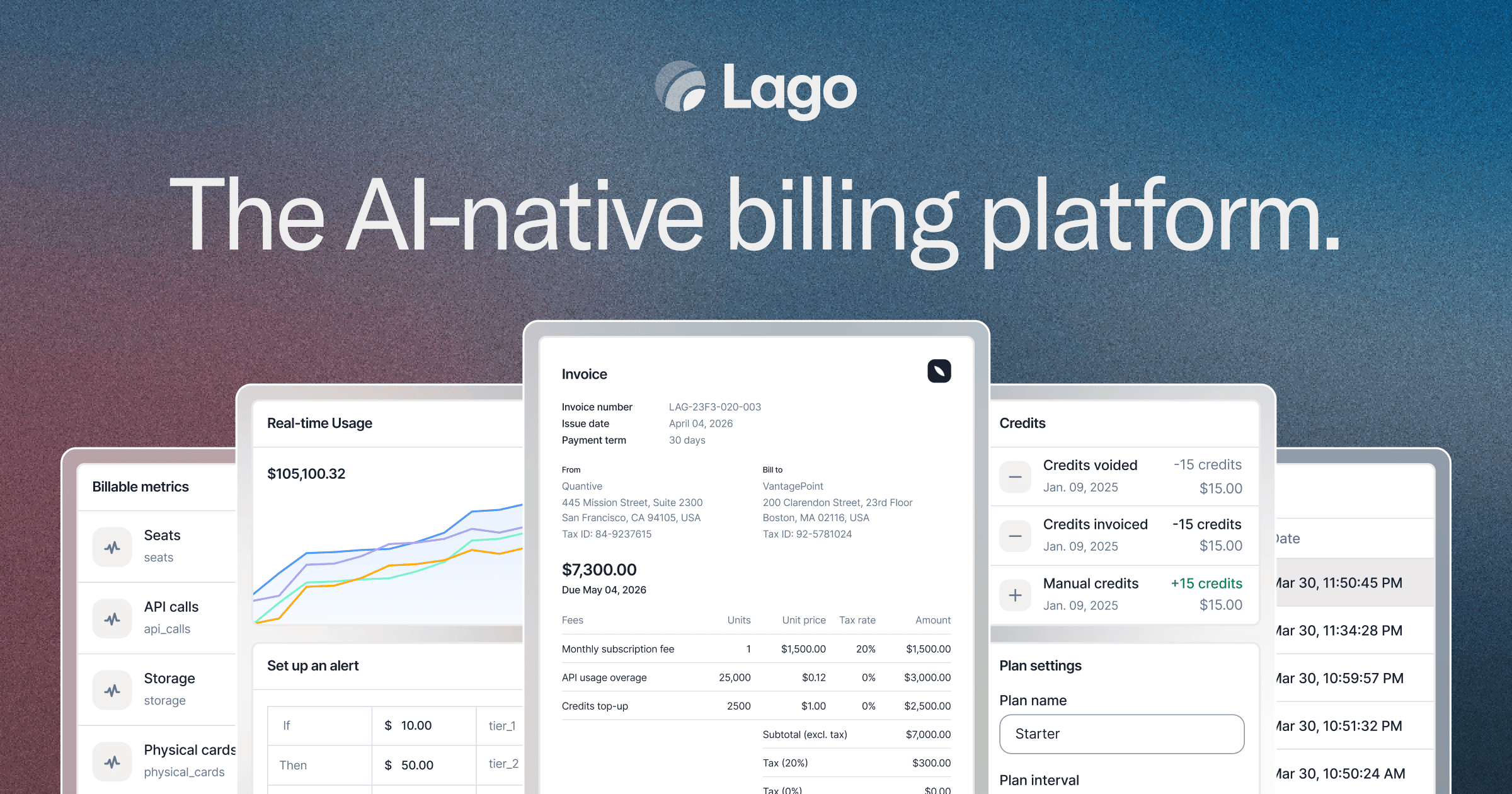
Lago is an open-source, event-driven billing platform built for AI companies and SaaS products with complex pricing models. With 9,500+ GitHub stars and Y Combinator backing, it's the most serious self-hostable alternative to Stripe Billing and Chargebee available today.
Lago is an open-source, event-driven billing and metering platform built as a self-hostable alternative to Stripe Billing and Chargebee. We rate it 78/100 — an excellent choice for engineering teams at AI companies, SaaS startups, and infrastructure providers who need full control over their billing infrastructure without vendor lock-in.
Lago was founded in by Raffi Sarkissian and Thèophile Brézot, graduates of Y Combinator's W22 batch. The project launched publicly on GitHub on and has since grown to 9,500+ stars on GitHub — making it the most popular open-source billing project available. The company has raised over $22 million from Y Combinator, FirstMark Capital, and other investors.
The core problem Lago solves is that building usage-based or hybrid billing in-house is notoriously complex — handling events at scale, proration, credit notes, tax, metering accuracy, and invoice generation typically takes months of engineering time. Lago provides a complete API and UI to do all of this in days, while letting you self-host for full data control or use their cloud offering.

On Product Hunt, Lago's initial launch earned over 1,200 votes and became Product of the Day, Week, and Month — unusually strong reception for a developer infrastructure tool. Reviewers consistently praise the no-code UI and the quality of the REST API, with several founders noting that Lago let them implement usage-based billing in under a week where previous attempts had taken months. On Reddit, engineering teams in r/SaaS and r/devops highlight the self-hosting story as a major differentiator for startups concerned about data privacy and billing costs at scale. The most common critique across Product Hunt comments and independent reviews (including from Orb's competitive analysis) is that the cloud pricing is opaque — Lago does not publish pricing on their website, requiring a sales conversation, which frustrates smaller teams who want to evaluate costs upfront. A minority of GitHub issues cite Docker setup complexity as a friction point for teams without DevOps experience.
Lago's pricing is structured around three tiers, though exact dollar amounts for cloud plans require contacting sales:
| Plan | Price | Key Features |
|---|---|---|
| Open Source | $0 (self-hosted) | Full feature set, self-hosted, MIT-adjacent license, community support via GitHub/Slack |
| Business | Contact sales | Lago Cloud, data pipeline integration (ClickHouse, S3, Segment), invoice preview API, business hours support, Slack channel |
| Enterprise | Contact sales | Everything in Business + 24/7 premium support, dedicated solutions engineer, VPC/on-prem deployment, SSO, custom SLAs |
The open-source version is genuinely full-featured — not a crippled "community edition." You can self-host the complete platform with Docker Compose and run production billing workloads at no cost beyond your own infrastructure.
Best for: AI API companies and SaaS startups with credit-burning, pay-as-you-go, or tiered usage pricing. Platform companies that want to embed billing capabilities for their own customers (Lago Embedded). Engineering teams with DevOps capacity who want full data ownership and want to avoid per-transaction fees from managed billing providers.
Not ideal for: Non-technical founders or small teams without engineering resources to manage self-hosted infrastructure. Teams that need pre-built subscription management with zero setup — for those, Stripe Billing or Paddle will be faster to launch with. Companies with purely flat-rate subscription pricing who don't need metering complexity.
Pros:
Cons:
Stripe Billing is the default choice for subscription billing but charges 0.5–0.8% of revenue as a platform fee, which becomes expensive at scale — Lago self-hosted eliminates this entirely. Chargebee offers a more polished UI and stronger enterprise sales tooling but is fully managed SaaS with no self-hosting option and higher costs. Orb is a strong direct competitor for usage-based billing in the cloud but is proprietary and VC-backed with no open-source option. OpenMeter focuses specifically on metering without the full billing stack that Lago provides.
For AI companies, infrastructure providers, and SaaS startups with usage-based pricing, Lago is the best open-source billing option available in 2026. The combination of a genuinely production-ready open-source core, a powerful event-based metering engine, and native prepaid credit support makes it uniquely suited to the AI API billing use case. The cloud pricing opacity and DevOps setup requirements are real friction points, but they don't outweigh the value of owning your billing infrastructure. We rate Lago 78/100 — very good, with room to improve on the documentation and pricing transparency front.
ServiceNow and Accenture Launch Forward Deployed Engineering Program to Scale Agentic AI in the Enterprise (May 6, 2026)
At Knowledge 2026, ServiceNow and Accenture announced a joint forward deployed engineering program that drops co-located engineer pods into customer environments to ship agentic AI workflows natively on the ServiceNow AI Platform — with access to 300+ pre-built agent skills and the AI Control Tower as the governance backbone.
May 7, 2026
ReFiBuy Raises $13.6M Seed to Help Brands Get Recommended by AI Shopping Agents (May 5, 2026)
ReFiBuy, the Raleigh-based agentic commerce platform from ChannelAdvisor founder Scot Wingo, closed an oversubscribed $13.6M seed led by NewRoad Capital Partners on May 5, 2026 — betting that the next billion-dollar e-commerce moat is being chosen by ChatGPT, Claude and Perplexity.
May 7, 2026
OpenAI Replaces ChatGPT's Default Model With GPT-5.5 Instant — 52.5% Fewer Hallucinations, 30% Shorter Answers (May 5, 2026)
OpenAI on May 5 swapped GPT-5.3 Instant for the new GPT-5.5 Instant as ChatGPT's default model, claiming 52.5% fewer hallucinated claims on high-stakes prompts and 30% more concise answers. The model also rolls into the API as chat-latest and adds personalization from Gmail and past chats for Plus and Pro web users.
May 7, 2026
Is this product worth it?
Built With
Compare with other tools
Open Comparison Tool →