
 Developer Tools
Templ
Type-safe HTML templating language for Go with compile-time safety
Mailtrap is an email delivery platform built for developers, pairing a safe sandbox for staging with a high-deliverability sending API for production. It is one of the most widely used email testing tools, with over 1M users.
Mailtrap is an email delivery platform built specifically for engineering teams that need to test transactional and marketing emails safely in development, then send them reliably in production. We rate it 85/100 — an excellent choice for dev teams who want one provider covering both staging sandbox and production sending without juggling separate tools.
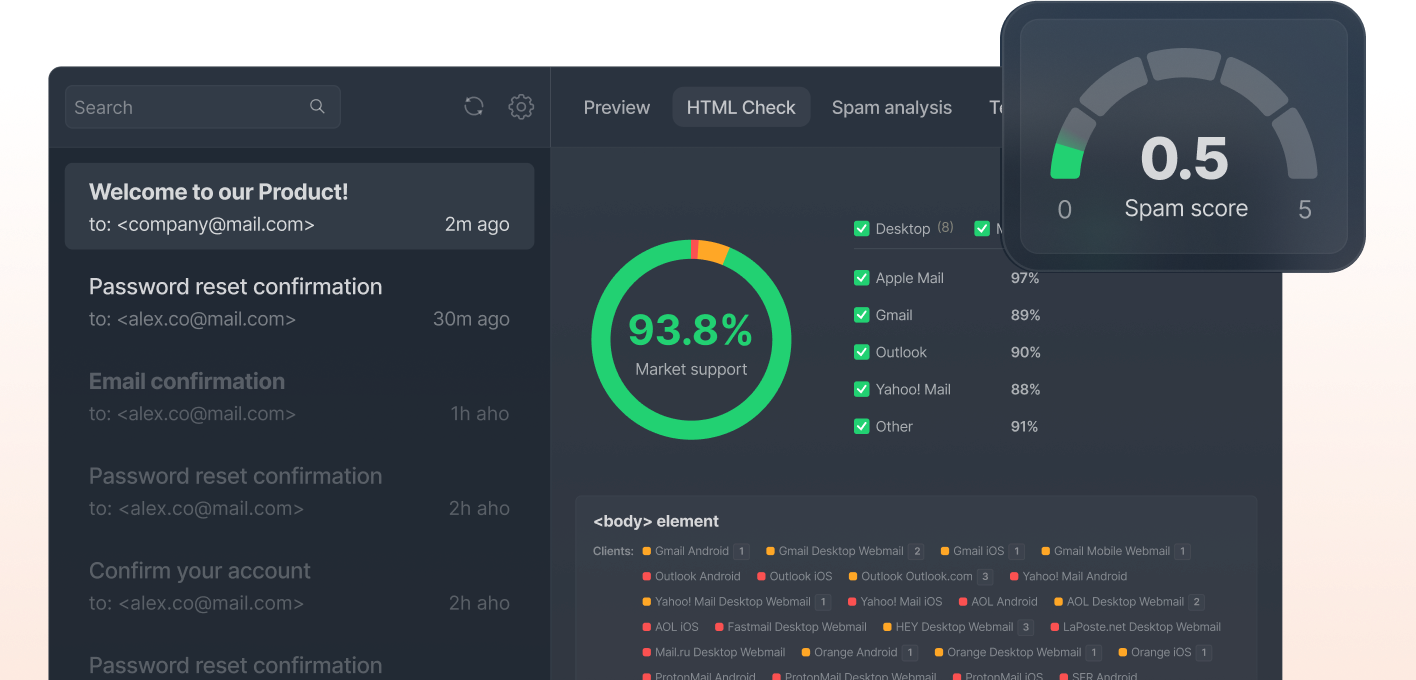
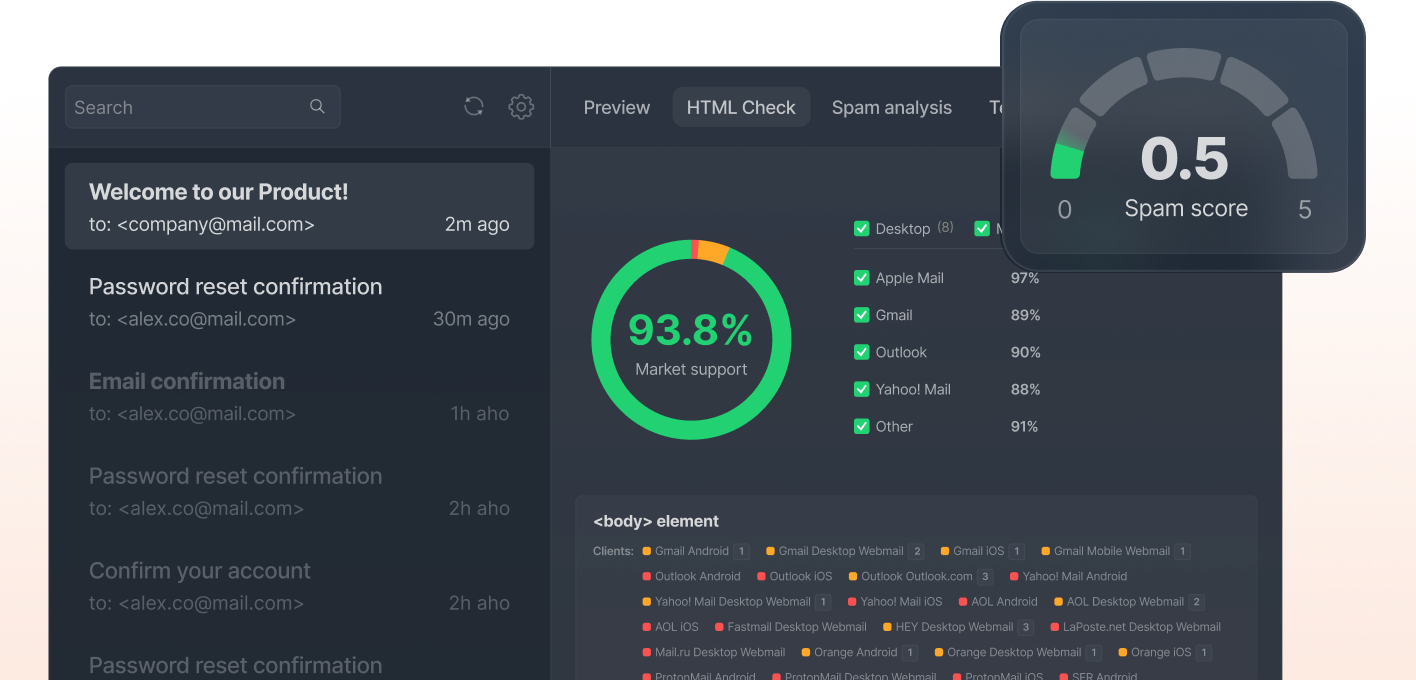
Mailtrap was created in 2009 by Railsware, a Ukrainian product studio, after the team accidentally flooded a client's real users with test emails during development. The original product was a free fake SMTP server that captured outbound mail in a virtual inbox so developers could inspect HTML, headers, and spam scores without risk. Today the platform has more than 1 million users worldwide and has grown into a two-product suite: Email Testing (the sandbox) and Email Sending (the production API/SMTP service launched in 2021).
The differentiator is the unified workflow. Most teams stitch together a tool like Mailpit for local testing with SendGrid or Postmark for production. Mailtrap covers both with a single account, single bill, and consistent template management — which removes a meaningful piece of glue code and operational overhead.
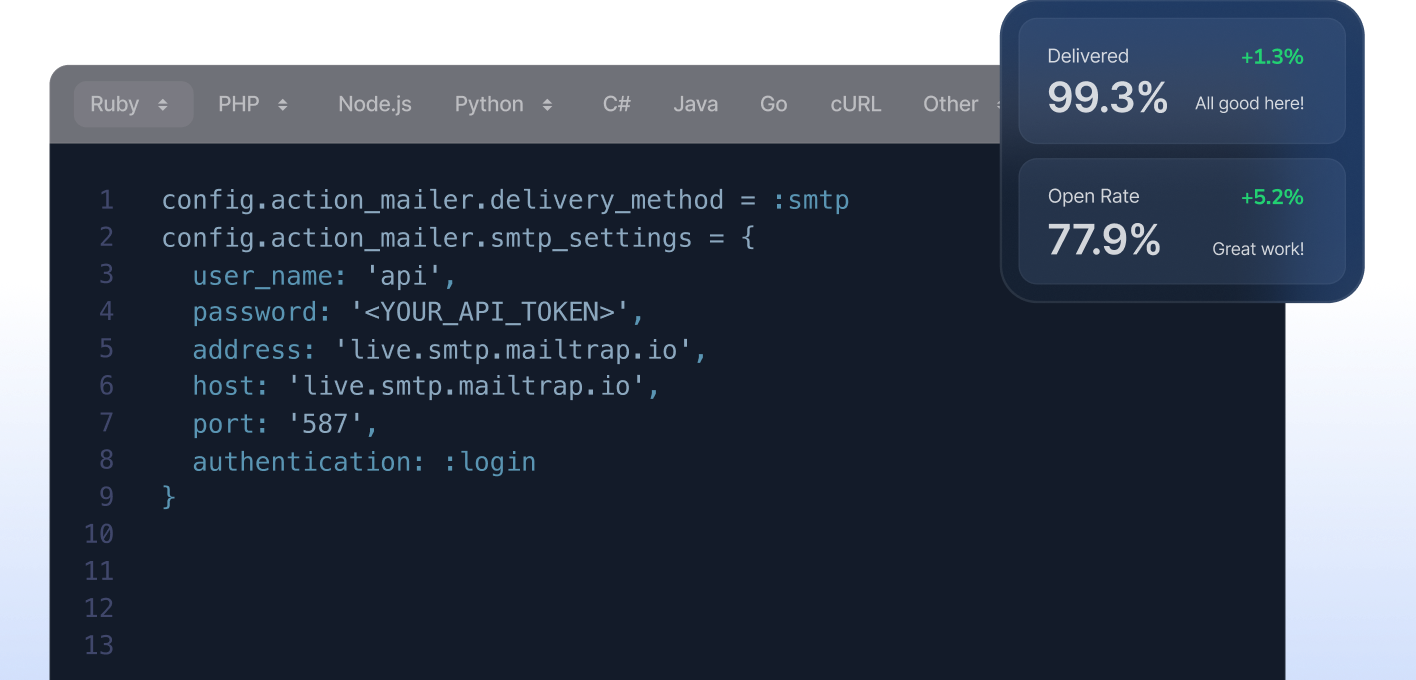
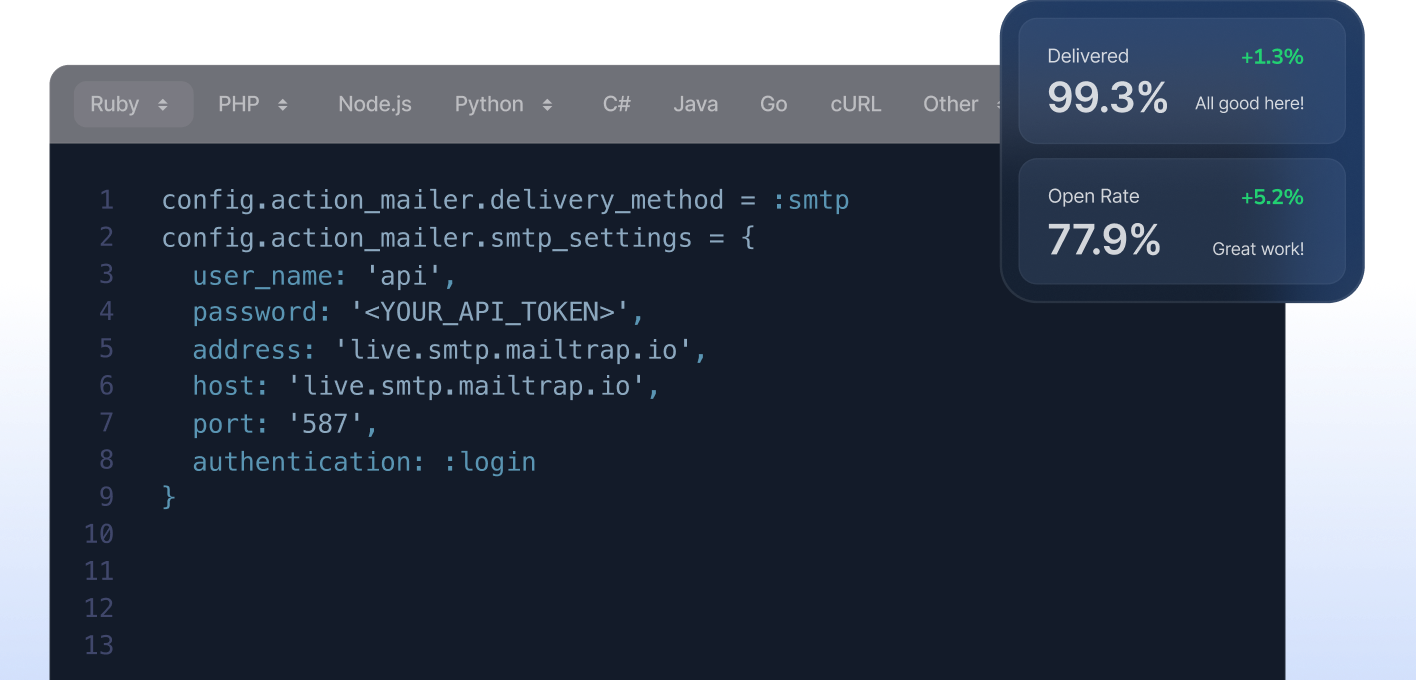
On G2 Mailtrap holds a 4.8/5 average across hundreds of reviews, with developers consistently praising how quickly the SMTP credentials integrate — most teams report less than a day to get the sandbox wired into a Rails, Django, or Node project. The ready-to-use code snippets in the dashboard are repeatedly called out as a time saver.
The recurring complaints are equally consistent. Several users on Trustpilot and the Mailtrap feedback portal report friction with the compliance workflow: campaigns flagged as “Under Review” with the team quoting an Acceptable Use Policy that was not surfaced during signup. Other complaints focus on storage limits forcing early upgrades, missing automation features (no built-in drip campaigns), and the cost step from Business to Enterprise once monthly volume crosses ~250K emails.
Mailtrap charges by email volume rather than contact count, which favors teams with large but quiet subscriber lists. Annual billing knocks roughly 20% off the monthly rate.
| Plan | Price (monthly) | Key Limits |
|---|---|---|
| Free | $0 | 1,000 sandbox + sending emails/month, 150/day cap, 1 domain, 1 user, 3-day log retention |
| Basic | $15 | 10,000 emails/month, multiple domains, team seats |
| Business | $85 | 100,000 emails/month, advanced analytics, longer log retention |
| Enterprise | From $750 | 1M+ emails/month, dedicated IP, SSO, 30-day logs, dedicated account management, deliverability consulting |
Volume bands within each tier scale to $200, $300, $450, $750, and $1,250/month for higher monthly send caps.
Best for: Engineering teams at SaaS companies, startups, and agencies that need both a safe staging sandbox and a production sender. Solo developers and small teams benefit most from the unified workflow and free tier. Teams sending 10K–250K transactional emails per month hit the price/feature sweet spot.
Not ideal for: Pure marketing teams running heavy drip automation or A/B testing — dedicated platforms like Customer.io or Klaviyo offer richer flow builders. Bootstrapped teams sending more than 1M emails/month will find self-hosted Postal or AWS SES dramatically cheaper, even with the operational overhead.
Pros:
Cons:
Resend is the developer-favorite challenger with a cleaner React Email integration but no built-in staging sandbox. Loops targets product-led SaaS with a friendlier UI but a higher per-email cost. Postmark still leads the field on raw inbox placement for transactional email but lacks Mailtrap's combined sandbox. Self-hosted options like Mailpit (testing) plus AWS SES (sending) cost less but require operational ownership.
For development teams that ship product email — confirmation messages, password resets, receipts, notifications — Mailtrap is one of the most defensible choices on the market in 2026. The unified sandbox-plus-sending workflow saves real engineering time, the free tier is genuinely usable, and support is unusually competent. Marketing teams should look elsewhere; large-volume transactional senders should compare against Postmark and SES. Everyone else: 85/100 is well-earned.
ServiceNow and Accenture Launch Forward Deployed Engineering Program to Scale Agentic AI in the Enterprise (May 6, 2026)
At Knowledge 2026, ServiceNow and Accenture announced a joint forward deployed engineering program that drops co-located engineer pods into customer environments to ship agentic AI workflows natively on the ServiceNow AI Platform — with access to 300+ pre-built agent skills and the AI Control Tower as the governance backbone.
May 7, 2026
ReFiBuy Raises $13.6M Seed to Help Brands Get Recommended by AI Shopping Agents (May 5, 2026)
ReFiBuy, the Raleigh-based agentic commerce platform from ChannelAdvisor founder Scot Wingo, closed an oversubscribed $13.6M seed led by NewRoad Capital Partners on May 5, 2026 — betting that the next billion-dollar e-commerce moat is being chosen by ChatGPT, Claude and Perplexity.
May 7, 2026
OpenAI Replaces ChatGPT's Default Model With GPT-5.5 Instant — 52.5% Fewer Hallucinations, 30% Shorter Answers (May 5, 2026)
OpenAI on May 5 swapped GPT-5.3 Instant for the new GPT-5.5 Instant as ChatGPT's default model, claiming 52.5% fewer hallucinated claims on high-stakes prompts and 30% more concise answers. The model also rolls into the API as chat-latest and adds personalization from Gmail and past chats for Plus and Pro web users.
May 7, 2026
Is this product worth it?
Built With
Compare with other tools