
 Developer Tools
Templ
Type-safe HTML templating language for Go with compile-time safety
mise is a Rust-built drop-in asdf replacement that manages tool versions, environment variables, and project tasks from one mise.toml file. Fast, polyglot, and approaching 28k GitHub stars in 2026.
mise (short for “mise-en-place”) is a single Rust-built CLI that manages your dev tool versions, project environment variables, and tasks from one mise.toml file. We rate it 92/100 — if you have ever fought with asdf, nvm, pyenv, rbenv, direnv, and Make all at once, mise is the cleanest way out in 2026.
mise was created in 2022 by Jeff Dickey (originally under the name rtx) and is shipped as a single static Rust binary under the MIT License. The repository at github.com/jdx/mise has crossed 27,600 stars with 1,100+ forks, and the latest stable release v2026.5.0 shipped on , graduating Conda support, smarter prerelease handling, and POSIX tasks on Windows.
The specific problem mise solves: every modern repo demands a different version of Node, Python, Go, Terraform, jq, kubectl, and a stack of .env files — and most teams stitch this together with asdf, nvm, pyenv, direnv, Make, and a brittle setup.sh. mise replaces all of that with one config (mise.toml), a Rust-compiled binary that runs without per-command bash shims, and a registry of nearly 950 tools as of 2026. It is a true drop-in replacement for asdf — it reads .tool-versions files unchanged and supports asdf plugins — while also bundling environment management and a task runner.
.env files and 1Password/AWS Secrets Manager directives), and run project tasks — all from a single mise.toml.PATH on shell activation rather than wrapping every command in a bash shim. asdf shims add roughly 120 ms of startup overhead per command; mise's activate hook removes it entirely..tool-versions files and can use asdf plugins. The migration path is two commands and your CI keeps working.mise-tasks/. The October 2025 release added the :task namespace syntax and ... pattern matching for running tasks across packages in a monorepo.mise.lock pins exact tool versions across machines and CI — the same idea Cargo and pnpm popularized, applied to every dev tool.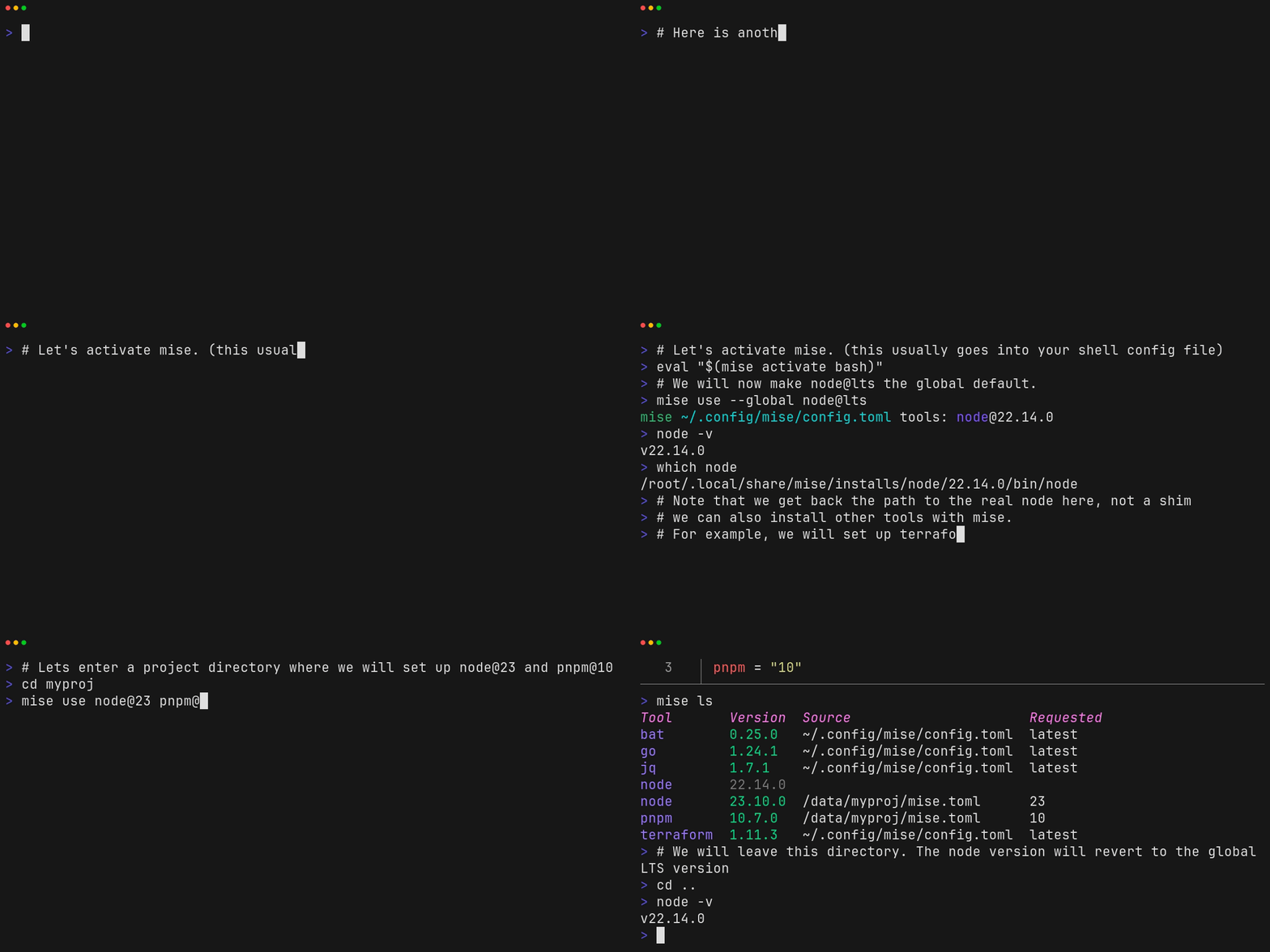
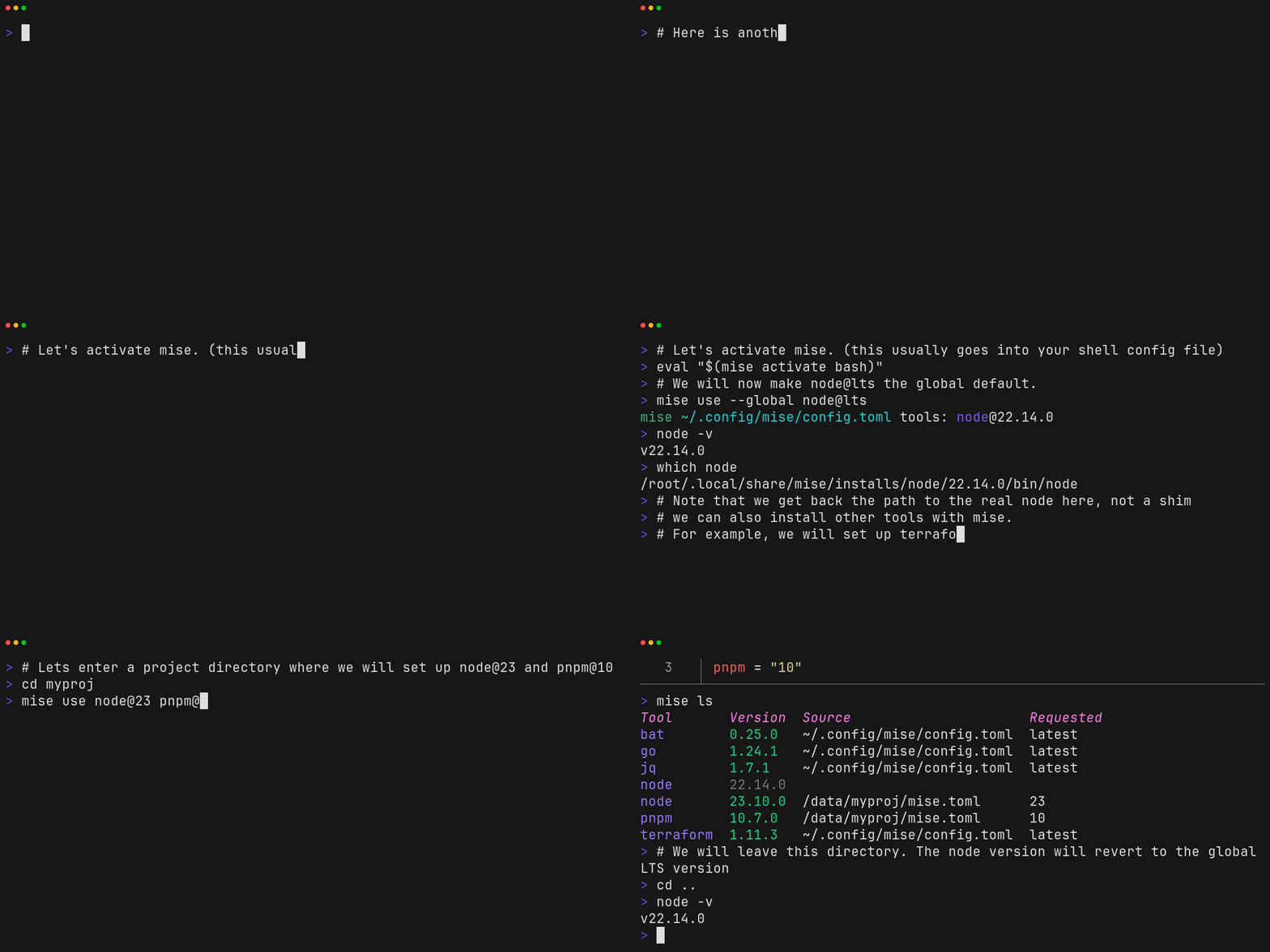
mise exec — with which node returning real paths, not shims.The recurring praise across Hacker News, r/programming, and r/devops is that mise is “the asdf you wish you'd had in 2018.” The most-upvoted HN comment on the original launch thread called it a strict drop-in upgrade, and a 2026 Medium write-up by an engineering team reported that their monorepo's 5-second cd delay disappeared after switching, with CI failures dropping by 90% thanks to consistent versions across local and CI. On LibHunt, multiple reviewers say it has become their go-to for “tons of things” and is “just perfect.” The honest criticism is also consistent: mise will not reuse existing asdf install directories, so the migration costs you a re-download of every tool; the mise.toml format is opinionated and differs slightly from .tool-versions; and a few users on Reddit note that the registry, while huge, occasionally pins to a slightly stale upstream — usually fixed within a release. Production users include parts of Cloudflare, Shopify, Netflix teams, and a long tail of mid-sized startups standardizing onboarding on a single config file.
mise is 100% free under the MIT License. There is no paid tier, no telemetry, and no signup required. Your only cost is the disk space for the tools you install.
| Plan | Price | Key Limits |
|---|---|---|
| Open Source (everything) | $0 | MIT license, unlimited use, full feature set |
| Self-hosted CI usage | $0 | Single binary install, no license server |
| Commercial support | Not officially offered | Use GitHub Discussions for community help |
Best for: polyglot teams who want one onboarding command instead of a wiki page; engineers tired of asdf's shim overhead; monorepo maintainers who need consistent tool versions plus a real task runner; and anyone who is currently combining asdf + direnv + Make and wants to delete two of those three.
Not ideal for: single-language shops perfectly happy with nvm alone (you don't need this); enterprises that require vendor-backed commercial support contracts; or teams locked into Nix or Devbox for hermetic, reproducible-by-hash environments — mise pins versions but is not bit-for-bit reproducible.
Pros:
curl https://mise.run | sh..tool-versions, supports asdf plugins, no daily-workflow surprises.v2026.5.0 from May 2026.Cons:
mise.toml format diverges slightly from asdf's .tool-versions; teams sometimes argue over which to commit.The closest direct competitor is asdf, the Bash-based original mise was inspired by; it has the largest plugin ecosystem but is meaningfully slower due to shims. proto by moonrepo is a newer Rust competitor with WASM-based plugins — cleaner sandboxing, smaller registry. Devbox and Nix chase a different goal: hermetic, fully reproducible environments at the cost of a steeper learning curve.
Yes — for almost every developer who manages more than one language or more than one project. mise replaces asdf, direnv, and a chunk of your Makefile with a single fast Rust binary, and the migration takes about an afternoon. The only teams that should skip it are single-language shops happy with their existing language-specific manager, and organizations that strictly require hermetic builds. We rate mise 92/100 — the universal version manager to use in 2026.
curl https://mise.run | sh..tool-versions files and supports asdf plugins, but it is written in Rust, modifies PATH instead of using shims (eliminating ~120 ms per command), and adds environment variables and a task runner that asdf does not have..env files and per-project environment variables natively, and the task runner handles common build/test/deploy commands. Teams that need direnv's complex shell hooks or Make's pattern rules sometimes keep one alongside mise.ServiceNow and Accenture Launch Forward Deployed Engineering Program to Scale Agentic AI in the Enterprise (May 6, 2026)
At Knowledge 2026, ServiceNow and Accenture announced a joint forward deployed engineering program that drops co-located engineer pods into customer environments to ship agentic AI workflows natively on the ServiceNow AI Platform — with access to 300+ pre-built agent skills and the AI Control Tower as the governance backbone.
May 7, 2026
ReFiBuy Raises $13.6M Seed to Help Brands Get Recommended by AI Shopping Agents (May 5, 2026)
ReFiBuy, the Raleigh-based agentic commerce platform from ChannelAdvisor founder Scot Wingo, closed an oversubscribed $13.6M seed led by NewRoad Capital Partners on May 5, 2026 — betting that the next billion-dollar e-commerce moat is being chosen by ChatGPT, Claude and Perplexity.
May 7, 2026
OpenAI Replaces ChatGPT's Default Model With GPT-5.5 Instant — 52.5% Fewer Hallucinations, 30% Shorter Answers (May 5, 2026)
OpenAI on May 5 swapped GPT-5.3 Instant for the new GPT-5.5 Instant as ChatGPT's default model, claiming 52.5% fewer hallucinated claims on high-stakes prompts and 30% more concise answers. The model also rolls into the API as chat-latest and adds personalization from Gmail and past chats for Plus and Pro web users.
May 7, 2026
Is this product worth it?
Built With
Compare with other tools