

 Developer Tools
Templ
Type-safe HTML templating language for Go with compile-time safety
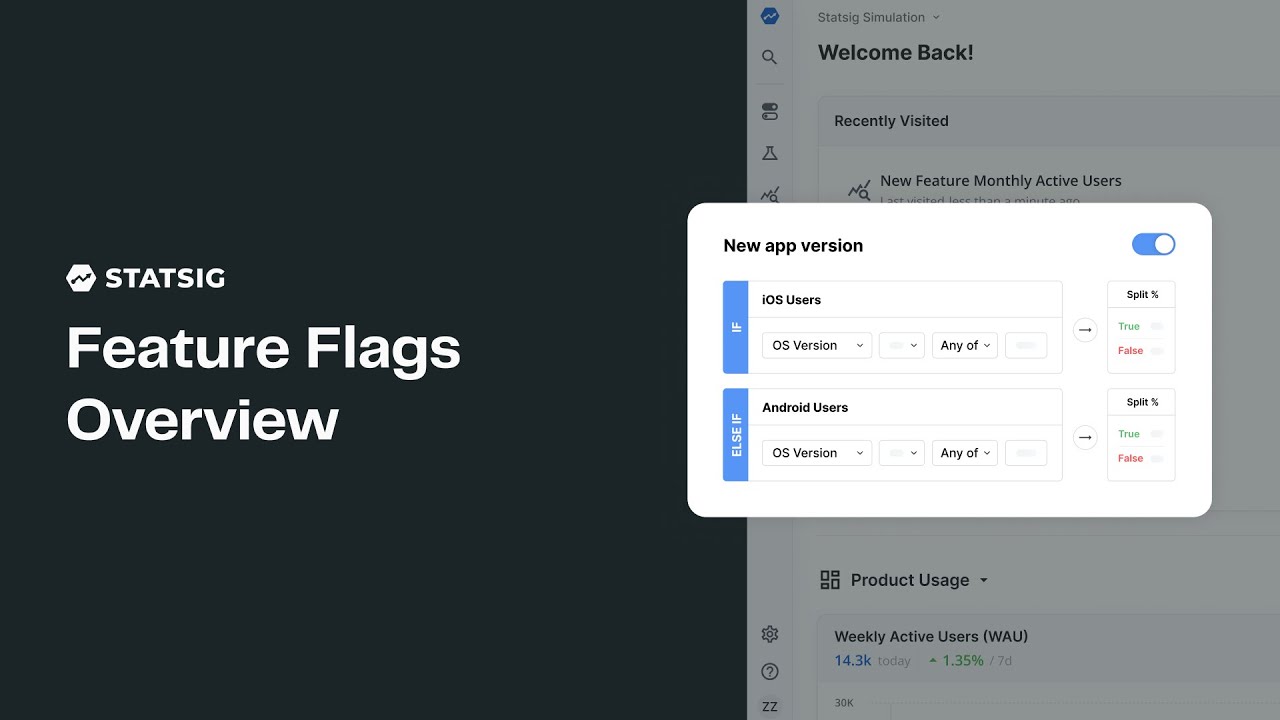
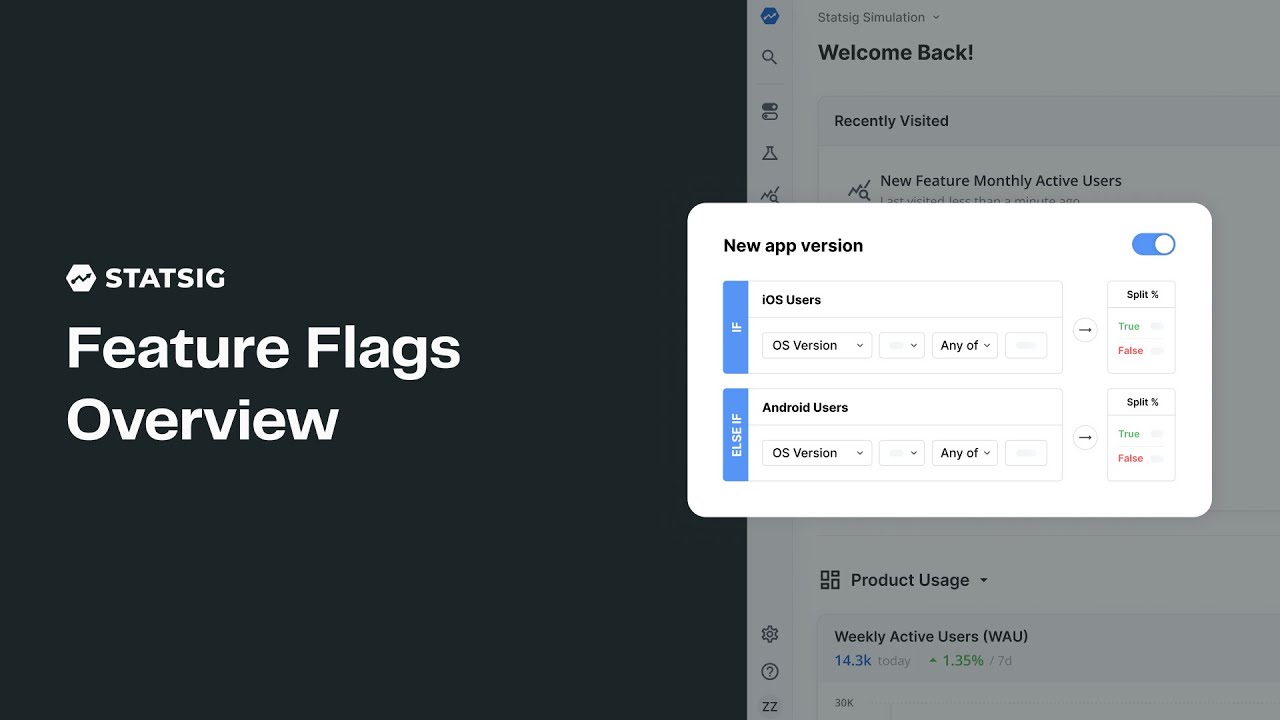
Statsig bundles feature flags, A/B experiments, and product analytics into one developer-first platform now powering OpenAI, Notion, and Figma — and it has a generous free tier for early-stage teams.
Statsig is an all-in-one product development platform that combines feature flags, A/B experimentation, product analytics, and session replays in a single developer-first stack. We rate it 88/100 — the most complete experimentation platform you can adopt today, and the only one with a genuinely usable free tier for early-stage teams.
Statsig was founded in 2021 by Vijaye Raji, the former VP of Engineering at Facebook who ran experimentation infrastructure for products like Facebook Watch and Facebook Gaming. The Seattle-based company shipped its first public release in April 2021 and was built around a simple thesis: every product team deserves the same experimentation tooling Meta built internally, but bundled with analytics and feature management so engineers don't have to glue four SaaS tools together.
The platform now powers experimentation at OpenAI, Notion, Figma, Atlassian, Microsoft, Brex, SoundCloud, Whatnot, and Riot Games. In September 2025, OpenAI acquired Statsig in an all-stock deal valued at $1.1 billion, with Vijaye Raji becoming OpenAI's CTO of Applications. The product continues to operate independently and onboard new customers from the Seattle office.

On Product Hunt, where Statsig holds a 4.9/5 rating, the most common praise is the breadth of the all-in-one suite and the speed of the SDKs. Reviewers on G2 highlight the polished UI, real-time results, and "setup in under an hour" experience. The most upvoted r/SaaS and Hacker News threads about Statsig consistently single out Pulse auto-stats as the feature competitors haven't replicated.
Recurring complaints are real but bounded. G2 reviewers note that overrides for sharing in-development gates with teammates can be cumbersome, and a small minority of users report bot traffic occasionally inflating exposure counts on free-tier projects. Several users on Hacker News also raised concerns about the long-term independence of the product after the OpenAI acquisition — Statsig's leadership has publicly committed to operating independently, but the question lingers for security-sensitive enterprises.
Statsig has the most generous free tier in this category — by a wide margin.
| Plan | Price | Key Limits |
|---|---|---|
| Developer (Free) | $0/month | Up to 1M MTUs, 2M metered events/month, unlimited feature seats, all gates and experiments |
| Pro | Usage-based | 5M metered events included, $0.05 per additional 1K events; warehouse-native and advanced experimentation |
| Enterprise | Custom | SSO, SOC 2 Type 2, audit logs, dedicated support, custom data residency |
For comparison, LaunchDarkly's starter plan is $10/seat/month with no free experimentation tier, and Optimizely Web is quoted at five-figure annual minimums. Statsig is the only platform in this category where you can ship feature flags and experimentation to production at no cost up to 1 million users.
Best for: Product-led startups, Series A–C SaaS companies, and engineering teams that want to consolidate feature management, experimentation, and analytics into one vendor. Especially strong for teams already on Snowflake, BigQuery, or Databricks who want warehouse-native experiments.
Not ideal for: Marketing-led organizations who need a visual no-code editor for landing-page tests (Optimizely or VWO are still better there), or fully air-gapped enterprises that require self-hosted feature flags (look at Flagsmith or Unleash instead).
Pros:
Cons:
LaunchDarkly — the long-time enterprise leader for feature flags, but no free tier, no built-in analytics, and no warehouse-native experimentation. PostHog — open-source product analytics with feature flags bolted on; better than Statsig if you want self-hosting, weaker on experimentation depth. Flagsmith — open-source, self-hostable feature flags only; pick this if you must keep flag evaluation behind your VPC. Optimizely — strong for marketing-led web experimentation but enterprise-only pricing and aging dev experience.
Yes — Statsig is now the default answer for any engineering team that wants experimentation done right. The free tier alone is enough to take it from "interesting" to "start your next project on Statsig." The only teams who should look elsewhere are marketing-led organizations that live in a visual editor, and security teams that legally cannot send flag-evaluation telemetry to a SaaS. For everyone else, the bundling of flags + experiments + analytics + replays under one well-designed product is a once-in-a-decade consolidation in this category. Rating: 88/100 — Very Good.
Developer ToolsType-safe HTML templating language for Go with compile-time safety
 Developer Tools
Open-source API key management and rate limiting platform for modern developers
 Developer Tools
Open-source low-code platform for building internal business applications
 Developer Tools
Git-friendly open-source API client for REST, GraphQL, and gRPC
ServiceNow and Accenture Launch Forward Deployed Engineering Program to Scale Agentic AI in the Enterprise (May 6, 2026)
At Knowledge 2026, ServiceNow and Accenture announced a joint forward deployed engineering program that drops co-located engineer pods into customer environments to ship agentic AI workflows natively on the ServiceNow AI Platform — with access to 300+ pre-built agent skills and the AI Control Tower as the governance backbone.
May 7, 2026
ReFiBuy Raises $13.6M Seed to Help Brands Get Recommended by AI Shopping Agents (May 5, 2026)
ReFiBuy, the Raleigh-based agentic commerce platform from ChannelAdvisor founder Scot Wingo, closed an oversubscribed $13.6M seed led by NewRoad Capital Partners on May 5, 2026 — betting that the next billion-dollar e-commerce moat is being chosen by ChatGPT, Claude and Perplexity.
May 7, 2026
OpenAI Replaces ChatGPT's Default Model With GPT-5.5 Instant — 52.5% Fewer Hallucinations, 30% Shorter Answers (May 5, 2026)
OpenAI on May 5 swapped GPT-5.3 Instant for the new GPT-5.5 Instant as ChatGPT's default model, claiming 52.5% fewer hallucinated claims on high-stakes prompts and 30% more concise answers. The model also rolls into the API as chat-latest and adds personalization from Gmail and past chats for Plus and Pro web users.
May 7, 2026
Is this product worth it?
Built With
Compare with other tools
Open Comparison Tool →