
 Developer Tools
Templ
Type-safe HTML templating language for Go with compile-time safety
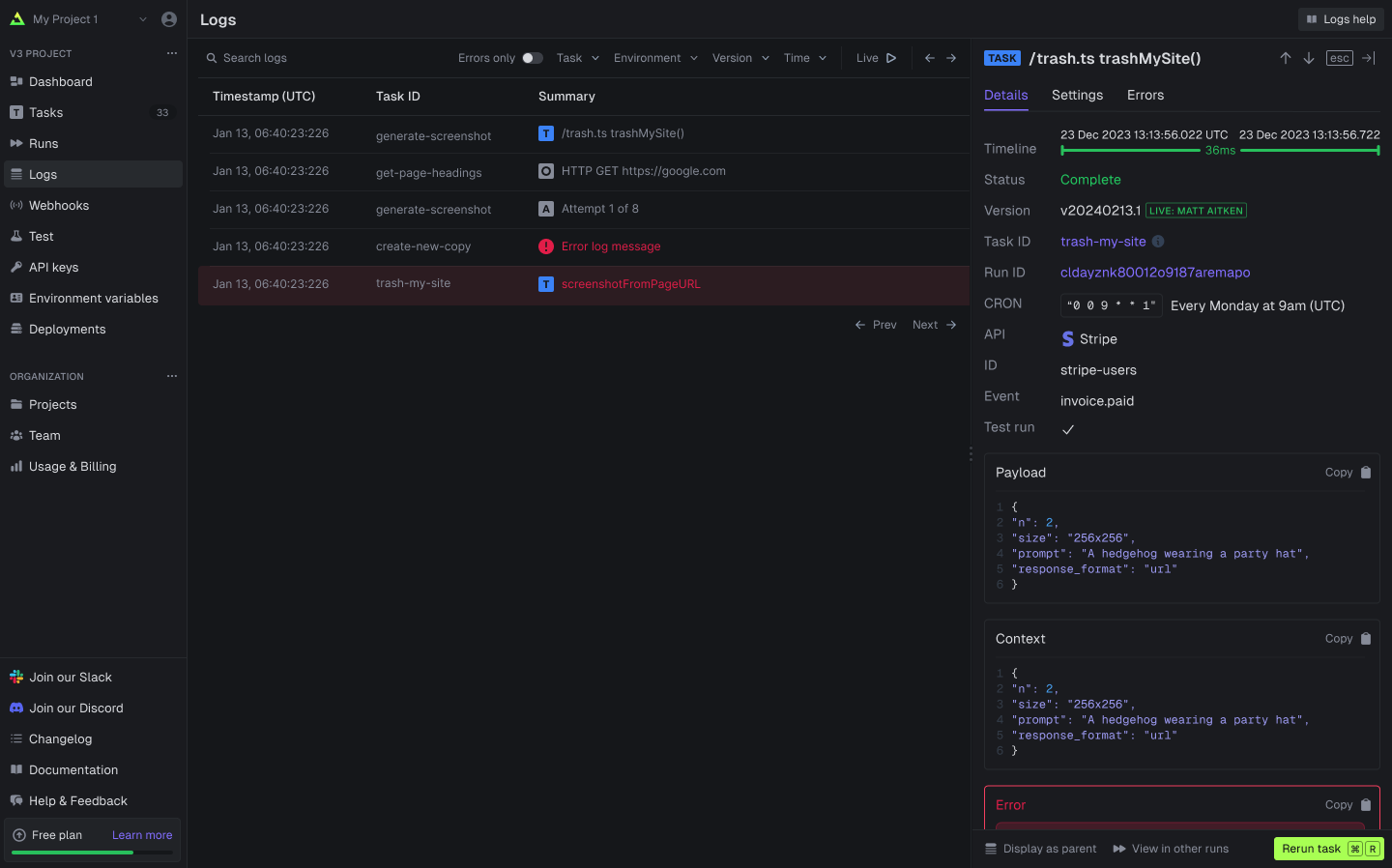
Trigger.dev is the open-source TypeScript platform for building durable background jobs, scheduled tasks, and AI workflows — without serverless timeouts. Ideal for teams building production-grade AI agents and automation pipelines in 2026.
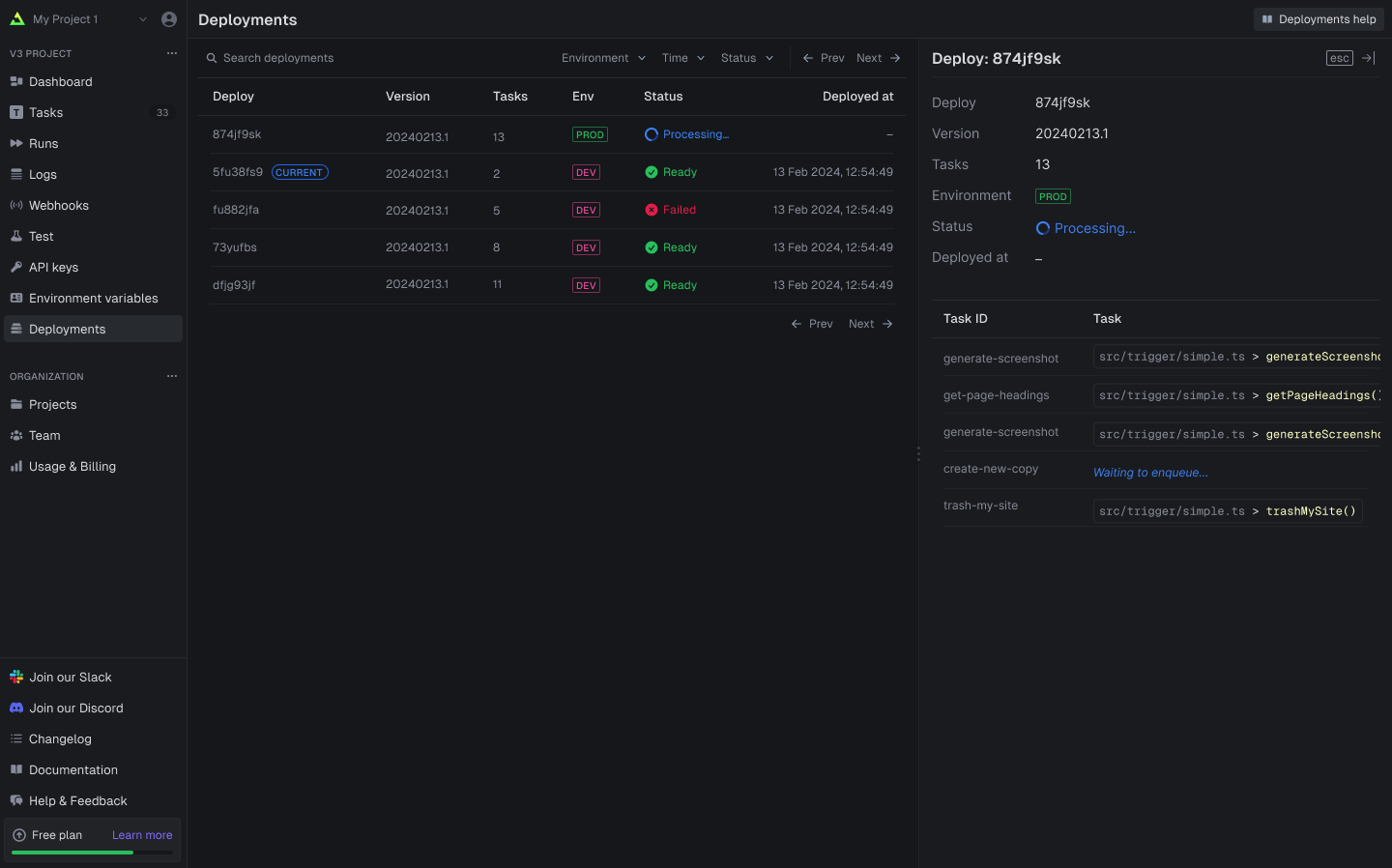
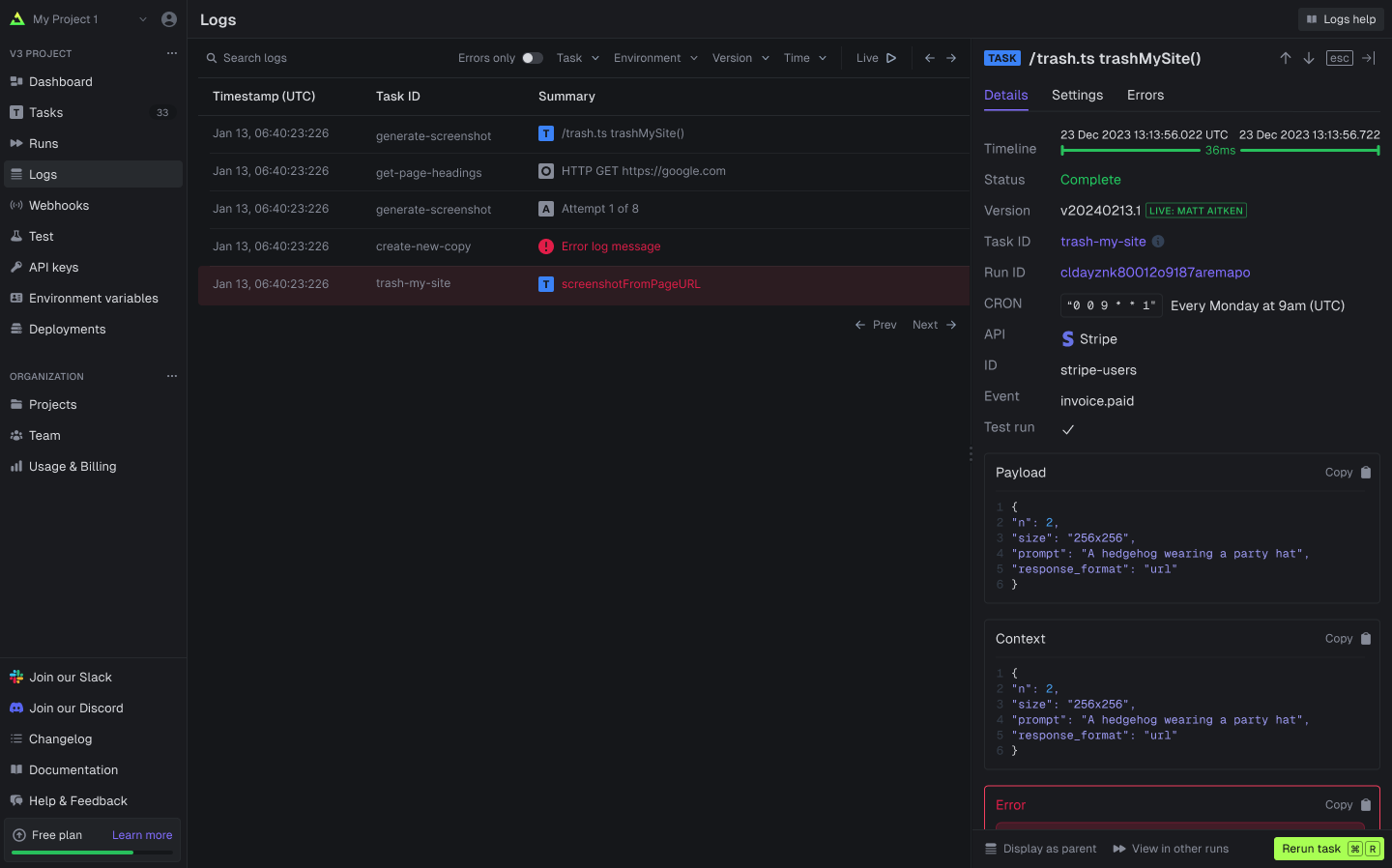
Trigger.dev is an open-source, TypeScript-native platform for building and deploying background jobs, durable AI agents, and long-running workflows — without serverless timeouts or brittle queue infrastructure. We rate it 84/100 — the go-to choice for TypeScript developers who need reliable, observable, and scalable task execution for AI applications and automation pipelines.
Trigger.dev was founded in 2022 by Matt Aitken and Eric Allam, and went through Y Combinator's W23 batch. The project grew out of frustration with existing background job solutions — Sidekiq requires Ruby, BullMQ needs Redis babysitting, and serverless platforms impose ruthless timeout limits. Trigger.dev's answer was a TypeScript-first platform that treats background jobs like regular code you write alongside your app, backed by a fully-managed cloud or a self-hosted runtime.
As of March 2026, the project has accumulated 14,300+ GitHub stars, is on v4.4.3 (released March 10, 2026), and has raised a $16M Series A. The pivot to AI workflows — giving LLM-based agents durable, resumable execution with human-in-the-loop checkpoints — has significantly expanded its appeal beyond pure backend jobs work.

The sentiment across Hacker News and Product Hunt is genuinely positive for a developer tool — which is hard to earn. The YC W23 Launch HN thread praised the "this is what background jobs should look like in 2025" framing, and multiple commenters noted it fills a real gap between BullMQ (raw and manual) and Temporal (powerful but operationally heavy). On Product Hunt, reviewers consistently call out the Discord community and team responsiveness as a standout: "amazing product, amazing team, they actually listen to feedback."
The main recurring criticism is around pricing predictability — the usage-based compute billing (charged per second of active execution) can be hard to estimate for bursty workloads. A secondary complaint is that the self-hosted version requires more ops knowledge than the docs suggest, and the documentation for advanced concurrency patterns lags behind the actual features available. Some users on Reddit's r/node also note that for very simple fire-and-forget jobs, the Trigger.dev SDK adds overhead compared to a basic BullMQ setup.
Trigger.dev uses a combination of flat monthly plans and usage-based compute billing. Your plan includes a monthly compute credit; additional usage is billed per second of execution time.
| Plan | Price | Included Credits | Concurrent Runs | Log Retention |
|---|---|---|---|---|
| Free | $0/month | $5 compute credits | 20 | 1 day |
| Hobby | $10/month | $10 compute credits | 50 | 7 days |
| Pro | $50/month | $50 compute credits | 200+ | 30 days |
| Enterprise | Custom | Custom | Custom | Custom (SOC 2) |
Compute overage is billed at $0.0000338/second for the default Small 1x worker size, and $0.000025 per run invocation ($0.25 per 10,000 runs). The self-hosted version is free under Apache 2.0 — you pay only for your own infrastructure.
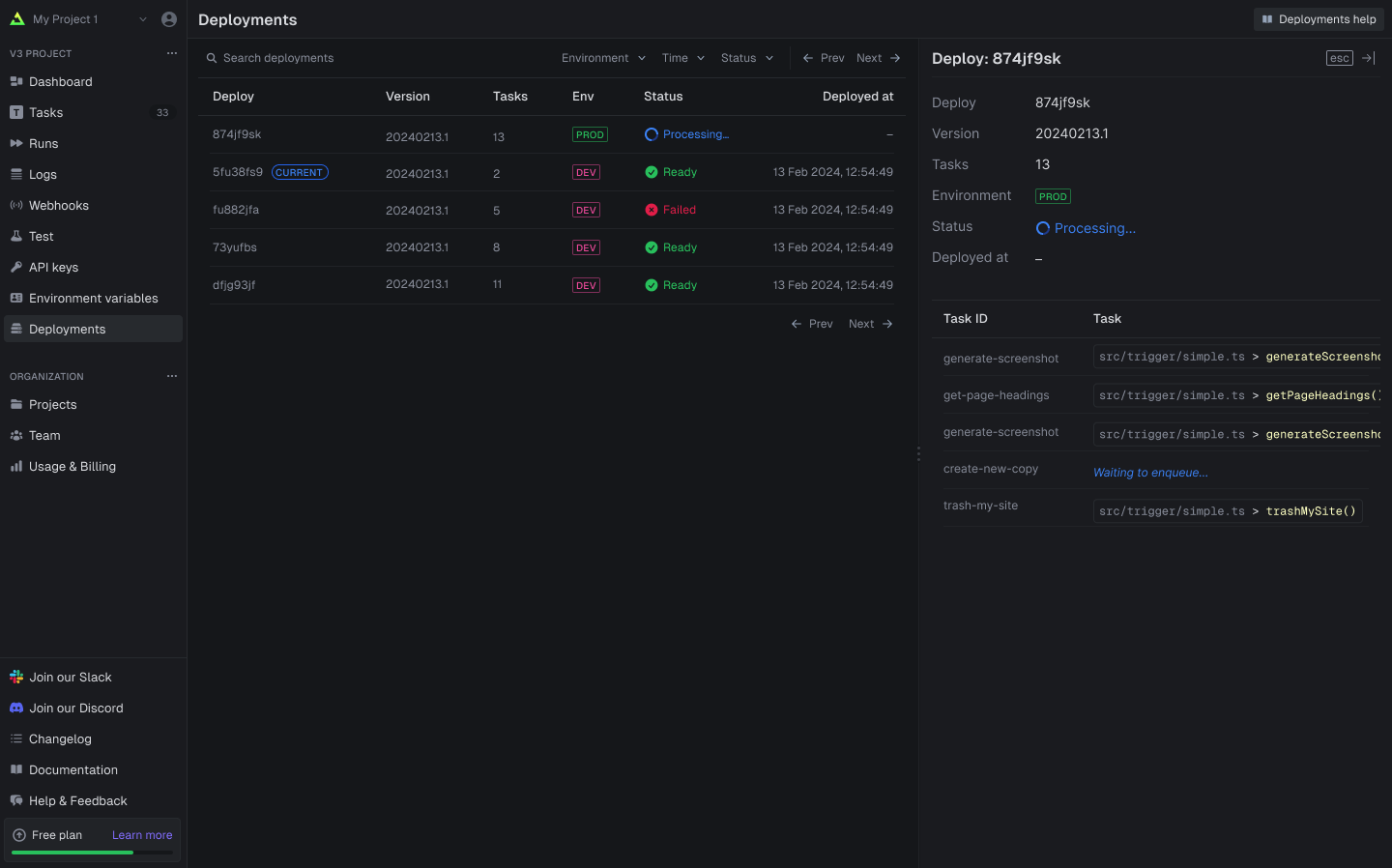
Best for: TypeScript/Node.js developers building AI-powered applications, automation pipelines, multi-step data processing, or any backend workflows that involve waiting (for external APIs, human input, or time delays). Especially valuable for teams using Vercel, Netlify, or other serverless-first stacks who've hit timeout walls running AI inference or document processing.
Not ideal for: Teams running a Ruby, Python, or Go backend where language-native solutions (Sidekiq, Celery, Asynq) are better fits. Also not the right tool for simple fire-and-forget notifications where a basic message queue (SQS, BullMQ) is sufficient and cheaper at high volume.
Pros:
Cons:
Temporal is the most feature-complete alternative — battle-tested at Stripe and Coinbase scale — but it requires significant operational overhead to self-host and has a steeper learning curve. Inngest is the closest direct competitor, also TypeScript-first with a managed cloud, but is closed-source and has less observability depth. BullMQ is a solid choice for pure Redis-backed queue needs in Node.js but lacks durable execution, human-in-the-loop, and first-class AI workflow features. For most TypeScript teams building in 2026, Trigger.dev sits in the sweet spot between BullMQ's simplicity and Temporal's power.
Yes — particularly for teams working on AI-heavy applications in TypeScript. Trigger.dev solves a genuine, painful problem (serverless timeout limits, unreliable retry logic, opaque background job failures) in a developer-friendly way. The free tier is genuinely useful for prototyping, and the $10/month Hobby plan covers most indie developer workloads. The rating of 84/100 reflects its excellent developer experience and growing AI capabilities, held back slightly by billing complexity and self-hosting friction.
ServiceNow and Accenture Launch Forward Deployed Engineering Program to Scale Agentic AI in the Enterprise (May 6, 2026)
At Knowledge 2026, ServiceNow and Accenture announced a joint forward deployed engineering program that drops co-located engineer pods into customer environments to ship agentic AI workflows natively on the ServiceNow AI Platform — with access to 300+ pre-built agent skills and the AI Control Tower as the governance backbone.
May 7, 2026
ReFiBuy Raises $13.6M Seed to Help Brands Get Recommended by AI Shopping Agents (May 5, 2026)
ReFiBuy, the Raleigh-based agentic commerce platform from ChannelAdvisor founder Scot Wingo, closed an oversubscribed $13.6M seed led by NewRoad Capital Partners on May 5, 2026 — betting that the next billion-dollar e-commerce moat is being chosen by ChatGPT, Claude and Perplexity.
May 7, 2026
OpenAI Replaces ChatGPT's Default Model With GPT-5.5 Instant — 52.5% Fewer Hallucinations, 30% Shorter Answers (May 5, 2026)
OpenAI on May 5 swapped GPT-5.3 Instant for the new GPT-5.5 Instant as ChatGPT's default model, claiming 52.5% fewer hallucinated claims on high-stakes prompts and 30% more concise answers. The model also rolls into the API as chat-latest and adds personalization from Gmail and past chats for Plus and Pro web users.
May 7, 2026
Is this product worth it?
Built With
Compare with other tools
Open Comparison Tool →