
 Developer Tools
Templ
Type-safe HTML templating language for Go with compile-time safety
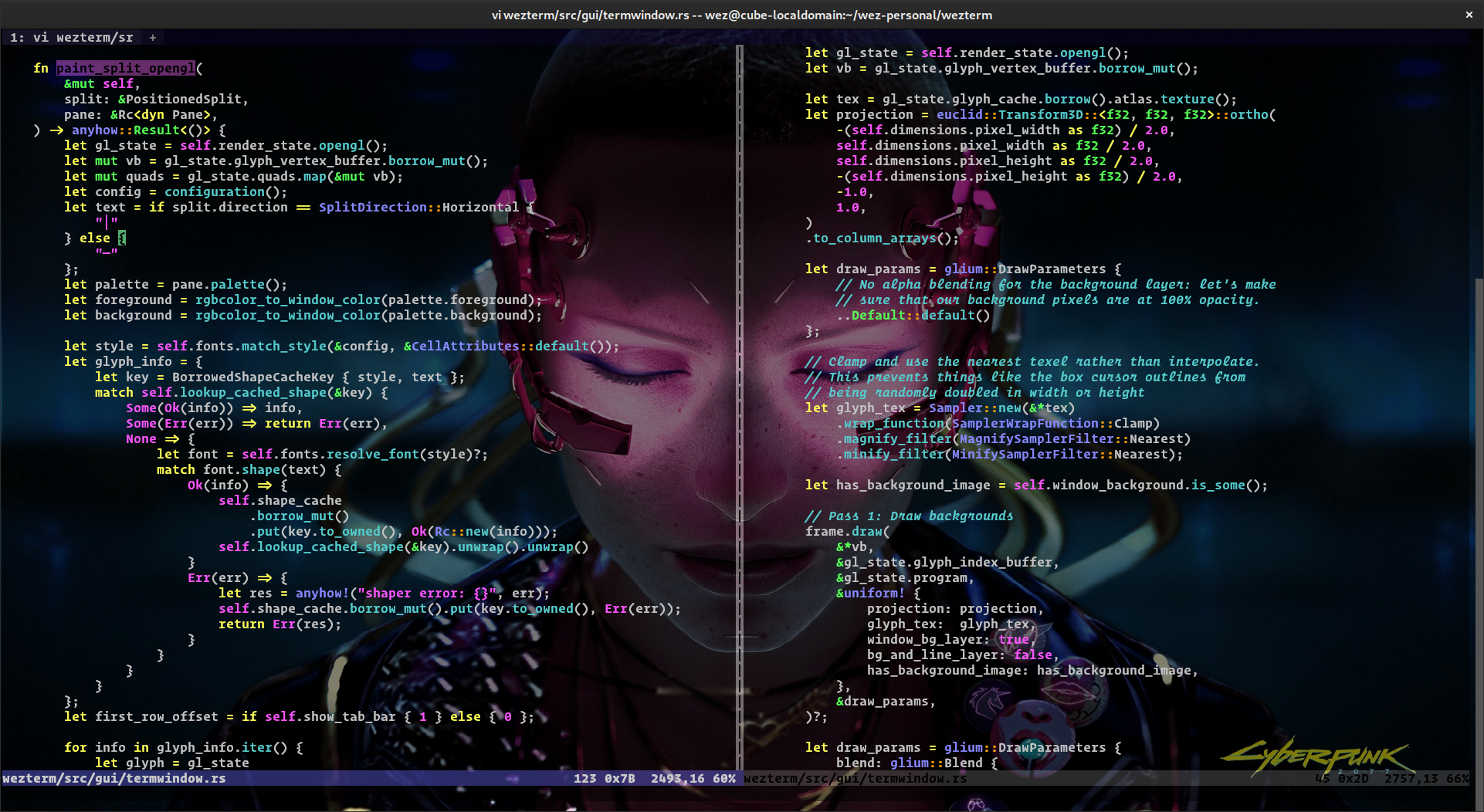
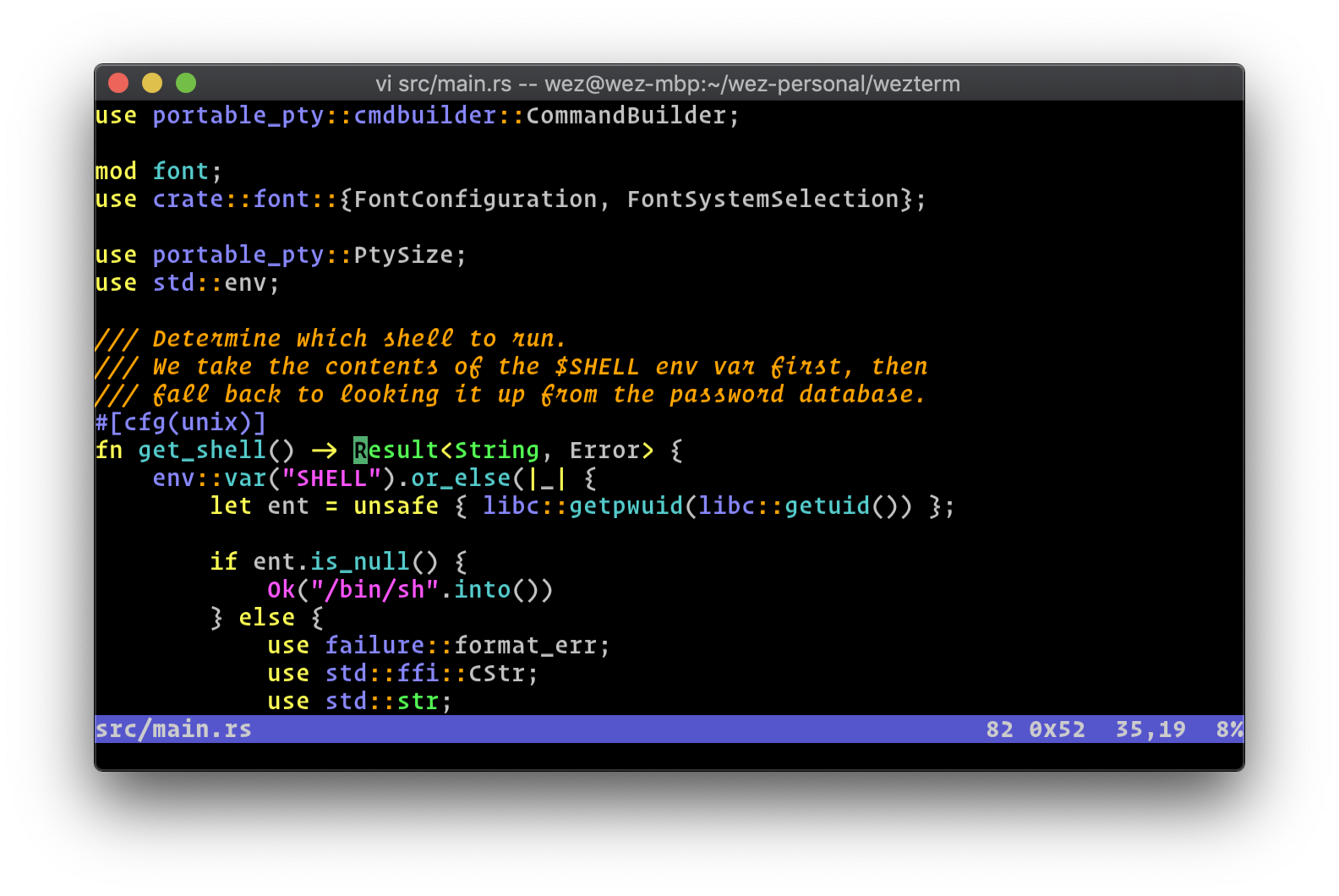
WezTerm is a free Rust-built terminal emulator that bundles GPU rendering, a tmux-style multiplexer and three image protocols on macOS, Linux and Windows. Powerful, scriptable in Lua, and slightly hungrier than Alacritty.
WezTerm is a free, GPU-accelerated terminal emulator and built-in multiplexer written in Rust by Wez Furlong. We rate it 78/100 — the most powerful and configurable cross-platform terminal you can run on macOS, Linux and Windows today, but a slow stable-release cadence and higher-than-rivals memory footprint keep it out of the very top tier in 2026.
WezTerm is a single Rust binary that combines a modern terminal emulator with a tmux-style multiplexer, so you get tabs, splits, panes, persistent sessions and remote workflows without bolting tmux on top. The project was started by veteran Wez Furlong in , is licensed Apache-2.0, and lives at wezterm/wezterm on GitHub where it has crossed 25,800 stars and is mirrored on every major package manager.
The specific problem WezTerm solves is the trade-off between “fast and minimal” (Alacritty) and “feature-rich” (iTerm2, Kitty). Most GPU terminals drop multiplexing and image protocols to stay lean; most heavy terminals are macOS-only or Linux-only. WezTerm is the only widely used terminal that does all of it — remote multiplexing, the Kitty graphics protocol, Sixel and the iTerm2 inline image protocol — while still rendering through wgpu / OpenGL on Windows, macOS and Linux from one codebase.
config table covering 600+ options — bindings, fonts, colour schemes, hyperlink rules and event hooks — with hot-reload on save.icat, matplotlib in TUI sessions, and ranger previews.ssh needed) and a serial-port mode for embedded work — rare in a 2026 terminal.
On Hacker News’ recurring “best Mac terminal” threads, the most-upvoted pro-WezTerm comments praise the Lua config (“the only terminal where my dotfile is actually shorter than my Neovim config”) and the remote multiplexer. The most-upvoted criticisms are equally consistent: WezTerm uses around 320 MB of resident memory in typical use versus ~50 MB for Alacritty, and several r/commandline threads in 2026 note typing latency that is noticeable next to Ghostty or Kitty on the same hardware.
The other recurring complaint — and the main reason we capped the rating at 78 — is the release cadence. The most recent stable tag at the time of writing is 20240203-110809 from ; the project has been on a near-continuous nightly-only diet since then, prompting discussion #2999 “What makes WezTerm bad?” where Wez himself describes WezTerm as a “spare time project.” In practice the nightly builds are stable, but the optics deter newcomers.
WezTerm is fully open source under the Apache-2.0 license and free to use for personal and commercial purposes. There is no hosted product, no paid tier and no telemetry. Pre-built binaries ship for macOS, Windows, Ubuntu, Fedora, Arch and FreeBSD; package managers include Homebrew, Scoop, Chocolatey, apt, pacman and Nix.
| Plan | Price | What you get |
|---|---|---|
| WezTerm | $0 forever | Full feature set, all platforms, source code, no account required |
Best for: Power users on mixed-OS workflows (a Mac laptop, a Linux workstation, a Windows gaming rig), engineers who SSH into many machines and want one config that travels with them, and anyone who genuinely uses tmux every day and would prefer the multiplexer to live inside the terminal.
Not ideal for: Users who want a polished, App-Store-style installer with a settings GUI — iTerm2 still wins on macOS for that. Also a tough sell for engineers on memory-constrained machines (8 GB or less) or those who type fast enough to feel the small input-latency gap to Ghostty or Kitty.
Pros:
Cons:
Alacritty wins on raw memory and latency but ships no multiplexer, no ligatures and no image protocols. Kitty matches WezTerm on image protocols and adds first-class sessions, but is Linux/macOS only. Ghostty (Mitchell Hashimoto’s 2025 entrant) is the closest cross-platform competitor and currently feels faster on M-series Macs, but lacks the Lua config surface area and the remote multiplexer. iTerm2 remains the easiest pick on macOS for users who want a GUI settings window.
If you live in a terminal across more than one operating system, WezTerm is still the clearest single answer in 2026 — nothing else combines GPU rendering, three image protocols, a real multiplexer and a Lua config the way it does. The slow stable cadence and the memory footprint are real, however, and they explain why we score it 78 rather than the 90s. For new users on a single Mac we’d still nudge you toward Ghostty or Kitty in 2026; for everyone else, WezTerm earns the disk space.
ServiceNow and Accenture Launch Forward Deployed Engineering Program to Scale Agentic AI in the Enterprise (May 6, 2026)
At Knowledge 2026, ServiceNow and Accenture announced a joint forward deployed engineering program that drops co-located engineer pods into customer environments to ship agentic AI workflows natively on the ServiceNow AI Platform — with access to 300+ pre-built agent skills and the AI Control Tower as the governance backbone.
May 7, 2026
ReFiBuy Raises $13.6M Seed to Help Brands Get Recommended by AI Shopping Agents (May 5, 2026)
ReFiBuy, the Raleigh-based agentic commerce platform from ChannelAdvisor founder Scot Wingo, closed an oversubscribed $13.6M seed led by NewRoad Capital Partners on May 5, 2026 — betting that the next billion-dollar e-commerce moat is being chosen by ChatGPT, Claude and Perplexity.
May 7, 2026
OpenAI Replaces ChatGPT's Default Model With GPT-5.5 Instant — 52.5% Fewer Hallucinations, 30% Shorter Answers (May 5, 2026)
OpenAI on May 5 swapped GPT-5.3 Instant for the new GPT-5.5 Instant as ChatGPT's default model, claiming 52.5% fewer hallucinated claims on high-stakes prompts and 30% more concise answers. The model also rolls into the API as chat-latest and adds personalization from Gmail and past chats for Plus and Pro web users.
May 7, 2026
Is this product worth it?
Built With
Compare with other tools
Open Comparison Tool →