Cursor 3.2 Released - Async Subagents, Worktrees, and Multi-Root Workspaces Land in the Agents Window (April 24, 2026)
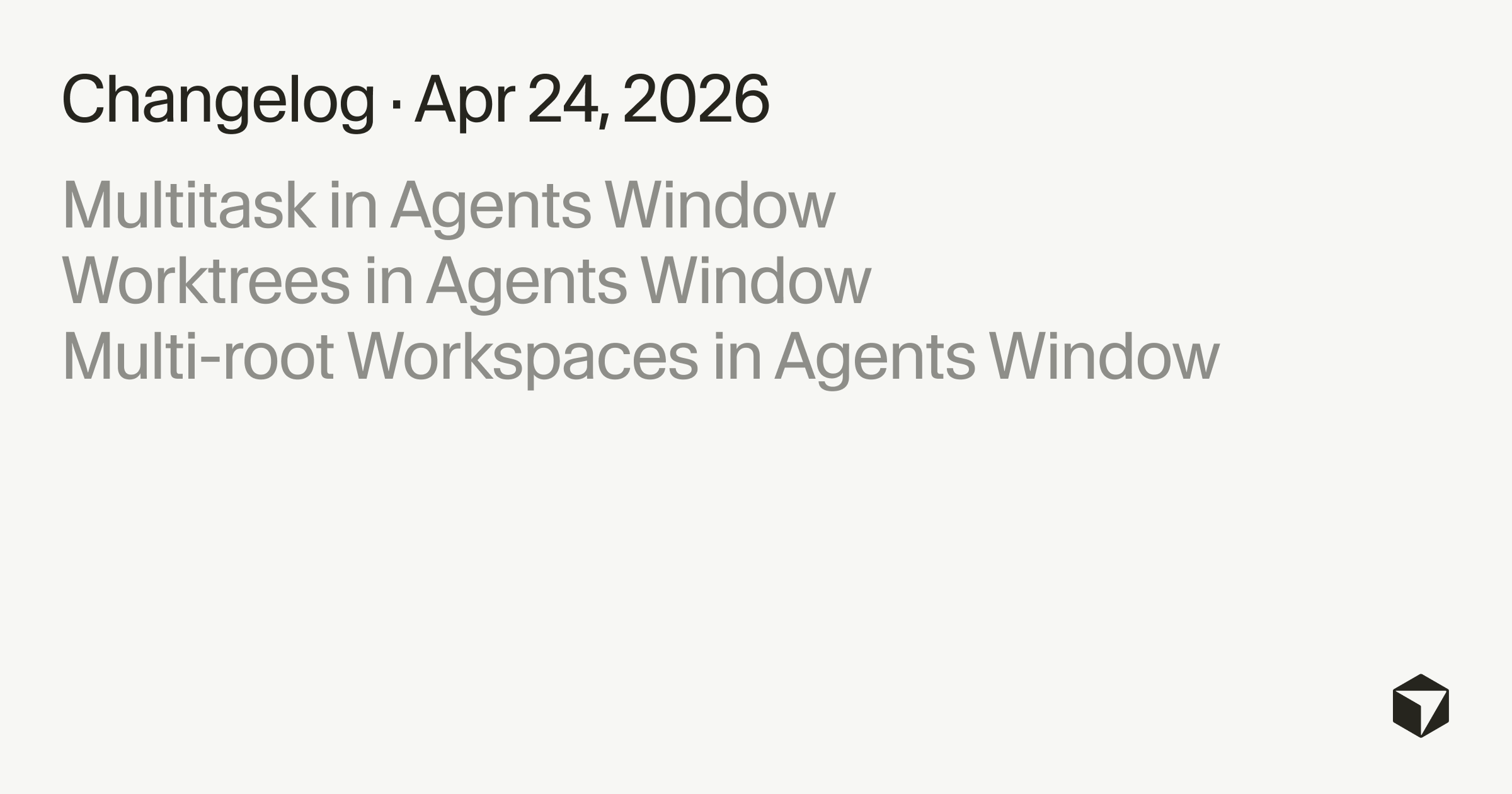
Anysphere released Cursor 3.2 on April 24, 2026, adding /multitask async subagents, isolated worktrees, and multi-root workspaces that let a single agent edit frontend, backend and shared-library repos in one session - the most aggressive parallel-coding push yet from any AI IDE.
Cursor on shipped Cursor 3.2, a release built around running multiple AI coding agents in parallel. The update adds an async /multitask command that spawns subagents on its own, a redesigned worktrees system that lets background agents work isolated branches, and multi-root workspaces that let one agent edit a frontend, backend, and shared library repo in a single session.
What Happened
Anysphere, the company behind Cursor, posted the changelog at cursor.com/changelog/04-24-26 on April 24, three weeks after the agent-first Cursor 3.0 rewrite that retired the old Composer pane in favor of a dedicated Agents Window. Cursor 3.2 layers three big changes on top of that base: /multitask, worktrees, and multi-root workspaces.
The official Cursor X account framed the launch this way: “Cursor can now run async subagents to parallelize your requests instead of adding them to the queue.” Lee Robinson, who works closely with the Vercel community, called it “way easier to run many agents at the same time… you can run agents across many repos (e.g. frontend and backend!).”
Key Details
- /multitask command — Typing
/multitaskin the Agents Window tells Cursor to break a request into chunks and dispatch them to parallel subagents instead of running them serially. Already-queued messages can be promoted into multitask mode mid-flight. - Improved worktrees — Background agents now run on isolated git worktrees, each on its own branch. A one-click button promotes a finished worktree into the foreground so the developer can review and test the diff locally.
- Multi-root workspaces — A single agent session can be pointed at a reusable workspace that bundles multiple folders (e.g., a frontend repo, a backend repo, and a shared package). Cursor can edit across all of them without being re-targeted between calls.
- Built on Cursor 3.0’s rewrite — Cursor 3.0 (released April 2, 2026) replaced Composer with the Agents Window and shipped Composer 2, Anysphere’s in-house frontier coding model that scored 61.3 on the company’s CursorBench and runs at 200+ tokens/sec on custom GPU kernels.
- Cost flag — A community thread on the Cursor forum, multitask mode is not routing through Anthropic API key, reports that
/multitaskis currently consuming Cursor plan credits even when a user has supplied their own Anthropic key — an open issue at time of writing.
What Developers Are Saying
Reaction on Hacker News and Reddit is sharply divided. The most-upvoted comments on the Cursor 3 thread argue Cursor is “abandoning the IDE-first identity” that made it popular, and a recurring complaint is cost: one HN user wrote they were spending “$2k a week with premium models” on Cursor before switching to Claude Code Max, where they reported being “equally as prolific and paying 1/10th the price.”
Among power users, the new multitask flow has fans. Robin Ebers wrote on Threads, “Cursor’s new Multitask mode is straight up crack — you can just keep talking and it will orchestrate multiple subagents, manage them, and wait for the background work to be done.” The flip side, in the same post: “never been easier to burn tokens.” Cursor’s own forum has multiple bug threads from the first 48 hours of the release, including the Anthropic-key routing issue above and several reports of subagents stepping on each other when worktrees are not cleanly isolated.
What This Means for Developers
If you’re a Cursor Pro or Pro+ user, Cursor 3.2 is a free auto-update — the multitask command, worktrees, and multi-root workspaces should appear in your Agents Window after restarting the editor. Two practical caveats:
- Watch your usage. Subagents run in parallel, which means a single
/multitaskcan spend several agent-runs worth of credits in a few minutes. Set a budget cap in Settings → Usage before you experiment. - Bring-your-own-key users should hold off on heavy
/multitaskusage until Anysphere fixes the Anthropic-key routing bug, since requests are currently going through the Cursor plan instead of the user’s API key.
For teams managing monorepos or microservice setups, multi-root workspaces are the bigger long-term shift: a single agent run can now reason across the frontend, backend, and shared-package boundary — the kind of cross-repo refactor that previously required either Claude Code with explicit file lists or a custom GitHub Actions workflow.
What’s Next
Anysphere is closing a reported $2B fundraise at a $50B valuation (per recent Doolpa coverage) and is also reportedly the target of a $60B option deal from SpaceX (our coverage here). Cursor’s public roadmap, posted in its forum, points at deeper background-agent integrations with GitHub and Linear next, and broader Composer 2 fine-tuning APIs after that. We expect a 3.3 release with the routing fix and additional multitask polish within the next two weeks.
Sources
- Cursor — Multitask, Worktrees, and Multi-root Workspaces (official changelog) — primary release notes from Anysphere, April 24, 2026.
- Cursor — full changelog — context for Cursor 3.0 and 3.2 release sequence.
- Hacker News — Cursor 3 discussion — developer reaction thread on the agent-first redesign.
- Cursor forum — /multitask in Agents Window — release discussion thread, including bug reports.
- Cursor forum — Anthropic API key routing bug — open issue affecting BYO-key users.
- InfoQ — Cursor 3 Introduces Agent-First Interface — independent coverage of the underlying 3.0 redesign.
Stay up to date with Doolpa
Subscribe to Newsletter →