Deezer: 44% of Daily Song Uploads Are Now AI-Generated, 75,000 Tracks a Day (April 2026)
Deezer now receives roughly 75,000 AI-generated tracks per day — 44% of all daily uploads — yet AI music accounts for just 1–3% of streams, with 85% flagged as fraudulent and demonetized.
French music-streaming service Deezer said on that 44% of every song uploaded to its platform each day is now fully AI-generated — roughly 75,000 tracks per day and more than 2 million per month. AI-music consumption, however, remains tiny: just 1–3% of total streams, of which 85% are flagged as fraudulent and demonetized.
What Happened
Deezer's disclosure, published in its April 20 press update and confirmed by CEO Alexis Lanternier, continues a sharp acceleration curve the company has tracked since launching its AI-detection tool in . Daily uploads of fully AI-generated tracks have moved from roughly 10,000 in January 2025, to 30,000 in September, 50,000 in November, 60,000 in January 2026, and now 75,000 as of this week — a 7.5× increase in 15 months.
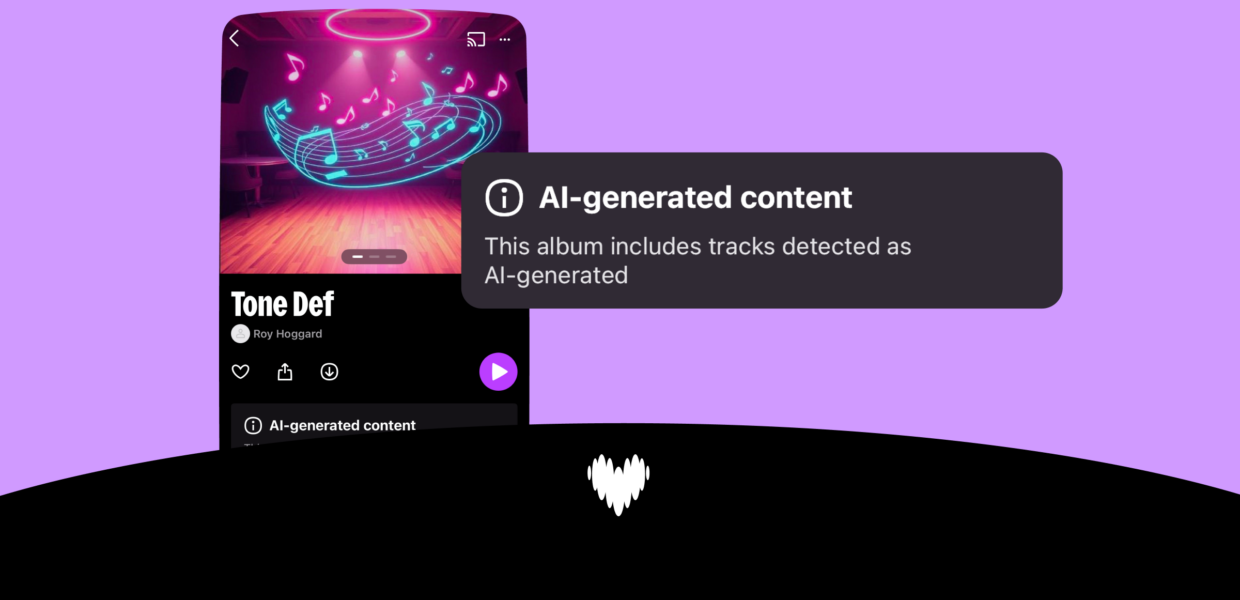
"AI-generated music is now far from a marginal phenomenon," Lanternier said in the statement, "and as daily deliveries keep increasing, we hope the whole music ecosystem will join us in taking action to help safeguard artists' rights and promote transparency for fans." Deezer tagged over 13.4 million AI tracks across 2025, and says it is the first streamer to publish per-upload numbers.
Key Details
- ~75,000 AI tracks uploaded per day — 44% of Deezer's total daily catalog intake and more than 2 million AI tracks monthly.
- Consumption stays at 1–3% of streams — the AI flood is an inventory problem, not yet a listening problem.
- 85% of AI-generated streams are flagged as fraudulent and are excluded from royalty payouts, which Deezer positions as a structural defense against streaming farms.
- AI-tagged tracks are pulled from algorithmic recommendations and editorial playlists, and Deezer said it will no longer store hi-res masters of AI tracks — a quiet cost-saving move given the upload volume.
- Detection tool now commercial: since January 2026, Deezer licenses its AI-music classifier to other streamers; Qobuz adopted its own tagging pipeline in , while Spotify and Apple Music continue with filtering-and-transparency approaches rather than published numbers.
What Developers and Users Are Saying
The Hacker News thread (item 47835928) split along predictable lines. One camp argues the 1–3% consumption figure is the real story — that generative music has cheap supply but no demand, which makes the whole debate economic, not aesthetic. Another camp points out that AI-track spam is effectively a denial-of-service attack on distributor infrastructure: every track has to be ingested, fingerprinted, classified, and stored, and Deezer's move to skip hi-res masters is tacit admission that the unit economics are breaking down.
Artist-side sentiment is harsher. A November 2025 Deezer survey found that 97% of listeners could not distinguish fully AI-generated tracks from human recordings, 52% opposed AI tracks appearing in main charts, and 80% wanted clear labeling — numbers musicians' rights groups have used in EU policy submissions this year.
What This Means for Developers
If you build in the audio-AI stack, two things just got harder: streaming distribution of anything auto-generated is effectively a dead monetization channel on Deezer, because the 85% fraud-demonetization rate applies whether the generator is Suno, Udio, or a homegrown pipeline. And if you build a music-tech product, you will almost certainly need an AI-origin classifier in your ingestion path within the next 12 months — Deezer's licensable detector is now the obvious off-the-shelf option. The broader lesson is one the image and text worlds already learned: platforms are building provenance and demonetization moats, and “build more slop” is not a go-to-market plan.
What's Next
Deezer said it will continue publishing monthly upload-volume data and expand the detection-as-a-service offering through 2026. Industry watchers expect similar disclosures from Spotify and Apple Music — both have been pressed by rights organizations for comparable figures. EU policy observers expect the numbers to feed into ongoing AI Act guidance on synthetic-content labeling, and US rights groups have flagged them in discussions over the still-stalled NO FAKES Act.
Sources
- TechCrunch — Deezer says 44% of songs uploaded to its platform daily are AI-generated — primary reporting by Aisha Malik.
- Music Business Worldwide — 75,000 AI tracks now flood Deezer daily — industry trade coverage with historical context.
- Billboard Pro — Deezer says 75,000 AI songs uploaded daily — additional streaming-market context.
- Deezer Newsroom — AI-generated music detection tool — primary source for Deezer's detection timeline.
- Hacker News discussion — developer and industry reaction thread.
- Music Ally — Deezer 85% AI-music streams fraudulent — background on Deezer's fraud-detection posture.
Stay up to date with Doolpa
Subscribe to Newsletter →