Google Cloud Next '26: Vertex AI Renamed Gemini Enterprise Agent Platform; TPU 8t and 8i Unveiled (April 29, 2026)
Google Cloud rebranded Vertex AI as the Gemini Enterprise Agent Platform and unveiled the eighth-generation TPU 8t (training) and TPU 8i (inference) at Google Cloud Next '26 on April 29 — a unified stack designed to make Google the operating system of the agentic enterprise.
Google Cloud on used the Cloud Next '26 keynote to rebrand Vertex AI as the Gemini Enterprise Agent Platform and unveil two specialized eighth-generation TPUs — the TPU 8t for training and TPU 8i for inference — alongside a new Agentic Data Cloud and a $750 million partner-fund commitment. CEO Thomas Kurian framed the launches as a single end-to-end stack designed to make Google the “operating system of the agentic enterprise.”
What Happened
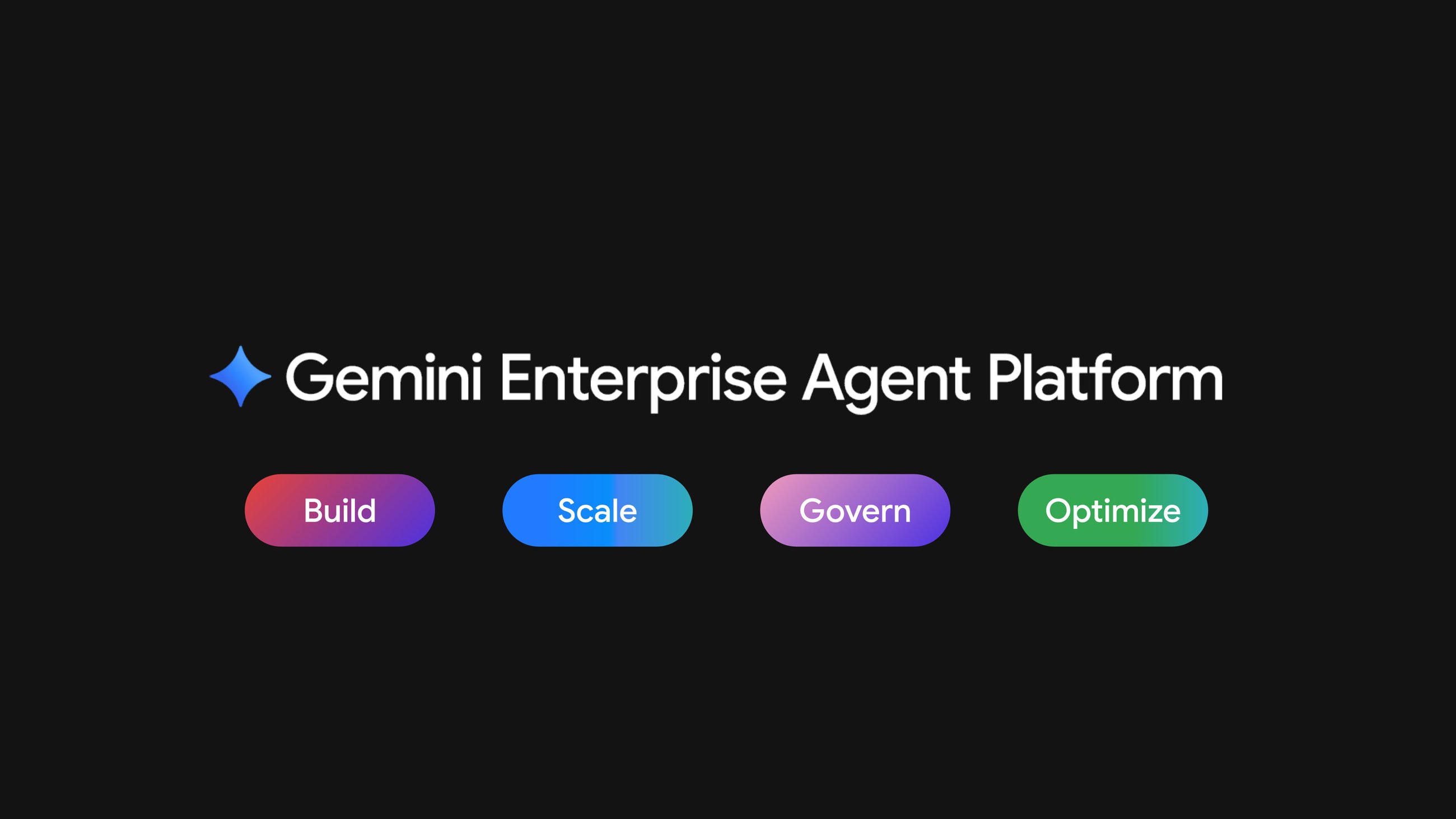
At Cloud Next '26 (April 22–24 main conference, with executive keynote rounds running through April 29), Google announced the deepest reorganization of its enterprise AI products since Vertex AI launched in 2021. Vertex AI is now the Gemini Enterprise Agent Platform: every future Vertex roadmap item ships under the new brand, with new modules including Agent Designer (formerly Vertex AI Agent Builder), an Agent Inbox for managing long-running agent activity, an Agent Registry, an Agent Gateway, Agent Identity, and Agent Observability. The platform offers first-class access to 200+ models via Model Garden — including Google’s own Gemini 3.1 Pro, Gemini 3.1 Flash Image, Lyria 3 and Gemma 4, plus third-party models such as Anthropic’s Claude.
On silicon, Google split its TPU line in two for the first time. The TPU 8t targets large-scale training and is sold in superpods of 9,600 chips delivering 121 exaflops of compute and 2 PB of shared memory; Google quotes 2.7× performance-per-dollar over the previous-generation Ironwood TPU. The TPU 8i targets low-latency inference for Mixture-of-Experts agents: 384 MB on-chip SRAM (3× the prior gen), 288 GB HBM, 19.2 Tb/s ICI bandwidth (2×), a dedicated Collectives Acceleration Engine that cuts on-chip latency by up to 5×, and an 80% performance-per-dollar improvement over Ironwood. Both chips deliver up to 2× better performance-per-watt.
Key Details
- 200+ models in Model Garden — Gemini 3.1 Pro, Gemini 3.1 Flash Image, Lyria 3, Gemma 4, plus Anthropic Claude and Meta Llama variants accessible from a single API.
- Agentic Data Cloud — a cross-cloud Lakehouse and Knowledge Catalog so agents can query enterprise data across BigQuery, AWS S3 and Azure ADLS without moving the data.
- Agent2Agent (A2A) protocol — an open standard for agent-to-agent orchestration, contributed to the Linux Foundation, with 50+ launch partners including Salesforce, ServiceNow and SAP.
- $750 million partner fund — allocated to its 120,000-member partner ecosystem to accelerate agentic-AI adoption.
- TPU 8t superpod — 9,600 chips, 121 exaflops, 2 PB shared memory; 2.7× perf/$ over Ironwood for training.
- TPU 8i — 288 GB HBM, 384 MB SRAM, 19.2 Tb/s ICI, 80% perf/$ over Ironwood for inference.
- Workspace Intelligence — agentic features baked into Gmail, Docs, Sheets and Meet that can act on enterprise data via the Agent Platform.
What Developers and Users Are Saying
The analyst reaction has been notably bullish. Stacy Rasgon (Bernstein) raised Broadcom’s fiscal-2027 EPS estimate by 14% — the largest single upward revision since Broadcom acquired VMware — citing Broadcom’s role as Google’s TPU co-designer. Harlan Sur (J.P. Morgan) added Broadcom to his Analyst Focus List with a $2,100 price target. SiliconANGLE called the conference theme “the control plane war,” arguing Google is no longer just selling AI features but trying to own the runtime for agentic enterprises — a direct contest with OpenAI’s Codex/Managed-Agents push and Anthropic’s Claude Agent ecosystem.
On developer forums, the reception has been more mixed. The Vertex AI rebrand drew the loudest groans — engineers complain about churn (Vertex AI itself replaced AI Platform only five years ago) and the cost of updating internal docs and SDKs. The TPU 8t/8i bifurcation, by contrast, was widely welcomed as overdue: separate-die architectures for training and inference are something AWS Trainium/Inferentia and Microsoft’s Maia silicon already do, and the perf-per-watt gains close a real gap with NVIDIA’s Blackwell-Ultra GB200 and B300 systems.
What This Means for Developers
If you build on Vertex AI today, plan for a migration window: Google says existing Vertex APIs continue to work, but new features will only ship under the Gemini Enterprise Agent Platform brand and namespace. The Agent2Agent protocol is the most consequential developer-facing change — it gives agents a vendor-neutral wire protocol for tool-calling and delegation, similar to what MCP did for tool calling. Teams running large MoE workloads should benchmark TPU 8i against H200 / B200 / Trainium2 inference; the 384 MB SRAM and CAE engine specifically target the latency profile of routing-heavy agents and could change cost models for hosted-agent products. For training-only workloads, the 2.7× perf/$ headline on TPU 8t is the largest single-generation jump Google has ever quoted — worth a fresh proof-of-concept even for teams currently committed to GPU clouds.
What's Next
Google says TPU 8i begins general availability in the third quarter of 2026, with TPU 8t superpods rolling out to select customers in Q4 2026. The Gemini Enterprise Agent Platform is GA today (April 29, 2026) for existing Vertex AI customers, with phased migrations into 2027. The Agent2Agent protocol working group at the Linux Foundation publishes its first reference implementation in May 2026, and the Agentic Data Cloud goes GA in Q3 2026.
Sources
- Google Cloud Blog: Introducing Gemini Enterprise Agent Platform — primary source from Google’s product team.
- Google Blog: Our eighth generation TPUs — two chips for the agentic era — official TPU 8t / 8i announcement.
- Sundar Pichai on Google Cloud Next 2026 — CEO recap and strategic framing.
- TNW: Workspace Studio, A2A protocol, and the full-stack bet against OpenAI and Anthropic — independent analysis of competitive positioning.
- Futurum Group: From Silicon to Security at Cloud Next 2026 — analyst view including Bernstein and J.P. Morgan reactions.
- HyperFRAME Research: TPU 8t and 8i bifurcate AI silicon — hardware deep-dive.
Stay up to date with Doolpa
Subscribe to Newsletter →