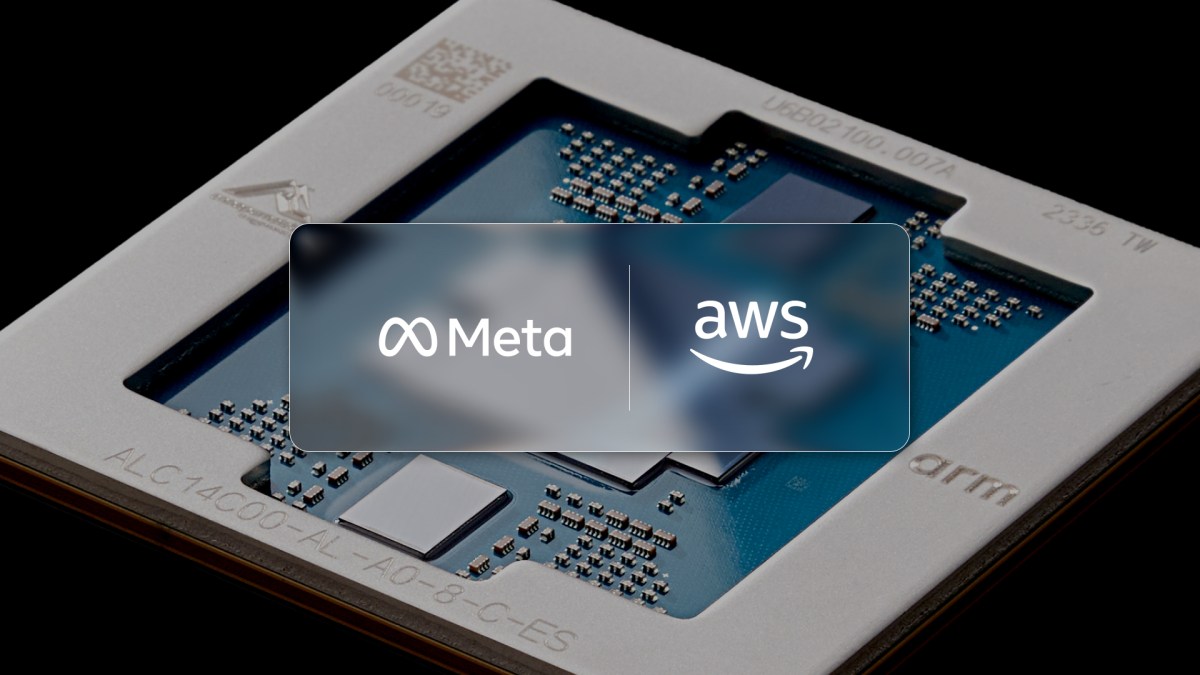
Meta Signs Multibillion-Dollar AWS Graviton Deal — Tens of Millions of Cores for Agentic AI (April 2026)
Meta and AWS announced on April 24, 2026 a multi-year agreement deploying tens of millions of AWS Graviton5 cores for Meta's agentic AI workloads — a CPU-side bet that lands as Meta diversifies beyond its $135B AI capex and $10B Google Cloud deal.
Meta and Amazon Web Services on announced a multi-year, multibillion-dollar agreement that will deploy tens of millions of AWS Graviton5 cores — equivalent to hundreds of thousands of physical chips — into Meta's compute fleet for agentic AI workloads. The deal, announced jointly by AWS and Meta and first reported by TechCrunch, makes Meta one of the largest Graviton customers in the world and sends Amazon stock higher on a quiet Friday.
What Happened
In a coordinated press release published the same morning, AWS said the deployment "starts with tens of millions of Graviton cores, with the potential to expand," and that the chips will run "various workloads at Meta, including supporting the company's AI efforts." Meta's head of infrastructure Santosh Janardhan framed the deal as portfolio diversification: "As we scale the infrastructure behind Meta's AI ambitions, diversifying our compute sources is a strategic imperative. AWS has been a trusted cloud partner for years, and expanding to Graviton allows us to run the CPU-intensive workloads behind agentic AI with the performance and efficiency we need at our scale."
AWS VP and Distinguished Engineer Nafea Bshara framed it as a vindication of Amazon's in-house silicon: "Meta's expanded partnership, deploying tens of millions of Graviton cores, shows what happens when you combine purpose-built silicon with the full AWS AI stack to power the next generation of agentic AI." The announcement landed the same week Google Cloud Next wrapped — TechCrunch's Julie Bort noted AWS appeared to time it as "a virtual smirk" at its cloud rival.
Key Details
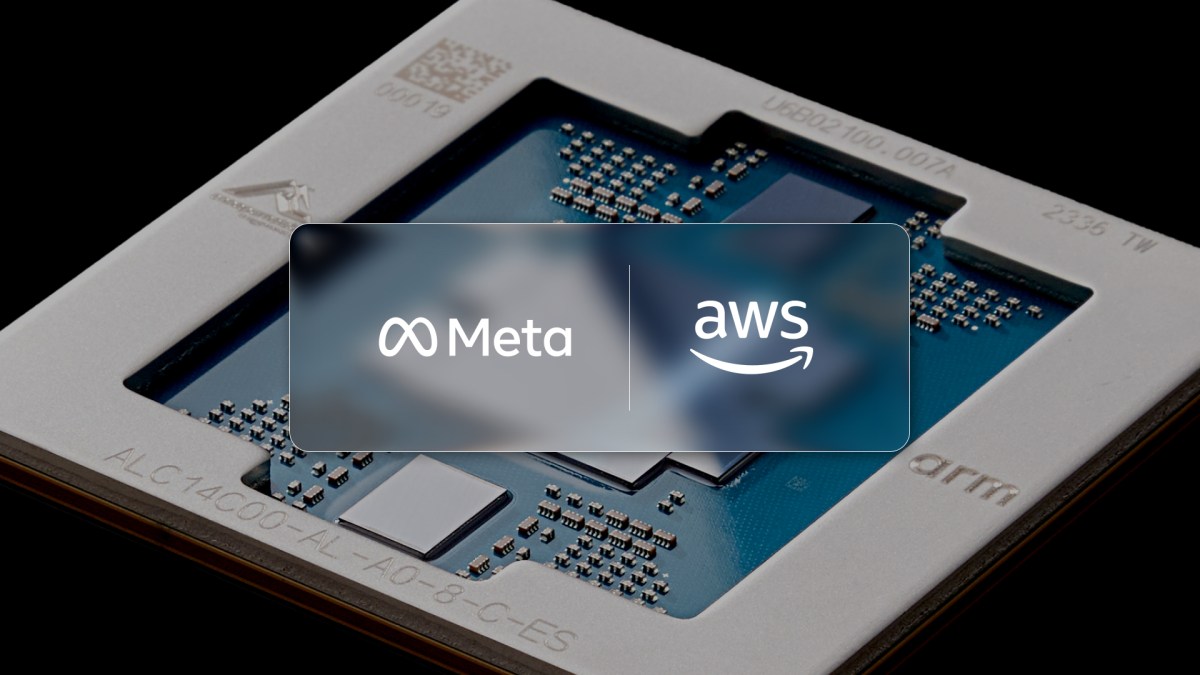
- Chip: AWS Graviton5 — a 3-nanometer ARM CPU with 192 cores per chip, a cache 5× larger than Graviton4, up to 33% lower core-to-core latency and roughly 25% better performance per core than the previous generation, per AWS.
- Scale: "Tens of millions" of cores at first, with room to expand. CNBC reports the deal covers "hundreds of thousands" of physical chips and runs at least three years.
- Workload focus: CPU-intensive agentic AI — real-time reasoning, code generation, search, and the orchestration of multi-step agent tasks. GPUs remain the choice for training; this is about inference and agent runtime.
- Existing context: Meta signed a $10B six-year Google Cloud deal in August 2025 and committed roughly $135B in AI capex for 2026 through Superintelligence Labs; AWS becomes a third major cloud bet alongside its own data centers and custom silicon.
- Networking: Graviton5 instances support Elastic Fabric Adapter (EFA) for low-latency, high-bandwidth communication — required for the multi-process agent workloads Meta is targeting.
What Developers and Users Are Saying
Reaction across ServeTheHome, Constellation Research and the developer commentariat focused on three threads. First, the deal validates the long-running thesis that ARM CPUs — long associated with mobile and edge — have crossed the price-performance threshold for hyperscale workloads. Second, it signals how much of agentic AI runs on CPUs, not GPUs: the orchestration layer (tool-calling, planning, retrieval, prompt routing) is largely CPU-bound, and as agent volume scales it adds up faster than training. Third, observers noted Meta is now hedging across at least four substrates — its own custom MTIA silicon, Nvidia GPUs, Google Cloud, and now AWS Graviton — a diversification that contrasts with its earlier near-monoculture on Nvidia. AWS's Andy Jassy has been increasingly vocal about price-performance: in his April 2026 shareholder letter he took aim at both Nvidia and Intel, saying enterprises want better cost ratios for AI and that AWS would win on that basis.
What This Means for Developers
For most developers nothing changes today, but two structural shifts matter. First, ARM-on-server is no longer optional — if Meta is moving agentic AI to Graviton5 alongside Nvidia's new ARM-based Vera CPU, expect more ARM-first SDKs, container builds, and CI matrices in 2026. Multi-arch Docker images (linux/amd64 and linux/arm64) become table stakes. Second, the line between "training" and "inference" is blurring into a third tier: agent runtime. Frameworks like LangChain, AutoGen and the new MCP-based agent stacks now compete on CPU efficiency per dollar. Cheaper, denser CPU instances on Graviton5 (or competitors like Ampere One and Nvidia Vera) are likely to push agent-runtime pricing down through 2026.
What's Next
AWS has not disclosed a precise dollar figure or core count, but multiple outlets — including GeekWire, The Next Web and Axios — describe the deal as multibillion-dollar and multi-year. Watch for: (1) updated guidance in Meta's Q2 2026 earnings on how AWS Graviton spend slots into the $135B capex envelope, (2) AWS expanding Graviton5 instance availability across regions through summer 2026, and (3) whether competing hyperscalers — particularly Microsoft Azure, which has its own Cobalt 100 ARM CPU — counter with similarly large agentic-AI deployment deals.
Sources
- Meta Newsroom — Meta Partners With AWS on Graviton Chips to Power Agentic AI — primary announcement and quotes from Santosh Janardhan.
- AWS / About Amazon — Meta signs agreement with AWS to power agentic AI on Amazon's Graviton chips — primary announcement, Graviton5 specifications, quotes from Nafea Bshara.
- TechCrunch — In another wild turn for AI chips, Meta signs deal for millions of Amazon AI CPUs — competitive context, Anthropic comparison, Andy Jassy comments.
- CNBC — Meta will adopt hundreds of thousands of AWS Graviton chips — duration and scale numbers.
- GeekWire — Meta signs multibillion-dollar deal to use Amazon's Graviton chips for agentic AI — financial framing.
- ServeTheHome — Meta Buys Tens of Millions of AWS Graviton Arm Cores — technical analysis and ARM-on-server context.
Stay up to date with Doolpa
Subscribe to Newsletter →