NASA's Artemis III Core Stage Arrives at Kennedy — 900-Mile Pegasus Voyage Sets Up 2027 Lunar Rendezvous (April 2026)
NASA's Artemis III SLS core stage arrived at Kennedy Space Center on April 27, 2026 after a 900-mile Pegasus barge journey from Michoud. Integration in High Bay 2 begins immediately ahead of a 2027 launch.
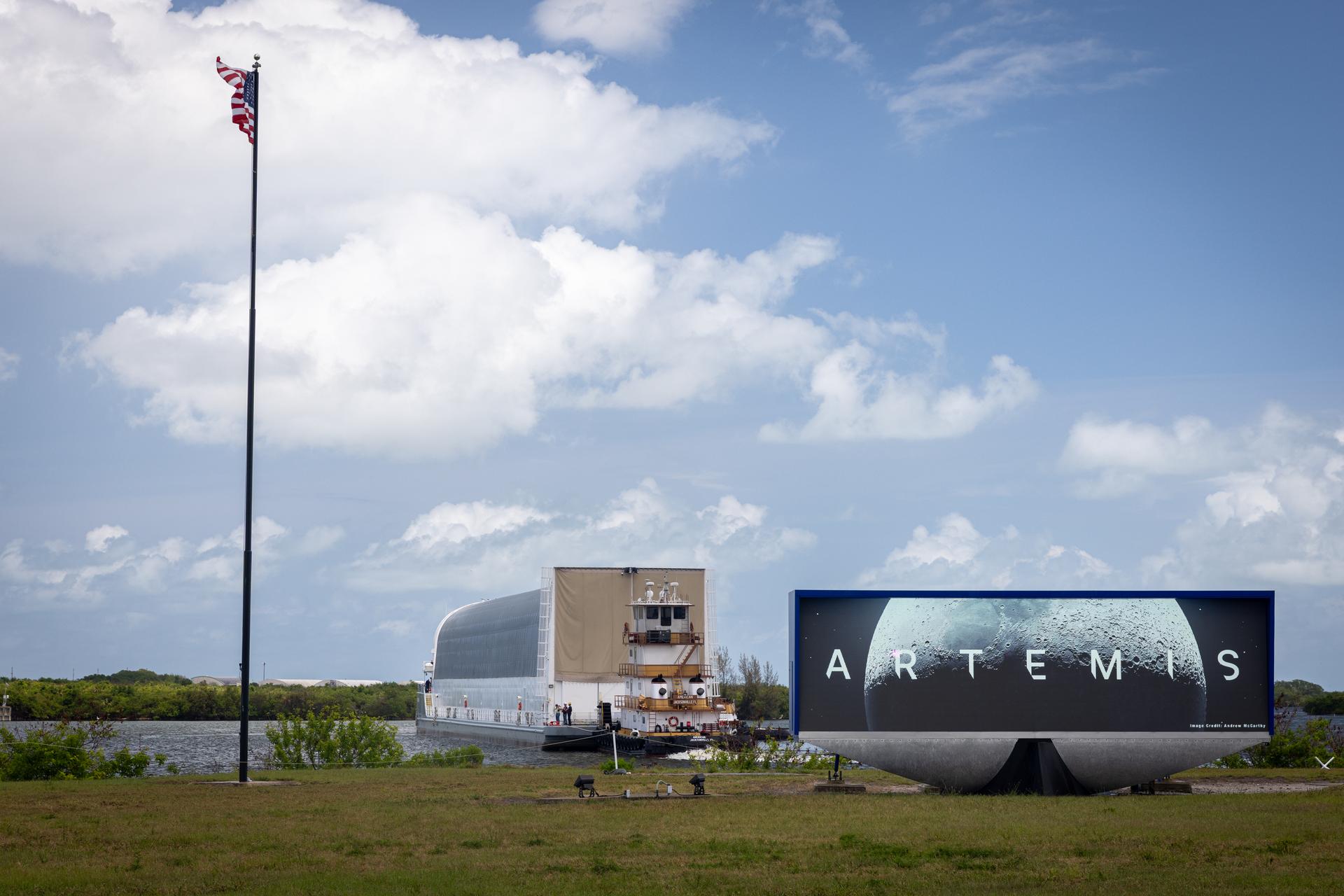
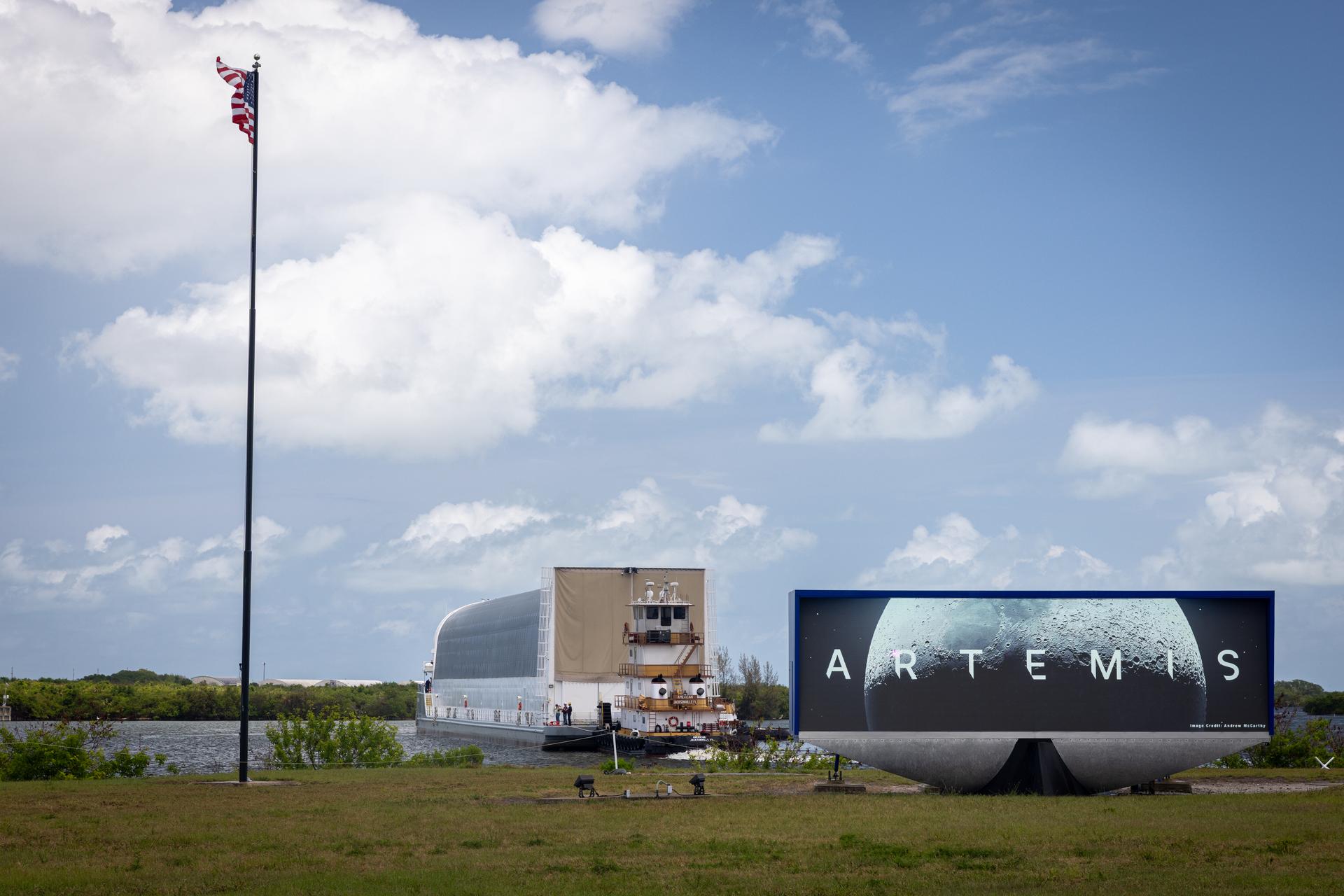
NASA on took delivery of the largest section of the Artemis III rocket at Kennedy Space Center, after a 900-mile sea voyage on the Pegasus barge from the Michoud Assembly Facility in New Orleans. The arrival kicks off final integration of the SLS (Space Launch System) core stage that will fly Artemis III in 2027 — a mission whose objectives were quietly downgraded earlier this year from a Moon landing to a low-Earth-orbit rendezvous and docking test with commercial lunar landers.
What Happened
The Pegasus barge docked at Kennedy Space Center’s Complex 39 turn basin wharf on Monday, , carrying the top four-fifths of the 212-foot Artemis III SLS core stage. The section that arrived contains the rocket’s liquid hydrogen tank, liquid oxygen tank, intertank and forward skirt — everything except the boat-tail and engine section, which were previously delivered to Kennedy.
NASA said teams would transport the core stage to the agency’s Vehicle Assembly Building (VAB) on Tuesday, , where it joins the previously delivered hardware in High Bay 2 for outfitting and vertical integration. The full core stage will then be mated with the four RS-25 engines, the upper stage and the Orion spacecraft over the coming months.
The hardware left Michoud’s vehicle assembly building on , and the Pegasus — a 310-foot ocean-going barge purpose-built to ferry SLS hardware — carried it on a ~900-mile journey through the Gulf of Mexico and around Florida to Kennedy.
Key Details
- 900-mile sea journey — from NASA’s Michoud Assembly Facility in New Orleans (where the SLS core stage is built by Boeing) to Kennedy Space Center, on the purpose-built Pegasus barge.
- 212 feet tall when complete — the section that arrived is roughly 80% of the final stage, missing only the engine section and boat-tail (already at Kennedy).
- High Bay 2 of the Vehicle Assembly Building is now the integration site — outfitting and vertical stacking begin immediately.
- Mission downgraded in February 2026: Artemis III no longer attempts a crewed Moon landing. Instead, NASA expedited the mission to 2027 and re-scoped it as a rendezvous and docking demonstration in low Earth orbit with one or both commercial Human Landing System (HLS) vehicles — SpaceX’s Starship HLS and Blue Origin’s Blue Moon.
- AxEMU spacesuit test: Artemis III will also flight-qualify the Axiom-built Extravehicular Mobility Unit, the new lunar surface suit slated for Artemis IV in 2028.
- Crew not yet announced: NASA has confirmed the Artemis III crew will be named after analysis of the Artemis II mission, which flew in April 2026.
What Developers and Users Are Saying
Space-program watchers on r/SpaceLaunchSystem and r/space welcomed the milestone but flagged the same concerns that have shadowed the program for a year: the cost-per-flight of SLS (estimated above $2 billion) compared with reusable commercial alternatives, and the awkward mission profile change that has Artemis III docking with Starship HLS in Earth orbit rather than landing on the Moon. Commenters on Hacker News and NASASpaceflight.com forums highlighted the engineering achievement — this is the largest cryogenic rocket stage anyone is currently flying — while questioning whether the rendezvous-only profile justifies the price tag.
Industry analysts noted a positive signal: hardware delivery is on schedule for the first time in several years of Artemis program slippage, and the parallel progress on the mobile launcher and Orion crew capsule keeps a 2027 launch date credible.
What This Means for Space Watchers and Industry
For commercial-space companies, the move toward a rendezvous-and-docking Artemis III turns the mission into a public certification flight for the HLS architecture. SpaceX’s Starship HLS and Blue Origin’s Blue Moon now both have a defined NASA-funded flight test on the path to Artemis IV in 2028. For the SLS supply chain — Boeing, Aerojet Rocketdyne (now L3Harris), Northrop Grumman and the regional contractors at Michoud and Stennis — the on-time core-stage delivery preserves continued NASA funding through the Artemis IV core stage build.
For developers and engineers tracking aerospace tooling, every Artemis core stage is also a moving stress-test of NASA’s digital twin, modelled in Siemens NX and integrated with the agency’s mission-systems data platform — a reference workload for industrial-scale CAD/PLM environments.
What’s Next
The immediate timeline at Kennedy is integration: vertical stacking of the core stage in High Bay 2, mating with the Interim Cryogenic Propulsion Stage (ICPS) and the Orion spacecraft, followed by a wet dress rehearsal at Launch Complex 39B. NASA has not yet published a target launch date inside its “mid-2027” window, but officials have said the first integrated test will follow once parallel work on the mobile launcher and HLS qualification flights converges.
Sources
- NASA Blog — Artemis Core Stage Arrives at Kennedy — primary NASA announcement and photo source.
- NASA News Release — Artemis III Moon Rocket Core Stage Rollout — April 20 rollout from Michoud.
- Space.com — independent context on 2027 launch target and core-stage dimensions.
- Wikipedia — Artemis III — February 2026 mission re-scope, HLS architecture and crew status.
- SpaceQ — Artemis III Core and Mobile Launcher Progress — integration and timeline analysis.
- SpacePolicyOnline — Starship HLS Delay Estimates — HLS qualification context.
Stay up to date with Doolpa
Subscribe to Newsletter →