QuantWare Raises $178M Series B Led by Intel Capital, Unveils 10,000-Qubit VIO-40K Architecture (May 5, 2026)
Delft-based QuantWare announced a $178M Series B on May 5, 2026 — the largest private round ever raised by a dedicated quantum processor company — alongside VIO-40K, a modular architecture designed to scale superconducting QPUs to 10,000 qubits, 100x today's commercial state of the art.
Dutch quantum chipmaker QuantWare on announced a $178 million (€152 million) Series B equity round — the largest private financing ever raised by a dedicated quantum processor company — and at the same time unveiled VIO-40K™, a modular superconducting architecture the company says is engineered to support up to 10,000 qubits, roughly 100× the commercial state of the art today.
What Happened
The round was led by Intel Capital, with new investors IQT and ETF Partners joining alongside existing backers FORWARD.one, Invest-NL Deep Tech Fund, InnovationQuarter Capital, Ground State Ventures and Graduate Ventures. QuantWare confirmed the round was "heavily oversubscribed." Proceeds will fund KiloFab, a dedicated quantum processor fabrication facility in Delft that the company says will be the world's first dedicated fab for Quantum Open Architecture (QOA) devices and will increase QuantWare's production capacity by 20×.
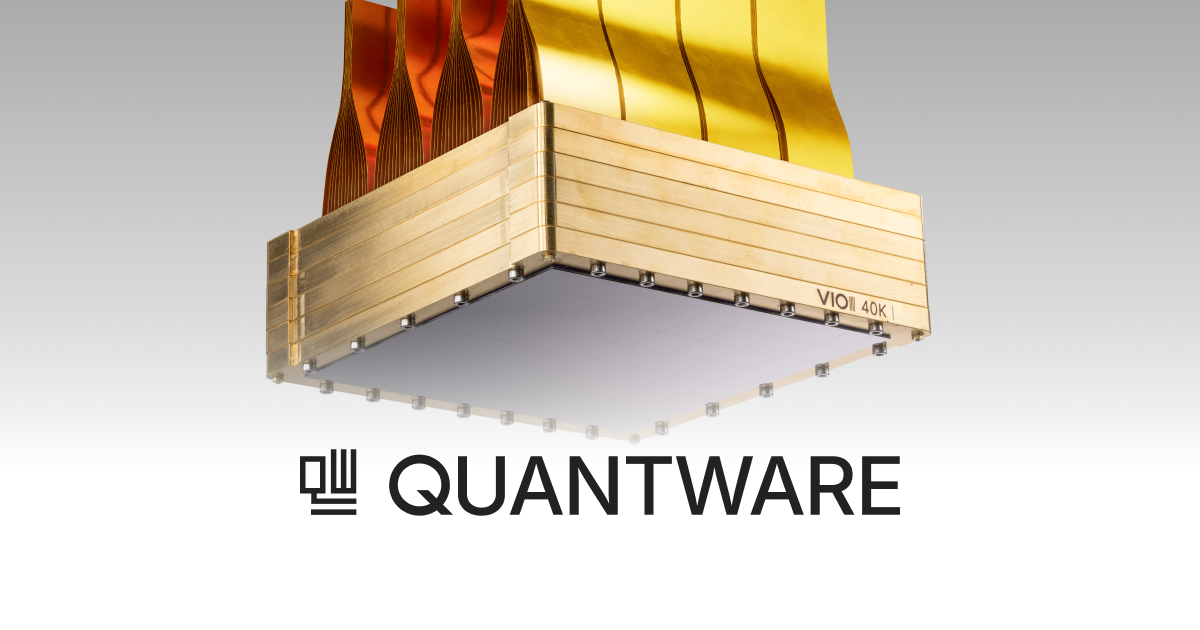
Alongside the funding, QuantWare published technical details for VIO-40K. Where today's superconducting QPUs cap out around 100 qubits because monolithic chips lose yield as they grow, VIO-40K is built around modular “chiplet” packaging and 3D integration of qubit-control wiring — the same VIO (Vertical I/O) approach QuantWare has been shipping commercially since 2023, scaled up. Reservations for VIO-40K are open today via direct request, with first customer deliveries scheduled for 2028.

Key Details
- $178M Series B — the largest private round for any dedicated quantum-processor company to date, per QuantWare and EU-Startups.
- Lead investor: Intel Capital, marking a major strategic move into superconducting quantum hardware.
- VIO-40K target: 10,000 qubits per system — 100× the ~100-qubit ceiling that has stalled the industry.
- KiloFab capacity: 20× QuantWare's current output, opening in Delft in 2026; production at scale targeted for 2028 deliveries.
- Customer footprint: QuantWare says it has shipped to more than 50 customers across 20 countries, making it the world's largest commercial QPU supplier by volume.
What the Industry Is Saying
QuantWare CEO Matt Rijlaarsdam framed the announcement as an end to a decade-long stall: “For years, people have heard about quantum computing's potential to transform fields from chemistry to materials to energy, but the industry has been stuck at 100-qubit QPUs forcing the field to theorize about interesting but far-off technologies.” The pitch echoed across coverage from SiliconANGLE, which described QuantWare as positioning itself as “the TSMC of quantum computing,” and from The Quantum Insider, which noted that the open-architecture model — QuantWare designs and fabs the QPU but lets customers build their own control stack on top — is the inverse of IBM and Google's vertically integrated approach.
On Hacker News and quantum-computing subreddits, the reaction is more cautious than celebratory. The first-deliveries-in-2028 timeline drew the most scrutiny, along with the standard caveat that raw qubit count without quantified logical-qubit performance is a marketing number. Several commenters contrasted the announcement with PsiQuantum's photonic roadmap and IBM's 2,000-qubit Condor-class systems, asking whether VIO-40K's connectivity and error-correction story can match what monolithic platforms have already published.
What This Means for Developers and the Quantum Ecosystem
For the broader quantum software stack — Qiskit, Cirq, PennyLane, the OpenQASM ecosystem — an open-architecture QPU vendor at industrial scale is structurally good news: control-electronics, calibration and compiler vendors get a hardware target that does not lock them into one cloud. For enterprise teams already piloting quantum chemistry or optimisation workloads on cloud QPUs, the practical message is that 2026–2027 hardware is unlikely to leap dramatically; the 10,000-qubit horizon is real but firmly a 2028+ buying decision. For European tech sovereignty advocates, the round is a marquee data point: $178M into a Delft fab, led by an American investor but anchoring production capacity in the EU.
What's Next
QuantWare says KiloFab construction is already underway in Delft, with the facility scheduled to come online during 2026. VIO-40K reservations are open via direct request, with deliveries to first customers planned for 2028. Intel Capital's involvement will be worth watching: it is Intel's most pointed move yet into superconducting quantum hardware after years of focusing on its own silicon-spin-qubit research.
Sources
- QuantWare press release (primary source) — official announcement of the $178M Series B and VIO-40K architecture.
- The Quantum Insider — deep-dive on the open-architecture model and KiloFab plans.
- SiliconANGLE — framing of QuantWare as the “TSMC of quantum computing.”
- EU-Startups — record-setting context within European deep tech funding.
- Intel Capital — lead investor's announcement post.
- Quantum Computing Report — technical breakdown of VIO and connectivity.
Stay up to date with Doolpa
Subscribe to Newsletter →