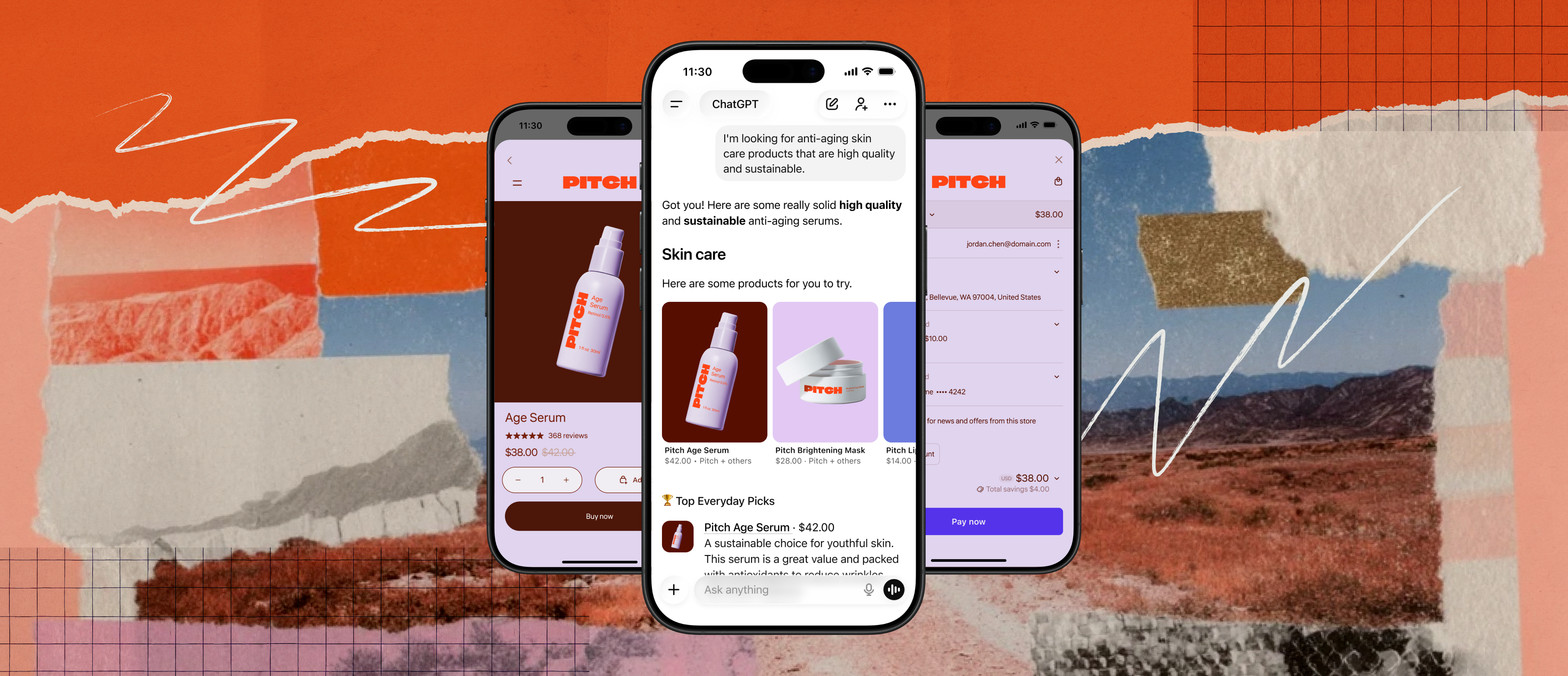
Shopify Agentic Storefronts Go Live: Millions of Merchants Now Selling Inside ChatGPT, Copilot, and Gemini (March 2026)
Shopify activated Agentic Storefronts by default for all eligible US merchants on March 24, 2026, enabling products from millions of stores to be discovered and purchased directly inside ChatGPT, Microsoft Copilot, Google AI Mode, and Gemini — with no merchant setup required and AI-driven orders already up 11x year-over-year.
On , Shopify activated Agentic Storefronts by default for all eligible US merchants — making products from millions of stores instantly discoverable and purchasable inside ChatGPT, Microsoft Copilot, Google's AI Mode, and the Gemini app without any merchant action required. AI-driven traffic to Shopify stores has already increased 7x and AI-attributed orders are up 11x since January 2025, and this move dramatically accelerates both trends.
What Happened
Shopify's Agentic Storefronts — first previewed in the Winter '26 Edition in — went live for millions of merchants on . The rollout was default-enabled: merchants didn't need to set anything up, install an app, or configure a feed. Products were simply available in AI conversations immediately.
The underlying infrastructure is the Universal Commerce Protocol (UCP), an open standard co-developed by Shopify and Google that defines how AI agents discover, query, and transact with merchants at scale. Walmart, Target, and Etsy joined as retail signatories, while American Express, Mastercard, Visa, and Stripe joined on the payments side — suggesting Shopify is positioning UCP as a cross-industry open standard rather than a proprietary moat.
Shopify VP Product Mani Fazeli said in the announcement: "Agentic commerce isn't something we're reacting to; it's a vision we're bringing to life at the very frontier of commerce and AI." OpenAI's Neel Ajjarapu added: "Shopping in ChatGPT begins with discovery — helping people explore options, compare products, and find what truly fits their needs."

Key Details
- Default-enabled on March 24, 2026 — all eligible US Shopify merchants were enrolled automatically with no setup required
- AI platforms supported: ChatGPT, Microsoft Copilot, Google Search AI Mode, Gemini app; Meta experiences with Shop Pay "coming soon"
- Real-time sync: Inventory, pricing, and product data stays synchronized across all AI surfaces through Shopify Catalog automatically
- Fee structure: OpenAI initially charged a 4% fee on in-chat purchases (via Instant Checkout launched January 2026), but the March 24 rollout moved to an "Apps" framework eliminating platform fees in the default configuration. Google AI Mode and Gemini have never charged additional fees
- Agentic Plan launched: Non-Shopify brands can now add products to Shopify Catalog and reach AI commerce channels without running a Shopify storefront
- Early named adopters: Fenty Beauty, Monos, and KEEN were among the first brands publicly named as early participants
- Coalition signatories: Walmart, Target, Etsy (retail); Visa, Mastercard, American Express, Stripe (payments) joined UCP as founding partners
What Developers and Merchants Are Saying
Reception among merchants has been cautiously optimistic but measured. In the Shopify Community forums, the most-engaged thread notes that while the default enrollment is positive for discoverability, conversion rates from AI-referred traffic haven't been disclosed — and the lack of an opt-out process in the initial rollout was flagged by a handful of merchants concerned about brand representation in AI conversations they can't fully control. The industry analyst take is more bullish: if the past decade was about social commerce (selling through Instagram and TikTok), the next one is shaping up to be about conversational commerce — and Shopify is attempting to own the infrastructure layer the way it owned DTC brand infrastructure in the 2010s.
Developer reaction centers on the UCP standard itself. Building toward an open protocol rather than a proprietary API is seen as the right move — several developers noted on Twitter that UCP's approach mirrors how RSS standardized syndication before platforms fragmented it. The concern is whether OpenAI and Google will truly respect the standard long-term or eventually preference their own commerce products.
What This Means for Developers
For developers building on Shopify or adjacent commerce tooling, the implications are immediate. The Shopify Catalog API now requires structured product data — accurate metafields, organized attributes, and clear variant data — to ensure relevant results in AI conversations. Merchants with poorly structured catalogs will see their products surface less effectively in AI-recommended results. Developers building Shopify apps should audit client catalogs now if they haven't already.
The Agentic Plan also opens a new integration surface: any brand can plug into the UCP ecosystem through Shopify without migrating their storefront, which creates new opportunities for headless commerce builds, catalog syndication services, and AI commerce analytics tools.
What's Next
Shopify has confirmed Meta integrations with Shop Pay are coming soon, which would add Facebook, Instagram, and WhatsApp to the list of AI-powered surfaces. The company has also signaled intent to expand Agentic Storefronts outside the US, though no timeline was given for international markets. Watch for Shopify's next platform edition announcement for the next batch of AI commerce features.
Official resources: Shopify Newsroom | Agentic Storefronts Help Center
Sources
- Shopify Newsroom — Agentic Commerce Momentum — Official Shopify announcement of the March 24 rollout
- Shopify — The Agentic Commerce Platform — Background on UCP and coalition partners
- Shopify Help Center — Agentic Storefronts — Technical documentation
- Awesome Agents — Shopify Activates AI Storefronts — Independent coverage with fee structure analysis
- Shopify Community — Agentic Shopping Q&A — Merchant community reaction
- Shopify Winter '26 Edition — Agentic Storefronts Announcement — Original December 2025 preview
Stay up to date with Doolpa
Subscribe to Newsletter →