SpaceX Falcon Heavy Returns After 18 Months to Launch Viasat's ViaSat-3 F3 Satellite (April 2026)
SpaceX is launching its first Falcon Heavy mission in 18 months on April 27, 2026, lofting Viasat's 6-ton ViaSat-3 F3 broadband satellite to geostationary orbit to complete the company's global APAC coverage. The center booster will be expended; both side boosters will land back at Cape Canaveral.
SpaceX on is launching its powerful Falcon Heavy rocket for the first time in 18 months, sending Viasat's ViaSat-3 F3 broadband satellite to a high transfer orbit en route to geostationary orbit. Liftoff is scheduled for 10:21 a.m. EDT from Launch Complex 39A at Kennedy Space Center, opening an 85-minute launch window.
What Happened
Viasat (NASDAQ: VSAT) confirmed the launch date in a press release on April 20, 2026. The 6-metric-ton ViaSat-3 F3 will be lofted by a Falcon Heavy in a partially expendable configuration: both side boosters will perform a Return to Launch Site (RTLS) landing at Landing Zone 2 (LZ-2) and Landing Zone 40 (LZ-40) at Cape Canaveral Space Force Station, while the center core booster will be expended to give the heavy spacecraft a more energetic transfer orbit.
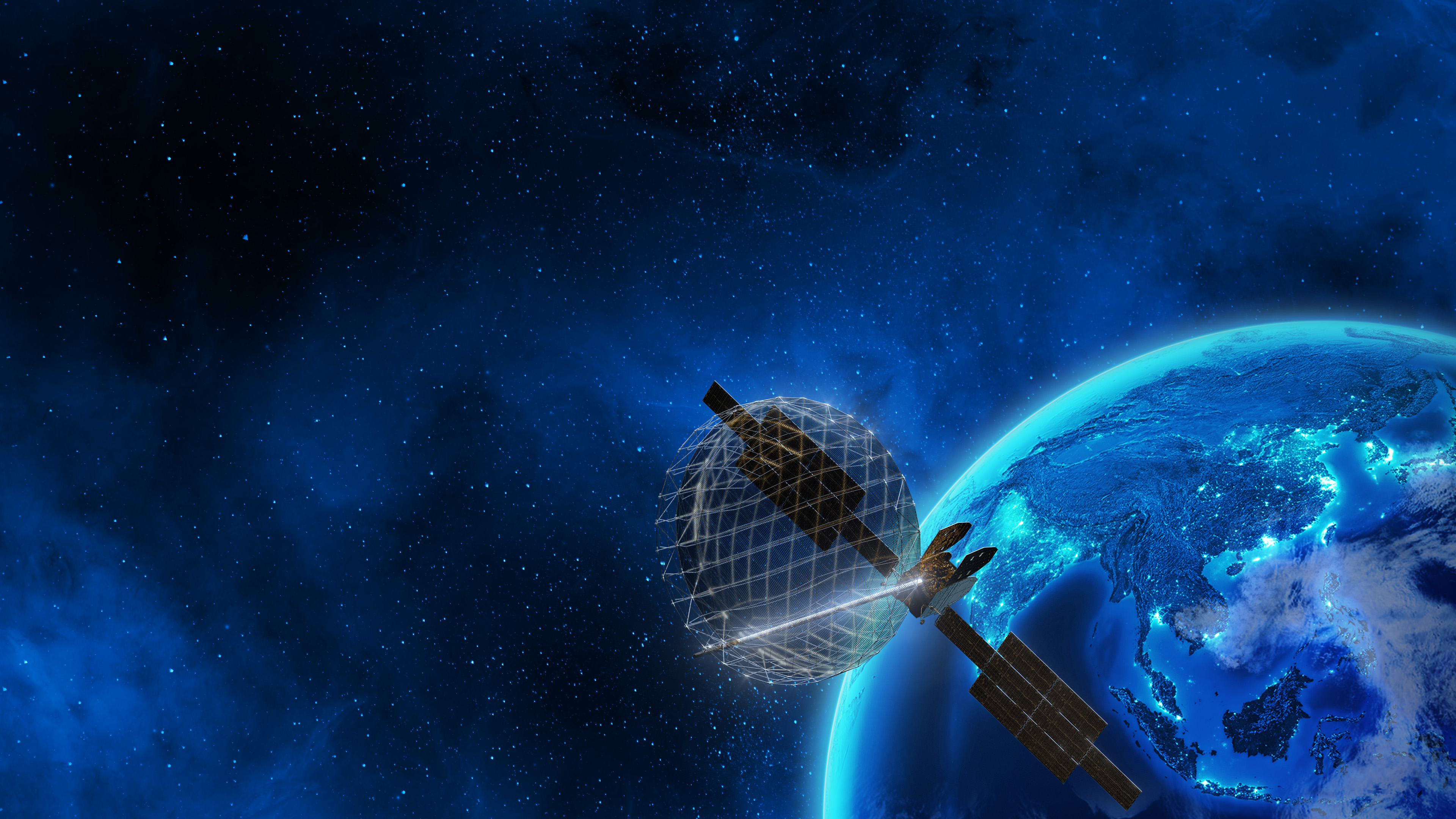
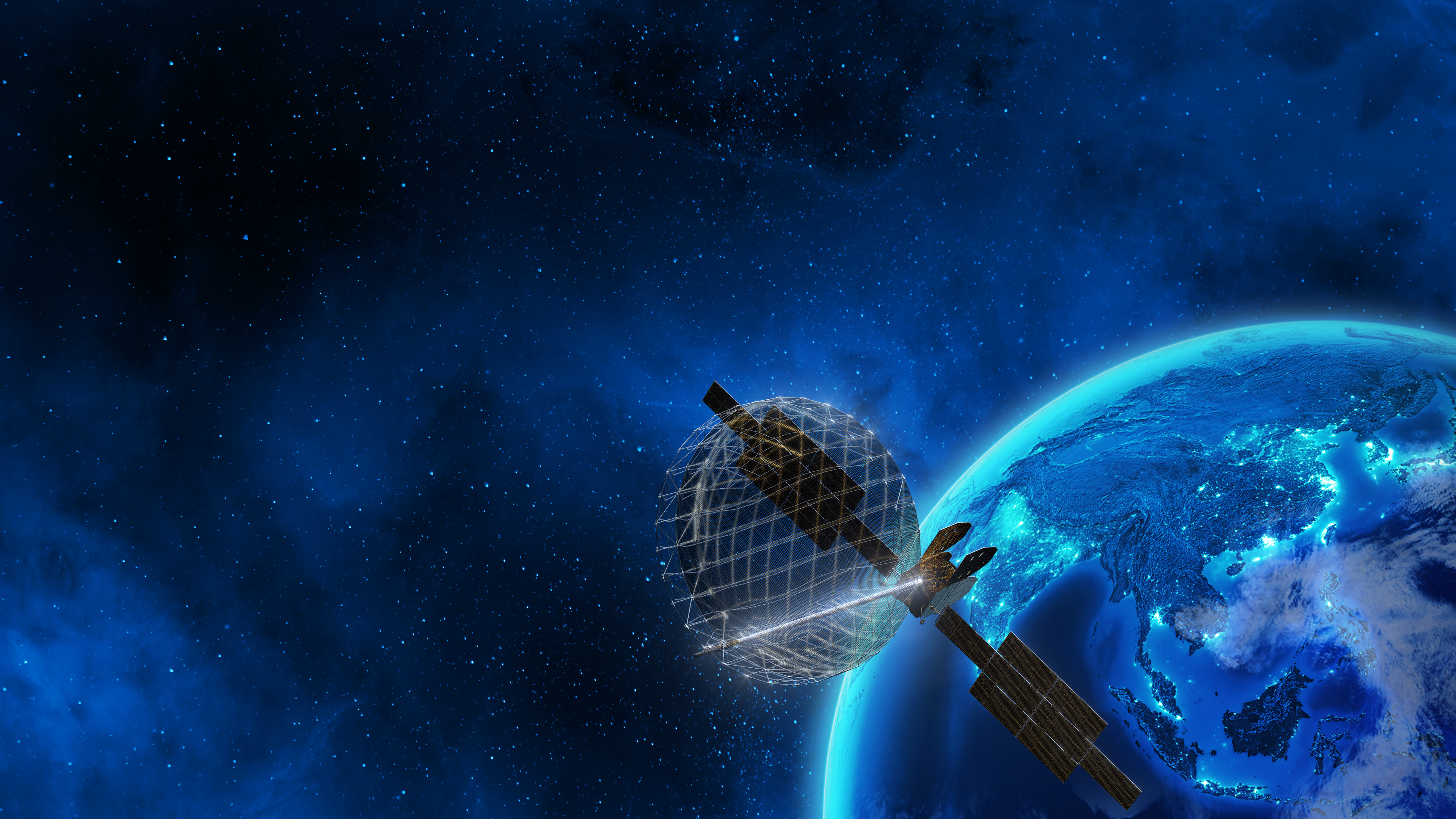
Once on station, ViaSat-3 F3 will become the third and final satellite in the ViaSat-3 constellation, providing high-throughput Ka-band broadband service across the Asia-Pacific (APAC) region. After launch, the satellite will spend several months using its electric propulsion system to climb to its reserved slot in geostationary orbit roughly 22,236 miles (35,786 km) above Earth before in-orbit testing. Viasat says service entry is expected by late summer 2026.
Key Details
- Launch vehicle: SpaceX Falcon Heavy, the first Falcon Heavy flight since NASA's Europa Clipper mission on October 14, 2024 — an 18-month gap.
- Launch site: LC-39A at Kennedy Space Center, Florida.
- Window: 85 minutes, opening at 10:21 a.m. EDT (14:21 UTC).
- Spacecraft: ViaSat-3 F3, ~6 metric tons, built by Boeing on the 702MP+ bus, equipped with electric propulsion for orbit-raising.
- Coverage: Asia-Pacific (APAC) Ka-band broadband — the third regional satellite after F1 (Americas, in service since 2024) and F2 (EMEA, currently in in-orbit testing).
- Booster recovery: Two side boosters return to Cape Canaveral for landing at LZ-2 and LZ-40; center booster expended.
- Service entry: Expected late summer 2026 after several months of orbit-raising and in-orbit testing.
What Industry Watchers Are Saying
The launch is being framed as both a technical and strategic milestone. Spaceflight publications including NASASpaceflight.com and Space.com note that this is Falcon Heavy's first flight in 18 months, in a launch market increasingly dominated by SpaceX's Starship development and high-cadence Falcon 9 missions. Industry observers expect Falcon Heavy's manifest to thin further once Starship comes online for heavy GEO payloads.
For Viasat itself, the stakes are high. Chairman and CEO Mark Dankberg said in the company's statement that ViaSat-3 F3 "will become a cornerstone of our unified, global, high-capacity network, as we move forward with a focus on sustained reductions in capital intensity and defining a common lower mass multi-orbit, multi-band satellite architecture." The ViaSat-3 program has been notoriously troubled — F1 suffered a partial reflector deployment failure shortly after its 2023 launch, sharply reducing its capacity, and F2's commissioning has been delayed by reflector deployment issues that, per Viasat, were further constrained by the spring 2026 eclipse season.
What This Means for Users and the Industry
For airlines, maritime operators, and government customers in the Asia-Pacific region, ViaSat-3 F3 should substantially expand high-capacity in-flight Wi-Fi and ship-to-shore broadband once it enters service. Viasat absorbed Inmarsat's L-band fleet in May 2023, and the company is positioning the completed ViaSat-3 constellation plus Inmarsat assets as a multi-orbit, multi-band global network competing with SES, Eutelsat-OneWeb, and SpaceX's own Starlink. ViaSat-3 F3 also adds new resilience features for U.S. and international government customers that were not present on F1 and F2.
For SpaceX, a successful Falcon Heavy mission preserves the rocket's role as the only operational U.S. heavy-lift vehicle for direct GEO-bound commercial payloads while Starship continues development. NASA has additional Falcon Heavy missions on its near-term manifest, including national security payloads.
What's Next
If the launch slips on April 27 due to weather or technical reasons, SpaceX has additional backup windows scheduled in the following days. Live launch coverage is expected on the official SpaceX webcast beginning roughly 15 minutes before liftoff. Viasat plans to provide updates on F2's reflector deployment progress and F3's transfer orbit performance over the following weeks. Investors and operators will be watching whether F3 deploys cleanly — a smooth deployment would mark the first flawless ViaSat-3 launch and a turning point for the constellation's troubled rollout.
Sources
- Viasat — Press Release (April 20, 2026) — Primary source: launch date, time, vehicle, mission profile, executive quotes.
- SpaceX — ViaSat-3 F3 launch page — Mission and webcast details.
- NASASpaceflight.com — Falcon Heavy returns after 18-month hiatus — Booster recovery profile and Falcon Heavy market context.
- Space.com — Falcon Heavy launches ViaSat-3 F3 — Spacecraft mass, GEO altitude, payload coverage region.
- Boeing — Delivers ViaSat-3 Flight 3 Spacecraft to Viasat — Manufacturer information for the satellite bus.
- Wikipedia — ViaSat-3 program — Background on F1 reflector anomaly and program history.
Stay up to date with Doolpa
Subscribe to Newsletter →