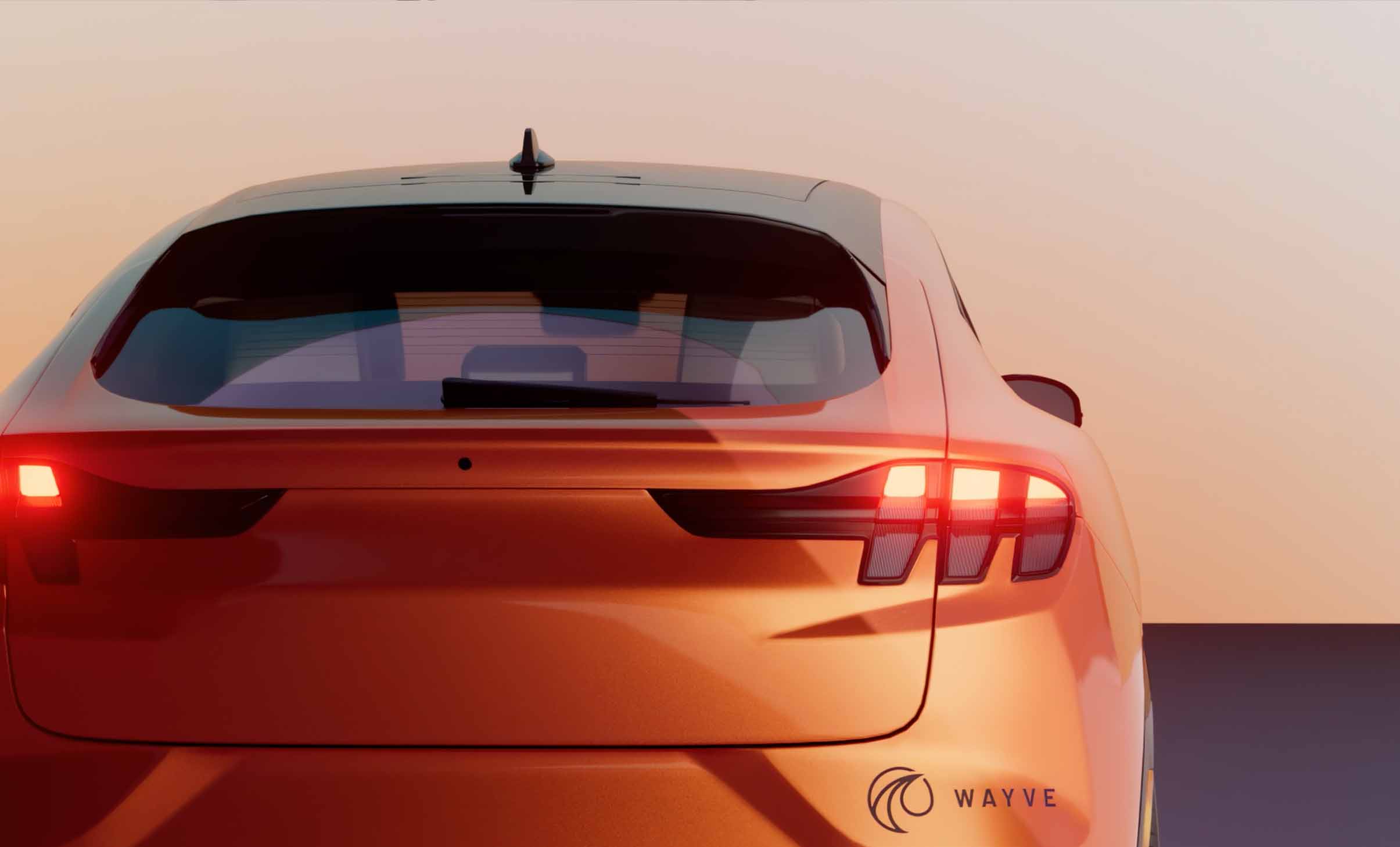
Wayve Extends Series D to $1.26B With $60M From AMD, Arm and Qualcomm (April 2026)
UK-based autonomous-driving startup Wayve on April 15, 2026 extended its Series D round to $1.26 billion after AMD, Arm and Qualcomm Ventures invested a combined $60M, lining up the four largest automotive silicon vendors behind its embodied-AI self-driving platform ahead of a Tokyo robotaxi pilot with Uber and Nissan later this year.
UK-based autonomous-driving startup Wayve on announced a $60 million Series D extension led jointly by AMD, Arm and Qualcomm Ventures, bringing the round to $1.26 billion and placing every major automotive silicon vendor on its cap table. The company said the funding will accelerate global deployment of its end-to-end embodied AI self-driving system ahead of robotaxi pilots in Tokyo and London later in 2026.
What Happened
Wayve first closed its $1.2 billion Series D in May 2024 — at the time the largest AI fundraise in European history — led by SoftBank with NVIDIA and Microsoft. NVIDIA followed on in February 2026. The new extension adds AMD, Arm and Qualcomm Ventures, which Wayve says together now cover "essentially every compute platform an automaker might deploy," including the SoCs that ship in the majority of production vehicles today. The company did not disclose the post-money valuation, but analysts quoted by Tech Startups and TNW peg it at roughly $9 billion.
Alex Kendall, co-founder and CEO of Wayve, framed the round as a deliberate bet on silicon neutrality: "For embodied AI to scale, automakers need design choice and supply chain flexibility." AMD's Salil Raje, SVP and GM of the Adaptive and Embedded Computing Group, added that "AI is moving into real-world systems, and that changes compute demands." Arm's Spencer Collins, EVP of Corporate Development, called the Arm compute platform "foundational to the AI-defined vehicle transformation," while Quinn Li, Global Head of Qualcomm Ventures, said "AI is becoming central to the driving experience and bringing it into vehicles requires alignment."
Key Details
- Round size: $60M extension on top of the existing $1.2B Series D, taking total Series D capital to $1.26B and lifetime funding past $1.5B.
- Investors added: AMD, Arm, and Qualcomm Ventures — the first time all three have co-invested in the same autonomy company.
- Deployment plans: Tokyo robotaxi pilot with Uber and Nissan starting , subject to Japanese regulatory approval; London pilot and a planned rollout across 10+ cities globally.
- Technology: A single end-to-end foundation model trained on globally diverse driving data, powering capabilities from L2+ “hands-off” ADAS through L3 “eyes-off” and L4 driverless applications. The AI Driver runs entirely on onboard compute using native vehicle sensors — no HD maps, no per-city hand-coding.
- Silicon-agnostic by design: Wayve says it can target AMD, Arm, Qualcomm, or NVIDIA compute platforms so automakers retain supply-chain optionality.
What Developers and Users Are Saying
Reaction on Hacker News and r/SelfDrivingCars has been cautiously positive. Technical commenters welcomed the chip-vendor coverage as a signal that automaker partners do not want to be locked to NVIDIA's DRIVE platform, which remains the incumbent in the category. Several threads noted that Wayve's end-to-end, mapless approach is philosophically closer to Tesla's FSD than to Waymo's HD-map-plus-rules stack — but unlike Tesla, Wayve is explicitly selling its stack to third-party automakers rather than running its own fleet. The most common critique is that Wayve has yet to disclose real-world safety metrics at the level Waymo publishes, and the Tokyo pilot will be the first publicly visible test of the AI Driver outside company-run trials.
What This Means for Developers
For automotive software teams, the practical takeaway is portability: Wayve is the first high-profile self-driving stack to explicitly commit to running on AMD, Arm, Qualcomm and NVIDIA silicon, which gives OEMs genuine leverage in compute procurement. For the broader AI community, the round is another data point that embodied AI — foundation models that control physical systems — is now commanding late-stage private capital on par with pure-LLM labs. For developers already building on OpenRouter or similar inference platforms, Wayve's multi-silicon strategy also previews how on-device inference procurement will likely look in the consumer space over the next 24 months.
What's Next
Wayve says the Tokyo pilot with Uber and Nissan remains on track for late-2026 launch, pending Japanese regulatory sign-off. The company has also confirmed that its next-generation foundation model will be the first to ship in a production OEM vehicle, though it has not named the launch partner publicly. Watch the Wayve press room and the company's GitHub-hosted technical blog for model release notes through Q3 2026.
Sources
- Wayve — Series D Extension Accelerates Global Deployment — primary press release
- Tech Startups — Wayve raises $60M from chip giants — deal analysis and valuation reporting
- The Next Web — Wayve extends Series D with $60M from AMD, Arm, Qualcomm — European tech coverage
- MLQ — Wayve raises $60M Series D funding — technical context
- Beinsure — $9B valuation analysis — valuation context
- The Engineer — Wayve secures $60m for automotive AI — industry reaction
Stay up to date with Doolpa
Subscribe to Newsletter →