
 Security
Bitwarden
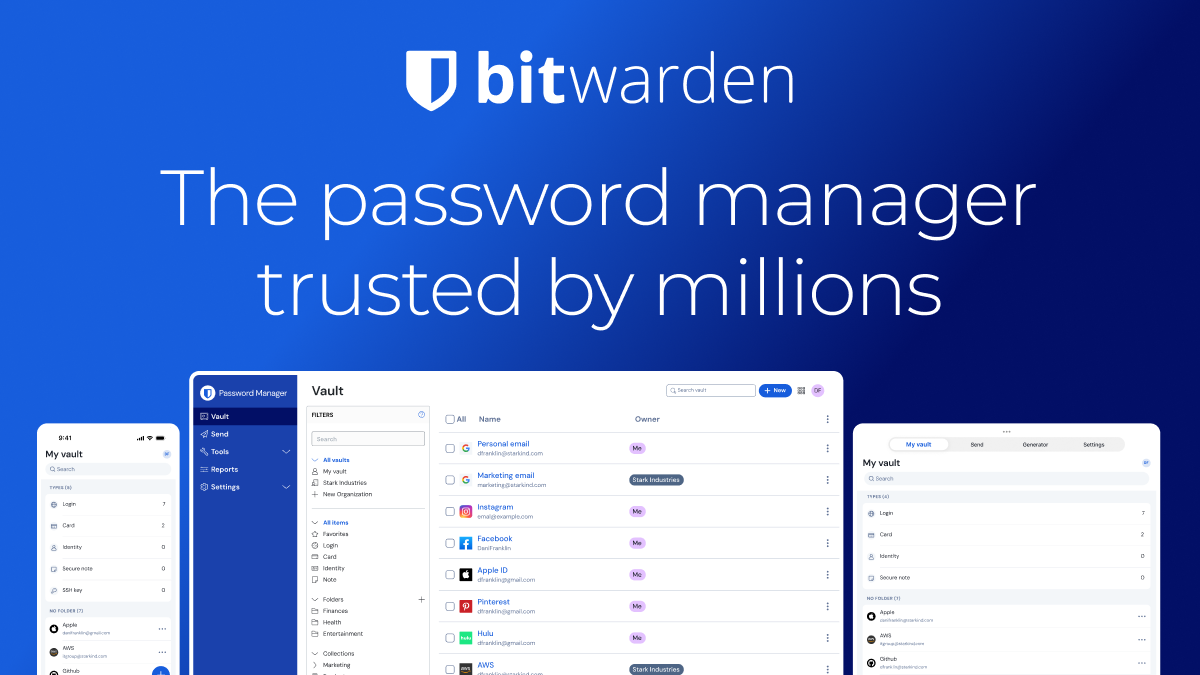
Open-source password manager — unlimited free vault on every device, AES-256 encryption, audited annually.
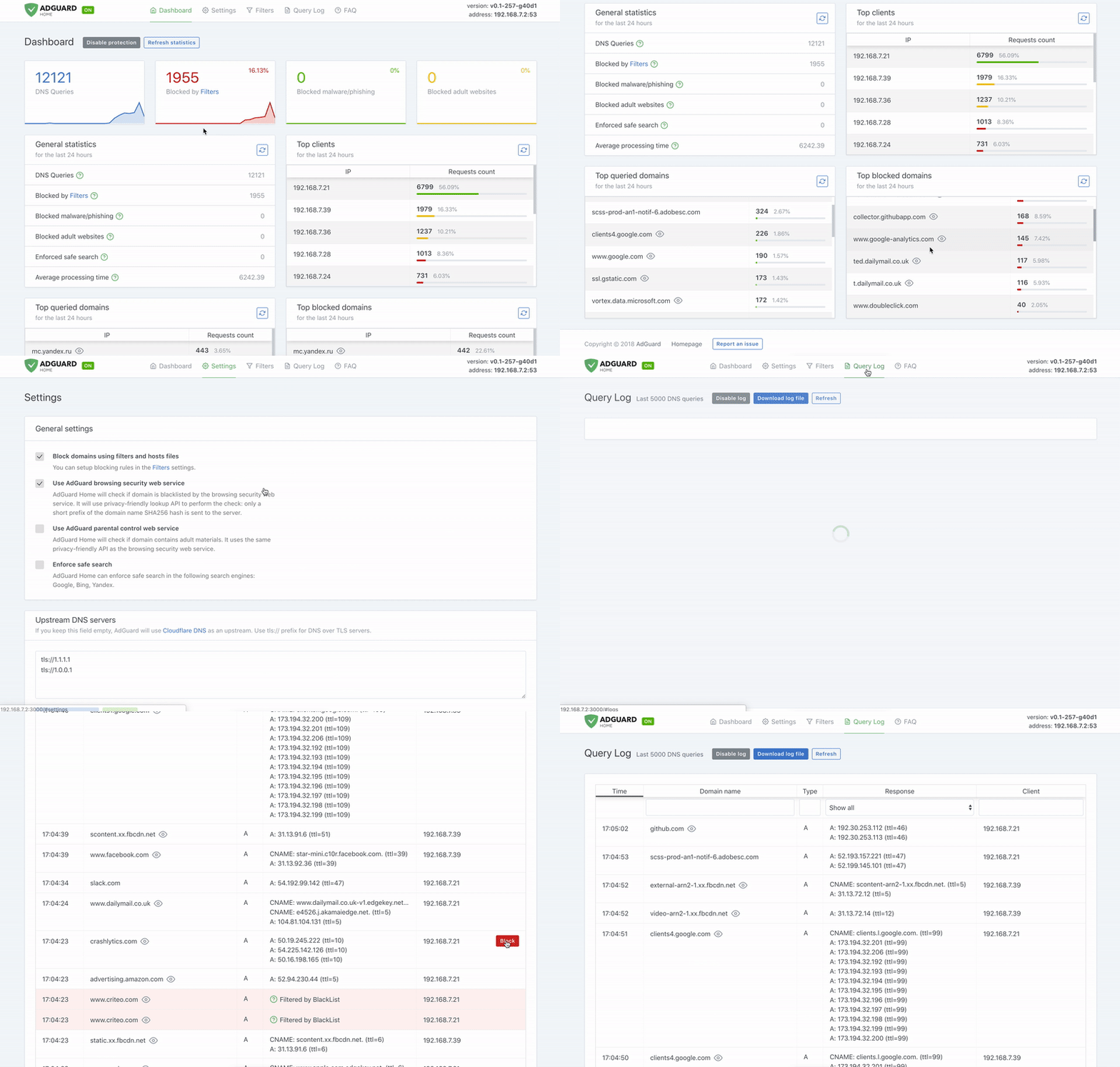
AdGuard Home is a free, open-source DNS sinkhole that blocks ads and trackers across every device on your LAN. Native encrypted upstream DNS, a clean dashboard, and a 30 MB Go binary — the modern Pi-hole alternative.
AdGuard Home is a free, open-source, network-wide ads & trackers blocking DNS server you self-host on a Raspberry Pi, NAS, or cheap VPS. We rate it 88/100 — it is the most polished modern alternative to Pi-hole, with native encrypted DNS, a clean dashboard, and zero monthly fees forever.
AdGuard Home is a DNS sinkhole maintained by Cyprus-based AdGuard Software Limited (the same team behind the AdGuard browser/desktop ad blocker). It first hit GitHub in and reached its v0.95 stable milestone in . As of the official repository sits at 31,200+ stars and has been pulled from Docker Hub more than 100 million times.
It runs as a single Go binary (under 30 MB) that intercepts every DNS query on your network and silently drops anything that matches its blocklists — ads, trackers, malware domains, phishing, and analytics. Anything passing the filter is forwarded to your chosen upstream over plain DNS, DNS-over-HTTPS, DNS-over-TLS, DNS-over-QUIC, or DNSCrypt. There is no agent on each device — point your router at the server and every phone, smart TV, and IoT gadget on the LAN inherits the protection.
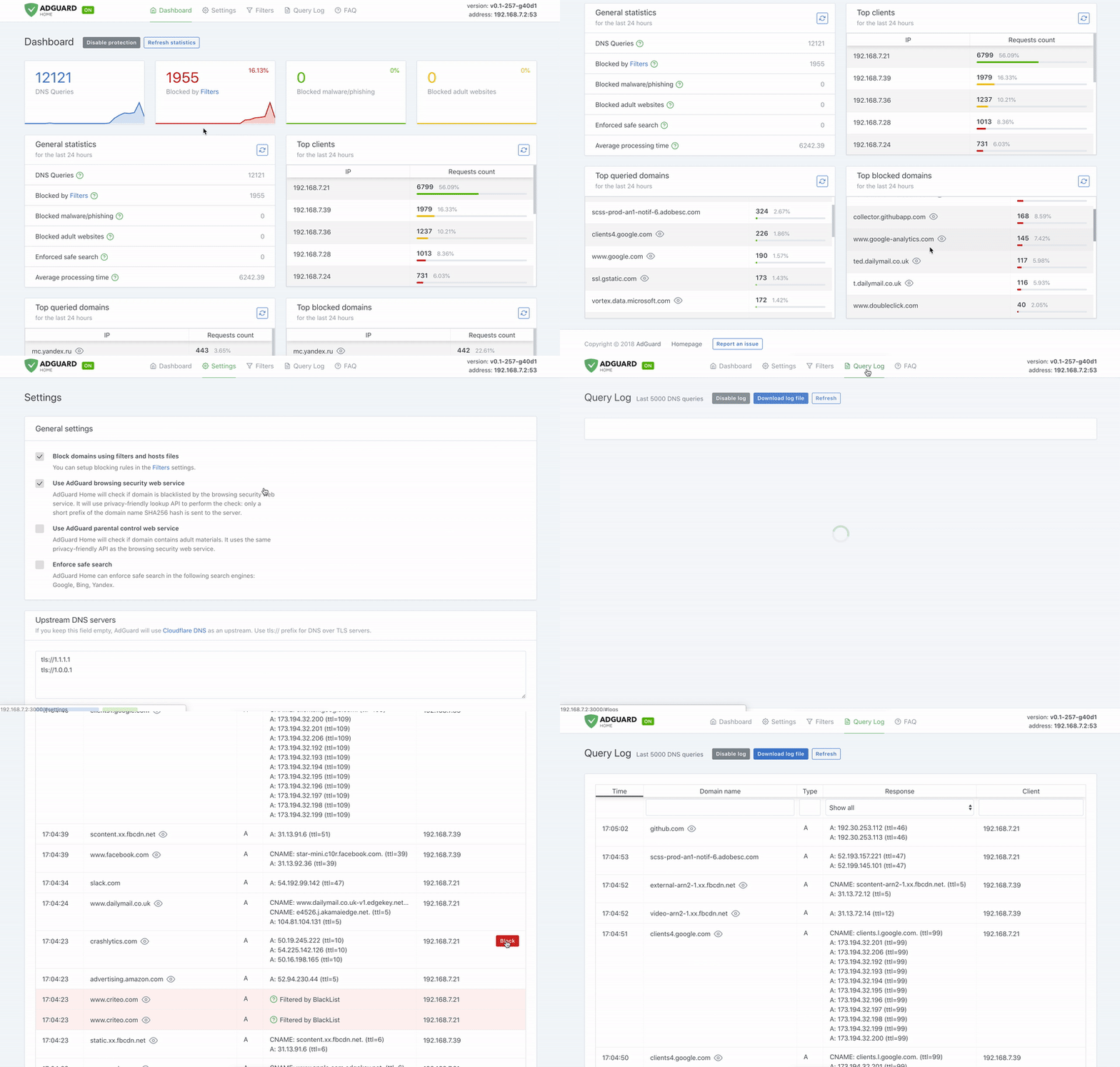
Sentiment in r/selfhosted and r/homelab has tilted firmly toward AdGuard Home over the past two years, with the most-upvoted recent thread arguing it is the "modernized replacement for Pi-hole." Users repeatedly praise the encrypted-DNS-without-fuss, the clean per-client UI, and the fact that the project ships pre-built binaries for ARM, FreeBSD, and OpenBSD — Pi-hole still requires Linux. On Hacker News, multiple commenters note that AdGuard Home's filter-syntax compatibility with browser AdGuard means a single subscription list can power both. Recurring complaints are real but minor: the official Docker image runs as root by default, group management is less granular than Pi-hole's, and a handful of advanced users miss conditional forwarding for split-horizon DNS at home.
AdGuard Home itself is completely free and open source (GPL-3.0). There is no paid tier, no upgrade prompts, and no telemetry. The only paid AdGuard products are the separate browser/desktop AdGuard Ad Blocker and the hosted AdGuard DNS service — both optional and unrelated to running AdGuard Home yourself.
| Plan | Price | Key Limits |
|---|---|---|
| Self-hosted (AdGuard Home) | $0 forever | Unlimited devices, blocklists, and queries — limited only by your hardware. |
| Hosted AdGuard DNS Personal | $0 (free tier) / $1.99–$2.49/mo | Optional — only if you don't want to run a server. Free tier covers 300k queries/month. |
Best for: homelab users, privacy-conscious households, small offices, and anyone who already runs a Raspberry Pi, Synology NAS, or always-on mini-PC. Also a strong fit for OPNsense/pfSense users who want a friendlier UI than Unbound's config files.
Not ideal for: people who don't run any always-on machine on their LAN (a phone-only blocker is a better fit), enterprises that need split-horizon DNS with dozens of conditional forwards, or users who fundamentally don't trust Go binaries from a Cyprus-based vendor — review the source on GitHub if that is a concern.
Pros:
Cons:
The two main alternatives are Pi-hole — older, slightly more granular group/list management, but no native encrypted DNS — and Technitium DNS Server, which is more of a full-feature DNS suite with built-in resolver, DNSSEC validation, and conditional forwarding, but a heavier UI and Windows-first roots. NextDNS is the closest hosted equivalent if you don't want to self-host at all.
For any homelab in 2026, AdGuard Home is the default recommendation. The encrypted-DNS story alone — paste a DoH URL and you're done — beats every comparable free tool, and the per-client policy engine is more flexible than its reputation suggests. We rate it 88/100: a polished, actively maintained, completely free piece of infrastructure that has genuinely raised the bar for what a network-wide ad blocker should ship by default. Knock a few points off for the root-by-default container and the still-shallow group model, but for the vast majority of self-hosters, AdGuard Home is the easy pick.
ServiceNow and Accenture Launch Forward Deployed Engineering Program to Scale Agentic AI in the Enterprise (May 6, 2026)
At Knowledge 2026, ServiceNow and Accenture announced a joint forward deployed engineering program that drops co-located engineer pods into customer environments to ship agentic AI workflows natively on the ServiceNow AI Platform — with access to 300+ pre-built agent skills and the AI Control Tower as the governance backbone.
May 7, 2026
ReFiBuy Raises $13.6M Seed to Help Brands Get Recommended by AI Shopping Agents (May 5, 2026)
ReFiBuy, the Raleigh-based agentic commerce platform from ChannelAdvisor founder Scot Wingo, closed an oversubscribed $13.6M seed led by NewRoad Capital Partners on May 5, 2026 — betting that the next billion-dollar e-commerce moat is being chosen by ChatGPT, Claude and Perplexity.
May 7, 2026
OpenAI Replaces ChatGPT's Default Model With GPT-5.5 Instant — 52.5% Fewer Hallucinations, 30% Shorter Answers (May 5, 2026)
OpenAI on May 5 swapped GPT-5.3 Instant for the new GPT-5.5 Instant as ChatGPT's default model, claiming 52.5% fewer hallucinated claims on high-stakes prompts and 30% more concise answers. The model also rolls into the API as chat-latest and adds personalization from Gmail and past chats for Plus and Pro web users.
May 7, 2026
Is this product worth it?
Built With
Compare with other tools