
 Developer Tools
Templ
Type-safe HTML templating language for Go with compile-time safety
Apify is a cloud web scraping and automation platform with 26,000+ ready-made Actors, managed proxies, and open-source SDKs. We tested it across pricing, reliability, and developer experience — here's our 2026 verdict.
Apify is a cloud platform for web scraping, browser automation, and data collection for AI — built around Actors, packaged jobs that run in containers with JSON inputs and structured outputs. We rate it 83/100 — the most flexible scraping platform on the market for developers, with a confusing pricing model that newcomers should budget for carefully.
Apify was founded in 2015 by Czech developers Jan Čurn and Jakub Balada during the Y Combinator Fellowship in Mountain View. The company moved back to Prague in 2016 and has since grown into one of the largest web-data infrastructure providers, with a Store of 26,000+ ready-made Actors and customers ranging from small affiliate marketers to AI labs that need fresh training data at scale.
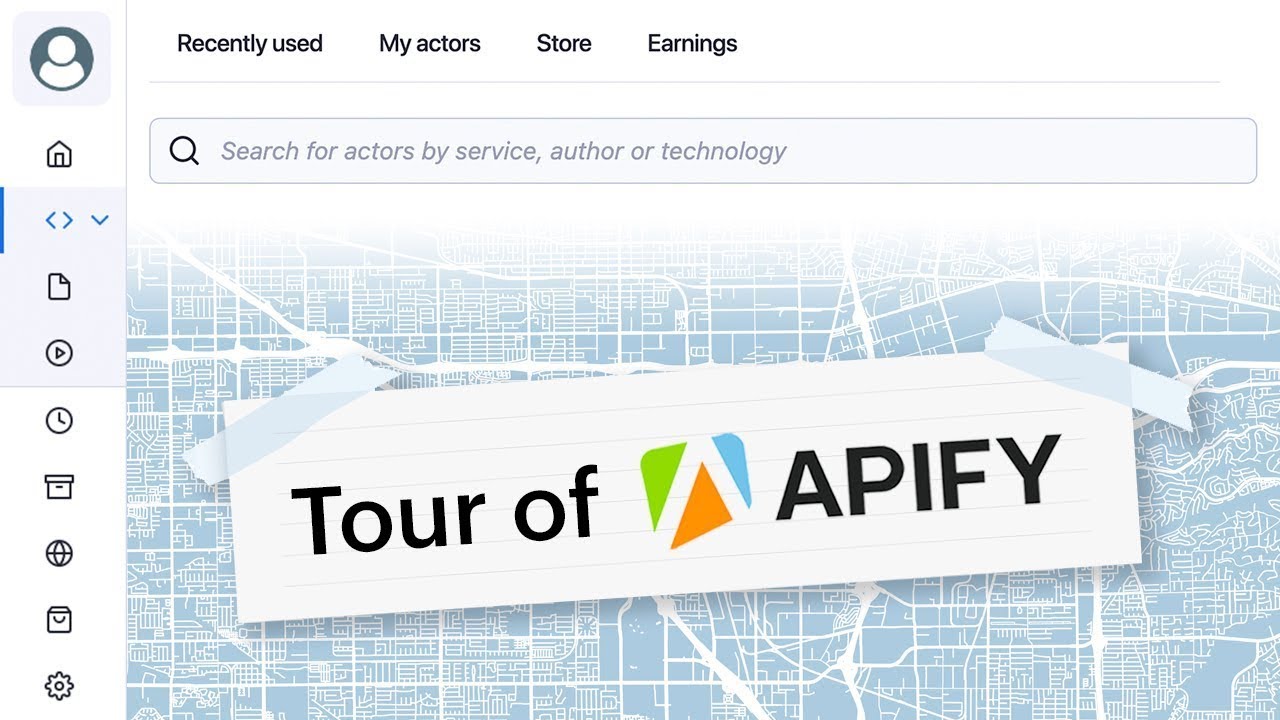
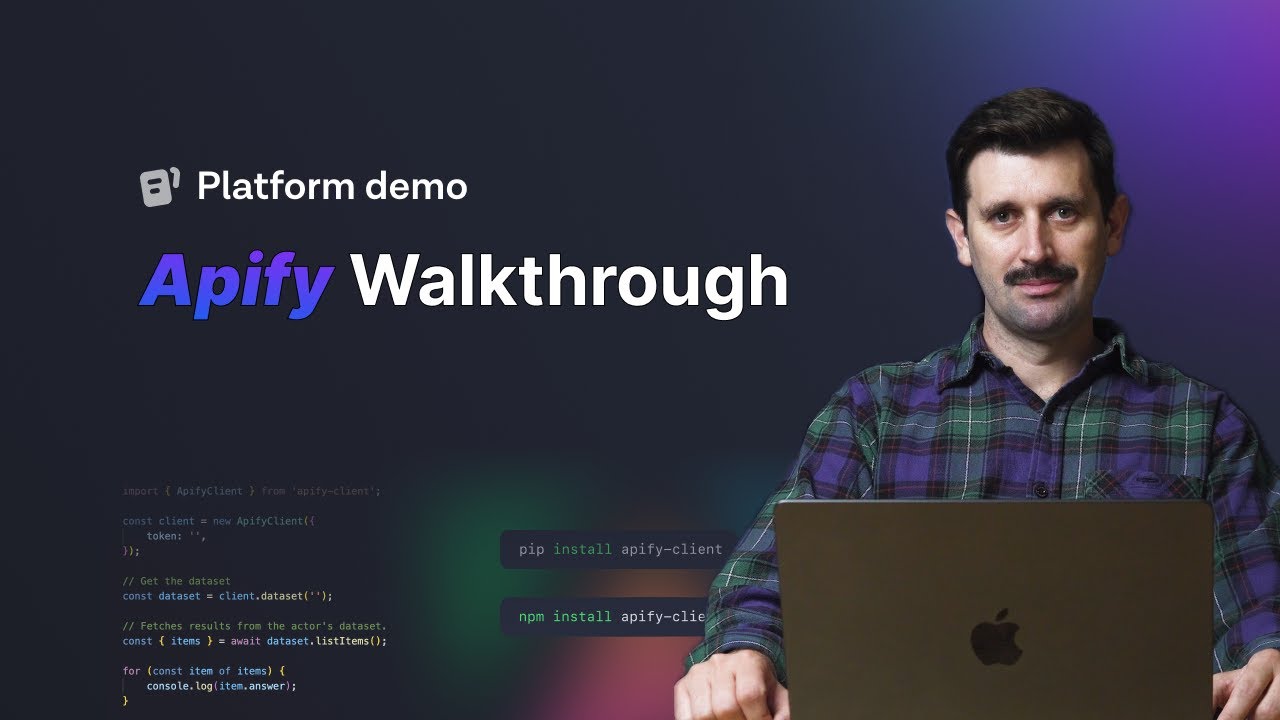
Apify's core idea: turn any scrape, automation, or browser-driven workflow into an Actor — a reusable container with a defined input schema, a defined output schema, and managed execution on Apify's cloud. You pick an Actor (Google Maps, TikTok, Instagram, LinkedIn, Amazon, Reddit and many more), feed it parameters, and get clean JSON, CSV or Excel back. If a Store Actor doesn't fit, you write your own in JavaScript or Python on top of Apify's open-source Crawlee and Apify SDK libraries.
On Capterra and G2, Apify holds an aggregate 4.7/5 across roughly 415 verified reviews. The two most-cited praises are the breadth of the Actor Store and how quickly non-experts can run jobs without writing any code. The most-cited complaint, tagged 88 times in G2, is "Pricing Issues" — specifically that compute-unit billing is hard to predict before you've built a proof of concept.
On Reddit's r/webscraping, sentiment is mixed. Power users praise the SDK and Crawlee but note that third-party Store Actors can change pricing or be suspended without warning — one widely upvoted thread reported Apollo scraping prices jumping from ~$1.50 to $30 per 1,000 leads before the Actor was pulled. On Hacker News, the most consistent feedback is that Apify is the right pick when you need scale and don't want to babysit proxies, but overkill for a one-off scrape.
Apify uses a hybrid model: every plan includes a flat amount of "platform usage credits" plus pay-as-you-go for anything beyond. As of :
| Plan | Price | Included Platform Usage |
|---|---|---|
| Free | $0/month | $5 in monthly platform usage, community support |
| Starter | $29/month + PAYG | $29 in usage, priority chat support |
| Scale | $199/month + PAYG | $199 in usage, priority chat, 1 hour personal training/quarter |
| Business | $999/month + PAYG | $999 in usage, account manager, monthly training |
| Enterprise | Custom | SSO, custom SLAs, dedicated infrastructure |
Compute units, residential proxy GB, dataset storage and external API calls are billed on top of the included platform usage at published per-unit rates.
Best for: Engineering teams and technical marketers who need to scrape multiple sources at scale, AI builders pulling fresh web data into RAG pipelines, growth teams running lead-generation against many sources, and agencies that bill clients for managed scraping work.
Not ideal for: Non-technical users who want a single-click "scrape this URL" tool, or solo developers who only need to scrape one or two sites occasionally — a simple requests + BeautifulSoup script (or a lighter tool like Firecrawl) will be cheaper and easier to predict.
Pros:
Cons:
Firecrawl is a simpler, AI-focused alternative for one-shot scrapes that return Markdown for LLMs. Browserbase is a programmable headless browser cloud that's better when you write all your own code and just want managed Chrome. ScrapingBee, Bright Data and Oxylabs compete on the proxy and one-call API side but lack Apify's Store breadth.
For developers and technical teams that scrape more than one site at non-trivial volume, Apify is hard to beat — the Store eliminates weeks of brittle scraper-building, the SDK and Crawlee mean you're not locked in, and the cloud handles everything you don't want to operate. The pricing model is the main thing to manage: budget two or three test runs before you commit to a plan, and watch your residential-proxy GB usage in production. We rate it 83/100.
ServiceNow and Accenture Launch Forward Deployed Engineering Program to Scale Agentic AI in the Enterprise (May 6, 2026)
At Knowledge 2026, ServiceNow and Accenture announced a joint forward deployed engineering program that drops co-located engineer pods into customer environments to ship agentic AI workflows natively on the ServiceNow AI Platform — with access to 300+ pre-built agent skills and the AI Control Tower as the governance backbone.
May 7, 2026
ReFiBuy Raises $13.6M Seed to Help Brands Get Recommended by AI Shopping Agents (May 5, 2026)
ReFiBuy, the Raleigh-based agentic commerce platform from ChannelAdvisor founder Scot Wingo, closed an oversubscribed $13.6M seed led by NewRoad Capital Partners on May 5, 2026 — betting that the next billion-dollar e-commerce moat is being chosen by ChatGPT, Claude and Perplexity.
May 7, 2026
OpenAI Replaces ChatGPT's Default Model With GPT-5.5 Instant — 52.5% Fewer Hallucinations, 30% Shorter Answers (May 5, 2026)
OpenAI on May 5 swapped GPT-5.3 Instant for the new GPT-5.5 Instant as ChatGPT's default model, claiming 52.5% fewer hallucinated claims on high-stakes prompts and 30% more concise answers. The model also rolls into the API as chat-latest and adds personalization from Gmail and past chats for Plus and Pro web users.
May 7, 2026
Is this product worth it?
Built With
Compare with other tools
Open Comparison Tool →