
 Security
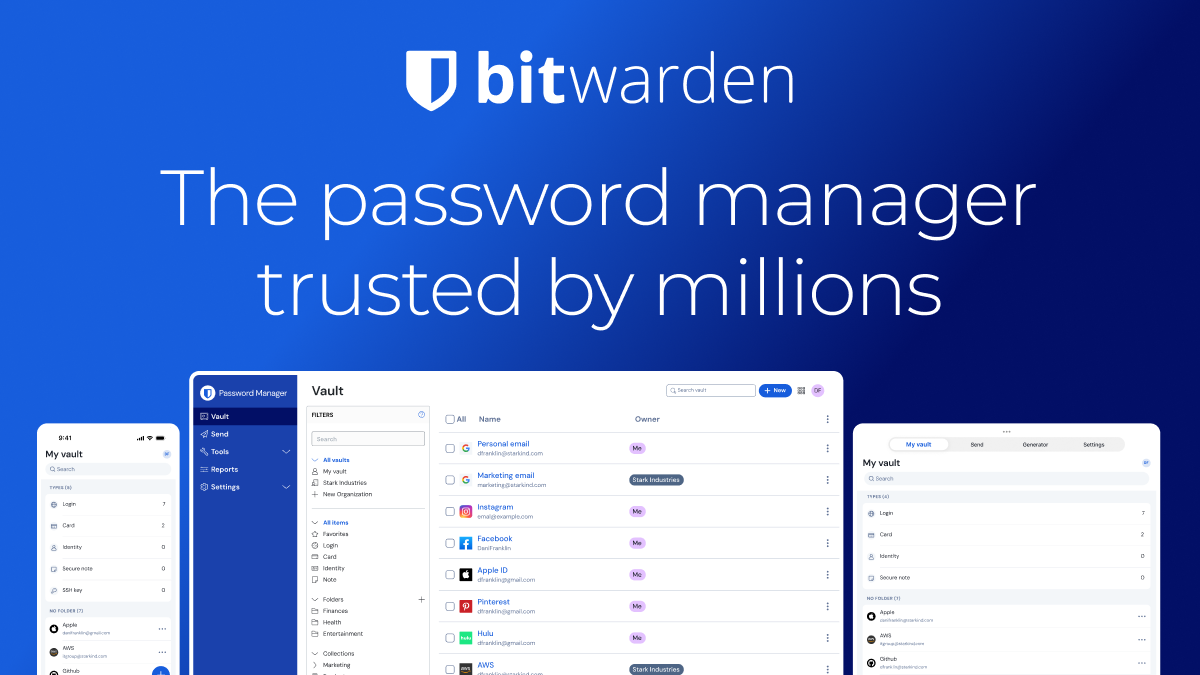
Bitwarden
Open-source password manager — unlimited free vault on every device, AES-256 encryption, audited annually.
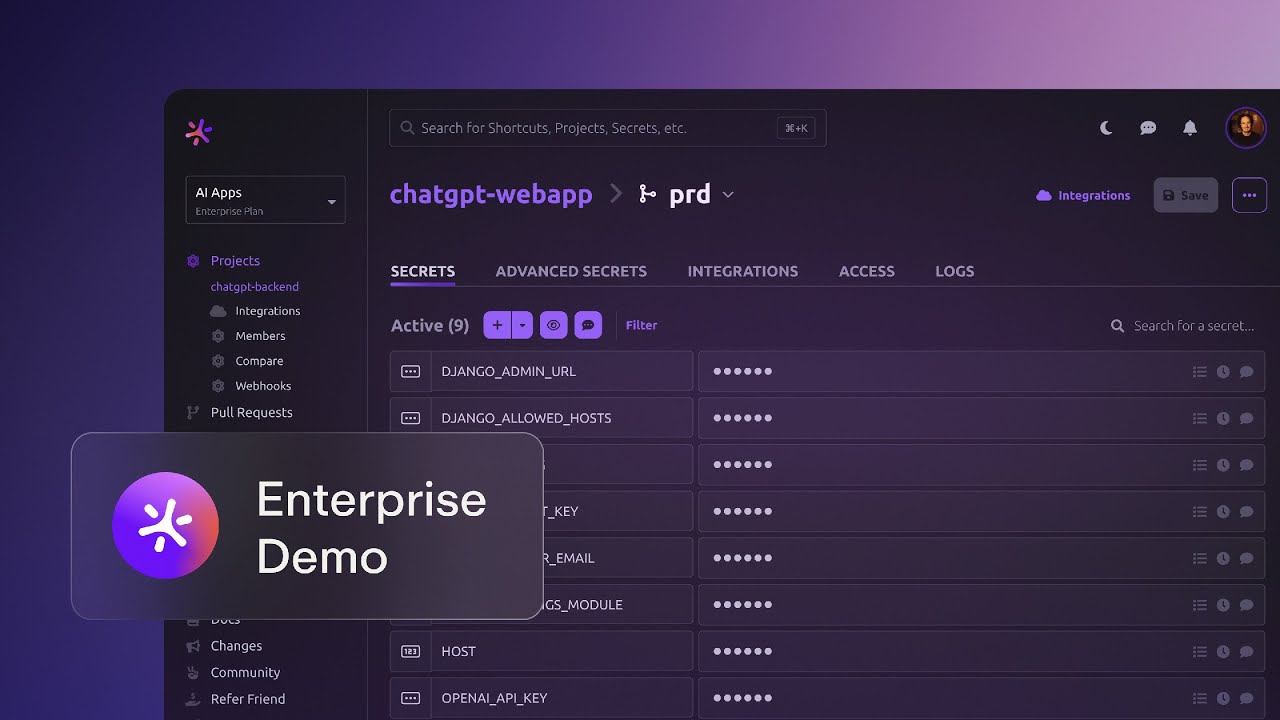
Doppler is a fully-managed secrets management platform built for developers — replace .env files with a single CLI command and sync to 20+ services. Free for 3 users; Team plans start at $21/user/month.
Doppler is a cloud-based secrets management platform that centralises environment variables across services and environments — built developer-first by ex-Uber engineer Brian Vallelunga to kill the .env file. We rate it 76/100 — for small-to-mid engineering teams that want a managed secrets workflow without standing up HashiCorp Vault, Doppler is one of the easiest tools to adopt, but its flat project model and the recent free-tier squeeze keep it from a top score.
Doppler is a SaaS that stores your API keys, database URLs, and environment variables in encrypted configs you can sync to local machines, CI runners, and production infrastructure with a single CLI command. The company was founded in in San Francisco by Brian Vallelunga (formerly an engineer at Uber) and co-founder Jack Legg, joined Y Combinator's batch, and has since raised about $29.5 million from Sequoia, Google Ventures, and Peter Thiel — celebrating its fifth anniversary in 2024.
The pitch is simple: instead of copying .env files between teammates, dumping secrets into CI/CD settings, or running a Vault cluster, you put every secret behind one source of truth and let Doppler push it everywhere — Vercel, AWS, Kubernetes, GitHub Actions, Docker, and ~17 more — whenever it changes.
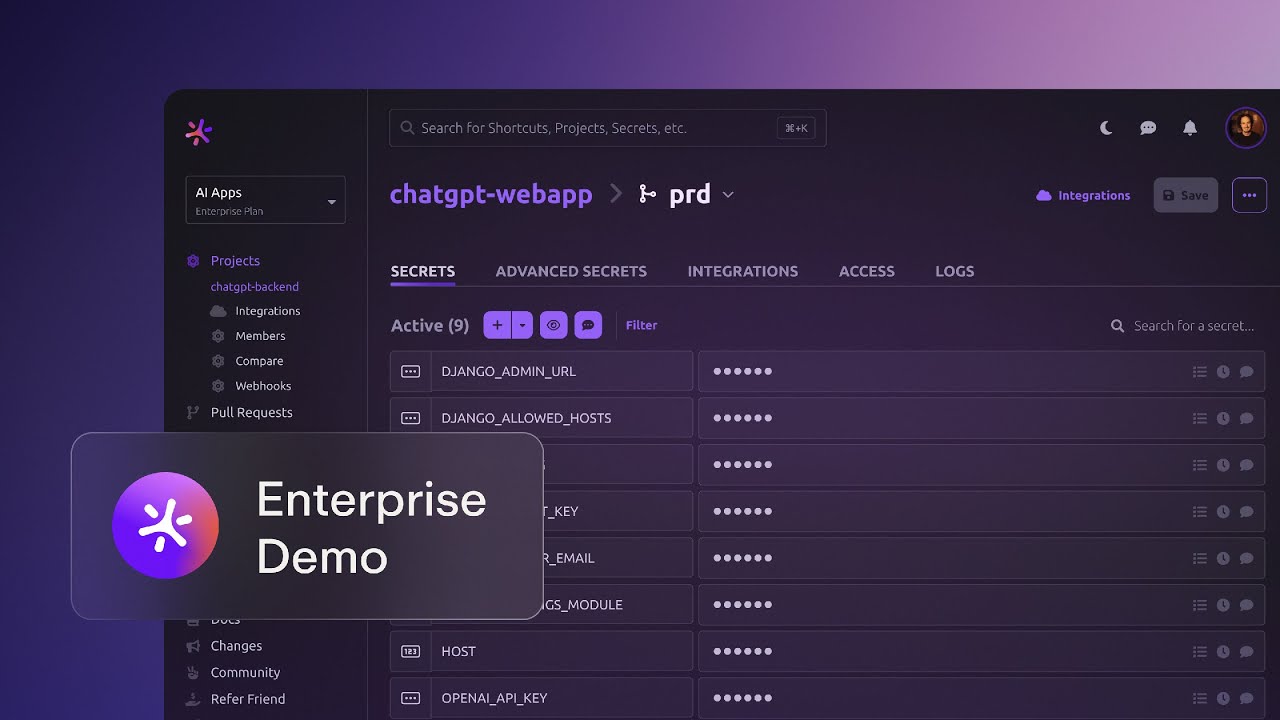
doppler run -- npm start replaces .env entirely — secrets are fetched at runtime and injected as environment variables, never written to disk.
doppler setup auto-detects the project and links a config in under 90 seconds.Sentiment on Doppler skews positive but with sharper-than-usual structural complaints. G2 reviewers and posts on Reddit's r/devops repeatedly praise the dashboard ergonomics, the friction-free CLI, and the fact that you can roll out company-wide secrets management in a single afternoon — a meaningful contrast to standing up Vault. Gartner Peer Insights and Trustpilot users single out the broad sync catalogue as the feature that makes the product stick.
The criticism, however, is real. Multiple Reddit threads and StackShare comparisons flag that Doppler's project model is essentially flat — one layer of projects with no folders or namespaces — which becomes painful at 50+ services. Some integrations dump every secret into a single sync target rather than per-key, which complicates rotation. And in Doppler significantly tightened the free tier (3 users, then per-seat pricing) — long-time fans grumble that the cheapest path to multi-developer secrets management is now noticeably less generous than it was at launch.
Pricing is straightforward and per-seat once you cross the free threshold. Add-ons (Custom Roles, User Groups) are an extra $9/seat/month on top of Team.
| Plan | Price | Key Limits |
|---|---|---|
| Developer | Free for 3 users; $8/mo per additional user | 5 config syncs, 3 days of activity logs, CLI, service tokens, secret referencing |
| Team | $21/user/month (14-day free trial) | Unlimited config syncs, longer log retention, SSO, role-based access |
| Enterprise | Contact sales | Custom roles, user groups, advanced integration syncing, audit retention, dedicated support |
Best for: Solo developers and small-to-mid engineering teams (5–50 people) who deploy on Vercel, AWS, GCP, or Kubernetes and want secrets shared across local, staging and production without running their own Vault cluster. Particularly strong for SaaS startups whose stack already lives in the integrations list.
Not ideal for: Very large orgs with deep folder hierarchies (the flat project structure starts to bite past 100 services), regulated environments that require self-hosting (Doppler is cloud-only — you'll want Infisical or HashiCorp Vault), or hobbyists with 4+ collaborators who want a generous always-free tier.
Pros:
doppler run -- just works on macOS, Linux, Windows, and inside Docker.Cons:
The closest open-source alternative is Infisical, which offers a generous self-hostable tier and stronger folder hierarchy at the cost of a smaller integrations catalogue. HashiCorp Vault is the enterprise-grade choice for teams who need dynamic secrets, PKI, and on-prem control — but the operational cost is roughly 100× higher. AWS Secrets Manager and GCP Secret Manager are excellent if you're committed to a single cloud and want native IAM integration, but they don't help with local development the way Doppler does.
For a 5-to-50-person engineering team that ships to multiple environments and wants to retire the .env file without taking on Vault as a side project, Doppler is the fastest path to a real secrets workflow on the market. The CLI is genuinely excellent, the sync catalogue is broad, and the compliance story is enterprise-grade. The 76/100 reflects two real friction points: a flat project model that doesn't scale to large orgs, and a free tier that has gotten meaningfully stingier since launch. If those don't apply to you, Doppler is an easy yes.
ServiceNow and Accenture Launch Forward Deployed Engineering Program to Scale Agentic AI in the Enterprise (May 6, 2026)
At Knowledge 2026, ServiceNow and Accenture announced a joint forward deployed engineering program that drops co-located engineer pods into customer environments to ship agentic AI workflows natively on the ServiceNow AI Platform — with access to 300+ pre-built agent skills and the AI Control Tower as the governance backbone.
May 7, 2026
ReFiBuy Raises $13.6M Seed to Help Brands Get Recommended by AI Shopping Agents (May 5, 2026)
ReFiBuy, the Raleigh-based agentic commerce platform from ChannelAdvisor founder Scot Wingo, closed an oversubscribed $13.6M seed led by NewRoad Capital Partners on May 5, 2026 — betting that the next billion-dollar e-commerce moat is being chosen by ChatGPT, Claude and Perplexity.
May 7, 2026
OpenAI Replaces ChatGPT's Default Model With GPT-5.5 Instant — 52.5% Fewer Hallucinations, 30% Shorter Answers (May 5, 2026)
OpenAI on May 5 swapped GPT-5.3 Instant for the new GPT-5.5 Instant as ChatGPT's default model, claiming 52.5% fewer hallucinated claims on high-stakes prompts and 30% more concise answers. The model also rolls into the API as chat-latest and adds personalization from Gmail and past chats for Plus and Pro web users.
May 7, 2026
Is this product worth it?
Built With
Compare with other tools
Open Comparison Tool →