

 Finance & Payments
Actual Budget
Open-source, local-first envelope budgeting — the free YNAB alternative you actually own
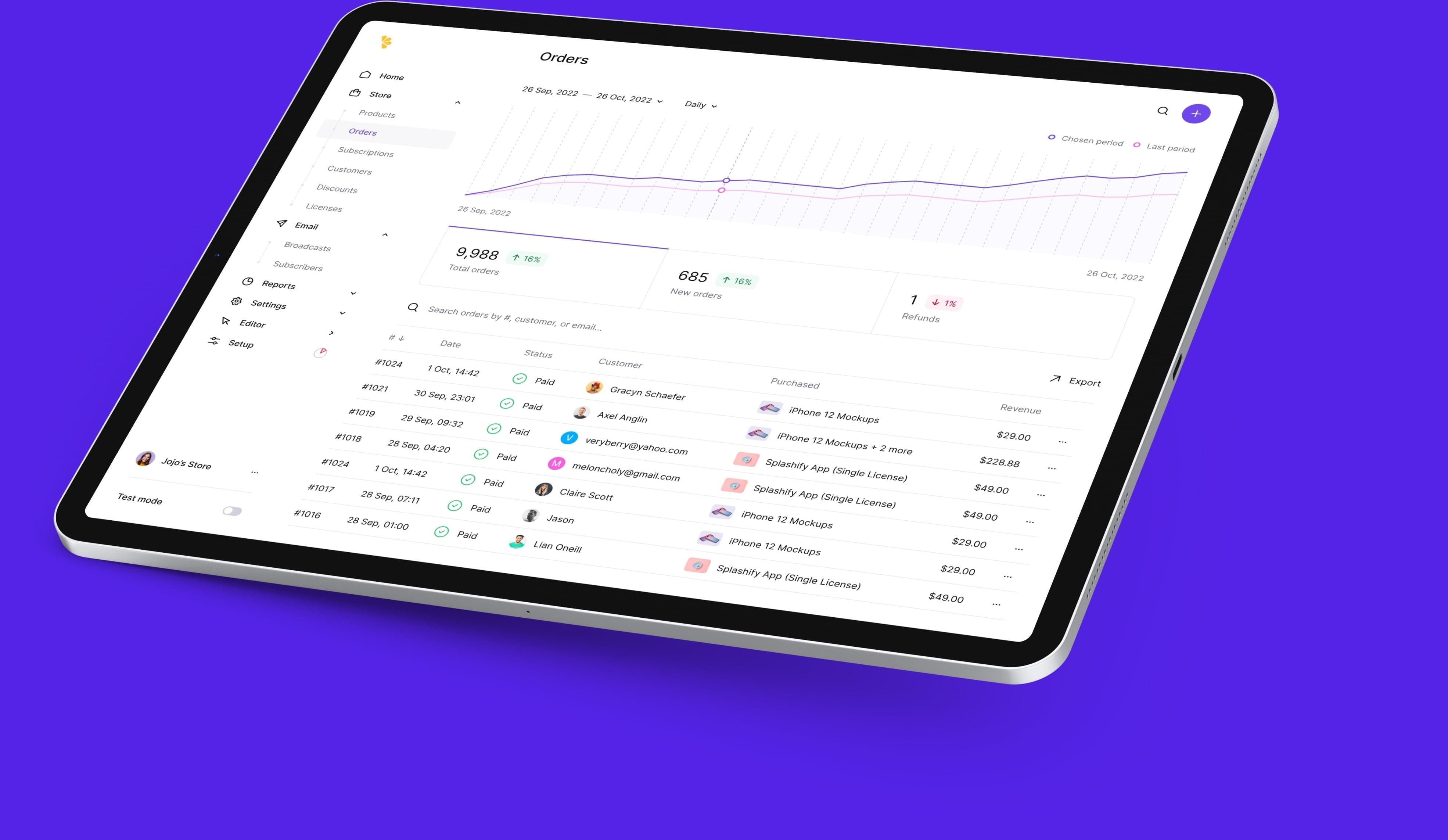
Lemon Squeezy is a merchant-of-record payment platform that handles global tax compliance, subscriptions, and digital product sales so SaaS founders can focus on building — not paperwork. Acquired by Stripe in July 2024, it now combines indie-friendly UX with enterprise-grade payment infrastructure.
Lemon Squeezy is an all-in-one payments, subscriptions, and digital commerce platform that acts as your merchant of record (MoR) — meaning it takes legal responsibility for collecting and remitting taxes globally on your behalf. We rate it 72/100 — a solid choice for indie developers and small SaaS teams who want to skip the tax headaches, though post-acquisition uncertainty and slow support hold it back from a higher score.
Lemon Squeezy was founded and launched into public beta in by a small team of experienced software builders. It quickly found its niche with indie hackers and solo SaaS founders who needed a way to sell software globally without registering for VAT in dozens of countries. In , Stripe acquired Lemon Squeezy for an undisclosed sum — making it one of the rare indie products to go from idea to acquisition in under three years. As of 2026, Lemon Squeezy runs on Stripe's payment infrastructure while maintaining its own checkout experience and feature set.
The core problem Lemon Squeezy solves is sales tax compliance. When you sell software globally, you're legally required to collect VAT in the EU, GST in Australia, and sales tax across U.S. states — a nightmare for solo developers. As your MoR, Lemon Squeezy handles all of that automatically. You receive your earnings (minus the transaction fee); they deal with tax authorities worldwide.


The community sentiment on Reddit and Product Hunt is mixed but leaning cautiously positive for small-scale use. Developers consistently praise the frictionless setup — "I had my first product live in 20 minutes" is a common refrain on r/indiehackers. The tax compliance story is the #1 reason people choose it: never having to think about VAT nexus thresholds is cited in nearly every positive review.
The criticism is equally consistent. Multiple verified reviews on Trustpilot and G2 describe slow or unresponsive customer support, with some users reporting account approval delays lasting a week or more. A recurring concern in Hacker News threads is post-acquisition uncertainty: since Stripe bought the company in July 2024, the public roadmap has gone quiet and feature development has noticeably slowed. The indie hacker community increasingly recommends Polar as a newer, actively developed alternative. Reports of checkout bugs (customers unable to complete purchases or being double-charged) have also surfaced in community threads, though frequency is unclear.
Lemon Squeezy uses a transaction-based pricing model — there are no monthly subscription fees. You pay only when you make a sale.
| Plan | Monthly Fee | Transaction Fee | Notes |
|---|---|---|---|
| Standard | $0 | 5% + $0.50 | All features included, no limits on products or revenue |
| Volume / Custom | Negotiated | Reduced rate | For higher-revenue sellers — requires contacting sales |
For context: on a $29/month SaaS subscription, Lemon Squeezy takes $1.95 per transaction (5% + $0.50). At $99/month, they take $5.45. Compared to Paddle (5% + $0.50, similar model) and Gumroad (10% flat), Lemon Squeezy's pricing is competitive for products under $100. Polar charges 4% with no fixed fee, which is better for small transactions. Non-US sellers should note that payouts are in USD, introducing FX exposure.
Best for: Solo developers, indie hackers, and small SaaS teams (1–10 people) selling software subscriptions, license keys, digital downloads, or online courses globally. Especially useful for those who want a zero-code setup and don't want to think about sales tax compliance. Also a solid pick for early-stage SaaS with modest revenue (under $50k MRR) where the transaction fee is manageable.
Not ideal for: High-volume SaaS businesses where the 5% + $0.50 fee compounds significantly. Sellers who need advanced checkout customization or complex billing logic. Teams who need rapid feature development or responsive SLAs — the post-acquisition roadmap slowdown is a real concern for businesses planning long-term on the platform.
Pros:
Cons:
Paddle — The most direct MoR competitor. Similar pricing (5% + $0.50), more enterprise features, and better support. Better for $100k+ MRR businesses. Polar — The emerging indie hacker favorite launched in 2023, charges 4% with no fixed fee, and is actively maintained with a transparent roadmap. Worth evaluating for new projects in 2026. Gumroad — Simpler but takes a flat 10% commission. Better brand recognition for digital creators; worse for pure software subscriptions.
Lemon Squeezy remains a legitimate choice for indie developers and small SaaS teams who need a fast, zero-code way to handle global payments and tax compliance. The merchant-of-record model genuinely solves a painful problem, and the Stripe acquisition means payments are rock-solid. However, the post-2024 roadmap slowdown and recurring support complaints are real risks — especially if you're building a long-term business on the platform. We rate it 72/100. Use it to get started quickly and validate your product; evaluate alternatives like Polar as you scale past $10k MRR.
ServiceNow and Accenture Launch Forward Deployed Engineering Program to Scale Agentic AI in the Enterprise (May 6, 2026)
At Knowledge 2026, ServiceNow and Accenture announced a joint forward deployed engineering program that drops co-located engineer pods into customer environments to ship agentic AI workflows natively on the ServiceNow AI Platform — with access to 300+ pre-built agent skills and the AI Control Tower as the governance backbone.
May 7, 2026
ReFiBuy Raises $13.6M Seed to Help Brands Get Recommended by AI Shopping Agents (May 5, 2026)
ReFiBuy, the Raleigh-based agentic commerce platform from ChannelAdvisor founder Scot Wingo, closed an oversubscribed $13.6M seed led by NewRoad Capital Partners on May 5, 2026 — betting that the next billion-dollar e-commerce moat is being chosen by ChatGPT, Claude and Perplexity.
May 7, 2026
OpenAI Replaces ChatGPT's Default Model With GPT-5.5 Instant — 52.5% Fewer Hallucinations, 30% Shorter Answers (May 5, 2026)
OpenAI on May 5 swapped GPT-5.3 Instant for the new GPT-5.5 Instant as ChatGPT's default model, claiming 52.5% fewer hallucinated claims on high-stakes prompts and 30% more concise answers. The model also rolls into the API as chat-latest and adds personalization from Gmail and past chats for Plus and Pro web users.
May 7, 2026