

 Finance & Payments
Actual Budget
Open-source, local-first envelope budgeting — the free YNAB alternative you actually own
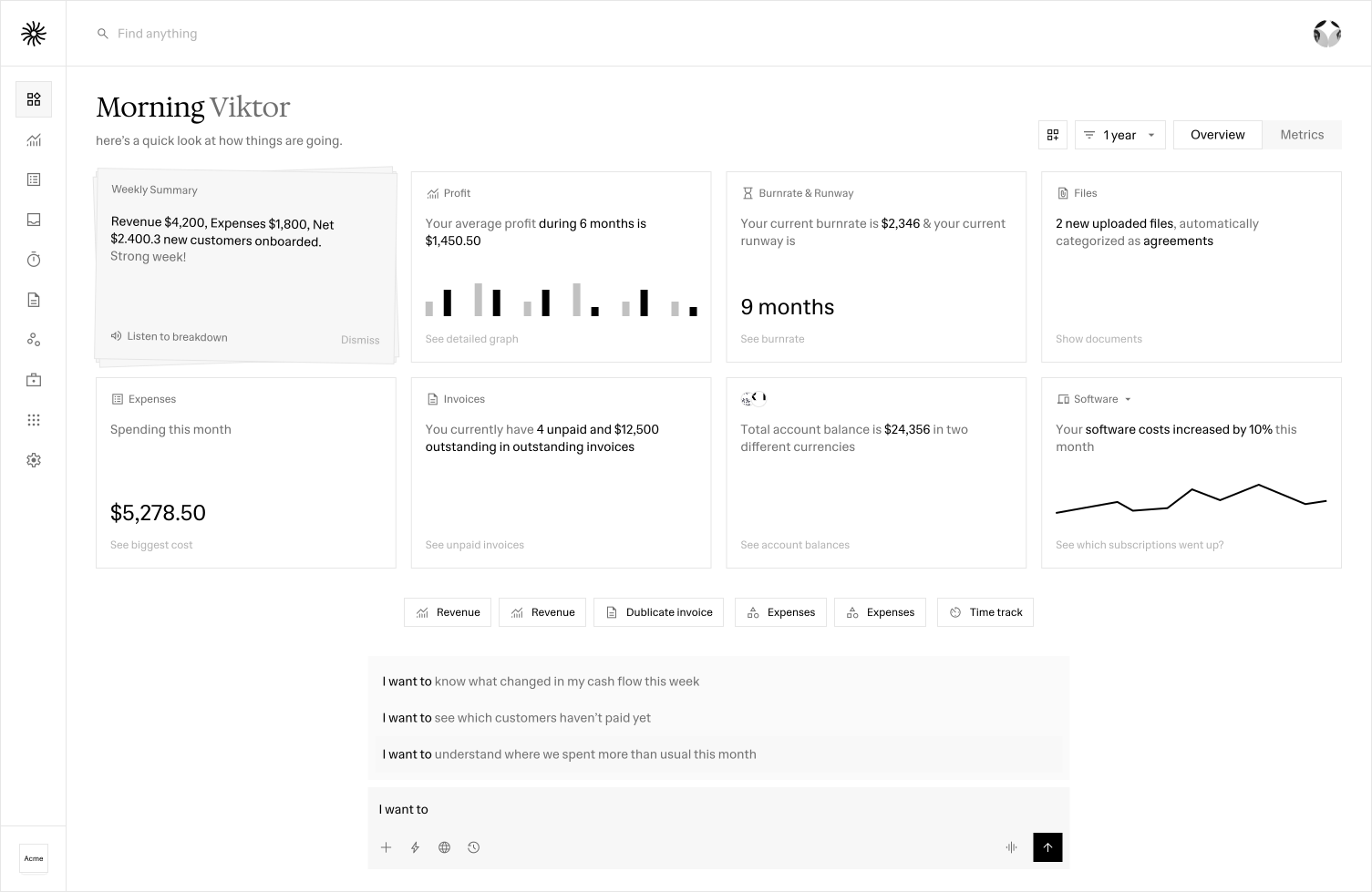
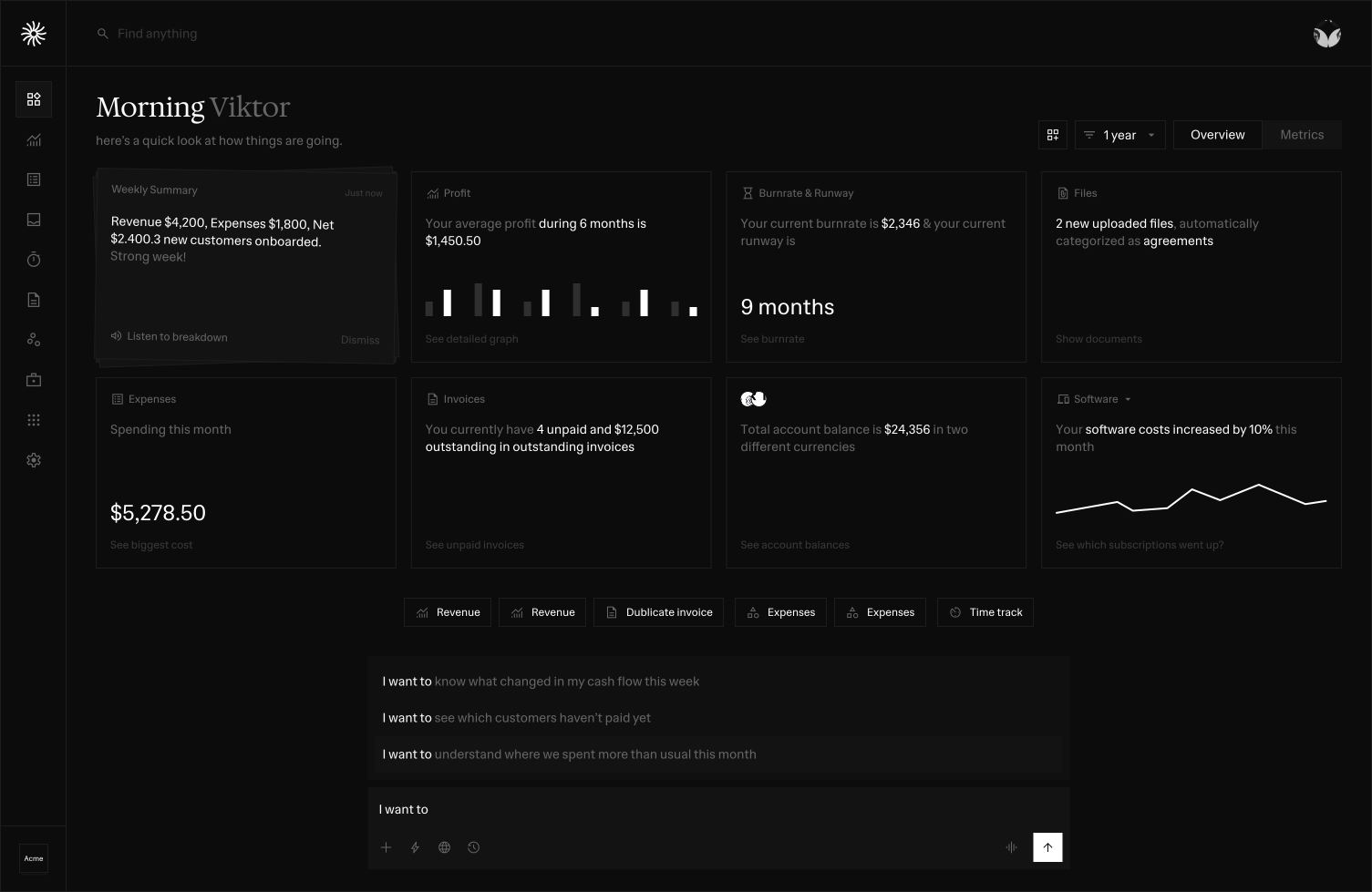
Midday is an open-source, all-in-one financial workspace for solo founders and freelancers. Bank sync, Magic Inbox auto-reconciliation, invoicing, time tracking and an AI assistant in one app starting at $15/month.
Midday is an open-source business workspace that bundles invoicing, automatic bank reconciliation, time tracking, document storage and an AI assistant into a single app aimed at solo founders, freelancers and one-person companies. We rate it 86/100 — the most opinionated, design-forward all-in-one financial OS in the freelancer/SMB space today, held back from a higher score only by a narrow target audience and an AGPL-3.0 license that makes commercial self-hosting awkward.
Midday was founded in by Stockholm-based engineer Pontus Abrahamsson after eight years of running his own consulting business and being frustrated that no single tool covered the full lifecycle of a one-person company. The first public commit landed on , and the project has since grown to 14,200+ GitHub stars and 1,396 forks under the AGPL-3.0 license — one of the fastest-growing financial-OS repos in the open-source ecosystem.
The problem Midday solves is fragmentation. Most freelancers cobble together QuickBooks for accounting, Toggl for time tracking, Bonsai or Stripe for invoicing, Google Drive for receipts, and a notes app for everything else. Midday collapses those into a single connected system: a transaction lands in your bank, the receipt is auto-matched from your inbox, the line item shows up on the invoice, and the time you logged is already attached to the customer it belongs to.
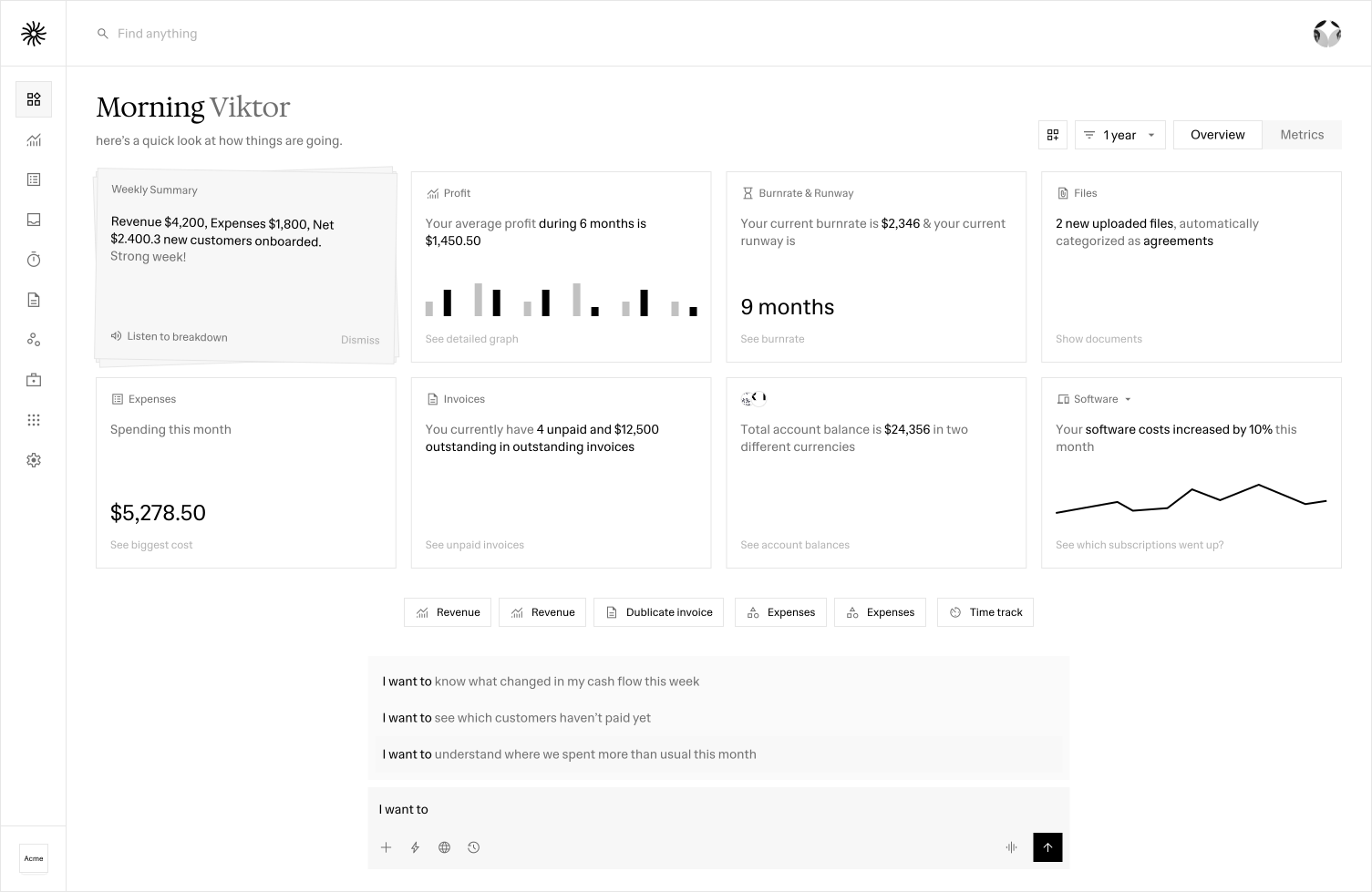

On Product Hunt, Midday's launches have repeatedly hit the front page with thousands of upvotes; the most cited praise across the comment threads is the Magic Inbox auto-reconciliation flow and the polish of the desktop app. The same theme shows up in the GitHub Discussions tab and in indie-hacker communities — reviewers consistently flag the design quality as "what a freelancer tool should have always looked like."
The recurring complaints are equally clear and worth knowing before you pay: the AGPL-3.0 license makes self-hosting commercially complicated unless you're willing to release any modifications under the same license, the assistant's accuracy can drift on edge-case categorization without manual rules, and bank-sync reliability depends on which provider (Plaid, GoCardless, Teller) covers your specific bank. Midday publishes its system status page openly — a good signal of bootstrap-style transparency, but also a reminder that outages happen.
Midday runs a simple two-tier model with a 14-day free trial and a 30-day money-back guarantee. There is no perpetual free plan.
| Plan | Price | Key Limits |
|---|---|---|
| Starter | $15/month or $180/year | 3 bank connections, 15 invoices/month, 10GB storage, 5 AI Connectors, all core features (invoicing, transactions, inbox, time tracking, exports, API). |
| Pro | $39/month or $468/year | 10 bank connections, 50 invoices/month, 100GB storage, 20 AI Connectors, customer portal, custom transaction categories, advanced metrics, priority support. |
| Self-hosted | Free (AGPL-3.0) | Run your own instance from the GitHub repo — you handle bank-provider keys, Resend, Supabase and infrastructure costs yourself. |
Best for: Solo founders, freelance designers and developers, indie consultants, and one-person agencies in the US or EU who currently juggle 4–6 separate apps for invoicing, time tracking, receipts and bookkeeping. If you bill in USD or EUR, send under 50 invoices a month, and want a single dashboard that talks to your bank, Midday is the cleanest option on the market.
Not ideal for: Teams with employees on payroll (Midday is explicitly a one-person workspace), businesses outside the supported bank-provider footprint, anyone needing direct tax-filing rather than CSV exports for an accountant, or commercial vendors who want to fork the codebase — AGPL-3.0 will force you to publish your modifications.
Pros:
Cons:
If Midday isn't the right fit, the closest credible alternatives are Bonsai (more mature, better US tax integration, $25/mo, closed-source), Indy (cheap at $9/mo, weaker bank sync, broader contract templates), and FreshBooks (the incumbent — far more features, but designed for accountants rather than founders, and starts at $19/mo only for limited clients). For pure open-source bookkeeping, Akaunting is the most popular self-hosted option but lacks Midday's design polish and AI features.
Yes — if you're a one-person company in the USD/EUR zone tired of jumping between QuickBooks, Toggl, Bonsai and a Notes app, Midday is the most cohesive single-tool replacement we've tested in 2026, and the $15/month Starter plan undercuts every closed-source competitor with comparable features. The design quality alone justifies the price for many founders. We rate it 86/100 because the one-person constraint is real and the AGPL-3.0 license rules out commercial forking — but for the audience it actually targets, it's the closest thing to a definitive answer in the freelancer-OS category.
ServiceNow and Accenture Launch Forward Deployed Engineering Program to Scale Agentic AI in the Enterprise (May 6, 2026)
At Knowledge 2026, ServiceNow and Accenture announced a joint forward deployed engineering program that drops co-located engineer pods into customer environments to ship agentic AI workflows natively on the ServiceNow AI Platform — with access to 300+ pre-built agent skills and the AI Control Tower as the governance backbone.
May 7, 2026
ReFiBuy Raises $13.6M Seed to Help Brands Get Recommended by AI Shopping Agents (May 5, 2026)
ReFiBuy, the Raleigh-based agentic commerce platform from ChannelAdvisor founder Scot Wingo, closed an oversubscribed $13.6M seed led by NewRoad Capital Partners on May 5, 2026 — betting that the next billion-dollar e-commerce moat is being chosen by ChatGPT, Claude and Perplexity.
May 7, 2026
OpenAI Replaces ChatGPT's Default Model With GPT-5.5 Instant — 52.5% Fewer Hallucinations, 30% Shorter Answers (May 5, 2026)
OpenAI on May 5 swapped GPT-5.3 Instant for the new GPT-5.5 Instant as ChatGPT's default model, claiming 52.5% fewer hallucinated claims on high-stakes prompts and 30% more concise answers. The model also rolls into the API as chat-latest and adds personalization from Gmail and past chats for Plus and Pro web users.
May 7, 2026
Is this product worth it?
Built With
Compare with other tools
Open Comparison Tool →