 Developer Tools
Templ
Type-safe HTML templating language for Go with compile-time safety
Marimo is a reactive, AI-native Python notebook that stores as pure .py, re-runs dependent cells automatically, and deploys as a web app. Backed by CoreWeave since October 2025.
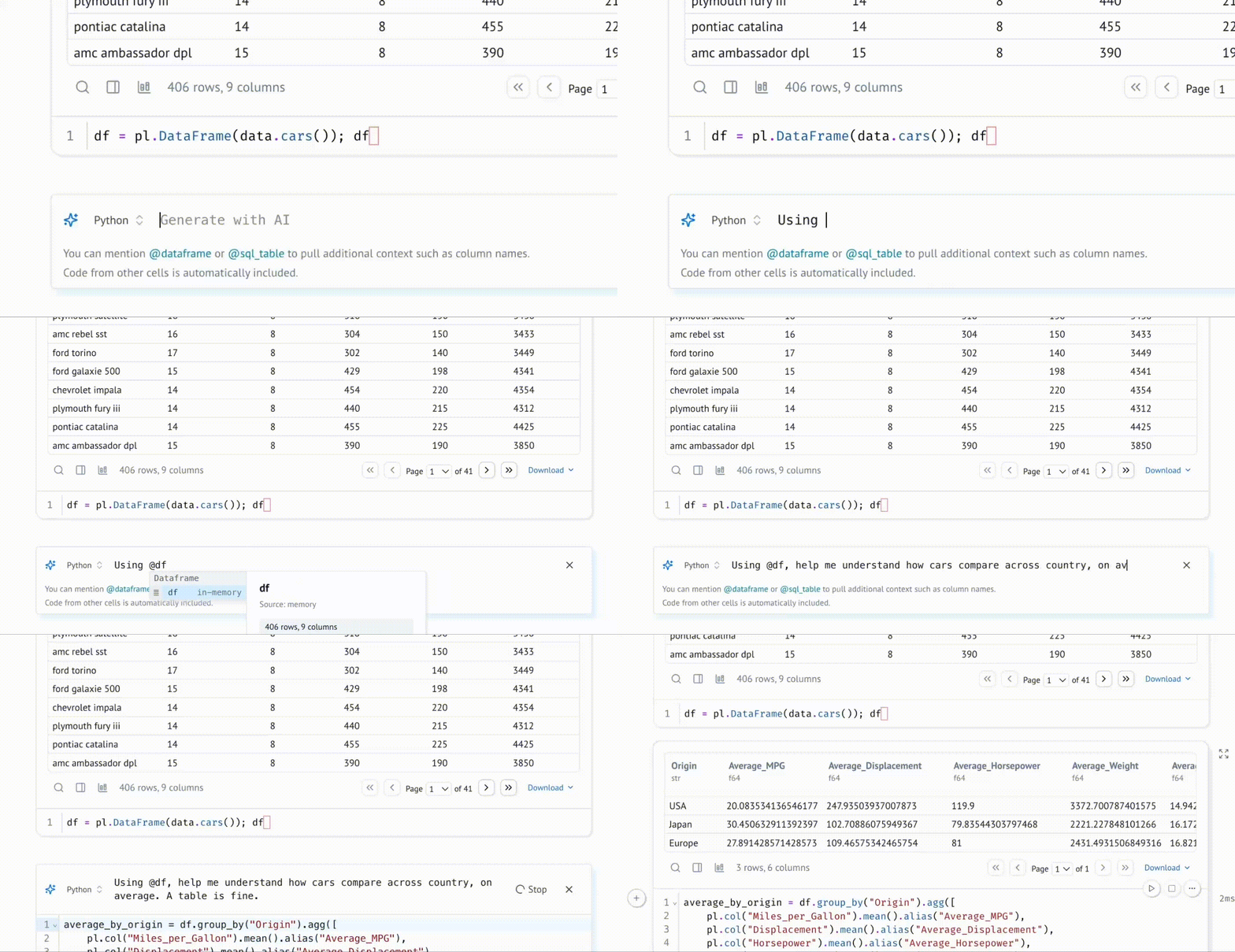
Marimo is a reactive, open-source Python notebook that stores as pure .py files, auto-reruns every dependent cell when you change one, and deploys as an interactive web app with a single command. We rate it 84/100 — the cleanest, most reproducible notebook experience we have tested in 2026, and the obvious pick for anyone tired of stale-state Jupyter bugs, although a recent pre-auth RCE vulnerability and a still-maturing ecosystem keep it from a 90.
Marimo is a next-generation notebook for Python, built from scratch by Akshay Agrawal (ex-Google Brain, Stanford PhD) and Myles Scolnick (ex-Palantir) in . The pitch is simple: kill the "hidden state" problem that has plagued Jupyter for a decade. In Marimo, cells form a DAG; run one cell and everything downstream reruns (or is marked stale), so what you see is what would actually run if you re-opened the notebook tomorrow. Variables can only be defined once, out-of-order execution is impossible, and notebooks serialize as plain Python — so git diff actually works.
On , Marimo Inc. was acquired by CoreWeave for an undisclosed amount. CoreWeave has committed to keeping the notebook permissively-licensed and open-source, and the latest release (0.23.2, ) was shipped just days ago. The project is at 20,500+ GitHub stars, downloaded hundreds of thousands of times a month, and already in production at Cloudflare, Shopify and BlackRock.
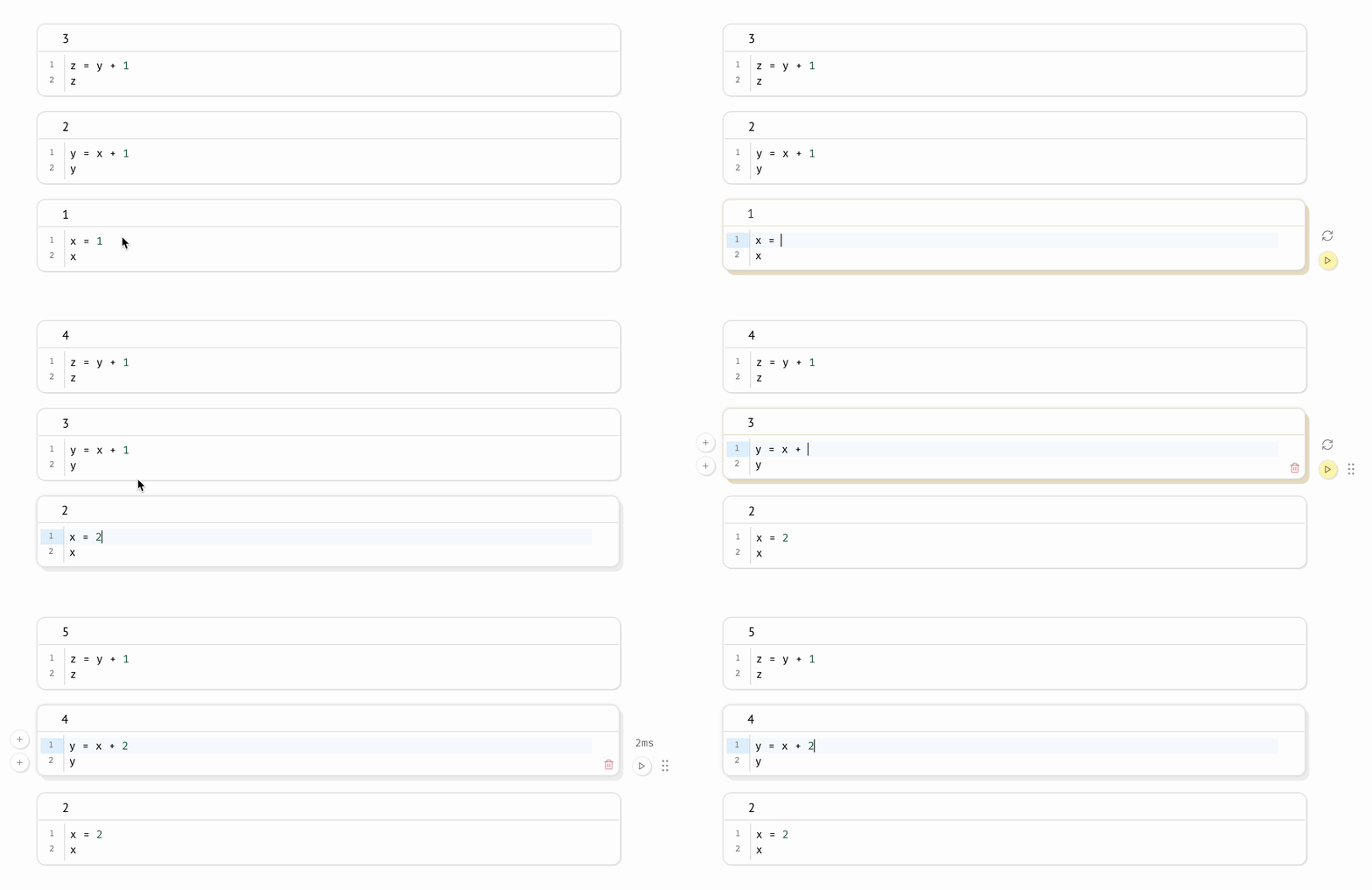
.py file. That means git diff is legible, merge conflicts are resolvable, and you can run any notebook with python notebook.py from the CLI.mo.ui.slider(), mo.ui.dropdown(), mo.ui.dataframe() — bind a widget to a variable and every cell that reads it updates reactively. No @observe, no event handlers.marimo run notebook.py serves the notebook as a read-only interactive web app; marimo export ships it as a WASM bundle that runs entirely in the browser.uv or pip.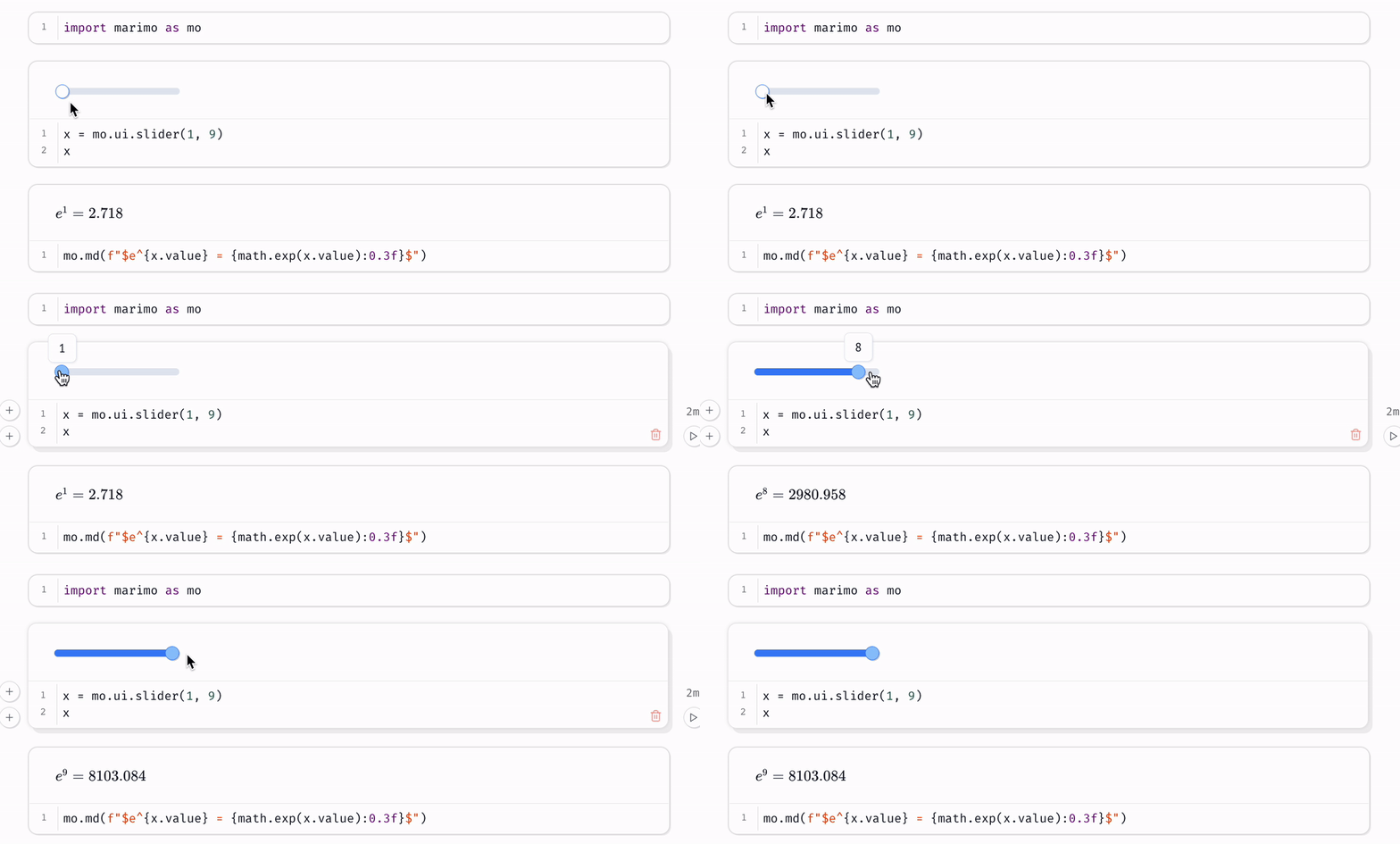
Reaction on Hacker News has been overwhelmingly positive, with the original Show HN thread crossing 500 points and top comments repeatedly praising the reproducibility story. On Reddit, r/Python and r/MachineLearning users highlight the git-friendly .py format as "the single feature that made me switch." Towards Data Science called it "a genuine replacement, not a wrapper" in early 2026.
The honest criticism is also consistent. Multiple Jupyter Discourse threads note that GitHub does not yet render .py notebooks visually the way it renders .ipynb, so sharing a read-only view on GitHub is worse. Some data scientists miss the ability to run cells truly out of order for exploratory hacking. And on , Sysdig disclosed a pre-authentication RCE in the terminal WebSocket endpoint; it was patched within 10 hours, but anyone exposing a Marimo server to the public internet without auth should double-check their version is ≥ 0.23.0.
The Marimo notebook itself is free and open-source under the Apache 2.0 license. There is no paid tier, no user cap, and no license key. The cloud-hosted offering, molab at molab.marimo.io, is currently free in public beta; enterprise pricing for CoreWeave-integrated deployments is negotiated directly.
| Plan | Price | Key Details |
|---|---|---|
| Marimo OSS | $0 | Self-host, unlimited notebooks, Apache 2.0 license, all features |
| molab (cloud) | $0 (beta) | Cloud-hosted shareable notebooks, browser-only |
| CoreWeave Enterprise | Contact | Integrated with CoreWeave GPU cloud, SSO, audit logs |
Best for: ML engineers, data scientists and AI builders who live in notebooks all day and keep getting burned by stale-state bugs; teams who want notebooks to live in git alongside the rest of their Python code; anyone building interactive dashboards or demos on top of a Python pipeline.
Not ideal for: Teams deeply invested in .ipynb tooling (Papermill pipelines, JupyterHub, Obsidian-style nbdev workflows), or anyone who relies on GitHub's native .ipynb rendering for casual sharing.
Pros:
Cons:
.py notebooks as rich previewsThe obvious alternative is JupyterLab — mature, ubiquitous, and the safe choice for anyone who does not value reactivity. Deepnote and Hex offer hosted reactive notebooks with built-in collaboration, but they are closed-source SaaS with per-seat pricing. Observable is brilliant if you are happy in JavaScript instead of Python. For pure scripting-as-documents, take a look at Val Town.
Yes, for most Python data and ML teams. Marimo solves a real, painful problem — notebook non-reproducibility — without asking you to adopt a new language or give up your favourite editor keybindings. The CoreWeave acquisition removes the last real objection ("will this startup survive?"), and the OSS license means you can adopt it today without vendor risk. The ecosystem is still smaller than Jupyter's, and if your team's workflow is tightly coupled to .ipynb tooling the switch will hurt for a few weeks. But the payoff in reproducibility and git-sanity is real. At 84/100, Marimo is the notebook we would pick for a new project in 2026.
.py files that are git-friendly; Jupyter stores them as .ipynb JSON files that are hard to diff. Jupyter has a larger ecosystem and native GitHub rendering; Marimo has stronger reproducibility guarantees.marimo run notebook.py to serve the notebook as a read-only interactive web app, or marimo export html-wasm to compile to a static WASM bundle that runs entirely in the browser with no server.ServiceNow and Accenture Launch Forward Deployed Engineering Program to Scale Agentic AI in the Enterprise (May 6, 2026)
At Knowledge 2026, ServiceNow and Accenture announced a joint forward deployed engineering program that drops co-located engineer pods into customer environments to ship agentic AI workflows natively on the ServiceNow AI Platform — with access to 300+ pre-built agent skills and the AI Control Tower as the governance backbone.
May 7, 2026
ReFiBuy Raises $13.6M Seed to Help Brands Get Recommended by AI Shopping Agents (May 5, 2026)
ReFiBuy, the Raleigh-based agentic commerce platform from ChannelAdvisor founder Scot Wingo, closed an oversubscribed $13.6M seed led by NewRoad Capital Partners on May 5, 2026 — betting that the next billion-dollar e-commerce moat is being chosen by ChatGPT, Claude and Perplexity.
May 7, 2026
OpenAI Replaces ChatGPT's Default Model With GPT-5.5 Instant — 52.5% Fewer Hallucinations, 30% Shorter Answers (May 5, 2026)
OpenAI on May 5 swapped GPT-5.3 Instant for the new GPT-5.5 Instant as ChatGPT's default model, claiming 52.5% fewer hallucinated claims on high-stakes prompts and 30% more concise answers. The model also rolls into the API as chat-latest and adds personalization from Gmail and past chats for Plus and Pro web users.
May 7, 2026
Is this product worth it?
Built With
Compare with other tools
Open Comparison Tool →