 Developer Tools
Templ
Type-safe HTML templating language for Go with compile-time safety
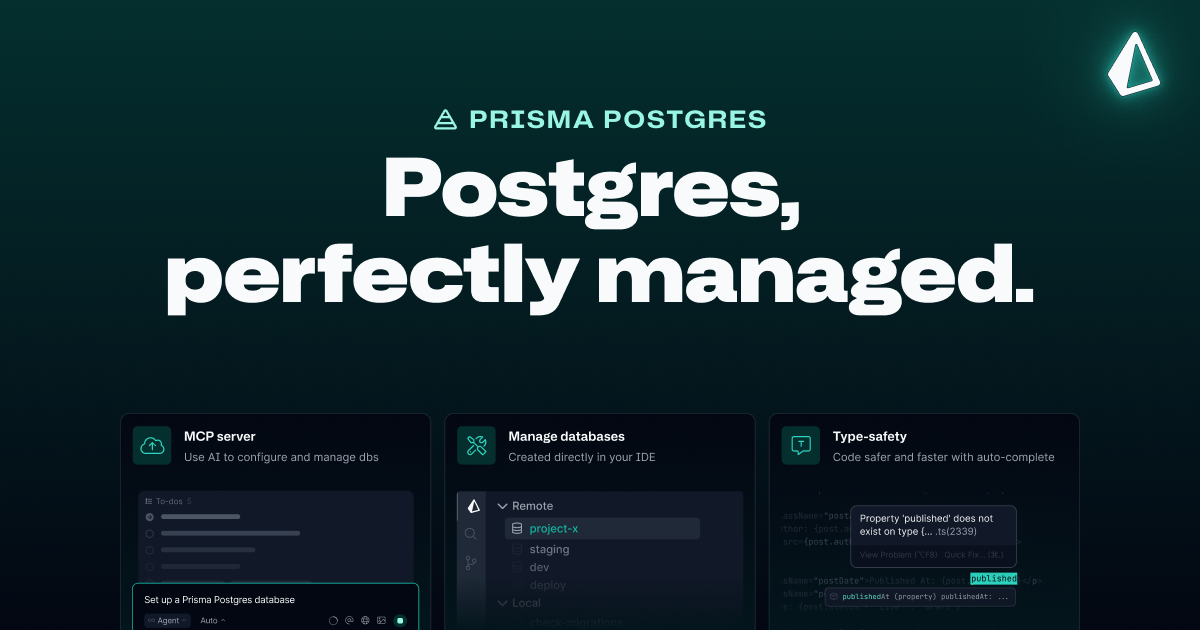
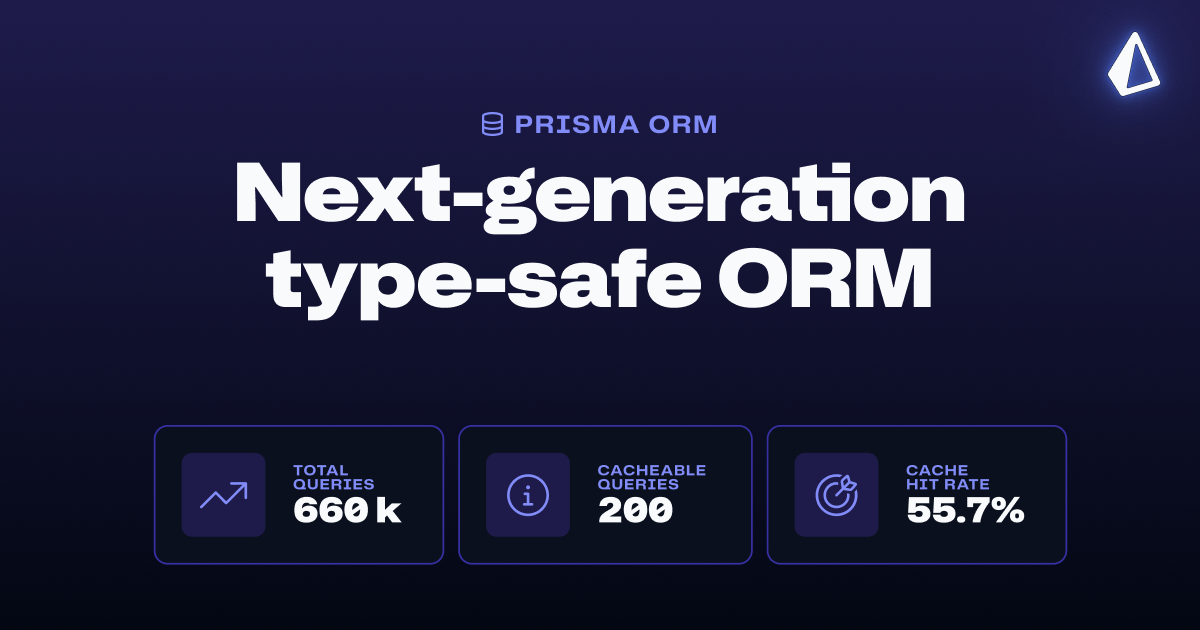
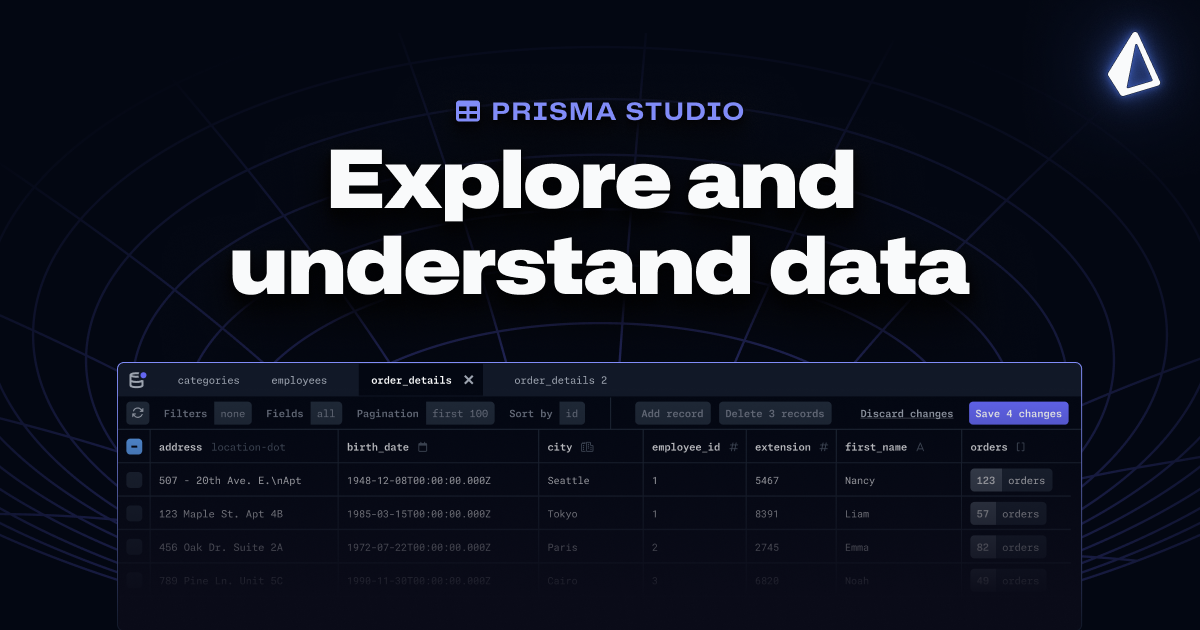
Prisma is the leading type-safe ORM for Node.js and TypeScript, now bundled with managed Postgres, a global query accelerator, and a free data browser. We rate it 89/100.
Prisma is a next-generation, type-safe ORM for Node.js and TypeScript that now ships with a fully managed Postgres database, a global query accelerator, and a built-in data browser. We rate it 89/100 — the most ergonomic data layer for TypeScript apps in 2026, with a freshly launched usage-based Postgres tier that finally makes the whole stack viable for hobby projects all the way up to production scale.
Prisma was created by Prisma Data, Inc. in Berlin and San Francisco, with the open-source ORM first published on GitHub on . The core ORM is licensed under Apache 2.0, and the repository at github.com/prisma/prisma currently sits at 45,848 stars and 2,177 forks. The latest stable release as of is Prisma 7.8.0, which lands faster cold-starts, an improved Prisma Studio, and tighter Prisma Postgres integration.
Prisma replaces hand-written SQL and brittle ORMs with a single declarative schema file. You describe your data model once in schema.prisma, run prisma generate, and get a fully type-safe client that auto-completes every query, prevents invalid joins at compile time, and keeps your migrations in lockstep with the database. It supports PostgreSQL, MySQL, MariaDB, SQL Server, SQLite, MongoDB, and CockroachDB — the broadest dialect coverage of any TypeScript ORM.
prisma migrate dev diffs your schema.prisma against the live database and produces a reviewable SQL migration. The same flow runs in CI for production rollouts.
Prisma is consistently the most-loved data layer in the State of JavaScript and Stack Overflow surveys, but the developer community is honest about its limits. On r/node and Hacker News, the most-cited praise is the developer experience: schema-first design, autocompletion that just works, and a migration story that doesn’t require remembering raw SQL. Engineering teams at Apollo, Adobe, Sotheby’s, Airdna, Replit, Hop, and Trustpilot all publicly use Prisma in production.
The recurring complaints are also worth knowing. The biggest is the historical query engine: until Prisma 6, Prisma shipped a Rust binary that added cold-start time on serverless platforms and ate hundreds of MB of RAM — the team has spent the last year migrating everything to a pure TypeScript engine, and 7.x has largely closed the gap. Heavy users still occasionally hit ORM-shaped queries (findMany with deep nested includes) that fall behind hand-written SQL, and a vocal minority on r/node prefer Drizzle ORM for its closer-to-SQL ergonomics.
The Prisma ORM and Prisma Studio are free forever under Apache 2.0, including for commercial use. The paid tiers exist for Prisma Postgres (the managed database) and Prisma Accelerate (the global pooler/cache), both billed on a usage-based model.
| Plan | Price | Key Limits |
|---|---|---|
| Free | $0/month | 100,000 operations, 500 MB storage, 5 databases — no credit card required |
| Starter | $10/month | 1M operations, 10 GB storage, 10 databases, 7-day backups |
| Pro | $49/month | 10M operations, 50 GB storage, 100 databases, cache tag invalidations |
| Business | $129/month | 50M operations, 100 GB storage, 1000 databases, 30-day backups |
| Enterprise | Contact sales | Volume pricing, SOC 2 / HIPAA, dedicated support |
Yearly plans save 25%. The team also publishes free credits for verified open-source projects.
Best for: Node.js and TypeScript teams who want ironclad type safety from schema to query result, full-stack developers shipping on Vercel, Netlify, Cloudflare Workers, or AWS Lambda, and small-to-mid-size product teams who would rather declare a schema than memorise raw SQL.
Not ideal for: teams writing Postgres-flavoured stored procedures, recursive CTEs, or anything where you genuinely want SQL itself in your codebase — Drizzle or Kysely are usually a better fit there. Polyglot stacks where the same database is queried by Go, Python, and JavaScript will see less of Prisma’s upside.
Pros:
Cons:
Drizzle ORM is the closest direct competitor — lighter weight, closer to raw SQL, and a popular pick for developers who find Prisma’s abstraction layer too thick. Supabase bundles a Postgres database with auth and storage and uses PostgREST instead of an ORM. For .NET-shaped teams, EF Core remains the equivalent. Neon and Turso compete with Prisma Postgres on managed hosting alone.
Yes — Prisma is the safest default for any new TypeScript project that talks to a database in 2026. The free ORM alone justifies the install, and the new Prisma Postgres tier finally lets you run the entire stack — schema, migrations, client, hosting — from a single vendor at a price that scales gracefully from $0 to enterprise. The 89/100 rating reflects the industry-leading developer experience minus a few honest gripes around bundle size and the operations pricing model. If you’re shipping a TypeScript backend in 2026, Prisma should be your first option, not your fallback.
ServiceNow and Accenture Launch Forward Deployed Engineering Program to Scale Agentic AI in the Enterprise (May 6, 2026)
At Knowledge 2026, ServiceNow and Accenture announced a joint forward deployed engineering program that drops co-located engineer pods into customer environments to ship agentic AI workflows natively on the ServiceNow AI Platform — with access to 300+ pre-built agent skills and the AI Control Tower as the governance backbone.
May 7, 2026
ReFiBuy Raises $13.6M Seed to Help Brands Get Recommended by AI Shopping Agents (May 5, 2026)
ReFiBuy, the Raleigh-based agentic commerce platform from ChannelAdvisor founder Scot Wingo, closed an oversubscribed $13.6M seed led by NewRoad Capital Partners on May 5, 2026 — betting that the next billion-dollar e-commerce moat is being chosen by ChatGPT, Claude and Perplexity.
May 7, 2026
OpenAI Replaces ChatGPT's Default Model With GPT-5.5 Instant — 52.5% Fewer Hallucinations, 30% Shorter Answers (May 5, 2026)
OpenAI on May 5 swapped GPT-5.3 Instant for the new GPT-5.5 Instant as ChatGPT's default model, claiming 52.5% fewer hallucinated claims on high-stakes prompts and 30% more concise answers. The model also rolls into the API as chat-latest and adds personalization from Gmail and past chats for Plus and Pro web users.
May 7, 2026
Is this product worth it?
Built With
Compare with other tools