 Developer Tools
Templ
Type-safe HTML templating language for Go with compile-time safety
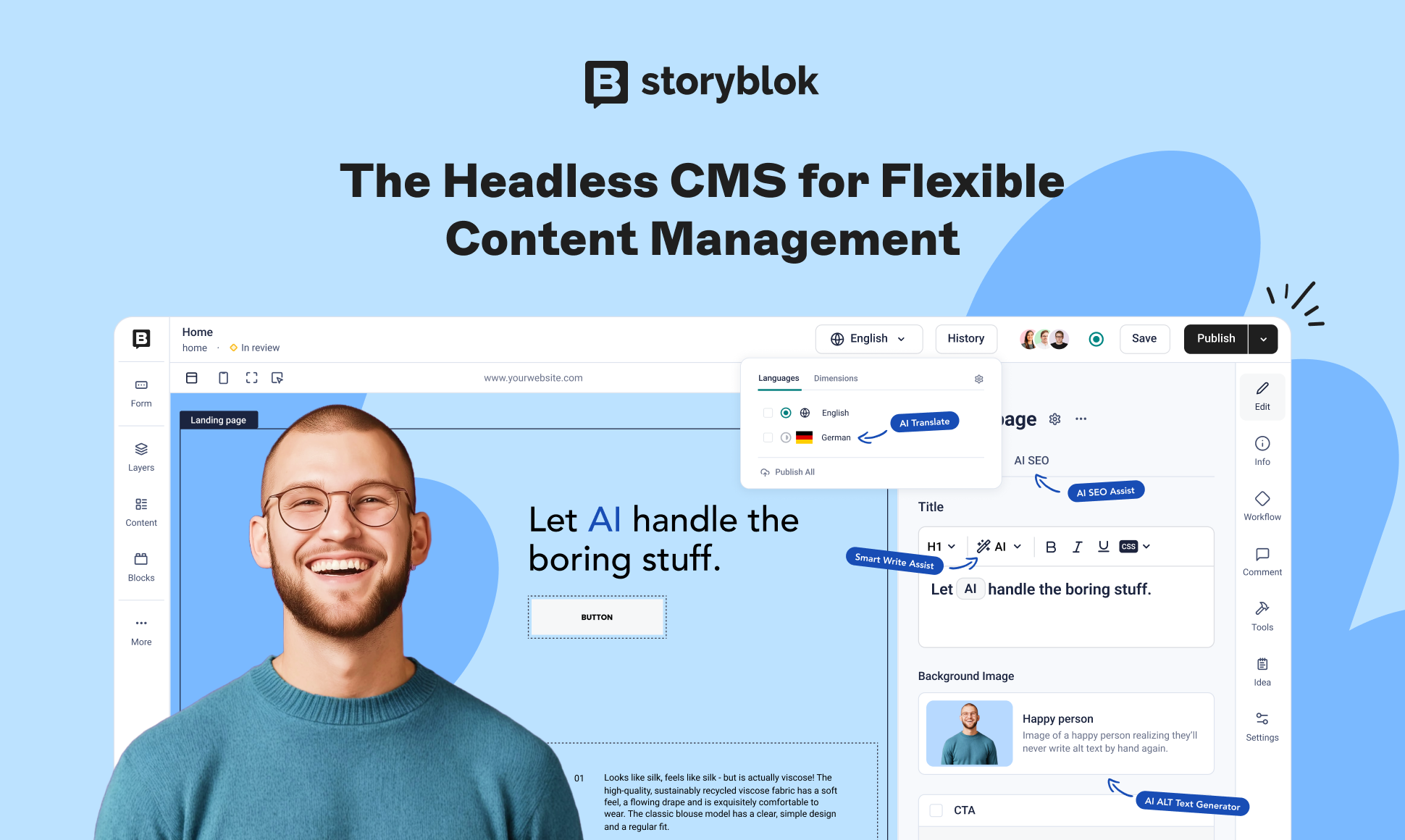
Storyblok pairs a structured, API-first content model with a live visual editor — the rare headless CMS that marketers actually like. Best-in-class component-based authoring, but pricing scales sharply once you outgrow the Entry tier.
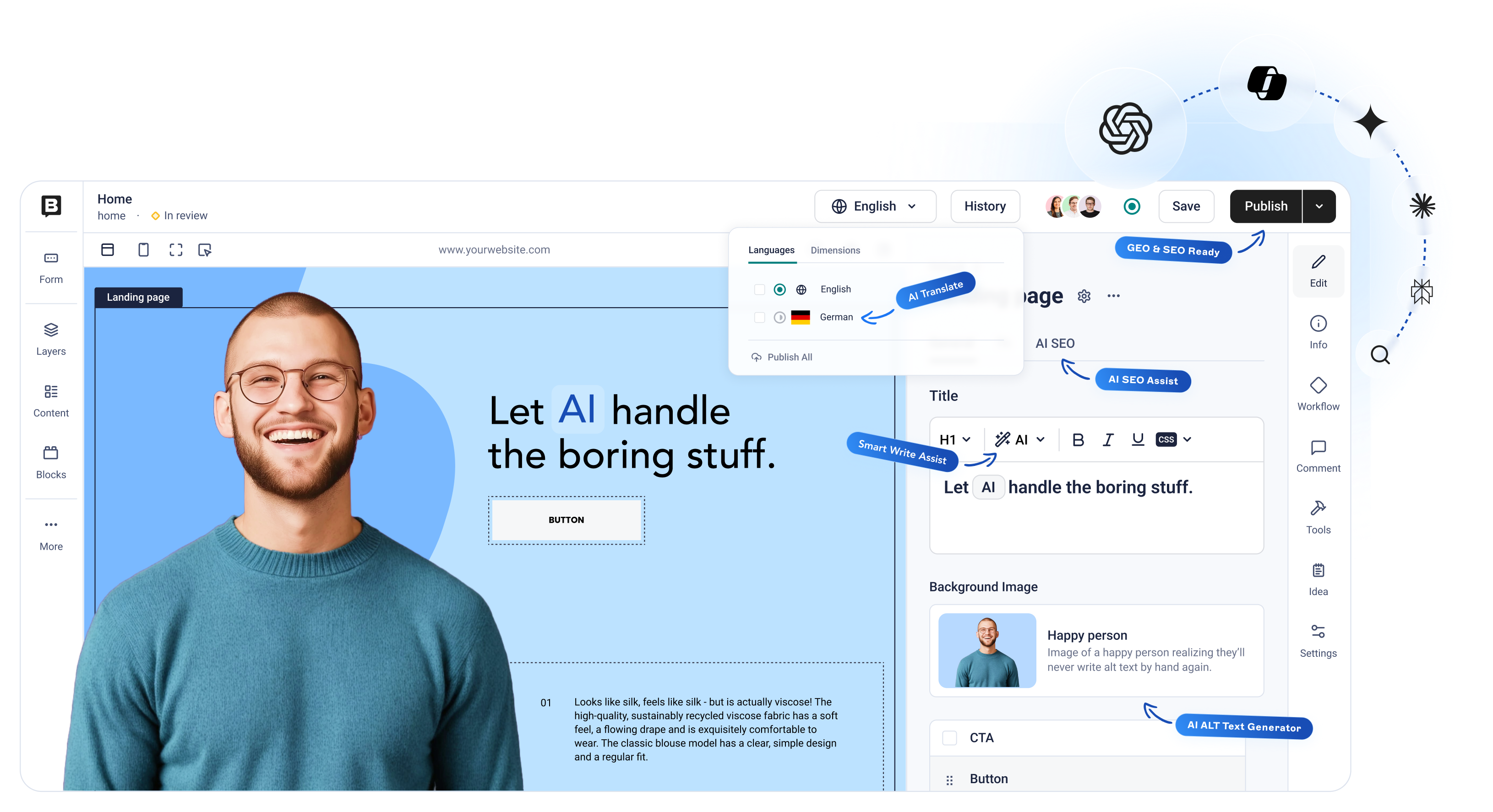
Storyblok is a headless CMS with a real visual editor — a structured, API-first content backend wrapped in a live preview that marketers can actually use without filing a developer ticket. We rate it 86/100 — for product and marketing teams that want the developer freedom of a headless stack without losing inline editing, Storyblok is the most polished option on the market today.
Storyblok is a headless content management system founded in 2017 by Dominik Angerer (CEO) and Alexander Feiglstorfer (CTO), headquartered in Linz, Austria. The pair were working at a digital agency, fixing the same broken WordPress and AEM setups for clients, when they decided to build the headless CMS they wished existed — one where the API-first content model didn't force editors to work blind in JSON-shaped admin forms. The first public version shipped in and the company has since raised $138M total across four rounds, capped by an $80M Series C on , led by Brighton Park Capital with participation from HV Capital and Mubadala Capital.
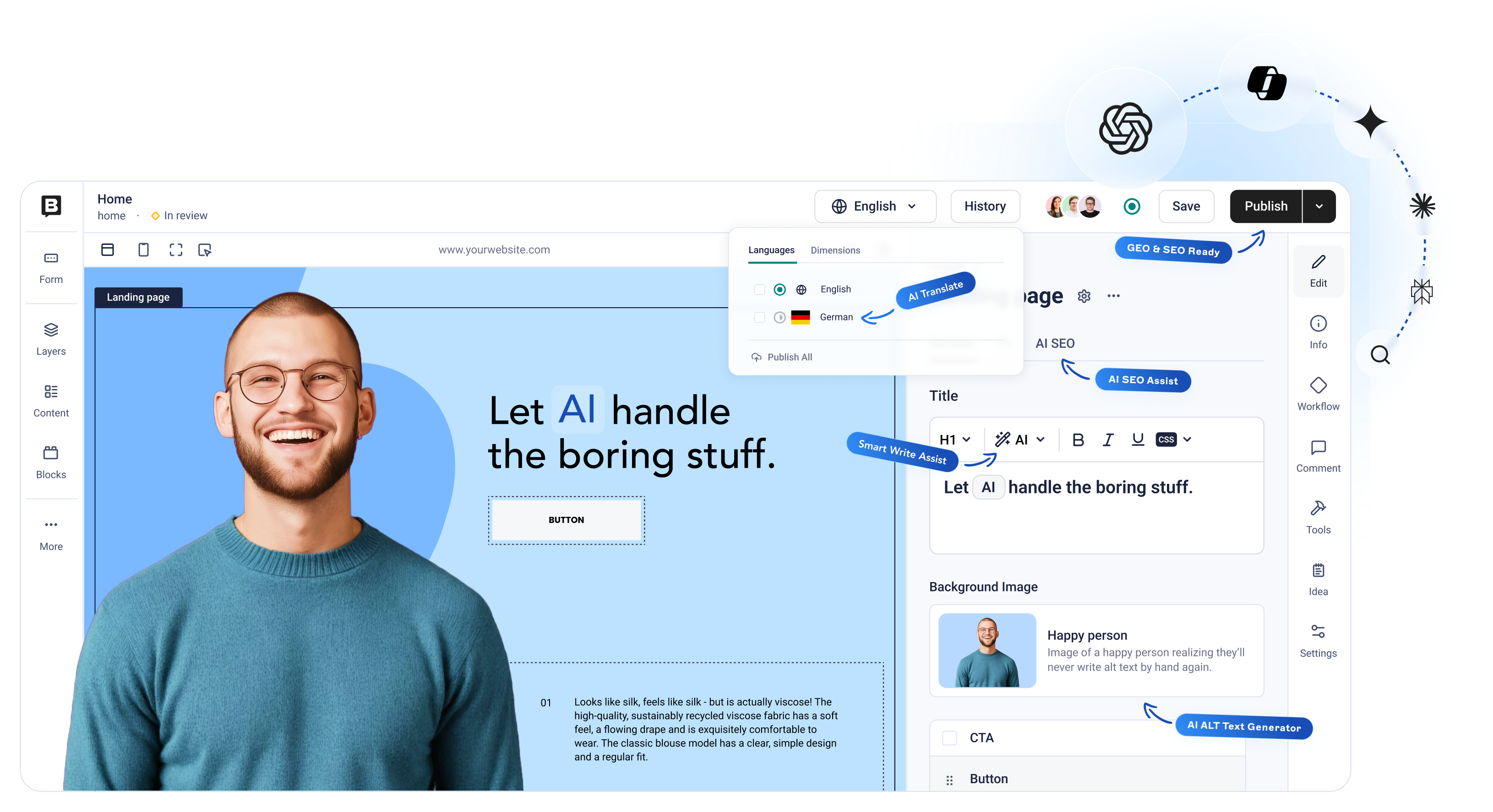
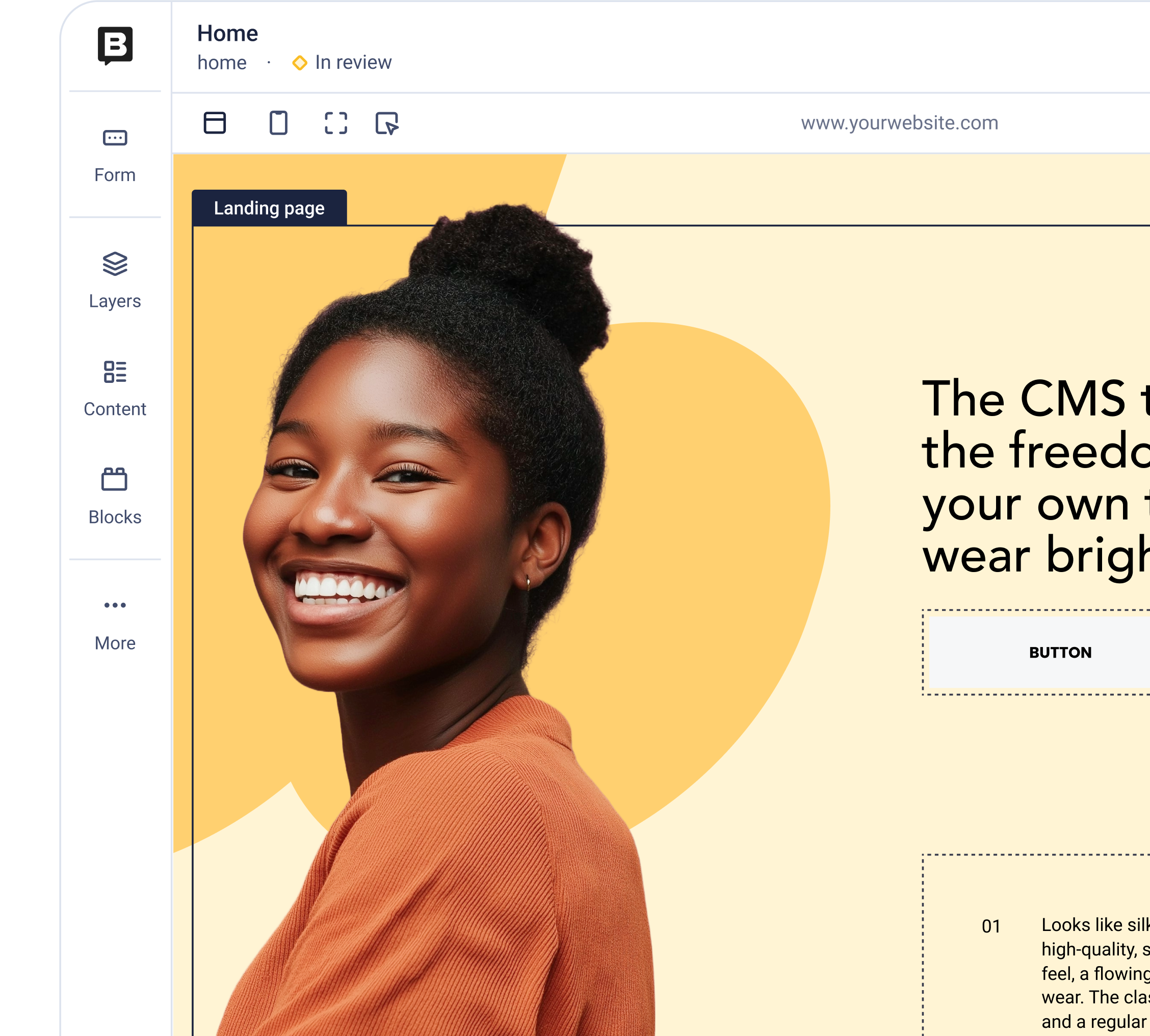
The specific problem Storyblok solves is the long-standing trade-off between developer flexibility and editor experience. Traditional headless CMSes like Contentful and Sanity ship a clean API but make marketers edit content in field-by-field forms with no spatial context. Page builders like Webflow give a great visual experience but lock you into their rendering. Storyblok is the rare middle path: a structured component-based content model on the backend, a true side-by-side visual editor on the frontend, and an iframe-based bridge that lets the live preview run in your own Next.js, Nuxt, Astro, or Remix project.
Sentiment is mostly positive but uneven. On G2, Storyblok holds a 4.6/5 across hundreds of reviews, with the most-quoted praise being some variant of "the only headless CMS my marketing team didn't ask me to swap out." On Reddit's r/webdev and r/nextjs, recurring praise centers on the SDK quality, the responsiveness of the support team, and the speed of the visual editor compared to Contentful's preview iframe. The consistent complaints, however, are real: pricing scales sharply with seats and traffic, the jump from the $99/month Entry tier to the $849/month Business tier is jarring for mid-size teams, and the translation workflow feels dated compared to Phrase and Lokalise direct integrations. On Hacker News, the most-upvoted critical thread (mid-2024) called out that complex nested layouts can fight the visual editor's coordinate system, and the official response acknowledged it as roadmap work.
Storyblok's published pricing has four tiers, and the gap between them is the single biggest thing to understand before adopting:
| Plan | Price | Key Limits |
|---|---|---|
| Community | Free | 1 user, 1 space, 25,000 API requests/month, 1 GB asset storage |
| Entry | $99/month | 5 users, dynamic content, 1M API requests, basic workflows |
| Business | $849/month | 20 users, multi-environment pipelines, advanced approvals, SLA |
| Enterprise | Custom | SSO/SAML, 99.99% uptime SLA, unlimited consumption, dedicated CSM |
Annual billing knocks roughly 17% off. Add-ons for extra seats, additional spaces, and image traffic stack on top of every tier.
Best for: Marketing-led product teams at mid-market and enterprise companies who run marketing sites on a modern frontend (Next.js, Nuxt, Astro) and need editors to ship pages without developer involvement. Particularly strong for multi-language sites and headless ecommerce storefronts where a structured, API-first model matters but the editor experience cannot be sacrificed.
Not ideal for: Tiny teams on tight budgets — the free tier is real but the Entry tier kicks in fast, and the jump to Business is brutal. Also not ideal for developers who prefer schema-as-code workflows like Sanity Studio's TypeScript schema, since Storyblok's component definitions live in the dashboard by default. If you have no marketing team and just want a structured content backend, Sanity or Payload will likely be cheaper and more developer-friendly.
Pros:
Cons:
Sanity is the strongest developer-first alternative — schema-as-code in TypeScript and an excellent customizable Studio, but the editor experience is field-based rather than visual. Contentful is the incumbent enterprise headless CMS with deeper marketplace integrations, but the visual editing story is weaker and the pricing is even less forgiving. Strapi is the open-source self-hostable choice — free at any scale if you operate it yourself, but the editor UX and visual preview are not in the same league. Webflow beats Storyblok on pure visual fidelity for marketing sites but locks you into Webflow's rendering and hosting.
For mid-market and enterprise teams where marketers and developers genuinely share ownership of the marketing site, Storyblok is the best headless CMS we've tested in 2026. The visual editor is the real differentiator — every other headless CMS treats live preview as an afterthought, and Storyblok treats it as the product. The 86/100 score reflects an outstanding product held back by aggressive pricing tiers and a few rough edges in translation and nested layouts. If your team has a $99/month budget, take the Entry tier; if you're already past the $849/month threshold, you're probably the exact customer they were built for. If you're a solo developer with no marketers in the loop, Sanity will save you money.
ServiceNow and Accenture Launch Forward Deployed Engineering Program to Scale Agentic AI in the Enterprise (May 6, 2026)
At Knowledge 2026, ServiceNow and Accenture announced a joint forward deployed engineering program that drops co-located engineer pods into customer environments to ship agentic AI workflows natively on the ServiceNow AI Platform — with access to 300+ pre-built agent skills and the AI Control Tower as the governance backbone.
May 7, 2026
ReFiBuy Raises $13.6M Seed to Help Brands Get Recommended by AI Shopping Agents (May 5, 2026)
ReFiBuy, the Raleigh-based agentic commerce platform from ChannelAdvisor founder Scot Wingo, closed an oversubscribed $13.6M seed led by NewRoad Capital Partners on May 5, 2026 — betting that the next billion-dollar e-commerce moat is being chosen by ChatGPT, Claude and Perplexity.
May 7, 2026
OpenAI Replaces ChatGPT's Default Model With GPT-5.5 Instant — 52.5% Fewer Hallucinations, 30% Shorter Answers (May 5, 2026)
OpenAI on May 5 swapped GPT-5.3 Instant for the new GPT-5.5 Instant as ChatGPT's default model, claiming 52.5% fewer hallucinated claims on high-stakes prompts and 30% more concise answers. The model also rolls into the API as chat-latest and adds personalization from Gmail and past chats for Plus and Pro web users.
May 7, 2026
Is this product worth it?
Built With
Compare with other tools
Open Comparison Tool →