

 Productivity
Raycast
Powerful macOS launcher and productivity platform — 7.3K GitHub stars for extensions
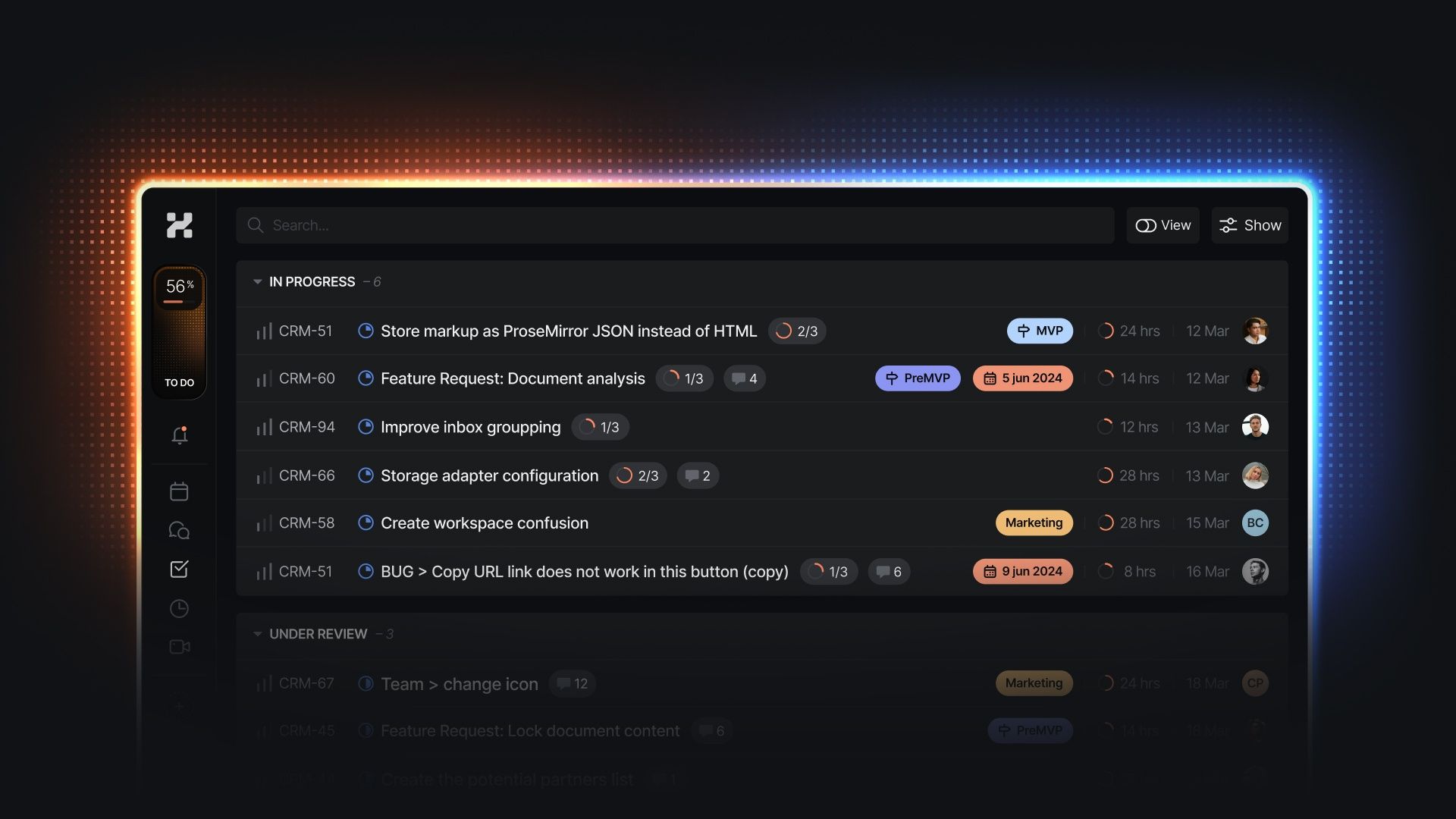
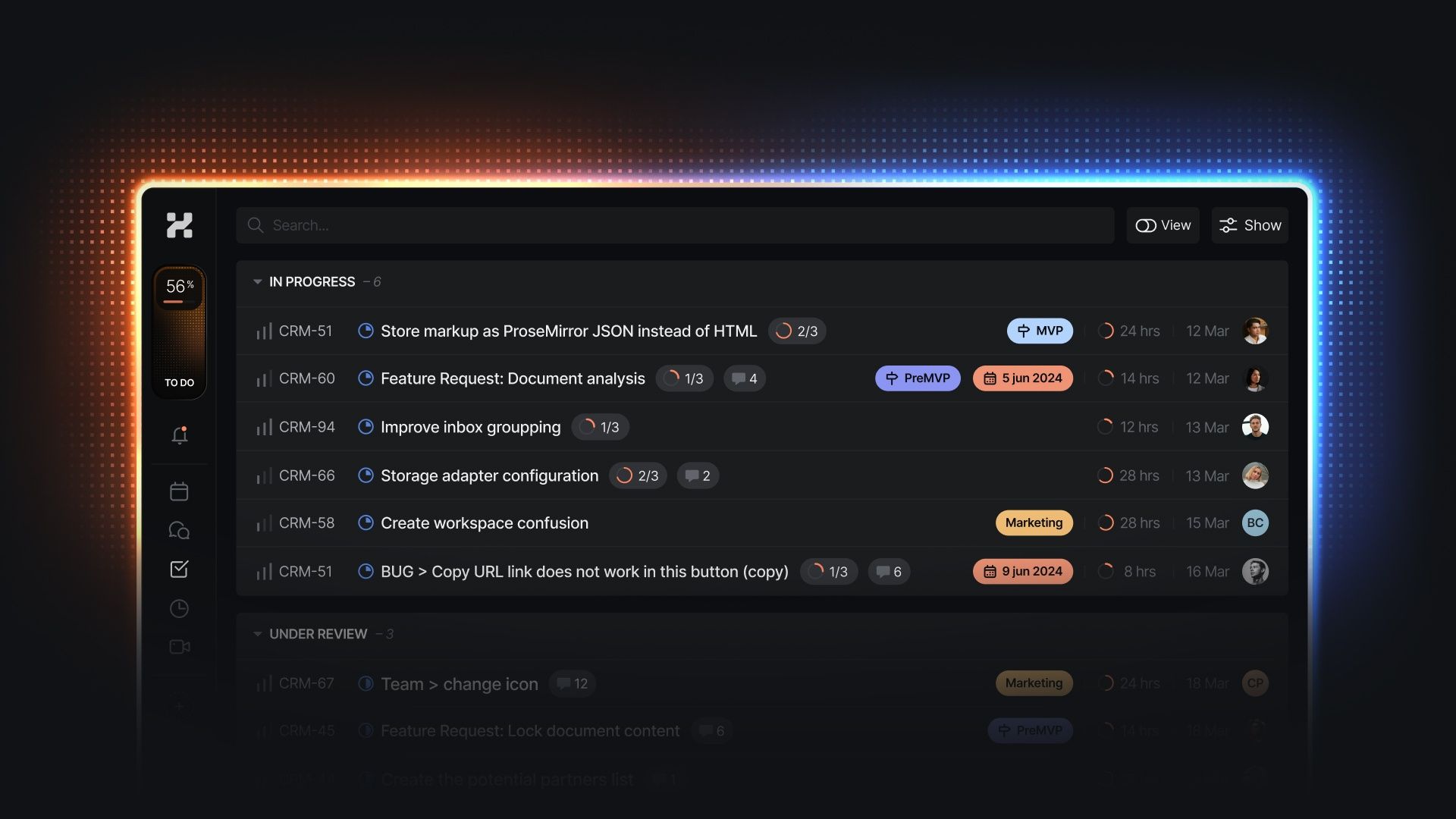
Huly is an open-source platform that bundles project management, chat, docs, HR and time tracking into a single self-hostable app. Unlimited users on every plan, including the free one.
Huly is an open-source “everything app” that bundles project management, team chat, documents, drive, time tracking and HR into a single platform — pitched as a self-hostable replacement for the Linear + Jira + Slack + Notion stack. We rate it 83/100 — an outstanding choice for engineering teams who want one tool they fully control, but rough edges around mobile and integrations mean it is not yet a drop-in for every Slack or Notion shop.
Huly is built by Hardcore Engineering Inc., founded by Andrey Platov — previously the CEO of TeamDev and the author of the original ALM tool that became Atlassian’s YouTrack. The first commit on the public hcengineering/platform repo lands in , and the project crossed 24,000 GitHub stars in 2025 with active production releases shipping multiple times a week (current self-host tag at the time of writing is v0.7.382).
The specific problem Huly solves is the five-tab workflow: most product teams already pay for Linear or Jira, Slack, Notion, a shared drive and a time tracker — tools that do not talk to each other and that bill per seat across every product. Huly puts all of that under one URL, with messages, documents and tasks linked at the data-model level, and charges a single flat price (or zero, if you self-host).
docker compose up on a 2 vCPU / 8 GB RAM box brings up the whole stack — Mongo, Elasticsearch, MinIO, the Rush’d Node services and the Svelte client.
The Hacker News launch thread from October 2024 racked up several hundred points and is unusually polarised. The most-upvoted positive comment praises the polish (“feels like a single product, not five Frankensteined together”); the most-upvoted critical thread points out that self-hosting Huly means running Mongo, Elasticsearch, MinIO and a stack of Node services — non-trivial for solo operators. On Reddit’s r/selfhosted, the recurring theme is that small teams love it after the initial setup but warn that upgrades sometimes ship breaking migrations — the MIGRATION.md file in the self-host repo is required reading. Capterra lists a small but enthusiastic review base in the 4.5–4.8 range, with the most common complaint being a still-immature mobile experience and limited third-party integrations beyond GitHub.
Huly is fully open source under EPL-2.0, so the most honest answer to “how much does it cost?” is “your server bill if you self-host.” The Huly cloud is priced on storage and bandwidth, with unlimited users on every tier:
| Plan | Price | Storage | Video / Audio Traffic |
|---|---|---|---|
| Common (Free) | $0/month | 10 GB | 10 GB |
| Rare | $19.99/month | 100 GB | 100 GB |
| Epic | $99.99/month | 1 TB | 500 GB |
| Legendary | $399.99/month | 10 TB | 2 TB |
| Custom | Contact | Tailored | Tailored |
Self-hosting on a $20–$40/month VPS is the sweet spot for ten- to fifty-person teams; the cloud plans make sense once you stop wanting to run Mongo upgrades.
Best for: Engineering and product teams of 5–100 people who currently pay for Linear or Jira plus Slack plus Notion and want to consolidate tools, control their own data, or simply stop paying per-seat across three products. Especially compelling for European teams with GDPR or data-residency obligations.
Not ideal for: Teams that depend heavily on third-party integrations (Salesforce, Zendesk, PagerDuty, Datadog), mobile-first users, or non-technical orgs that need a SOC 2-audited managed SaaS today rather than a self-hostable young product.
Pros:
Cons:
The closest commercial alternative is the Linear + Slack + Notion stack — faster, more polished, and dramatically more expensive once you cross 20 seats. Plane is a leaner open-source PM tool but lacks chat and documents. AppFlowy overlaps on the docs side but does not ship a real issue tracker. Outline is a great Notion alternative but is documentation-only.
Yes, with a caveat. If you are an engineering or product team comfortable running a Docker stack — or paying $20/month for the cloud — Huly is the single best open-source bet for collapsing Linear, Slack and Notion into one bill. The product is mature enough for production use today (hundreds of teams already run it that way), but it is not yet a one-click replacement for a Slack-first non-technical org. Our 83/100 reflects exactly that: outstanding for the right team, still maturing for everyone else.
ServiceNow and Accenture Launch Forward Deployed Engineering Program to Scale Agentic AI in the Enterprise (May 6, 2026)
At Knowledge 2026, ServiceNow and Accenture announced a joint forward deployed engineering program that drops co-located engineer pods into customer environments to ship agentic AI workflows natively on the ServiceNow AI Platform — with access to 300+ pre-built agent skills and the AI Control Tower as the governance backbone.
May 7, 2026
ReFiBuy Raises $13.6M Seed to Help Brands Get Recommended by AI Shopping Agents (May 5, 2026)
ReFiBuy, the Raleigh-based agentic commerce platform from ChannelAdvisor founder Scot Wingo, closed an oversubscribed $13.6M seed led by NewRoad Capital Partners on May 5, 2026 — betting that the next billion-dollar e-commerce moat is being chosen by ChatGPT, Claude and Perplexity.
May 7, 2026
OpenAI Replaces ChatGPT's Default Model With GPT-5.5 Instant — 52.5% Fewer Hallucinations, 30% Shorter Answers (May 5, 2026)
OpenAI on May 5 swapped GPT-5.3 Instant for the new GPT-5.5 Instant as ChatGPT's default model, claiming 52.5% fewer hallucinated claims on high-stakes prompts and 30% more concise answers. The model also rolls into the API as chat-latest and adds personalization from Gmail and past chats for Plus and Pro web users.
May 7, 2026
Is this product worth it?
Built With
Compare with other tools
Open Comparison Tool →