 AI Tools
Aider
AI pair programming in your terminal—free, open-source, any LLM
Lovable is the AI app builder that turned vibe coding into a $6.6B business in 18 months. We tested the 2026 version — the speed is real, the credit system is not.
Lovable is the Swedish AI app builder that lets you describe a product in plain English and ships a working React + Tailwind + Vite app you can deploy in one click. We rate it 82/100 — the fastest way on the market today to go from idea to clickable MVP, but the credit system and error-loop problems on complex projects mean it's a tool you outgrow, not a forever stack.
Lovable is an AI-powered app builder founded in in Stockholm by Anton Osika (a former CERN physicist and Depict.ai co-founder) and Fabian Hedin. It publicly launched in and has grown faster than any European startup in history: $10M ARR in 60 days, a $200M Series A at $1.8B led by Accel in July 2025, and a $6.6B valuation in December 2025. As of Lovable reports 8 million users, $400M ARR, and 146 full-time employees.
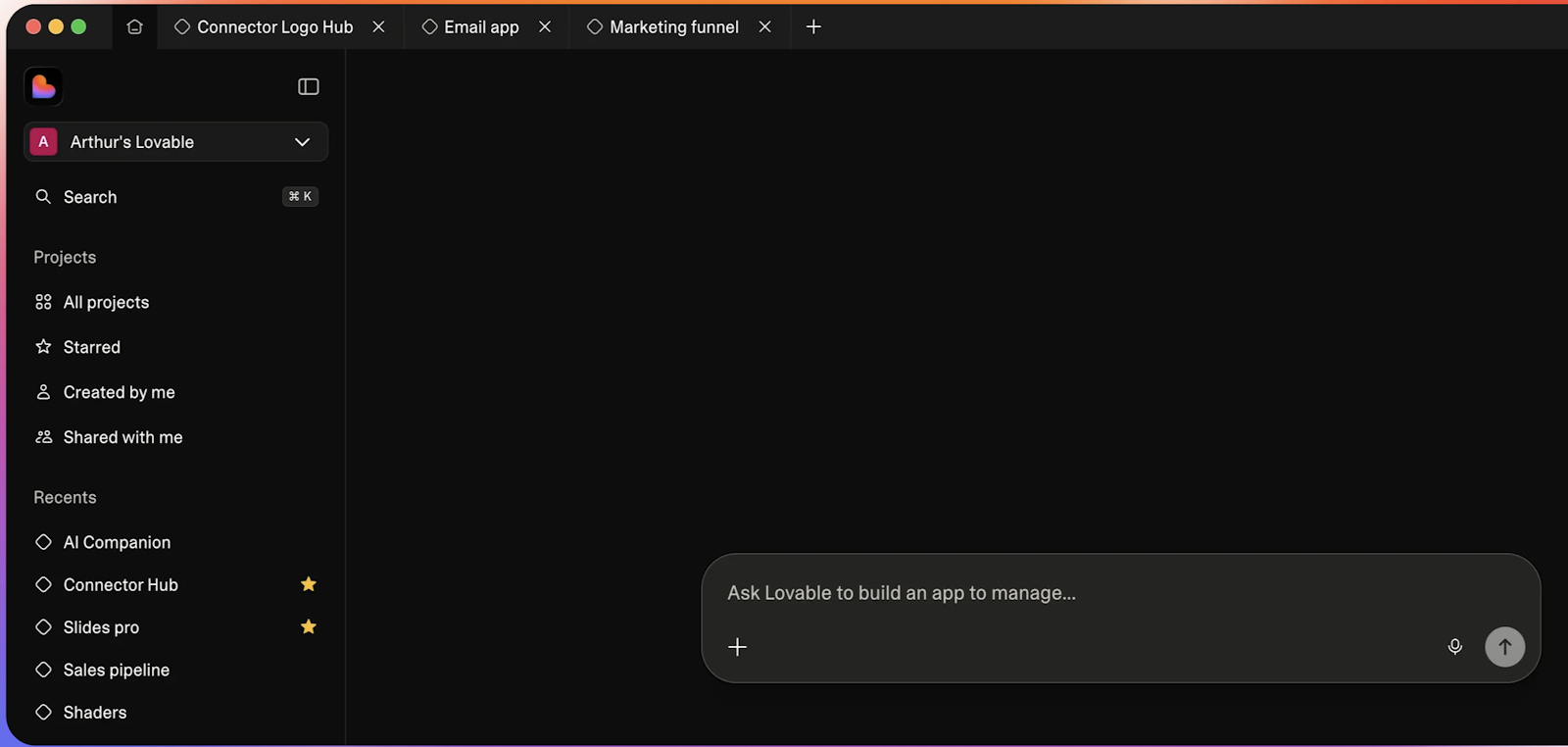
The product sits in the same category as Bolt.new, Vercel's v0, and Replit Agent — a class now called "vibe coding" tools. You type an idea (or drop a screenshot) into a chat box, Lovable generates a full React app with a database, auth, and deploy-ready hosting, then lets you iterate on it conversationally. What separates Lovable from its rivals is the code quality on export (clean components, readable React, works in a real CI pipeline) and the sheer breadth of integrations shipped into the prompt layer — Supabase, Stripe, Resend, Clerk and GitHub are all one sentence away.
lovable.app subdomain, a custom domain on Pro, and bi-directional GitHub sync so you can drop back to Cursor or Zed the moment the AI hits its ceiling.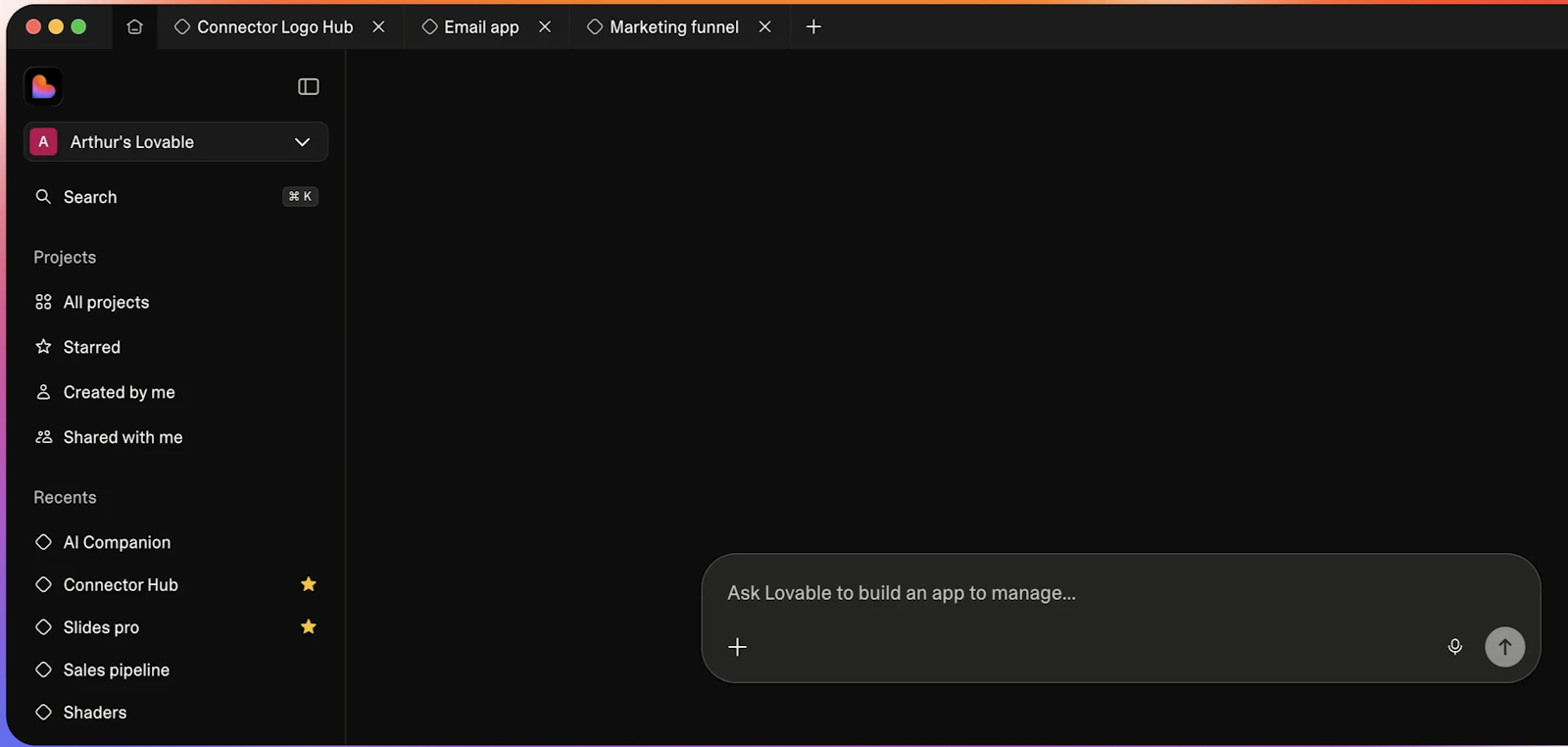
Lovable has one of the most polarized reputations of any 2025–2026 developer tool. The fans are evangelical, the critics are specific, and both are correct about different parts of the product.
What people love: Hacker News threads consistently rate Lovable's exported code as the cleanest in the vibe-coding category — notably ahead of Bolt for maintainability. Reddit founders describe shipping validated MVPs in an afternoon that would have taken two weeks of Cursor pair-programming. The 85% day-30 retention Anton Osika disclosed at Slush is the kind of number you normally only see on ChatGPT-class consumer products.
What people complain about: The credit system is the single most-cited pain point on G2, Trustpilot and Superblocks' independent review — the AI sometimes enters "error loops" where it reintroduces a bug it just fixed, and each attempt costs credits. Reviewers consistently say Lovable gets you 70% of the way to a real product and the last 30% is slow and expensive. In security firm Guardio flagged Lovable as the most susceptible vibe-coding tool to "VibeScamming" prompt injections — a finding the company has since addressed with stricter output filters, but it remains a talking point on Hacker News.
Published rates on lovable.dev/pricing — credits are the unit of AI generation, not seats:
| Plan | Price | Credits & Limits |
|---|---|---|
| Free | $0/month | Up to 5 daily credits (~150/month), unlimited lovable.app subdomains, public projects, Lovable branding. |
| Pro | $25/month (shared across unlimited users) | 100 credits/month + 5 daily (up to 150), usage-based Cloud + AI, custom domains, removed badge, user roles, credit rollover. |
| Business | $50/month (shared across unlimited users) | Everything in Pro + internal publish, SSO, team workspace, design templates, role-based access, security center. |
| Enterprise | Custom (volume-based) | Design systems, SCIM, custom connectors, audit logs, dedicated support, onboarding. |
Students get up to 50% off Pro, and the Lovable Kids program (via imagi) is free for schools.
Best for: Solo founders and indie hackers who need a clickable MVP in an afternoon, product managers who want to prototype real flows instead of Figma mockups, and internal-tools teams at small companies who already pay a Supabase/Stripe bill and want a chat-first front-end on top of it.
Not ideal for: Engineering teams shipping production SaaS with complex state management, long-lived multi-year codebases, or strict compliance requirements — export to GitHub and move to Cursor or Zed the moment the project crosses ~10k lines. Also a poor fit for cost-sensitive hobbyists running big projects: the credit burn on complex apps can exceed a Pro plan in under a week.
Pros:
Cons:
Bolt.new is Lovable's closest competitor — similar prompt-to-app flow, often cheaper for small projects but noisier exported code. Vercel's v0 is better if you're already in the Next.js ecosystem and want component-level output instead of full apps. For teams that have outgrown vibe coding and want real pair programming, Cursor is the industry standard.
Yes — for the use case it was designed for. If you are a founder, PM or designer who wants a deployable prototype today, Lovable at $25/month is the best dollar-for-speed deal in software right now, and the $400M ARR and 85% day-30 retention show that at scale. If you're an engineer building a long-lived production app, treat Lovable as a v1 generator and move to Cursor + a real IDE before you hit the 70% wall. We rate it 82/100: very good, genuinely category-defining, with credit economics that punish the wrong workloads.
lovable.app subdomains. Paid Pro plans start at $25/month and include 100 monthly credits plus 5 daily.ServiceNow and Accenture Launch Forward Deployed Engineering Program to Scale Agentic AI in the Enterprise (May 6, 2026)
At Knowledge 2026, ServiceNow and Accenture announced a joint forward deployed engineering program that drops co-located engineer pods into customer environments to ship agentic AI workflows natively on the ServiceNow AI Platform — with access to 300+ pre-built agent skills and the AI Control Tower as the governance backbone.
May 7, 2026
ReFiBuy Raises $13.6M Seed to Help Brands Get Recommended by AI Shopping Agents (May 5, 2026)
ReFiBuy, the Raleigh-based agentic commerce platform from ChannelAdvisor founder Scot Wingo, closed an oversubscribed $13.6M seed led by NewRoad Capital Partners on May 5, 2026 — betting that the next billion-dollar e-commerce moat is being chosen by ChatGPT, Claude and Perplexity.
May 7, 2026
OpenAI Replaces ChatGPT's Default Model With GPT-5.5 Instant — 52.5% Fewer Hallucinations, 30% Shorter Answers (May 5, 2026)
OpenAI on May 5 swapped GPT-5.3 Instant for the new GPT-5.5 Instant as ChatGPT's default model, claiming 52.5% fewer hallucinated claims on high-stakes prompts and 30% more concise answers. The model also rolls into the API as chat-latest and adds personalization from Gmail and past chats for Plus and Pro web users.
May 7, 2026
Is this product worth it?
Built With
Compare with other tools
Open Comparison Tool →