 Hosting & Infrastructure
Pi-hole
Network-wide ad blocker and DNS sinkhole — kills ads on every device on your network without any client software
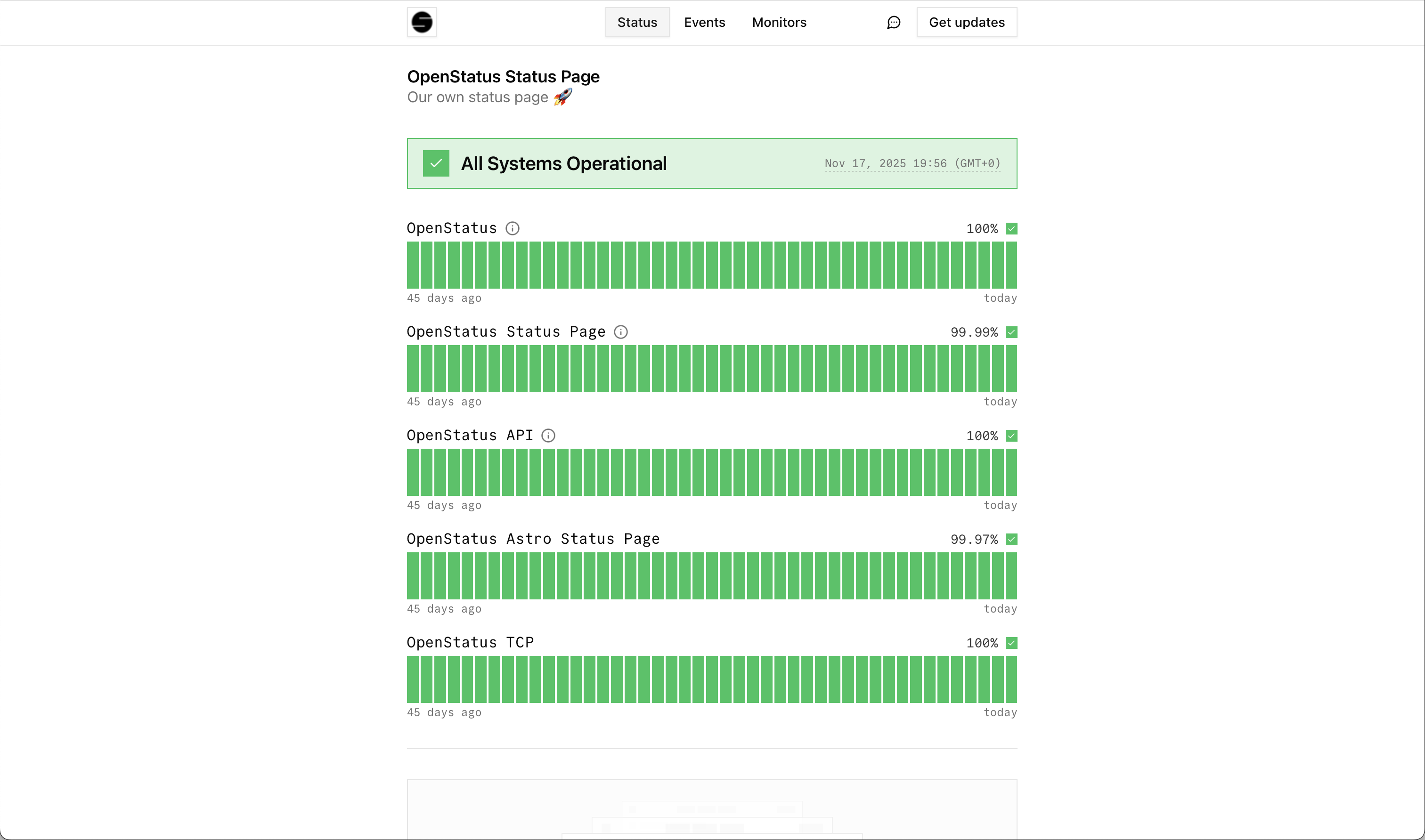
OpenStatus is the open-source, AGPL-licensed alternative to Atlassian Statuspage and Better Stack — uptime monitoring from 28 regions and a status page that you can self-host or run on the managed cloud.
OpenStatus is an AGPL-3.0 licensed, self-hostable status page and uptime monitoring platform built on Next.js, Bun, Drizzle ORM, Tinybird and Turso — a credible open-source alternative to Atlassian Statuspage, Better Stack and Instatus. We rate it 83/100 — the most polished open-source status page on the market today, with a managed cloud cheap enough to be the default for early-stage teams.
OpenStatus was founded in by Maximilian Kaske and Thibault Le Ouay and is developed in the open under the openstatusHQ/openstatus repository on GitHub. As of the project has 8,615 GitHub stars, 648 forks and the most recent commit was less than 24 hours old — release cadence is roughly weekly. The codebase is TypeScript across a Next.js dashboard, a Bun-based monitoring worker and a Hono-based public API.
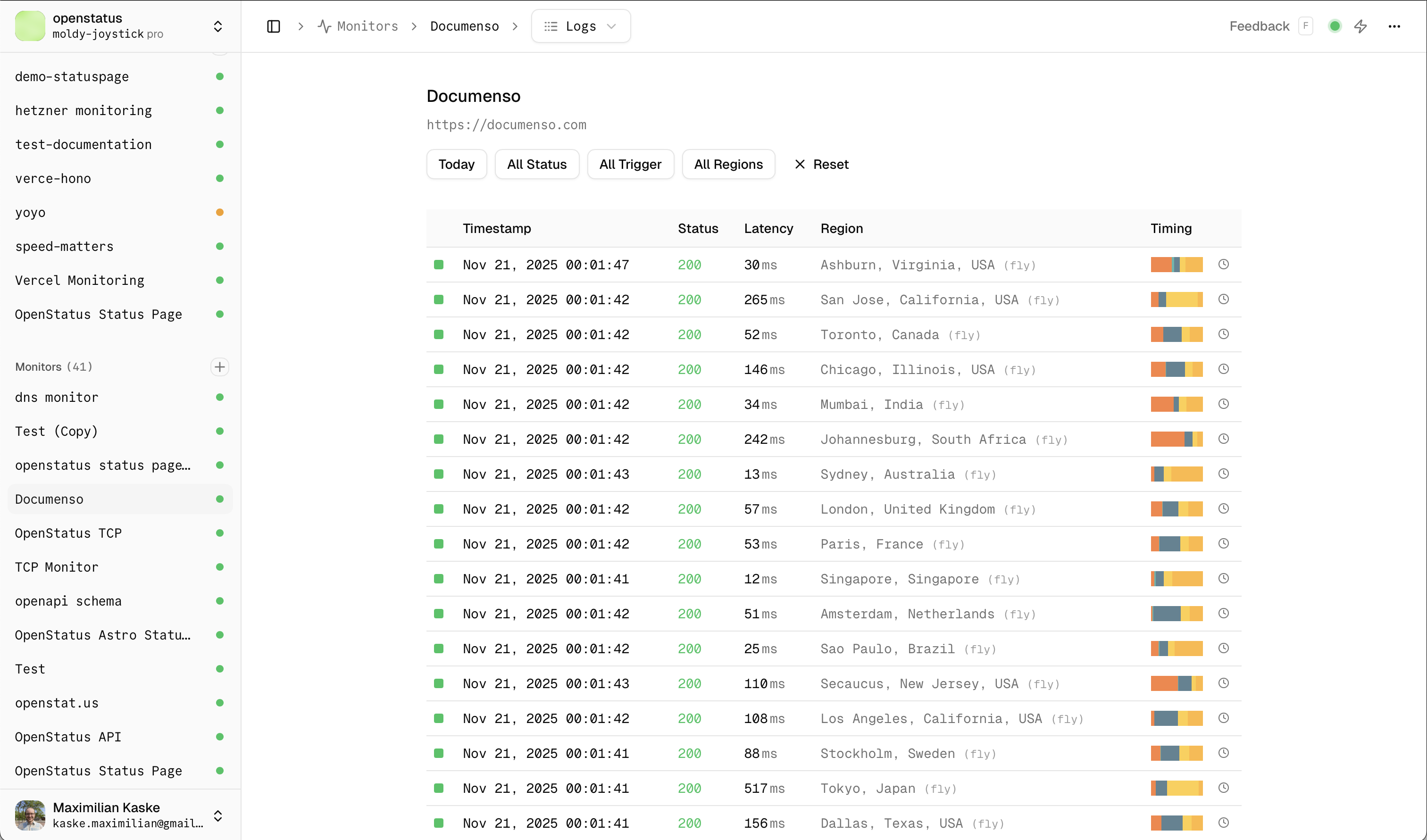
The product does two things and does them well: it runs HTTP, TCP and DNS uptime checks from up to 28 global regions, and it generates a polished public status page that your customers can subscribe to. Both pieces are designed as "monitoring as code" — every monitor, page and notification channel can be defined in a Terraform provider or imported via the official CLI, so your status configuration lives in the same repository as the service it monitors.
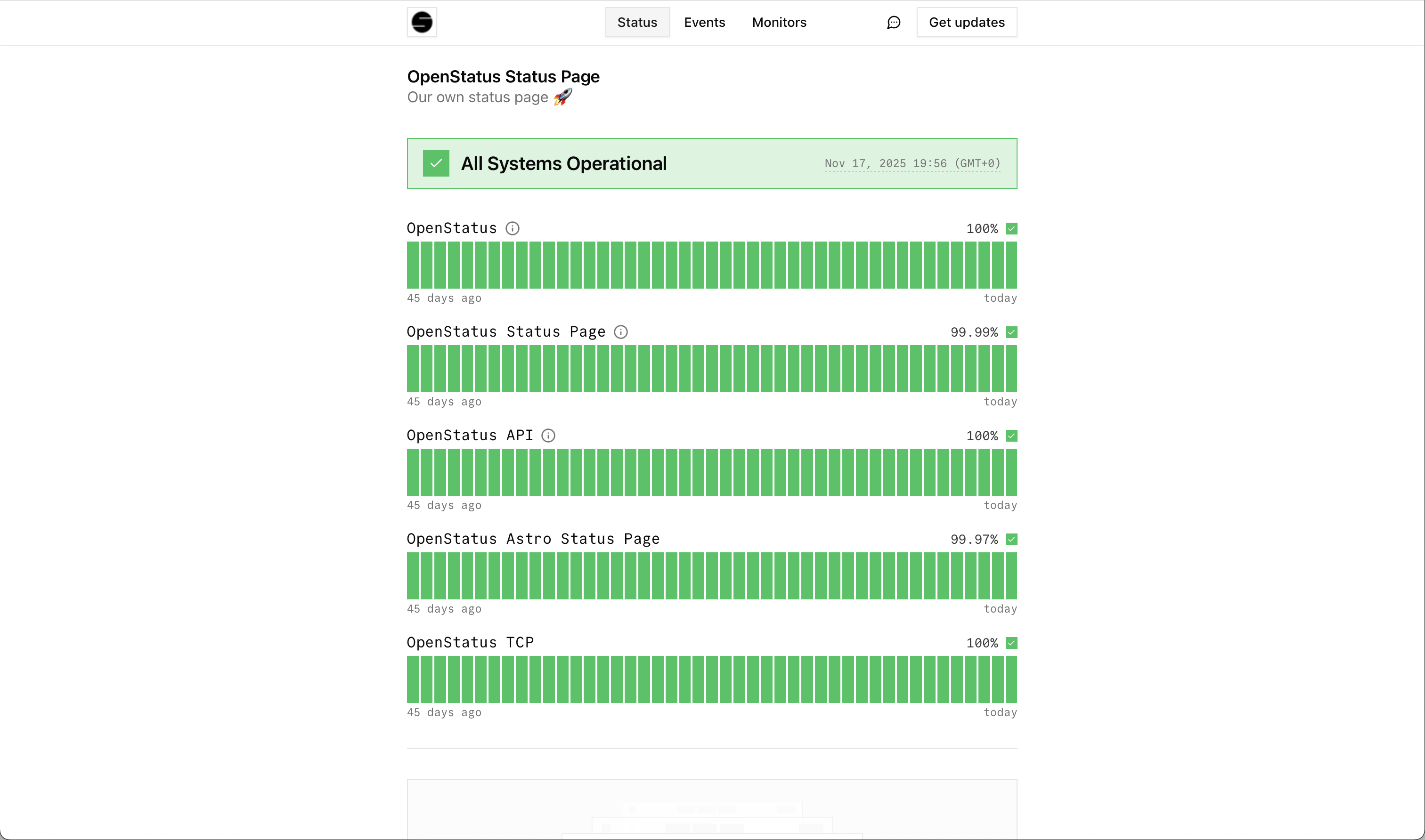
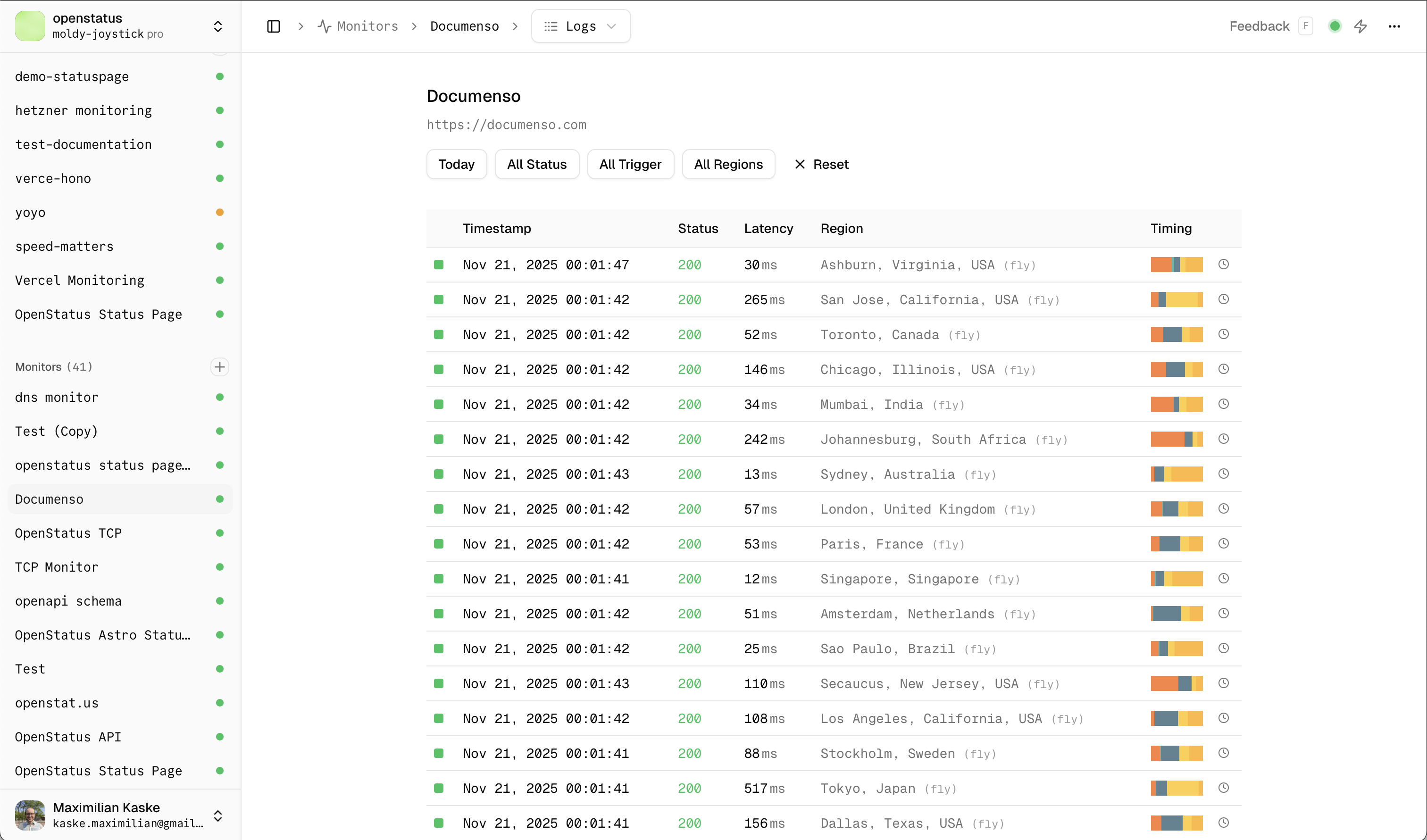
On Hacker News and Reddit's r/selfhosted and r/devops, the most upvoted threads about OpenStatus consistently praise the polish of the status page UI, the cleanliness of the multi-region map and the fact that you can move from Atlassian Statuspage in "under an hour" using the CLI's import command. Product Hunt comments on the original launch repeatedly call it "the first status page that doesn't look like a 2014 Bootstrap template."
The recurring complaints are equally consistent. Several users on r/selfhosted note that self-hosting the full stack is harder than running a typical Next.js app because Tinybird and Turso are required for analytics and global SQL — there is community work on Postgres-only deployments, but it is not the supported path. A few enterprise reviewers also flag that SSO and on-prem deployments still require an Enterprise contract.
OpenStatus offers a free Hobby tier on the managed cloud, two paid tiers, and an Enterprise plan for self-hosted SSO and audit. Self-hosting the AGPL-3.0 core is always free.
| Plan | Price | Key Limits |
|---|---|---|
| Hobby (Free) | $0/month | 1 status page, 3 components, 1 monitor, 10-minute interval, 6 regions, 14-day retention. |
| Starter | $30/month ($25/mo annual) | 1 status page, 20 components, 20 monitors, 1-minute interval, 28 regions, 3-month retention, unlimited team. |
| Pro | $100/month ($83/mo annual) | 5 status pages, 50 components, 50 monitors, 30-second interval, 28 regions, 12-month retention, OTel exporter. |
| Enterprise | Contact sales | SSO, audit logs, dedicated support, on-prem deployment options. |
| Self-hosted | $0 (AGPL-3.0) | Full functionality of the open-source core. You bring infra. |
Annual billing includes two months free, and add-ons such as IP restriction or extra status pages are billed separately at $20–$300 per month.
Best for: Pre-Series-A startups who want a status page their SOC 2 auditor will accept without paying Atlassian Statuspage prices; open-source maintainers who want to self-host; and infrastructure teams who already define their stack as code and want their monitors in the same repository.
Not ideal for: Large enterprises that need air-gapped on-prem deployments and 24/7 vendor support today — OpenStatus has Enterprise contracts, but the rough edges of self-hosting and the small team behind the project are real. Atlassian Statuspage and Better Stack are still the safer pick if you have hundreds of customers depending on your status page from day one.
Pros:
Cons:
Better Stack is the closest commercial competitor, with deeper log management but per-monitor pricing that grows fast. Uptime Kuma is the older self-hosted favorite — simpler to deploy but with no real status page or multi-region story. Atlassian Statuspage remains the enterprise default and integrates with Atlassian's incident tools, but it is significantly more expensive and not open source.
OpenStatus is the open-source default we have been waiting for in the status-page category. The product is polished, the pricing on the managed cloud is honest, and the AGPL-3.0 license means you can self-host without commercial-source-available games. It is not the right pick for an air-gapped Fortune 500 deployment today, but for any team smaller than a few hundred engineers it deserves to be the first option you evaluate against Atlassian Statuspage and Better Stack. The 83/100 reflects how strong the core product is, with a few points held back for the Tinybird/Turso dependency and the still-young Enterprise offering. If you have ever cursed Atlassian Statuspage's pricing, this is the project to try this week.
ServiceNow and Accenture Launch Forward Deployed Engineering Program to Scale Agentic AI in the Enterprise (May 6, 2026)
At Knowledge 2026, ServiceNow and Accenture announced a joint forward deployed engineering program that drops co-located engineer pods into customer environments to ship agentic AI workflows natively on the ServiceNow AI Platform — with access to 300+ pre-built agent skills and the AI Control Tower as the governance backbone.
May 7, 2026
ReFiBuy Raises $13.6M Seed to Help Brands Get Recommended by AI Shopping Agents (May 5, 2026)
ReFiBuy, the Raleigh-based agentic commerce platform from ChannelAdvisor founder Scot Wingo, closed an oversubscribed $13.6M seed led by NewRoad Capital Partners on May 5, 2026 — betting that the next billion-dollar e-commerce moat is being chosen by ChatGPT, Claude and Perplexity.
May 7, 2026
OpenAI Replaces ChatGPT's Default Model With GPT-5.5 Instant — 52.5% Fewer Hallucinations, 30% Shorter Answers (May 5, 2026)
OpenAI on May 5 swapped GPT-5.3 Instant for the new GPT-5.5 Instant as ChatGPT's default model, claiming 52.5% fewer hallucinated claims on high-stakes prompts and 30% more concise answers. The model also rolls into the API as chat-latest and adds personalization from Gmail and past chats for Plus and Pro web users.
May 7, 2026
Is this product worth it?
Built With
Compare with other tools
Open Comparison Tool →