
 Hosting & Infrastructure
Pi-hole
Network-wide ad blocker and DNS sinkhole — kills ads on every device on your network without any client software
Uptime Kuma is the most popular self-hosted uptime monitor on GitHub: free, MIT-licensed, 20-second checks, 13 monitor types and 90+ notification providers. Our verdict: the clear default for homelabs and small teams.
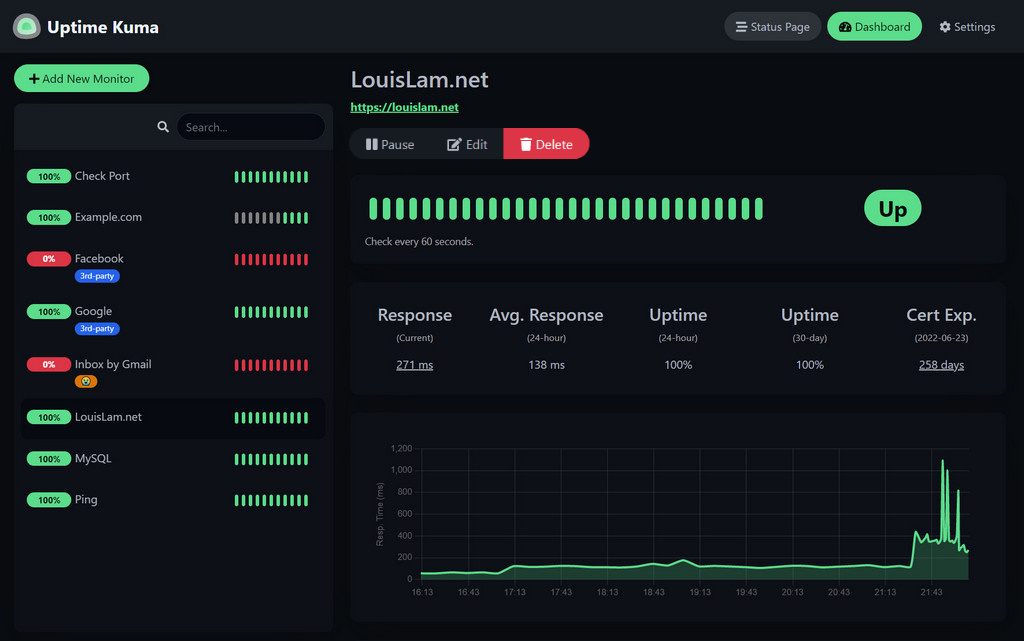
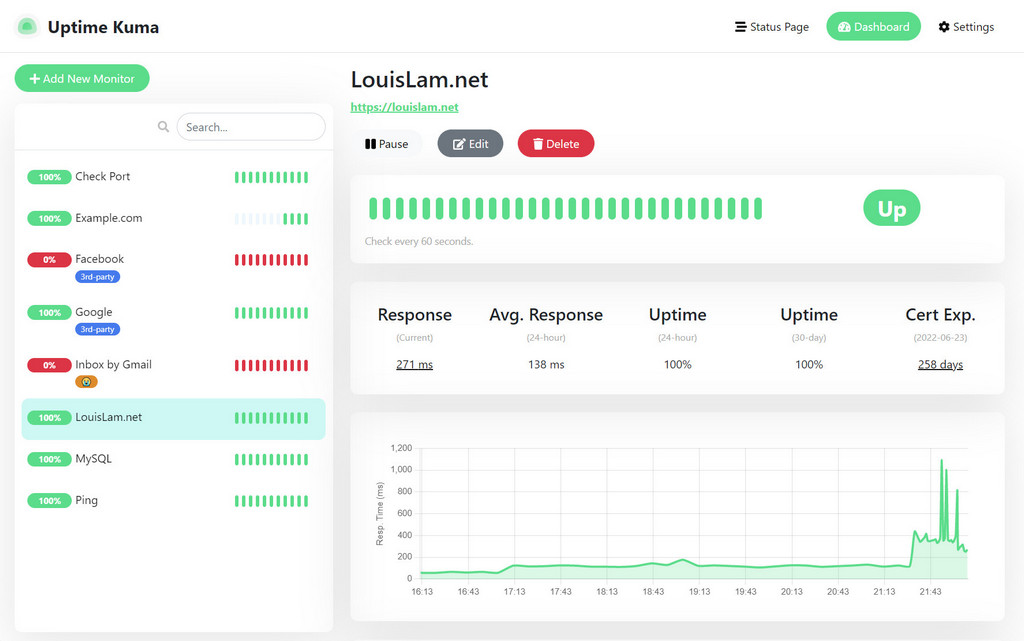
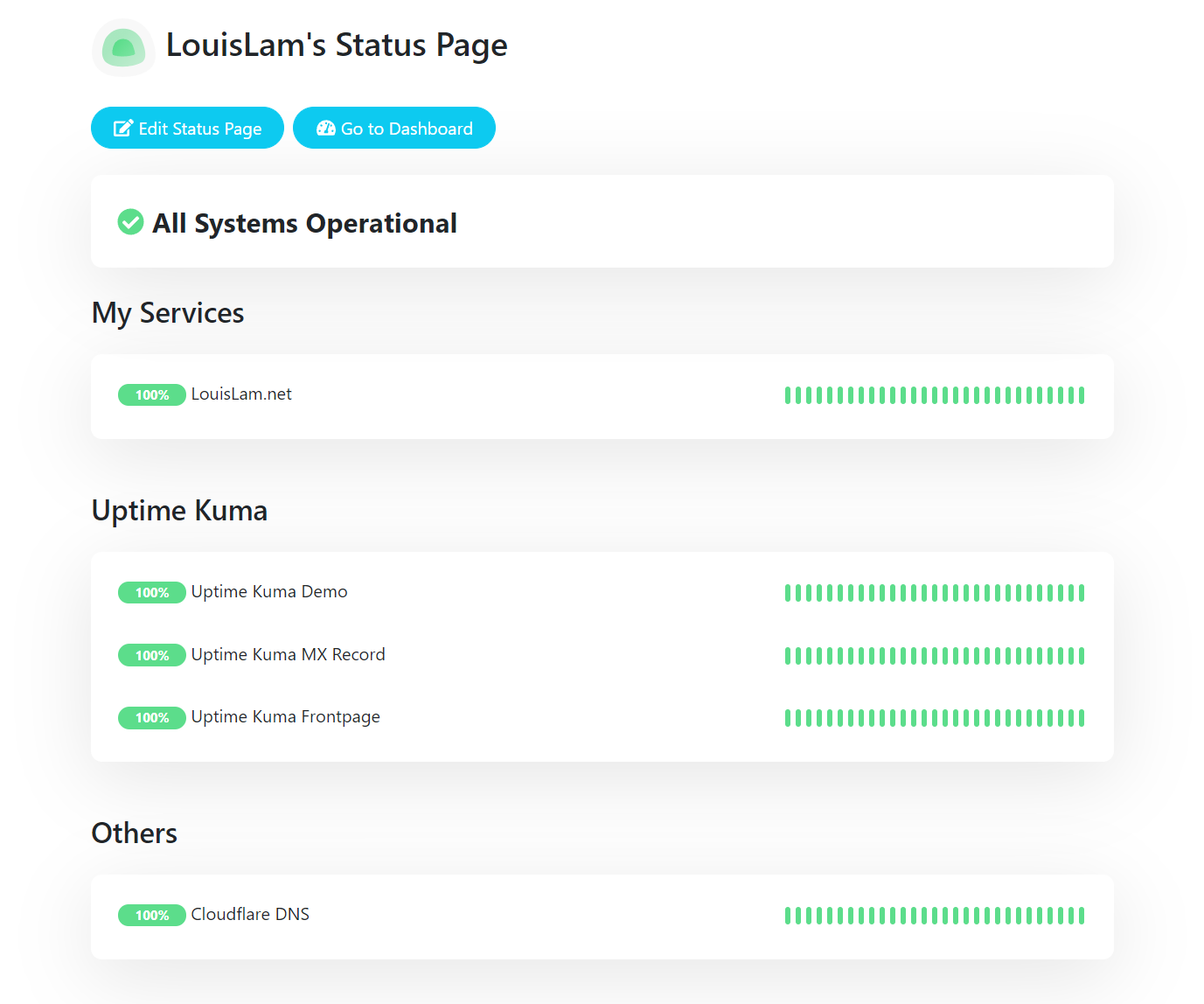
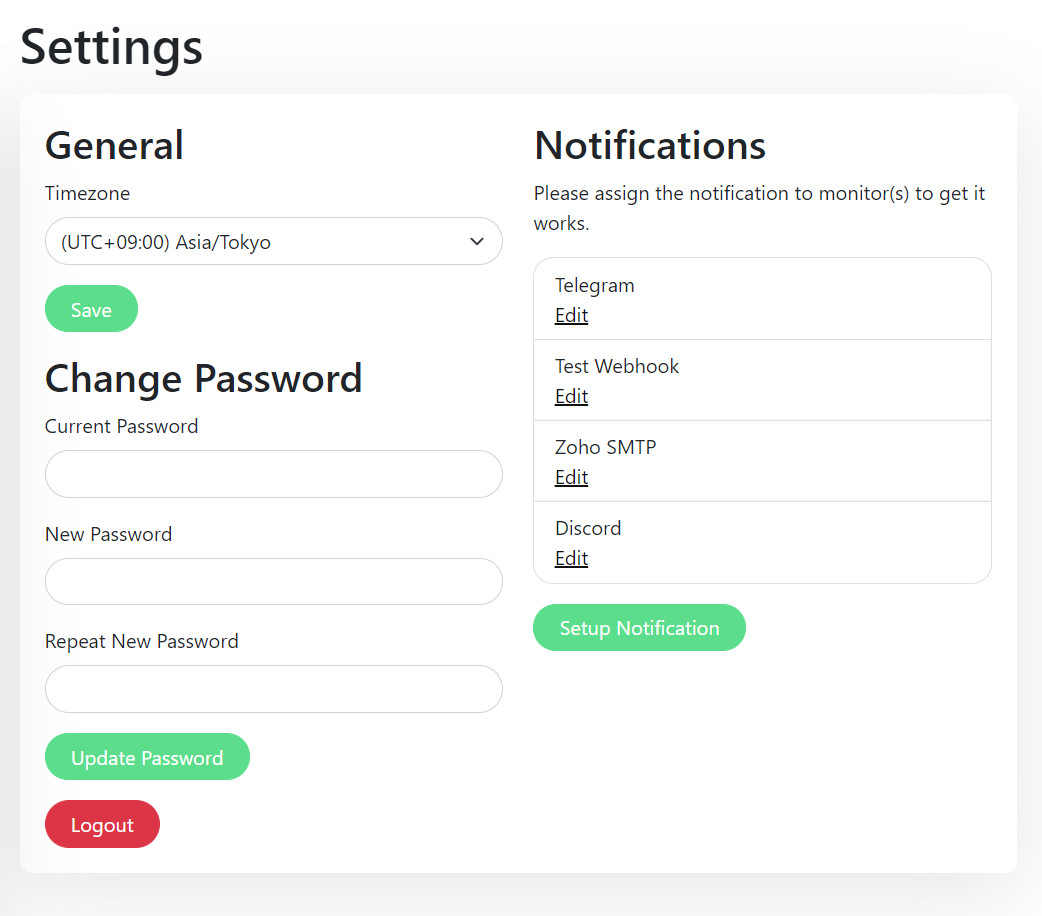
Uptime Kuma is a free, MIT-licensed, self-hosted monitoring tool that watches your websites, APIs, ports, databases and Docker containers and alerts you when anything breaks. We rate it 88/100 — the clear default choice for hobbyists, homelab operators and small dev teams who want a polished UptimeRobot replacement they fully control, with deductions for the missing official REST API and single-location monitoring.
Uptime Kuma was built by Hong Kong developer Louis Lam (@louislam) and the GitHub repository was first published on . It is a Node.js + Vue 3 + Bootstrap 5 application that uses Socket.IO for real-time updates and SQLite for storage, and it is licensed under MIT. As of the GitHub repository has 85,947 stars and 7,730 forks, making it the most-starred self-hosted monitoring project on GitHub. The latest stable release is v2.2.1, published , which patches a Server-Side Template Injection (SSTI) advisory in the LiquidJS dependency.
The product targets a very specific niche: developers, sysadmins and homelabbers who currently pay for UptimeRobot, StatusCake or Pingdom and want a free, self-hosted, good-looking alternative they can run on a $5 VPS or Raspberry Pi without sending their endpoint list to a third-party SaaS.
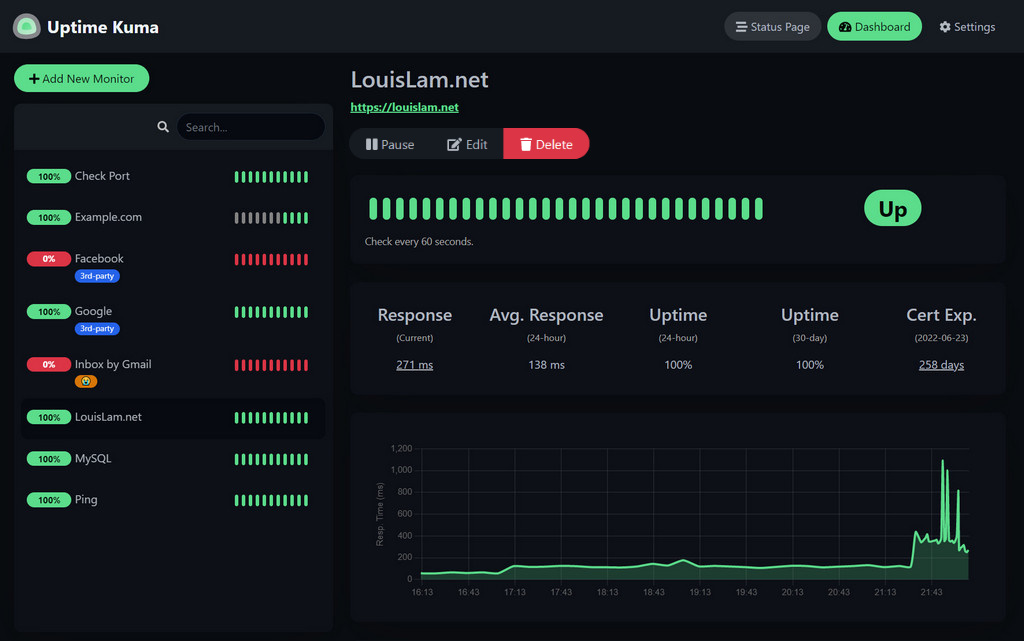
docker run gets you a working instance in under a minute.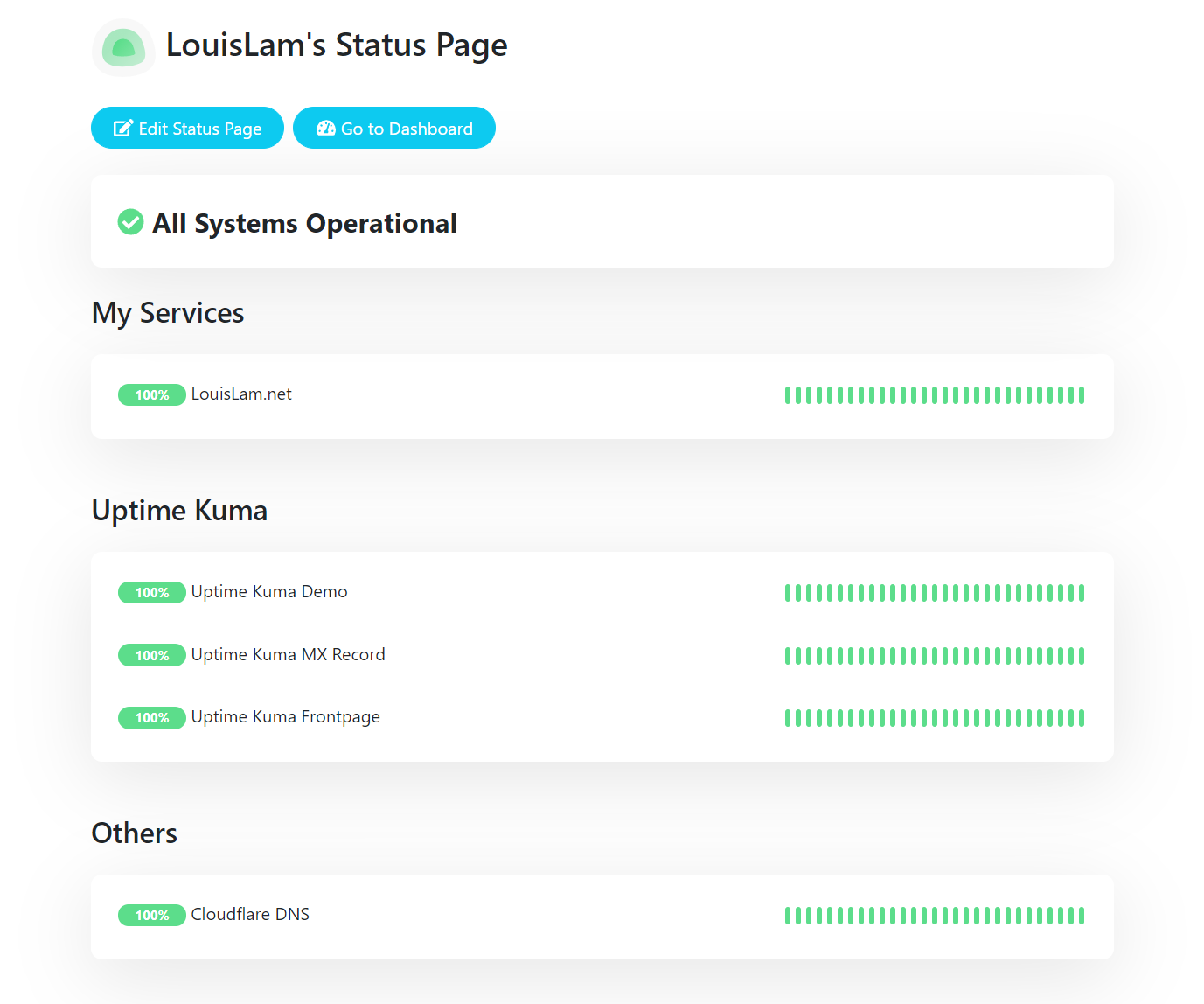
Sentiment in self-hosting communities is overwhelmingly positive. On Reddit's r/selfhosted, Uptime Kuma is the default recommendation in nearly every "what should I use to monitor my homelab" thread, and the dedicated r/UptimeKuma subreddit is active with deployment help. The Hacker News discussions have repeatedly hit the front page since 2021 and consistently praise the UI and ease of installation.
The honest criticism is consistent and fair. The most upvoted feature request in the GitHub issue tracker is a first-party REST API — today you cannot programmatically add monitors from CI/CD without a community fork, which is a real blocker for teams managing hundreds of endpoints. The second most requested feature is distributed monitoring from multiple regions, since a network blip between your single Uptime Kuma host and the target service still triggers a false alert. Heavy users on Better Stack's comparison also note that the SQLite-only backend is a ceiling: PostgreSQL support has been requested for years but remains unimplemented in 2.x, and teams with 500+ monitors report visible UI lag.
Uptime Kuma is 100% free and open source under the MIT license. There is no paid tier, no managed cloud, no usage limits, no telemetry. You pay only for the server you run it on.
| Plan | Price | Includes |
|---|---|---|
| Self-hosted (only option) | $0 forever | Unlimited monitors, unlimited status pages, unlimited notifications, all 13 monitor types — you supply the server. |
Typical hosting cost: $4–$6/month on a Hetzner CX11 or DigitalOcean basic droplet, or free if you already run a homelab.
Best for: Solo developers, indie hackers, homelab operators, IT admins at small companies, and any team that already self-hosts and wants under-an-hour deployment of a polished status page and uptime monitor without recurring SaaS fees.
Not ideal for: Enterprise SRE teams that need a REST API, multi-region probes, RBAC, audit logs, SLA reporting and SOC 2 attestations — for that, Better Stack, Datadog Synthetics or Pingdom remain the right call. Also a poor fit if you cannot afford to monitor your monitor.
Pros:
docker run command and you're live, confirmed by countless r/selfhosted walkthroughs.Cons:
Three honest comparisons developers ask about most:
Yes — if you already run a server, Uptime Kuma is the easiest way to replace your UptimeRobot subscription with a better-looking, faster-checking, fully-controlled monitoring stack in about ten minutes. We rate it 88/100: it is best-in-class for individual operators and small teams, and the only reasons it is not 95+ are the missing REST API and the absence of distributed multi-region probes — both of which matter only once your monitoring matures past the homelab stage. For everyone else, it is genuinely the right answer.
uptime-kuma-api Python wrapper, which scripts the underlying Socket.IO calls.Hosting & InfrastructureNetwork-wide ad blocker and DNS sinkhole — kills ads on every device on your network without any client software
 Hosting & Infrastructure
The open-source Go web server with automatic HTTPS by default — no Certbot, no cron, no excuses.
 Hosting & Infrastructure
The free software media system — a 100% open-source, ad-free, self-hosted alternative to Plex and Emby.
 Hosting & Infrastructure
AI-native observability and incident management — one bill for logs, metrics, uptime, and on-call, 30x cheaper than Datadog
ServiceNow and Accenture Launch Forward Deployed Engineering Program to Scale Agentic AI in the Enterprise (May 6, 2026)
At Knowledge 2026, ServiceNow and Accenture announced a joint forward deployed engineering program that drops co-located engineer pods into customer environments to ship agentic AI workflows natively on the ServiceNow AI Platform — with access to 300+ pre-built agent skills and the AI Control Tower as the governance backbone.
May 7, 2026
ReFiBuy Raises $13.6M Seed to Help Brands Get Recommended by AI Shopping Agents (May 5, 2026)
ReFiBuy, the Raleigh-based agentic commerce platform from ChannelAdvisor founder Scot Wingo, closed an oversubscribed $13.6M seed led by NewRoad Capital Partners on May 5, 2026 — betting that the next billion-dollar e-commerce moat is being chosen by ChatGPT, Claude and Perplexity.
May 7, 2026
OpenAI Replaces ChatGPT's Default Model With GPT-5.5 Instant — 52.5% Fewer Hallucinations, 30% Shorter Answers (May 5, 2026)
OpenAI on May 5 swapped GPT-5.3 Instant for the new GPT-5.5 Instant as ChatGPT's default model, claiming 52.5% fewer hallucinated claims on high-stakes prompts and 30% more concise answers. The model also rolls into the API as chat-latest and adds personalization from Gmail and past chats for Plus and Pro web users.
May 7, 2026
Is this product worth it?
Built With
Compare with other tools
Open Comparison Tool →