

 Developer Tools
Templ
Type-safe HTML templating language for Go with compile-time safety
Refine is an open-source, MIT-licensed React meta-framework that ships everything you need to build CRUD-heavy admin panels and B2B apps — auth, RBAC, data providers, real-time, and an AI agent that scaffolds production-ready code.
Refine is an open-source, headless React meta-framework purpose-built for admin panels, dashboards, internal tools and B2B CRUD apps — and as of it ships with a paid AI agent that scaffolds working apps from a prompt. We rate it 82/100 — the most flexible enterprise-grade React framework in this category, but only if you're comfortable wiring more of the UI yourself than you would with a more opinionated rival like React-Admin.
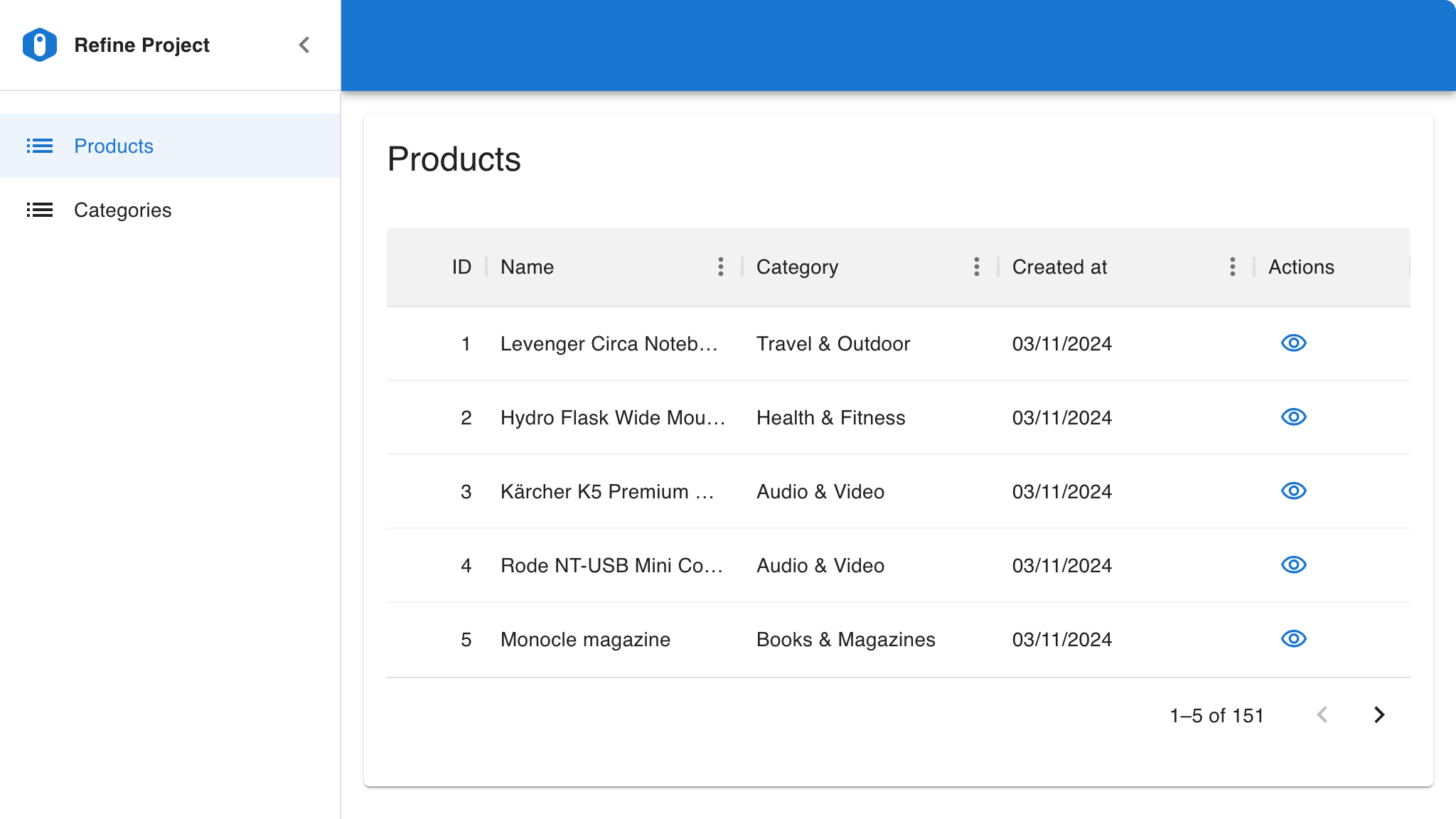
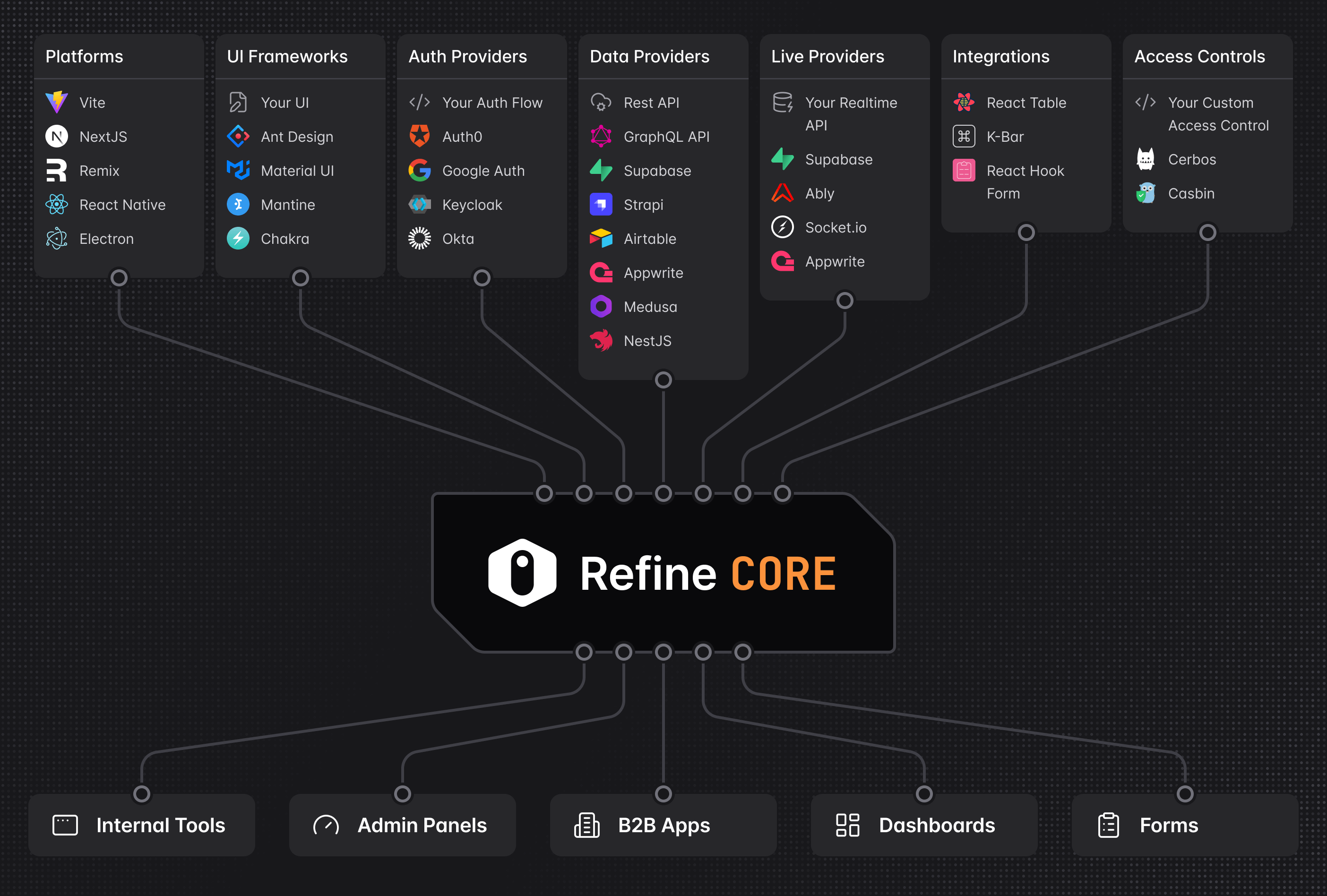
Refine is an MIT-licensed React framework first released by founder Necati Ozmen and team in , and accepted into Y Combinator's S23 batch. It targets the unsexy but enormous niche of internal tools — the dashboards, CRMs, CMSs, HRIS panels and admin consoles that every B2B company eventually has to build. Instead of dictating a UI library, Refine is "headless by design": it gives you a set of React hooks for data fetching, auth, access control, forms, tables, routing and i18n, and lets you bolt on whichever component library you already use.
As of , the refinedev/refine repo has 34,557 stars and 3,008 forks, and the latest stable release is @refinedev/core v5.0.12 shipped on . Refine v5 brings React 19 support, TanStack Query v5 integration and meaningful performance improvements over the v4 line.

@refinedev/devtools package shows query state, mutations and hook usage live during development.
Sentiment in the React ecosystem is genuinely positive but not uncritical. On GitHub Discussion #1917 ("Compare to React-Admin?") and the parallel Hacker News thread item 37065475, developers consistently praise Refine for being headless-by-default, for its breadth of data providers, and for shipping RBAC and real-time as MIT code rather than as a paid Enterprise add-on. Product Hunt reviewers single out the smart context-aware AI agent and the "3x faster" build claim as broadly accurate for prototypes.
The recurring complaints are equally consistent and worth taking seriously. Marmelab's React-Admin team — admittedly competitors — pointed out three real issues: Refine's default theme has oversized desktop margins forcing constant scrolling; the default edit form puts "Delete" uncomfortably close to "Save", which has caused accidental deletions for testers; and there is no built-in undo. The bigger structural critique is that "headless" cuts both ways — you ship more code to reach the same UX as a more opinionated framework, and the learning curve is real for teams without strong React fundamentals.

Refine CORE — the framework itself — is free and MIT-licensed forever. Refine AI (the optional agent) is the paid product, billed by "Refine tokens" consumed during generation:
| Plan | Price | Tokens / month | Key Limits |
|---|---|---|---|
| Starter (Free) | $0/month | 300 | Core features, preview only, no credit card |
| Starter Paid | $0.99/month | 300 | Same as free, paid tier for billing setup |
| Pro | $20/month | 1,500 | Interactive code editor, one-click export, Netlify hosting, file uploads |
| Pro 3K | $40/month | 3,000 | Same Pro features, more tokens |
| Pro 6K | $80/month | 6,000 | For heavy use |
| Pro 40K | $533/month | 40,000 | Studio / agency tier |
| Enterprise | Contact | Custom | Self-hosted Refine, SLA, dedicated support |
Critically: nothing about the open-source framework is gated by Refine AI. If you only want the React framework, you never have to pay or sign up.
Best for: Mid-to-senior React teams building B2B SaaS dashboards, internal admin panels, CRMs or data-heavy CRUD apps where they want enterprise features (RBAC, audit log, real-time) without paying for a commercial framework, and where they need to plug into an existing backend (Supabase, Hasura, REST, GraphQL).
Not ideal for: Solo non-developers wanting drag-and-drop visual building (use Budibase or Retool); teams that want a fully opinionated, batteries-included admin UI out of the box (use React-Admin); or anyone who needs a no-code internal tools builder with a UI canvas.
Pros:
Cons:
React-Admin is the most direct competitor — more opinionated, ships a polished default UI, but charges for RBAC/audit-log in its Enterprise tier. Retool is a closed-source low-code drag-and-drop builder, faster for non-developers but lock-in heavy. ToolJet and Budibase are open-source low-code visual alternatives — pick those if you want a UI canvas, not a code framework.
For a React team that needs to ship a production B2B internal tool with auth, RBAC, real-time and a real backend integration in weeks rather than months, Refine is the strongest free option in 2026. The 34K-star community, MIT license, breadth of data providers and active v5 release line all justify the 82/100 rating. Take a point off if you want a polished default UI without writing component code — React-Admin is friendlier there. Take three points off if you were hoping Refine AI would be cheap; the token model gets expensive past the Pro tier. The free open-source framework, however, remains a clear recommendation.
Developer ToolsType-safe HTML templating language for Go with compile-time safety
 Developer Tools
Open-source API key management and rate limiting platform for modern developers
 Developer Tools
Open-source low-code platform for building internal business applications
 Developer Tools
Git-friendly open-source API client for REST, GraphQL, and gRPC
ServiceNow and Accenture Launch Forward Deployed Engineering Program to Scale Agentic AI in the Enterprise (May 6, 2026)
At Knowledge 2026, ServiceNow and Accenture announced a joint forward deployed engineering program that drops co-located engineer pods into customer environments to ship agentic AI workflows natively on the ServiceNow AI Platform — with access to 300+ pre-built agent skills and the AI Control Tower as the governance backbone.
May 7, 2026
ReFiBuy Raises $13.6M Seed to Help Brands Get Recommended by AI Shopping Agents (May 5, 2026)
ReFiBuy, the Raleigh-based agentic commerce platform from ChannelAdvisor founder Scot Wingo, closed an oversubscribed $13.6M seed led by NewRoad Capital Partners on May 5, 2026 — betting that the next billion-dollar e-commerce moat is being chosen by ChatGPT, Claude and Perplexity.
May 7, 2026
OpenAI Replaces ChatGPT's Default Model With GPT-5.5 Instant — 52.5% Fewer Hallucinations, 30% Shorter Answers (May 5, 2026)
OpenAI on May 5 swapped GPT-5.3 Instant for the new GPT-5.5 Instant as ChatGPT's default model, claiming 52.5% fewer hallucinated claims on high-stakes prompts and 30% more concise answers. The model also rolls into the API as chat-latest and adds personalization from Gmail and past chats for Plus and Pro web users.
May 7, 2026
Is this product worth it?
Built With
Compare with other tools
Open Comparison Tool →