 Security
Bitwarden
Open-source password manager — unlimited free vault on every device, AES-256 encryption, audited annually.
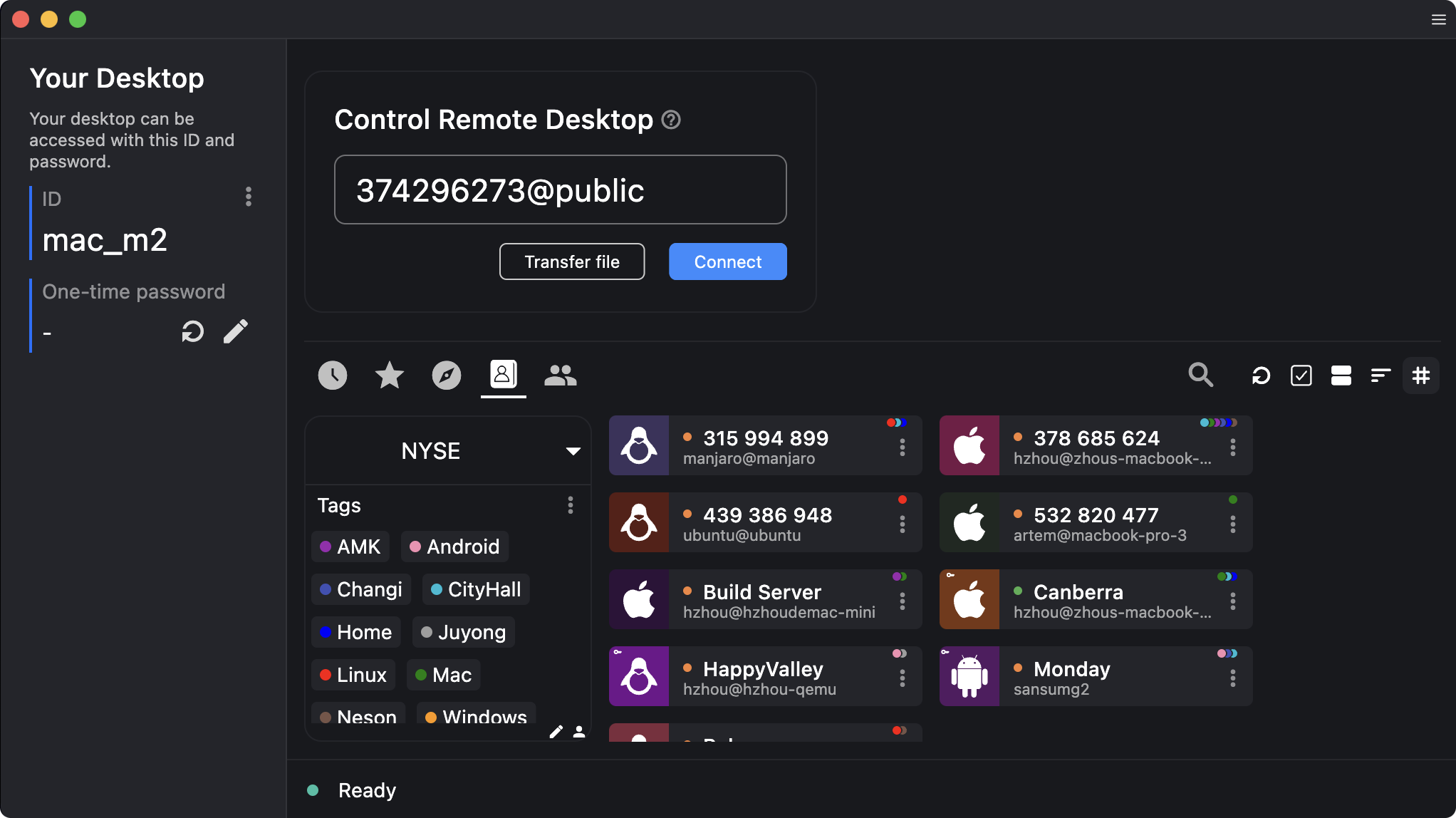
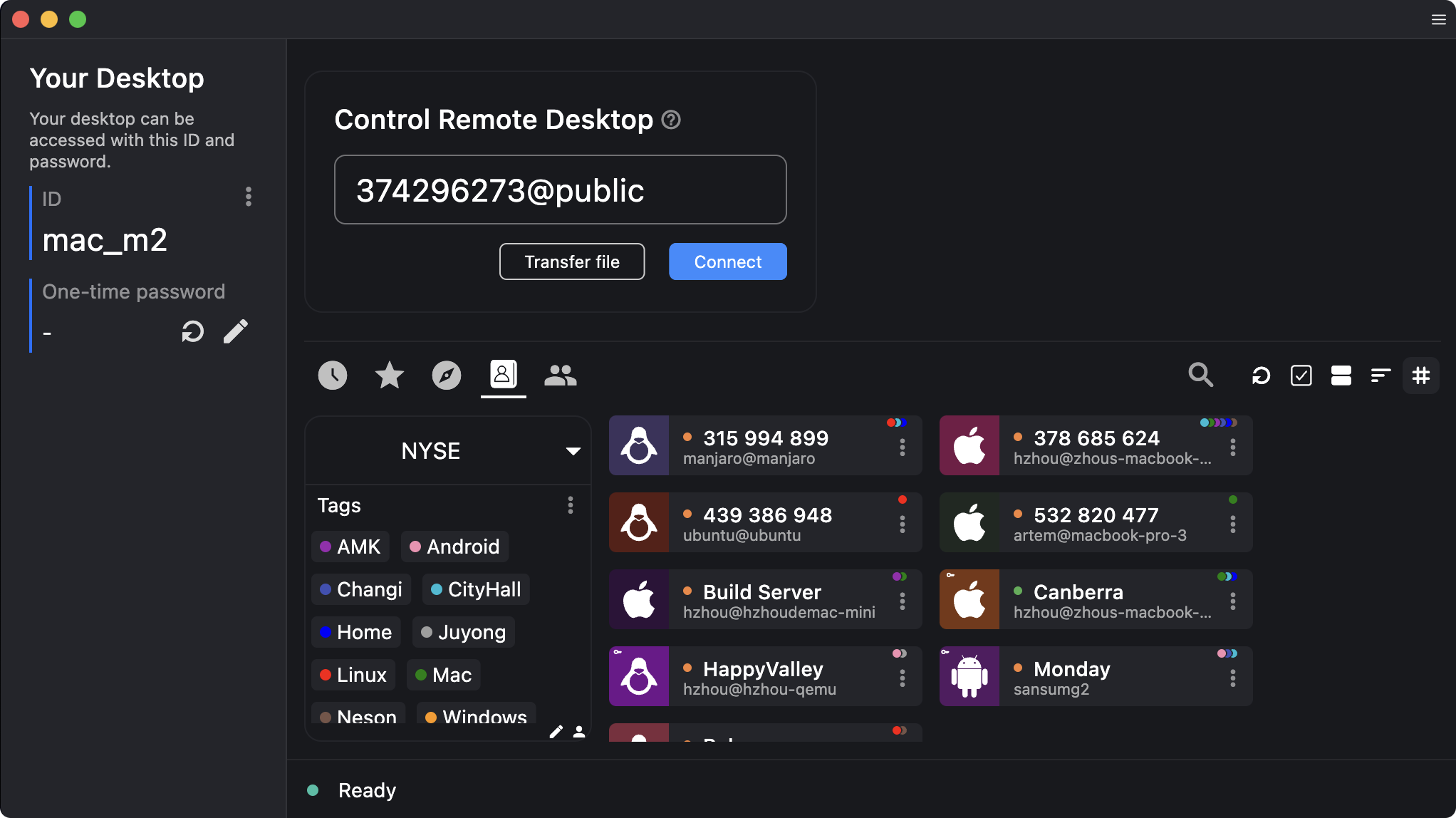
RustDesk is the leading open-source, self-hostable remote desktop with end-to-end encryption, cross-platform clients, and a one-command Docker server. A privacy-first replacement for TeamViewer and AnyDesk — used by IT support, sysadmins and remote-work teams.
RustDesk is an open-source remote desktop client and self-hostable relay server — an AGPL-3.0 alternative to TeamViewer and AnyDesk that lets you keep every byte of session data inside your own infrastructure. We rate it 83/100 — the strongest 2026 pick for IT support, MSPs and homelab users who want serious privacy without the per-seat enterprise tax.
RustDesk launched on GitHub in , founded by Huabing Zhou in mid-2020 during the COVID-19 pandemic when his team needed an affordable substitute for TeamViewer’s commercial license. Today the project is maintained by Singapore-based Purslane Tech Pte. Ltd. and lives at github.com/rustdesk/rustdesk with 113,000+ stars, 15,000+ forks and a 50,000-strong community across Discord and Reddit. The latest stable client, v1.4.6, shipped on , and the team reports more than 30 million client downloads and 10 million Docker pulls of the server.
The specific problem RustDesk solves is the "remote support tax": TeamViewer and AnyDesk meter on concurrent connections, charge per technician, and route every session through their cloud. RustDesk inverts that — the Flutter+Rust client is fully free, the OSS relay is one docker compose up away, and even the paid Server Pro tier is a self-hosted license rather than a SaaS subscription, so your screen pixels never leave the boxes you control.
bash <(wget -qO- https://get.docker.com) followed by wget rustdesk.com/oss.yml -O compose.yml && docker compose up -d brings up the OSS hbbs/hbbr relay pair on any VPS.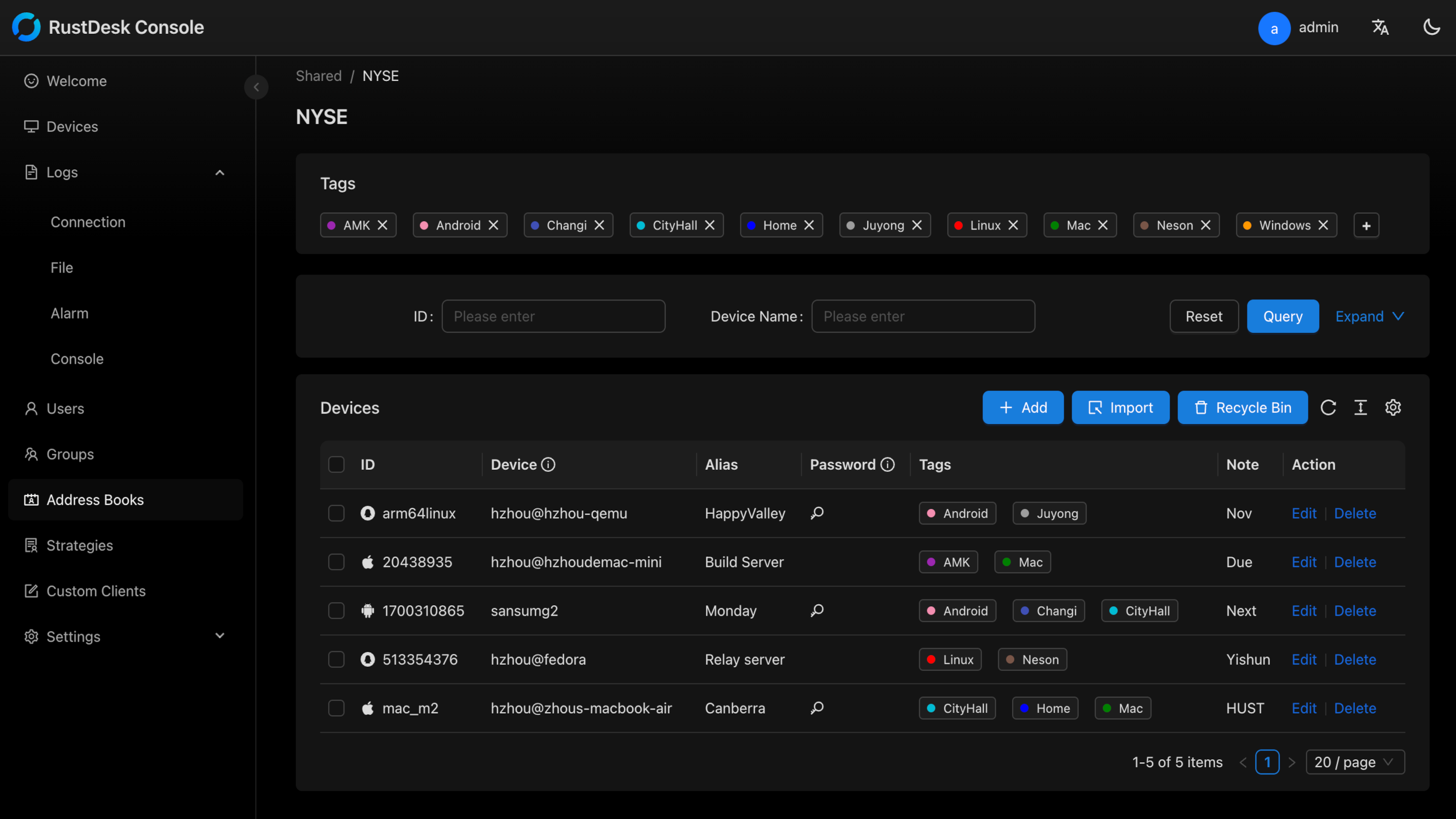
Across r/sysadmin, r/homelab and r/msp the consensus is that RustDesk is the default privacy-first pick — one heavily upvoted Hacker News thread (item 39263224) puts it bluntly: ex-TeamViewer and ex-AnyDesk users moved to RustDesk and stopped looking back. XDA Developers’ head-to-head with AnyDesk reports "smooth and instant screen updates" and gives RustDesk the edge on raw performance.
The recurring complaints are equally consistent. First, the "Server Pro tax": features many sysadmins consider table stakes — web console, address book, audit logs, OIDC — require a $9.90–$19.90/month Pro license, which several GitHub discussion threads argue conflicts with the project’s open-source positioning. Second, some early adopters in 2024 flagged unusual developer responses to security questions on GitHub issues, prompting a more cautious tone in r/selfhosted threads. Both criticisms are real, neither has stopped enterprise adoption, and the team has visibly tightened up release hygiene through 2025–2026.
RustDesk follows a self-hosted licensing model — you always run the software on your own infrastructure. The client is free for any use; the OSS server is free; only the Pro server requires a license.
| Plan | Price (annual) | Key Limits |
|---|---|---|
| Free / OSS server | $0/month | Online status, community support, unlimited concurrent connections |
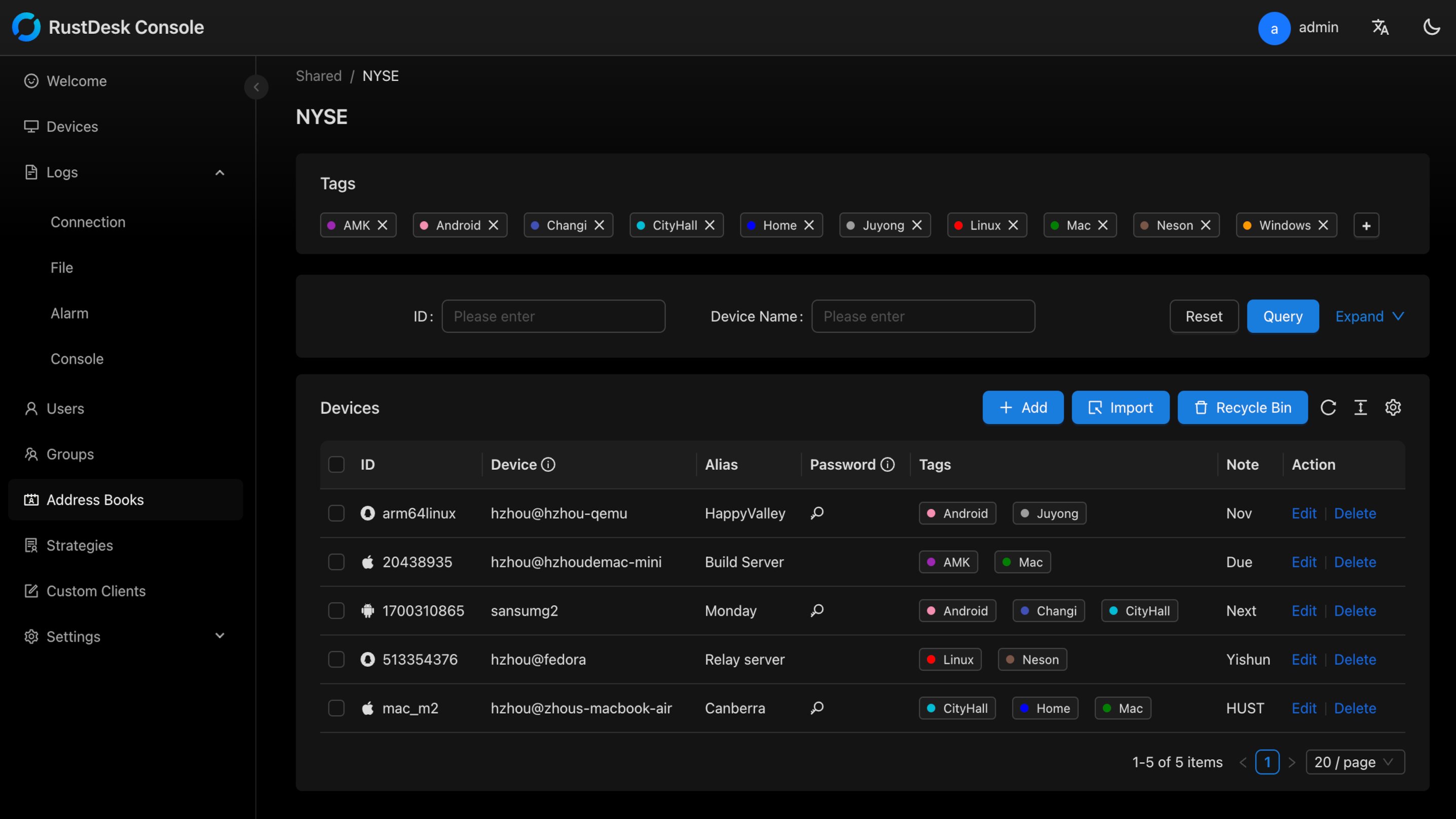
| Individual | $9.90/month | 1 login user, 20 managed devices, 2FA, web console, address book, audit logs |
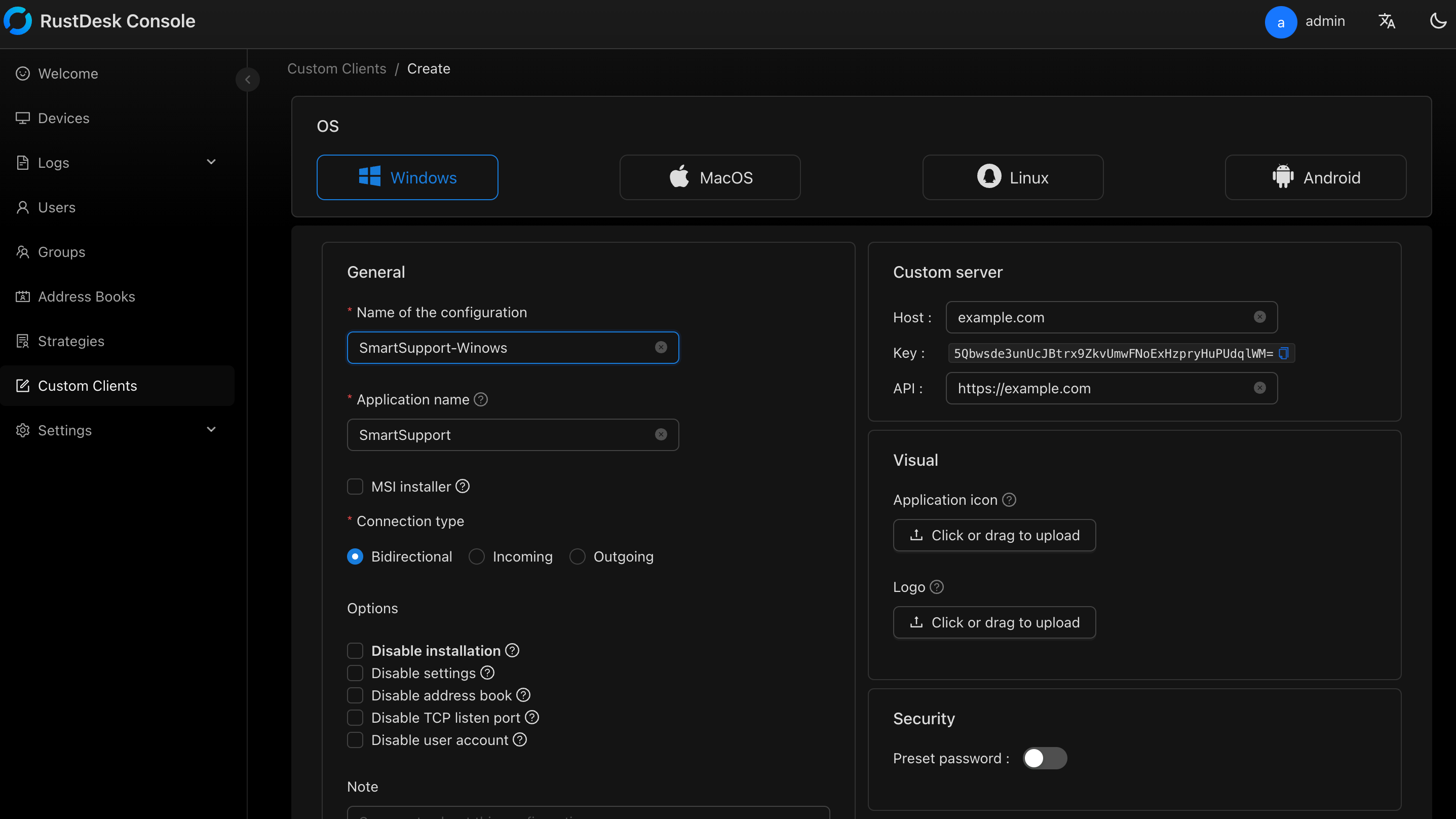
| Basic | $19.90/month | 10 login users, 100 devices, OIDC (SSO), LDAP, cross-group access, custom client generator |
| Customized V2 | $20 per concurrent connection | Unlimited sessions per connection, scaled deployments |
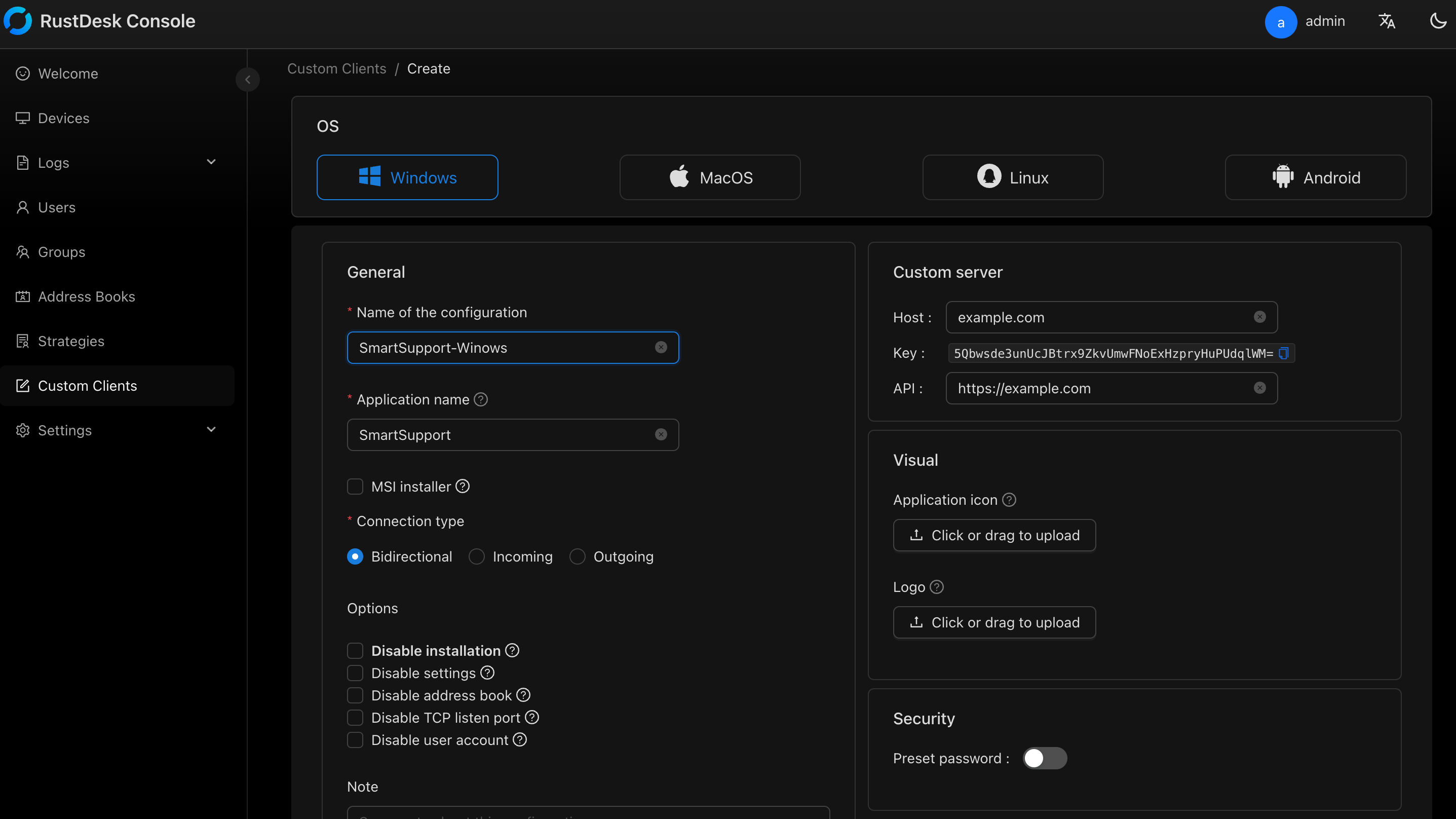
Best for: IT support teams and MSPs who already pay $50–$200 per technician per month for TeamViewer or AnyDesk, sysadmins running r/homelab-style setups who want everything inside their VPN, and small companies that need cross-platform remote support but cannot accept their session traffic transiting a third-party cloud.
Not ideal for: Teams that need a fully managed SaaS with no infrastructure to operate — running hbbs/hbbr means you own DNS, TLS, port forwarding and updates. Also a poor fit for one-off "help my parent’s PC" sessions where Microsoft’s Quick Assist or Apple’s built-in screen sharing is friction-free.
Pros:
docker compose up deployment that finishes in under five minutes on a $5 VPS.Cons:
The closest open-source rival is MeshCentral, which is more feature-rich for unattended fleets but has a steeper learning curve. HopToDesk is a friendly fork of RustDesk with simpler pricing for small teams. On the commercial side, Splashtop is the SaaS that most r/sysadmin migrators land on when they don’t want to self-host, and HelpWire targets MSPs with a free-forever attended-support tier. None of them combine a free OSS relay, a real public client and a $9.90/month admin console the way RustDesk does.
For anyone whose remote-support bill has crossed a few hundred dollars a month, RustDesk is the easiest meaningful saving in the IT stack. You trade a SaaS contract for a Docker host, gain end-to-end encryption you can audit, and unlock multi-platform parity that the closed-source incumbents still don’t deliver. The 83/100 reflects two real frictions: the operational overhead of self-hosting and the fact that the most useful Pro features are not part of the OSS core. If you can absorb both, RustDesk is the best-value remote desktop in 2026; if you can’t, Splashtop or HelpWire will save you the headaches at a higher monthly price.
wget rustdesk.com/oss.yml -O compose.yml (or pro.yml for Pro), then docker compose up -d. End-to-end setup takes under five minutes on a 1 vCPU VPS.ServiceNow and Accenture Launch Forward Deployed Engineering Program to Scale Agentic AI in the Enterprise (May 6, 2026)
At Knowledge 2026, ServiceNow and Accenture announced a joint forward deployed engineering program that drops co-located engineer pods into customer environments to ship agentic AI workflows natively on the ServiceNow AI Platform — with access to 300+ pre-built agent skills and the AI Control Tower as the governance backbone.
May 7, 2026
ReFiBuy Raises $13.6M Seed to Help Brands Get Recommended by AI Shopping Agents (May 5, 2026)
ReFiBuy, the Raleigh-based agentic commerce platform from ChannelAdvisor founder Scot Wingo, closed an oversubscribed $13.6M seed led by NewRoad Capital Partners on May 5, 2026 — betting that the next billion-dollar e-commerce moat is being chosen by ChatGPT, Claude and Perplexity.
May 7, 2026
OpenAI Replaces ChatGPT's Default Model With GPT-5.5 Instant — 52.5% Fewer Hallucinations, 30% Shorter Answers (May 5, 2026)
OpenAI on May 5 swapped GPT-5.3 Instant for the new GPT-5.5 Instant as ChatGPT's default model, claiming 52.5% fewer hallucinated claims on high-stakes prompts and 30% more concise answers. The model also rolls into the API as chat-latest and adds personalization from Gmail and past chats for Plus and Pro web users.
May 7, 2026
Is this product worth it?
Built With
Compare with other tools
Open Comparison Tool →