 Databases
DuckDB
The in-process SQL OLAP database — SQLite-style embedding, columnar speed, and 1.5.2 ships DuckLake 1.0 GA.
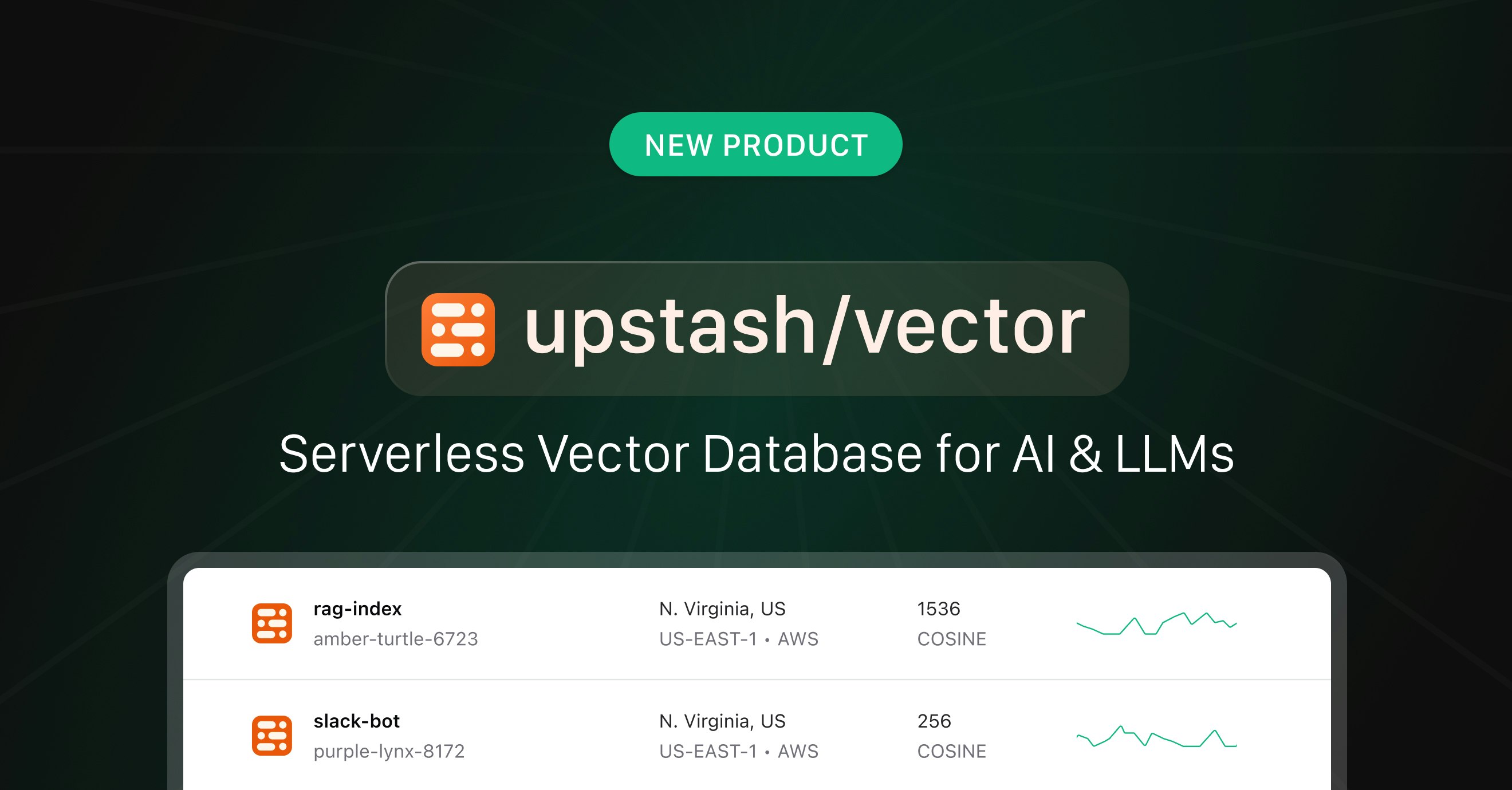
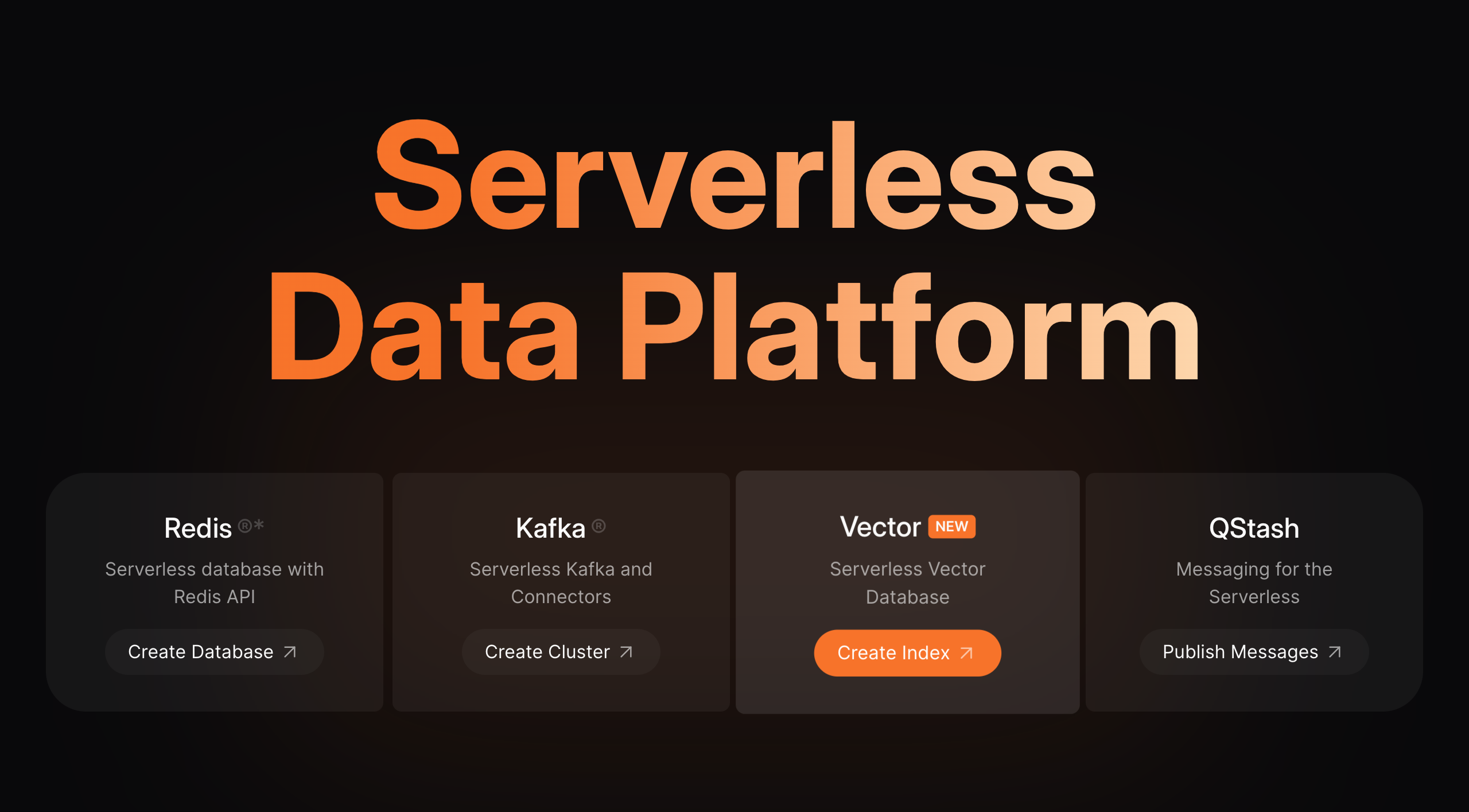
Upstash is a serverless data platform offering Redis, Vector, QStash, and Search with per-request pricing and a generous free tier. It's the go-to data layer for edge functions and serverless apps that need low-latency storage without managing any infrastructure.
Upstash is a serverless data platform that gives developers production-grade Redis, a vector database, message queuing (QStash), and full-text search — all with pay-per-request pricing and zero infrastructure management. We rate it 82/100 — an excellent choice for serverless and edge developers, with pricing that scales well at low-to-medium volumes but warrants attention at high throughput.
Upstash was founded by Enes Akar, Mehmet, and Bilal, launching its first product — serverless Redis — in 2021. The company raised a $1.9M seed round in March 2022 and a $10M Series A led by Andreessen Horowitz in February 2024. By then, the platform had grown to over 85,000 developer users. Headquartered in San Jose, California, Upstash's core philosophy is to remove all operational overhead from data infrastructure: no servers to provision, no capacity planning, no connection pooling headaches.
The platform stands apart from traditional managed databases because it exposes everything over HTTP/REST, making it compatible with edge runtimes like Cloudflare Workers, Vercel Edge Functions, and Deno Deploy — environments where TCP connections are impossible. If you've tried to use standard Redis in a Vercel serverless function and hit a connection limit wall, Upstash was built specifically to solve that problem.


The developer community is broadly positive. On Product Hunt, Upstash earned a 5.0/5 rating across 28 reviews, with users consistently praising the ease of setup ("from zero to production Redis in under 3 minutes") and the reliability of QStash for async workflows. The Upstash JS SDK is frequently highlighted as "incredibly clean to use." On Reddit and Hacker News, the main complaints cluster around two areas: first, that at very high volumes (millions of commands per day), pay-per-request pricing exceeds the cost of a managed Redis instance on Redis Cloud or even a self-hosted setup; second, that Upstash is Redis-compatible but does not support Redis modules — meaning advanced features like RedisJSON, RediSearch, and RedisTimeSeries are unavailable. Developers building standard caching and session storage workloads rarely hit these limitations, but power users should read the compatibility matrix carefully.
Upstash uses per-request pricing for Redis, making it genuinely free to start and predictable to scale.
| Plan | Price | Key Limits |
|---|---|---|
| Free | $0/month | 256 MB storage, 500K commands/month, 1 database |
| Pay as you go | $0.20 per 100K commands | 100 GB data, unlimited bandwidth, global replication |
| Fixed (250MB) | $10/month | 50 GB/month bandwidth, no per-command charge, +$5/read region |
| Prod Pack (add-on) | +$200/month per DB | Uptime SLA, RBAC, encryption at rest, SOC-2, Prometheus/Datadog |
| Enterprise | Custom | 100K+ commands/sec, unlimited DBs, HIPAA compliance, dedicated support |
Best for: Developers building on Vercel, Cloudflare Workers, Deno Deploy, or any edge/serverless runtime who need Redis, a vector store, or a message queue. Startups and solo developers who want zero DevOps overhead for caching, rate limiting, session storage, or AI-powered semantic search. Anyone on a variable-traffic application who wants to pay only for what they use.
Not ideal for: High-throughput applications sending tens of millions of Redis commands per day — at that scale, a fixed-cost managed Redis instance or self-hosted deployment will be more economical. Also not suitable for workloads requiring Redis modules (RedisJSON, RediSearch, RedisGraph).
Pros:
Cons:
Redis Cloud is the closest direct competitor — it offers Redis module support and fixed pricing tiers, making it better for module-dependent workloads or very high volume. PlanetScale Boost and Neon (serverless Postgres) serve similar serverless-database philosophies but for SQL rather than key-value. For vector databases specifically, Pinecone and Weaviate offer deeper ML-focused feature sets but at significantly higher cost and complexity.
For serverless and edge developers, Upstash is close to a no-brainer. It solves a genuine pain point (Redis in edge environments), offers a meaningful free tier, and packages four useful data services into one account. The per-request pricing model is fair for most applications, and the HTTP API is genuinely well-designed. We rate it 82/100: excellent for its target use case, with the caveat that high-volume workloads should model costs carefully before committing.
ServiceNow and Accenture Launch Forward Deployed Engineering Program to Scale Agentic AI in the Enterprise (May 6, 2026)
At Knowledge 2026, ServiceNow and Accenture announced a joint forward deployed engineering program that drops co-located engineer pods into customer environments to ship agentic AI workflows natively on the ServiceNow AI Platform — with access to 300+ pre-built agent skills and the AI Control Tower as the governance backbone.
May 7, 2026
ReFiBuy Raises $13.6M Seed to Help Brands Get Recommended by AI Shopping Agents (May 5, 2026)
ReFiBuy, the Raleigh-based agentic commerce platform from ChannelAdvisor founder Scot Wingo, closed an oversubscribed $13.6M seed led by NewRoad Capital Partners on May 5, 2026 — betting that the next billion-dollar e-commerce moat is being chosen by ChatGPT, Claude and Perplexity.
May 7, 2026
OpenAI Replaces ChatGPT's Default Model With GPT-5.5 Instant — 52.5% Fewer Hallucinations, 30% Shorter Answers (May 5, 2026)
OpenAI on May 5 swapped GPT-5.3 Instant for the new GPT-5.5 Instant as ChatGPT's default model, claiming 52.5% fewer hallucinated claims on high-stakes prompts and 30% more concise answers. The model also rolls into the API as chat-latest and adds personalization from Gmail and past chats for Plus and Pro web users.
May 7, 2026
Is this product worth it?
Built With
Compare with other tools