 Productivity
Raycast
Powerful macOS launcher and productivity platform — 7.3K GitHub stars for extensions
Capacities is a Notion alternative that organizes notes as connected objects (people, books, projects, ideas) instead of pages and folders. It is fast, beautifully designed, and finally has a usable mobile app — but still ships without team collaboration or end-to-end encryption.
Capacities is an object-based note-taking app from a small German team that wants to replace your folders with a graph of connected things — people, books, projects, ideas, daily notes — and let you find them by association rather than by hierarchy. We rate it 82/100 — the most thoughtful Notion alternative on the market for solo knowledge workers, with a generous free tier, but it still has no team mode and no end-to-end encryption.
Capacities was founded in by Steffen Bleher and Michael von Hohnhorst as Capacities Labs GmbH, based in Sankt Wendel, Germany, and shipped its public web app in . The mobile apps for iOS and Android followed in , completing a Mac, Windows, Linux, web, iOS and Android footprint. The company has stayed independent and bootstrapped — no VC round and no acquisition rumors — which is part of why long-time users trust it with multi-year second-brain libraries.
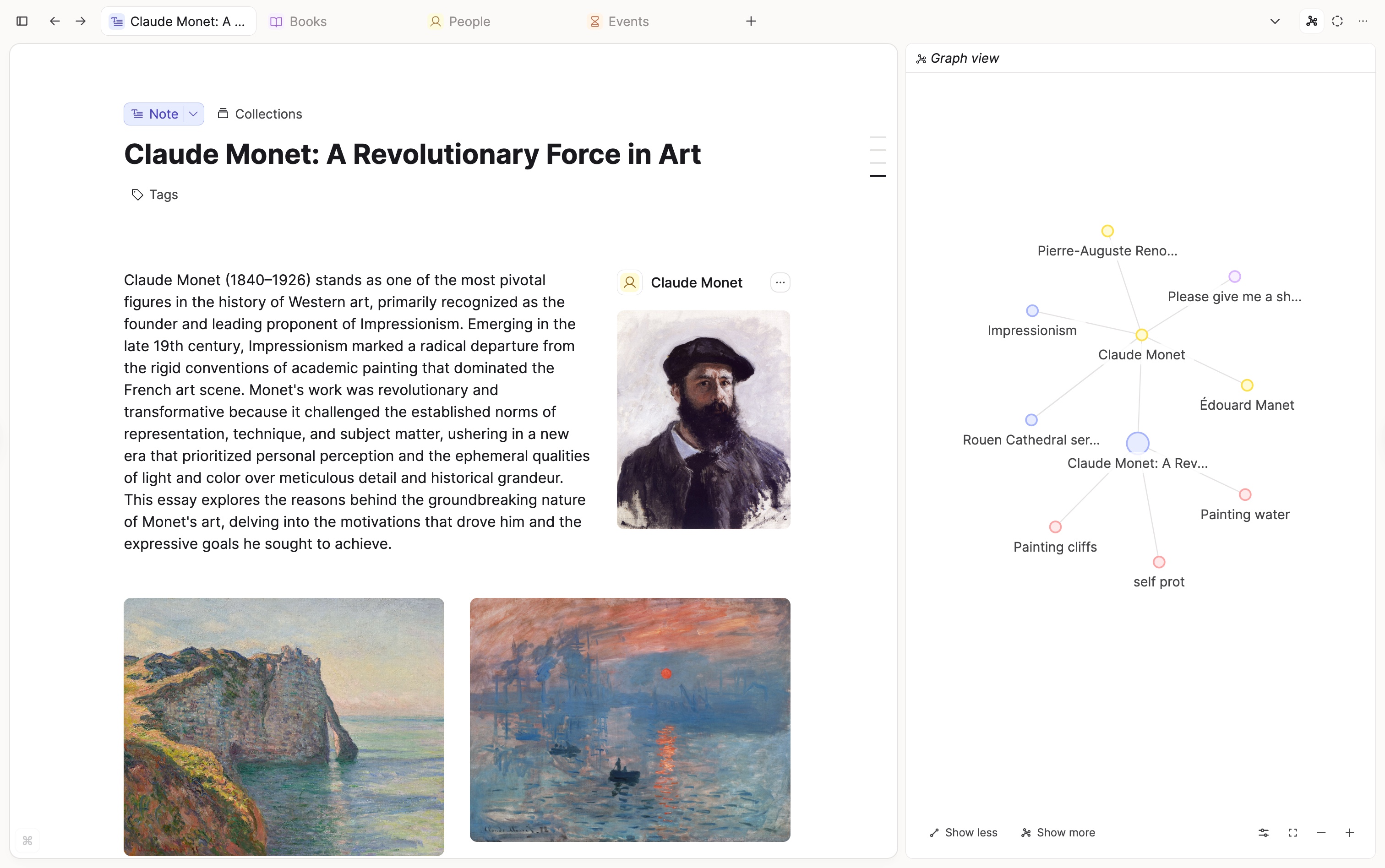
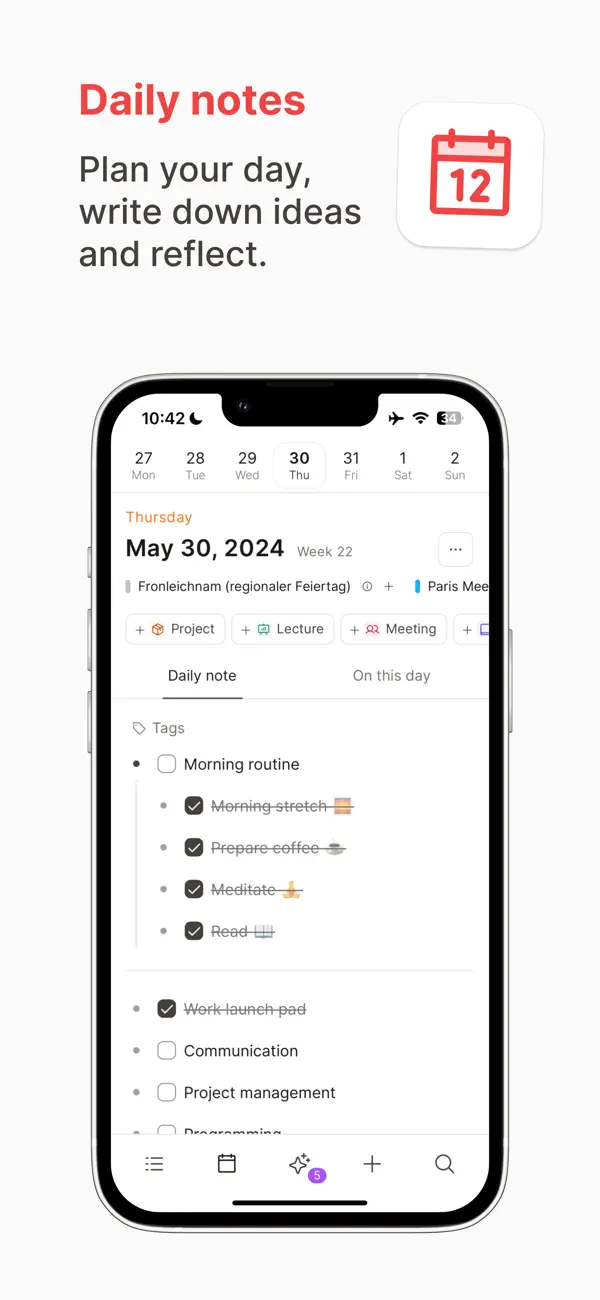
The core idea is structural: every entry in Capacities is a typed object — a Person, a Book, a Project, a Meeting, an Idea — with its own template, properties and back-references. You then write daily notes (your inbox), reference those objects with @, and Capacities builds the graph for you in the background. It is closer to Tana or Roam than to Notion or Obsidian, but with a much gentler learning curve than either.
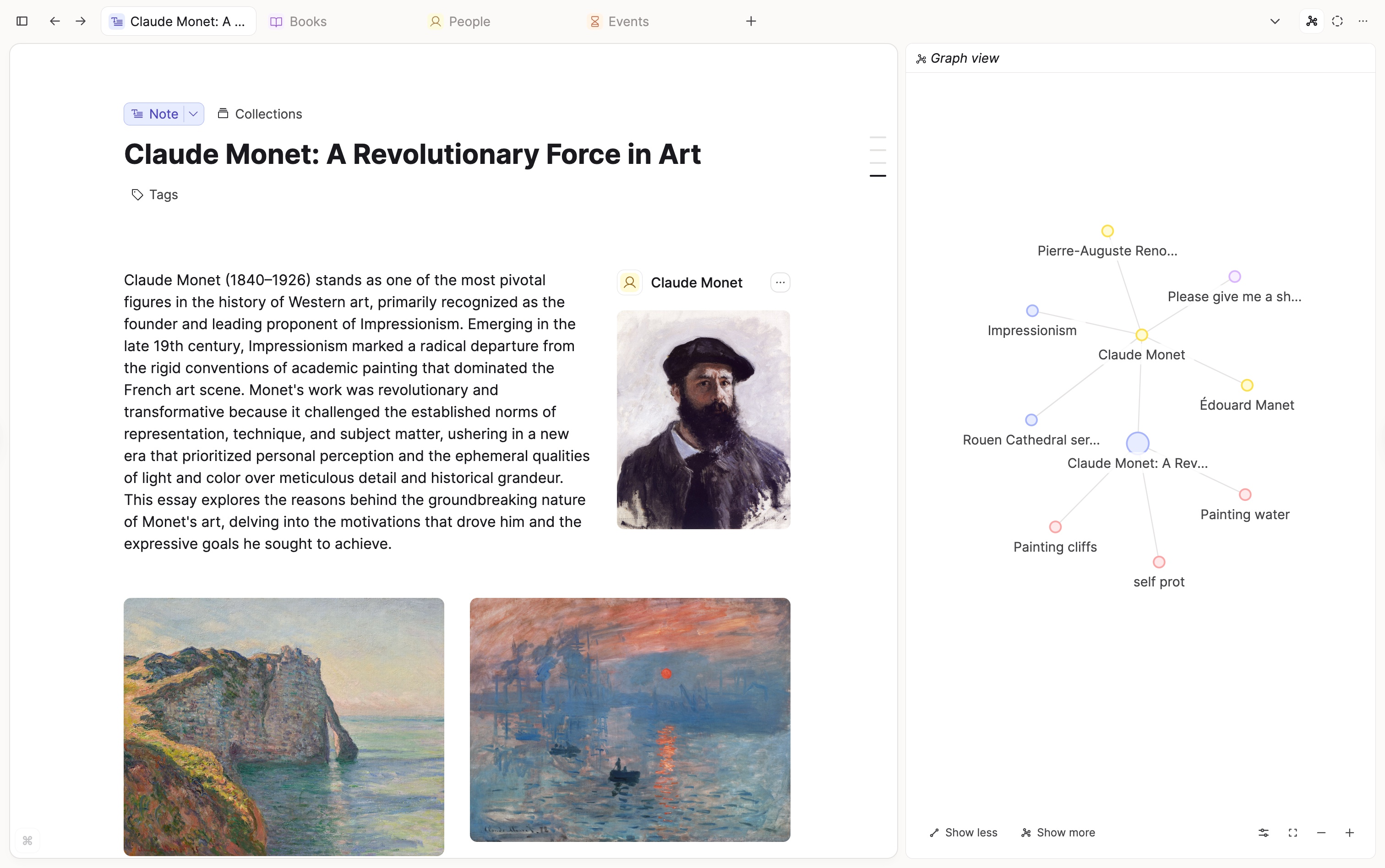
@mention in a daily note becomes a real link in the graph.@, and Capacities timelines everything. The blog post you wrote, the meeting you attended and the book you started all surface on the relevant object pages without any folder choreography.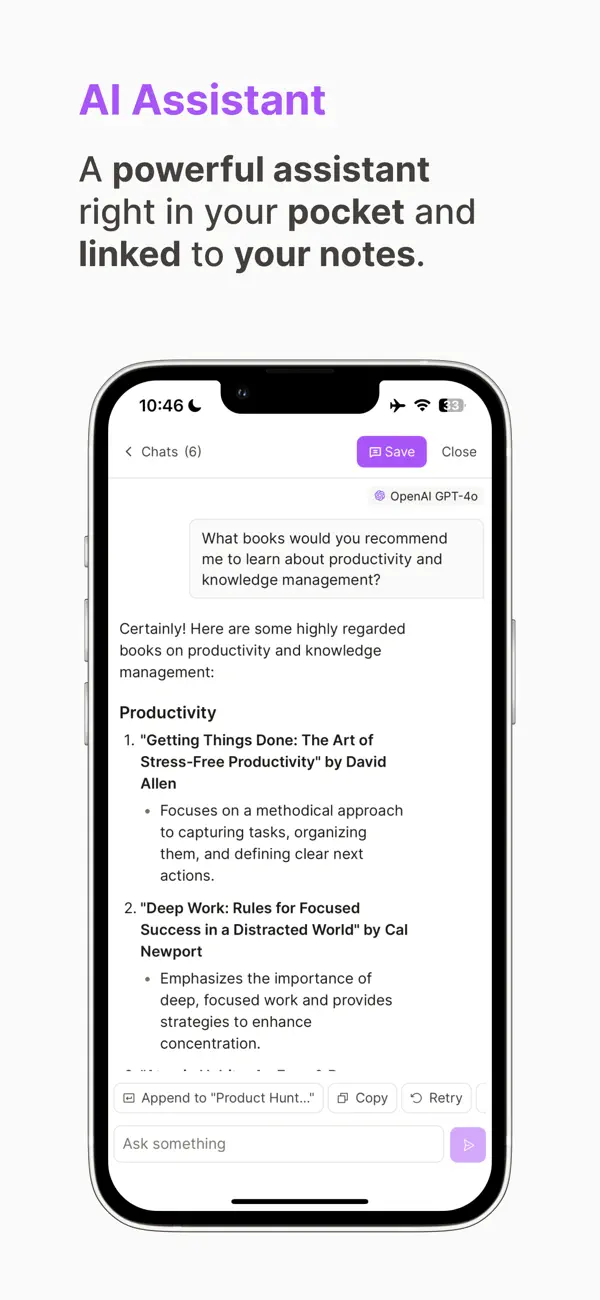
Sentiment in r/PKMS and on Product Hunt is unusually warm for a category as crowded as PKM. The most upvoted r/PKMS thread describes Capacities as “awesome and super easy to use,” and a recurring sentiment is that it replaced both Notion and Obsidian for users who wanted Obsidian’s linking but Notion’s polish. Founders Steffen and Michael are visibly active in the community, which goes a long way.
The honest criticism — collected across r/PKMS, Reddit’s r/Notion threads and the Medium piece “I Finally Tried Capacities” — is consistent: no end-to-end encryption (a real blocker for anyone storing client or medical notes), no real-time collaboration (Capacities is single-player only — there is a comparison page literally titled “Capacities is for individuals”), mobile is good but still catches up to desktop, and there is no native canvas/whiteboard view yet. The learning curve from Notion or Apple Notes is real for the first week.
Capacities is freemium with one of the most generous free tiers in PKM and refreshingly clear paid pricing — no “contact us” fog, no per-seat anchor pricing.
| Plan | Price | Key Limits |
|---|---|---|
| Free (Basic) | $0 forever | Unlimited notes, blocks and objects. 5 GB media storage. Sync across all devices. Daily notes, backlinks, queries. |
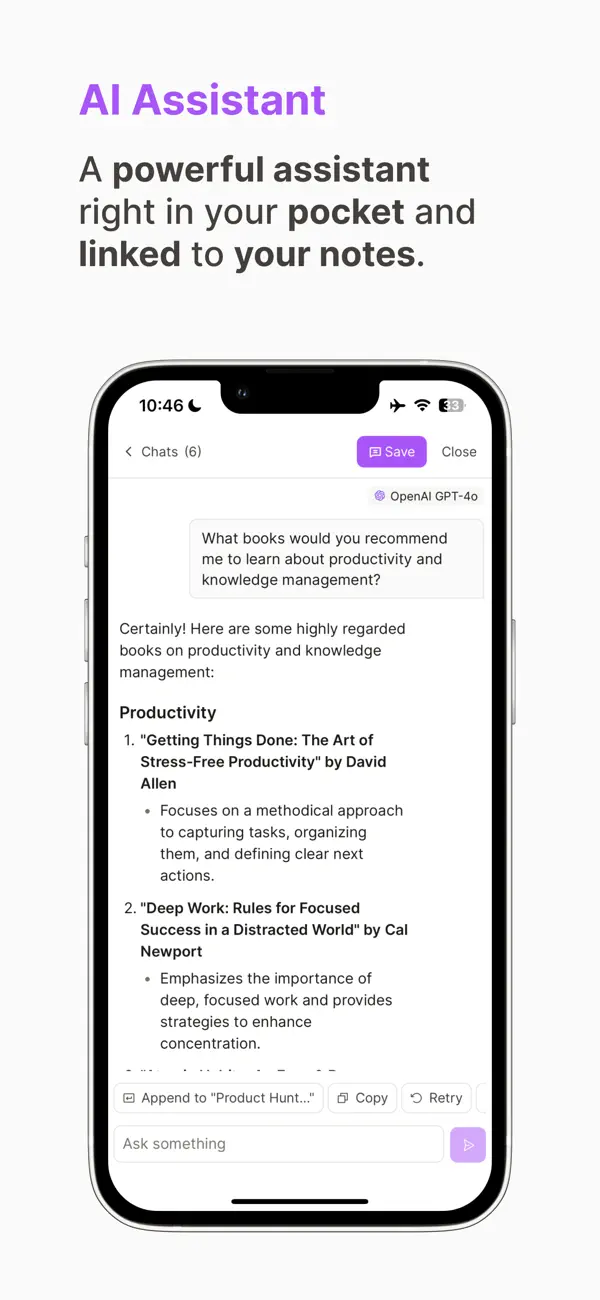
| Pro | $11.99/month or $119.88/year | Unlimited media, AI assistant, calendar & tasks, formulas in tables, unlinked mentions, Web Highlights, Hookmark, Raycast, public API. |
| Believer | $14.99/month or $149.88/year | Everything in Pro plus early access to beta features. A way to support the indie team. |
Best for: Researchers, writers, students, consultants, designers and any solo knowledge worker who has hit the wall with Notion’s page-and-database mental model or with Obsidian’s blank-canvas overhead. If you live in daily notes and want a tool that connects ideas to people, books and projects automatically, Capacities is currently the best-designed app in this niche.
Not ideal for: Teams that need shared workspaces, lawyers and clinicians who require end-to-end encrypted notes, anyone who lives on a phone before a laptop, or workflows that depend on infinite-canvas whiteboarding.
Pros:
Cons:
The closest alternatives are Obsidian (local-first markdown, more plugins, no objects), Notion (better for teams and project tracking, weaker for atomic ideas), Tana (more powerful supertags but steeper learning curve and pricier), and AFFiNE (open source with whiteboard but rougher edges). For pure note-takers Obsidian remains the safer choice; for object-thinkers Capacities currently wins on design and speed.
Capacities earns an 82/100. The free tier alone is enough reason to install it tonight if you have ever wanted Roam-style backlinks without the Roam-style bill. The $11.99 Pro tier is worth the upgrade once the AI assistant, calendar sync and Web Highlights start saving you 30 minutes a day. We are docking points specifically for the missing E2E encryption and the absence of any team or canvas mode — those will be the deciding factors for some readers in 2026. For everyone else, this is the most carefully designed PKM app you can adopt right now.
ServiceNow and Accenture Launch Forward Deployed Engineering Program to Scale Agentic AI in the Enterprise (May 6, 2026)
At Knowledge 2026, ServiceNow and Accenture announced a joint forward deployed engineering program that drops co-located engineer pods into customer environments to ship agentic AI workflows natively on the ServiceNow AI Platform — with access to 300+ pre-built agent skills and the AI Control Tower as the governance backbone.
May 7, 2026
ReFiBuy Raises $13.6M Seed to Help Brands Get Recommended by AI Shopping Agents (May 5, 2026)
ReFiBuy, the Raleigh-based agentic commerce platform from ChannelAdvisor founder Scot Wingo, closed an oversubscribed $13.6M seed led by NewRoad Capital Partners on May 5, 2026 — betting that the next billion-dollar e-commerce moat is being chosen by ChatGPT, Claude and Perplexity.
May 7, 2026
OpenAI Replaces ChatGPT's Default Model With GPT-5.5 Instant — 52.5% Fewer Hallucinations, 30% Shorter Answers (May 5, 2026)
OpenAI on May 5 swapped GPT-5.3 Instant for the new GPT-5.5 Instant as ChatGPT's default model, claiming 52.5% fewer hallucinated claims on high-stakes prompts and 30% more concise answers. The model also rolls into the API as chat-latest and adds personalization from Gmail and past chats for Plus and Pro web users.
May 7, 2026
Is this product worth it?
Built With
Compare with other tools
Open Comparison Tool →