

 Security
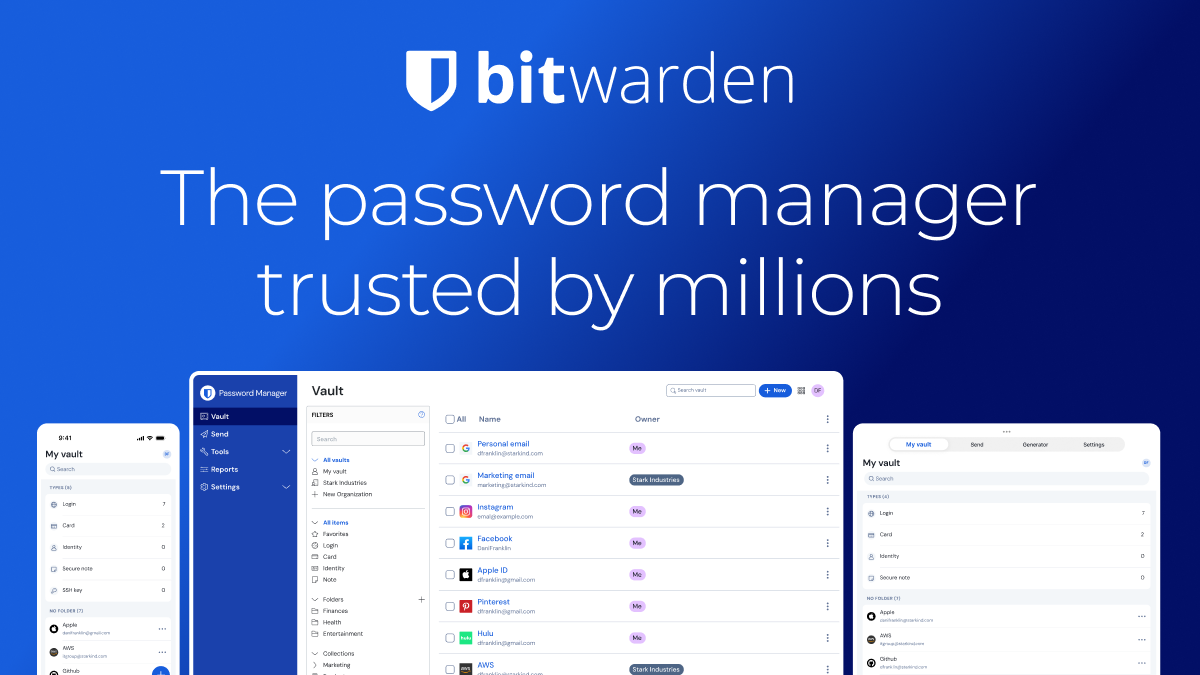
Bitwarden
Open-source password manager — unlimited free vault on every device, AES-256 encryption, audited annually.
Stack Auth is an open-source, self-hostable Auth0/Clerk alternative with a generous 10,000 MAU free tier and a five-minute Next.js setup. We rate it 78/100 — a very good pick for indie devs and YC-stage startups who want Clerk DX without Clerk pricing.
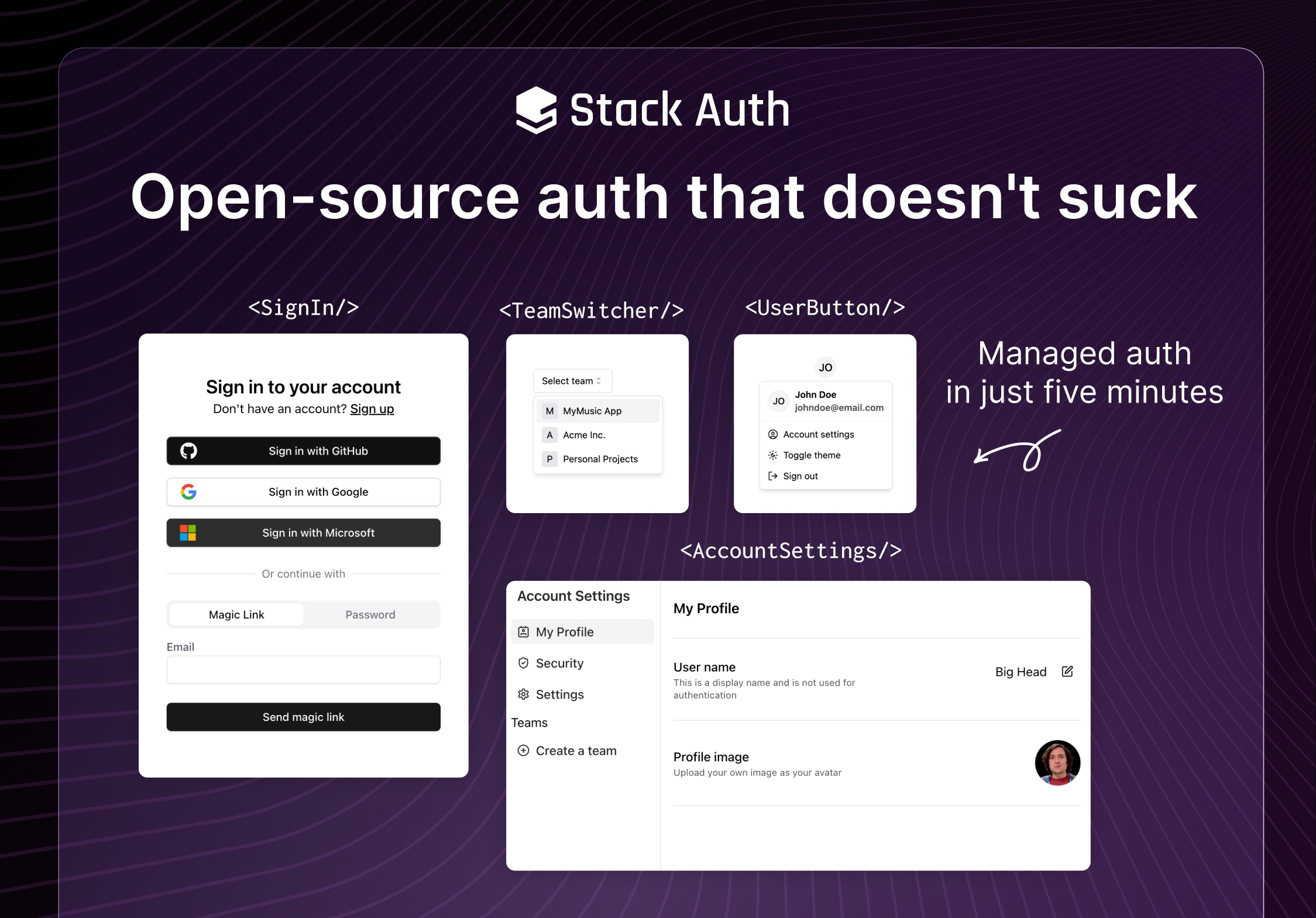
Stack Auth is an open-source authentication and user management platform that aims to be the developer-friendly Auth0 / Clerk alternative — same drop-in components, same OAuth/passkey/magic-link flows, but MIT-licensed, fully self-hostable, and with a free tier you can actually ship a startup on. We rate it 78/100 — an excellent pick for indie devs and YC-stage startups who want Clerk-grade DX without Clerk-grade pricing or vendor lock-in.
Stack Auth was founded by repeat founders Konstantin Pluhatariuk (Konsti) and Zaymon (Zai) and went public on Hacker News as part of the batch on . The pitch is simple: every existing managed auth product (Auth0, Clerk, WorkOS, Firebase Auth) eventually punishes you — either with steep per-MAU pricing, vendor lock-in, or the inability to self-host. Stack Auth ships the same five-minute setup experience but is dual-licensed under MIT (frontend SDKs) and AGPLv3 (backend), so you can export your users and bring the whole thing in-house at any time.
By the project has crossed 4,800+ GitHub stars, ships SDKs for Next.js, React, JavaScript and Python, and powers production auth at YC-batch startups, indie SaaS, and open-source side projects. The company is headquartered in San Francisco and remains lean — small team, public roadmap on GitHub, and a Discord that founders still answer in personally.
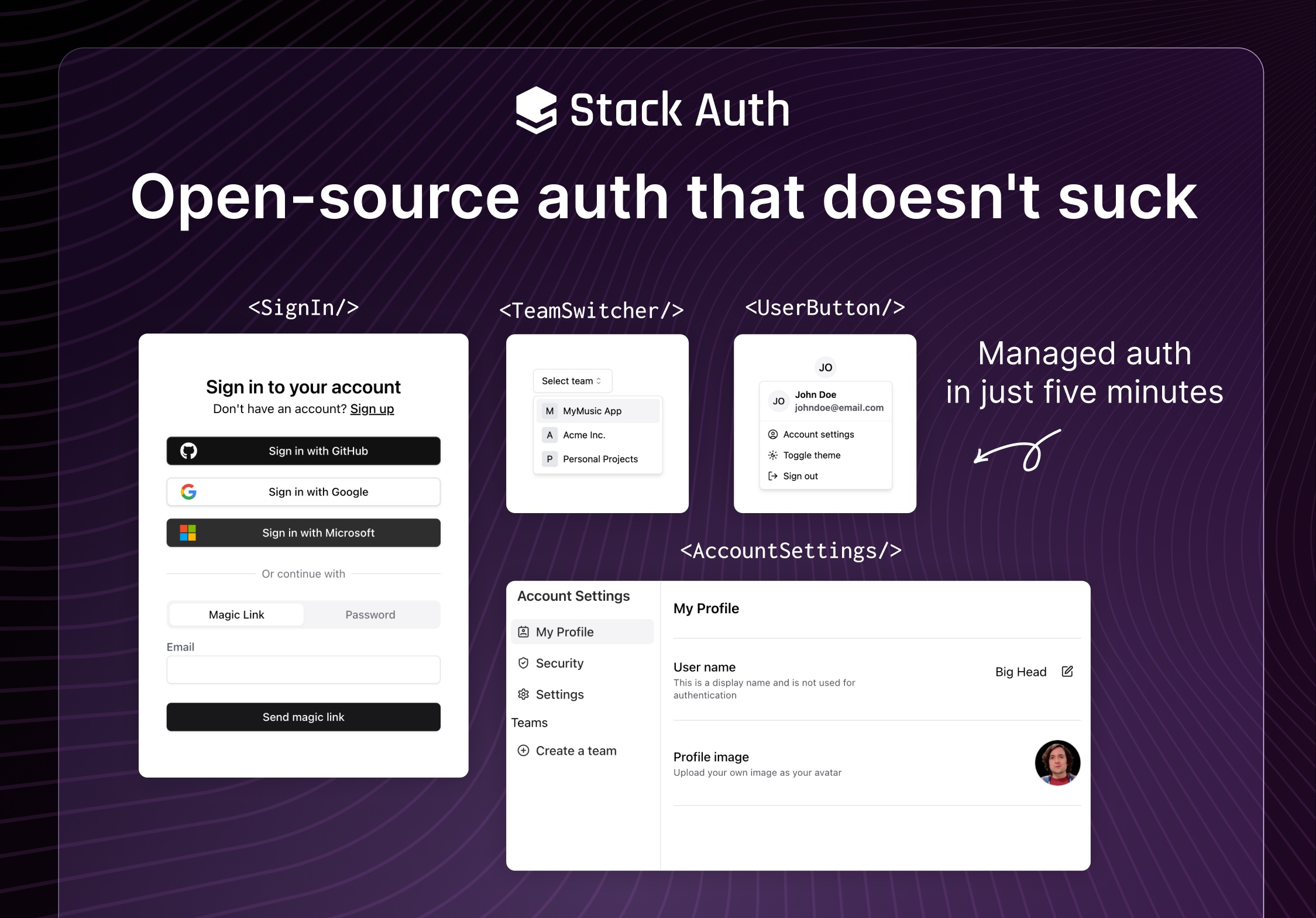
npx @stackframe/init-stack@latest) wires up sign-in, sign-up, password reset, OAuth callbacks and a user dashboard. Most teams report a working auth flow in under 10 minutes.<SignIn />, <SignUp />, <UserButton /> and <AccountSettings /> components — the same DX Clerk popularised, now MIT-licensed and themable.docker compose up. Self-hosting is free forever, including B2B and team features that Clerk and Auth0 paywall.Sentiment in the developer community has trended sharply positive since the Launch HN thread in August 2024. The most-upvoted comment on the original post described replacing a Clerk integration with Stack Auth in a few hours and praised the flexibility of having a real open-source escape hatch. On Reddit's r/nextjs, recurring threads through 2025 and 2026 cite the free tier (10,000 MAU) as a major draw — that's the same ceiling Clerk only offers on its paid Pro plan.
The honest complaints are equally consistent. Several developers on Hacker News and GitHub Issues note that the SDK ecosystem outside of Next.js and React is still thinner than Auth0's — if you're on Vue, Svelte, or Flutter, you're calling REST endpoints by hand. The AGPLv3 license on the backend is also polarising: it's fine for SaaS, but a non-starter for some enterprise customers who need a permissive license for vendored code. And like every young auth product, the dashboard occasionally lags behind the SDK on new features.
Stack Auth is freemium with a self-hostable open-source core. The free tier is genuinely production-grade: 10,000 monthly active users, unlimited teams and projects, OAuth, passkeys, B2B orgs — everything most early-stage startups need at zero cost.
| Plan | Price | Key Limits |
|---|---|---|
| Self-Hosted | $0 forever | Unlimited MAU, unlimited everything — you run it on your own Docker / Postgres |
| Free (Cloud) | $0/month | 10,000 MAU, 1 dashboard admin, all auth features, community support |
| Team | $49/month | 50,000 MAU, 3 admins (then $49 each), email support, B2B orgs |
| Growth | $299/month | Unlimited MAU, 5 admins (then $49 each), priority support, SSO/SAML |
| Enterprise | Contact | SOC 2 reports, SLA, on-prem assistance, custom DPA |
Best for: Indie hackers, YC-stage startups, and small engineering teams building on Next.js, React or Python who want Clerk-grade developer experience without a per-MAU bill that scales linearly with growth. Also a strong pick for any team that needs a self-hostable auth layer for compliance or sovereignty reasons.
Not ideal for: Large enterprises that need an Auth0-grade enterprise feature set today (advanced rules engine, fine-grained authorization, hundreds of pre-built integrations), Vue/Svelte/Flutter shops that don't want to call REST by hand, or organisations whose legal team won't ship AGPLv3 code.
Pros:
Cons:
Clerk is the closest commercial competitor and arguably has better polish and a larger SDK ecosystem, but it is not self-hostable and pricing scales aggressively past 10K MAU. Better Auth is a code-first, framework-agnostic library that's even more flexible than Stack Auth but ships no managed cloud or pre-built dashboard. WorkOS is enterprise-first with the best SAML/SSO/SCIM story, but is overkill (and overpriced) for early-stage products. Auth0 remains the safe enterprise default but is the most expensive option once you cross 10,000 MAU.
If you are building on Next.js, React or Python and you've ever stared at a Clerk or Auth0 invoice and winced, Stack Auth is genuinely worth the half-hour of evaluation. It nails the things that matter to small teams — five-minute setup, drop-in components, B2B teams, and a free tier that scales to 10,000 MAU — while giving you a real self-host escape hatch you can take at any time. It is younger and less battle-tested than Auth0, and the SDK story outside the React ecosystem still needs work, but the trajectory is the right one. 78/100: a very good product that is on track to be outstanding.
docker compose up runs the entire stack (backend, dashboard, Postgres) on your own infrastructure. Self-hosting is unlimited and free forever.SecurityOpen-source password manager — unlimited free vault on every device, AES-256 encryption, audited annually.
 Security
Developer-first enterprise identity — SAML SSO, SCIM, audit logs and AuthKit behind OpenAI, Cursor and Vercel
 Security
Free, network-wide ad & tracker blocking DNS server you self-host in five minutes.
 Security
Open-source auth infrastructure with multi-tenancy, SSO, and RBAC built on OIDC and OAuth 2.1.
ServiceNow and Accenture Launch Forward Deployed Engineering Program to Scale Agentic AI in the Enterprise (May 6, 2026)
At Knowledge 2026, ServiceNow and Accenture announced a joint forward deployed engineering program that drops co-located engineer pods into customer environments to ship agentic AI workflows natively on the ServiceNow AI Platform — with access to 300+ pre-built agent skills and the AI Control Tower as the governance backbone.
May 7, 2026
ReFiBuy Raises $13.6M Seed to Help Brands Get Recommended by AI Shopping Agents (May 5, 2026)
ReFiBuy, the Raleigh-based agentic commerce platform from ChannelAdvisor founder Scot Wingo, closed an oversubscribed $13.6M seed led by NewRoad Capital Partners on May 5, 2026 — betting that the next billion-dollar e-commerce moat is being chosen by ChatGPT, Claude and Perplexity.
May 7, 2026
OpenAI Replaces ChatGPT's Default Model With GPT-5.5 Instant — 52.5% Fewer Hallucinations, 30% Shorter Answers (May 5, 2026)
OpenAI on May 5 swapped GPT-5.3 Instant for the new GPT-5.5 Instant as ChatGPT's default model, claiming 52.5% fewer hallucinated claims on high-stakes prompts and 30% more concise answers. The model also rolls into the API as chat-latest and adds personalization from Gmail and past chats for Plus and Pro web users.
May 7, 2026
Is this product worth it?
Built With
Compare with other tools
Open Comparison Tool →