 Productivity
Raycast
Powerful macOS launcher and productivity platform — 7.3K GitHub stars for extensions
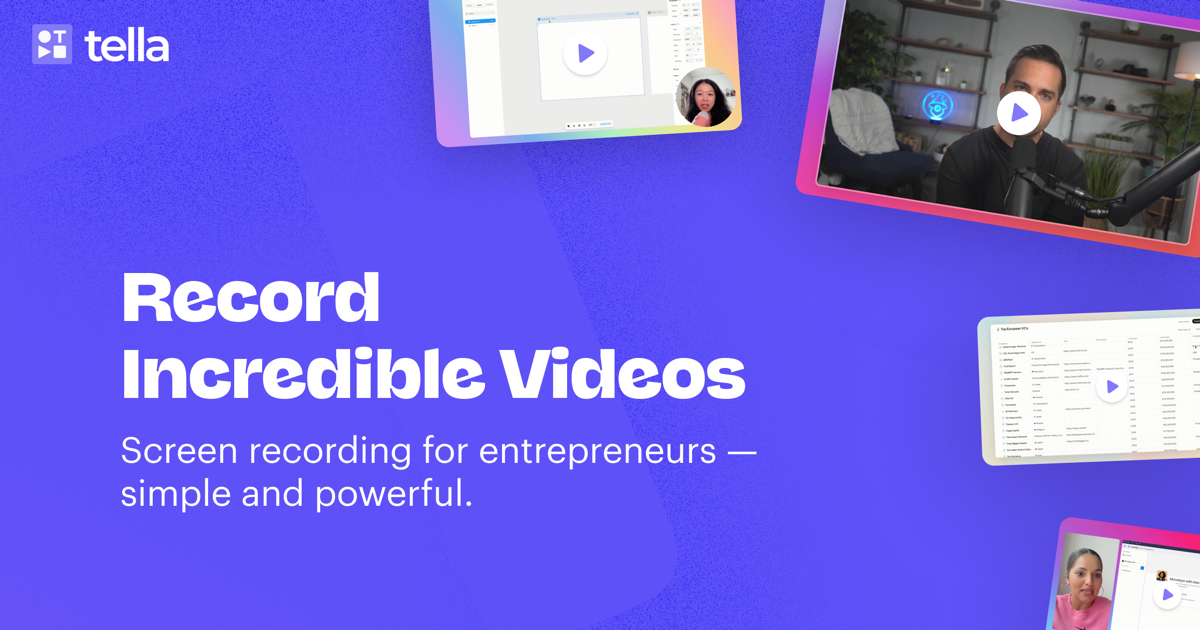
Tella is a browser- and desktop-based screen recorder that adds an AI-powered editor on top — auto-cut filler words, swap layouts, and zoom into details without ever opening Premiere. We rate it 84/100 for creators who ship demo and tutorial videos every week.
Tella is an all-in-one screen recorder for the Mac, Windows and the browser that bundles capture, AI editing and instant sharing into one workflow — the pitch is that you can ship a polished demo or tutorial in minutes instead of dragging a raw screen capture into Premiere. We rate it 84/100 — for solo founders, indie hackers and content creators who publish demo videos every week, Tella is one of the most opinionated and most enjoyable tools on the market in 2026, but team buyers who care about chat-style replies and playback analytics will still find Loom a better fit.
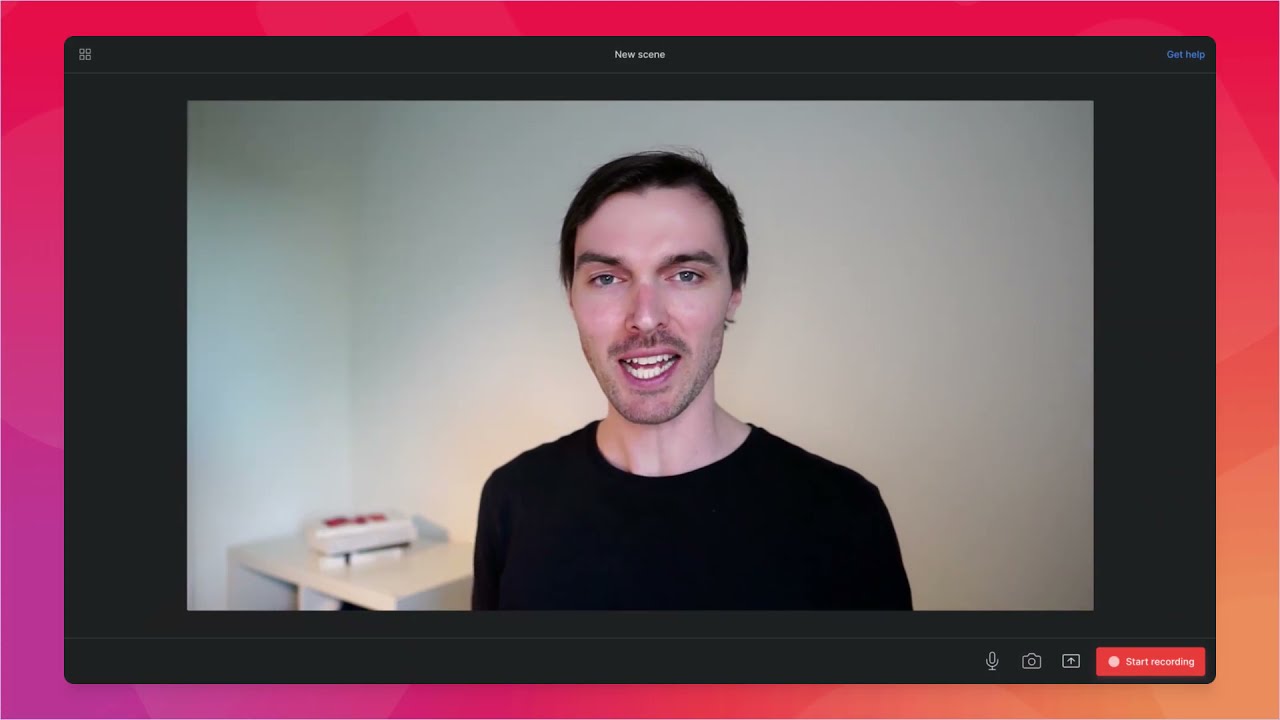
Tella is a screen recorder with a built-in editor. The company, Tella HQ Inc., was founded in 2020 by Michiel Westerbeek and Grant Shaddick and shipped its public Tella 2.0 launch on . Where most recorders stop at a raw MP4, Tella drops every clip onto an editor that already has stylish backgrounds, auto-zoom, layout transitions and AI-powered trimming applied — so the file you start with is already 80 percent of the way to something you would actually publish.
The audience is creators rather than coworkers: founders shooting product demos, indie SaaS makers walking through onboarding, course creators recording lessons, and a fast-growing slice of YouTubers who use Tella as a faster substitute for Final Cut. That focus shows up everywhere — multi-clip recording, 4K MP4 export, animated zooms and one-click branded backgrounds are all front and centre.
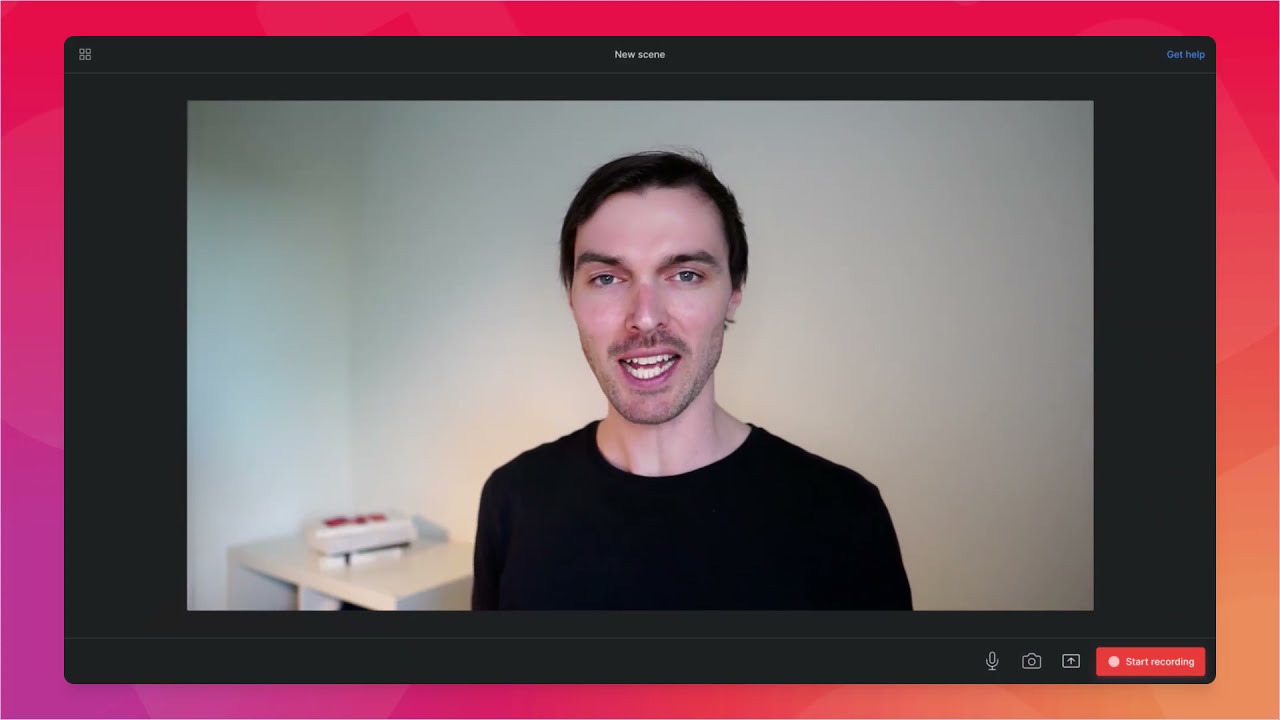
Sentiment on Tella is unusually warm for a paid recorder. Product Hunt reviewers repeatedly highlight the clean design, multi-clip recording and the way the editor encourages you to actually finish a video — comments like "the little touches like centring yourself on camera give videos that extra bit of polish" and "the Cut tool drastically reduces editing time" come up often. On Reddit's r/SaaS and r/Entrepreneur, founders praise it as the recorder that finally got them to publish weekly demo videos.
The recurring complaint, fairly enough, is reliability. A handful of Product Hunt users have reported recordings saving incorrectly, and a smaller minority say the feature set is still narrower than a full editor like Descript. Reviewers also note that the lack of a native mobile app is a real gap if you record on the go — Loom still wins that comparison.
Tella runs on a freemium model with a 7-day trial of all paid features (no card required). The published tiers are:
| Plan | Price | Key Limits |
|---|---|---|
| Free | $0/month | Limited recordings, watermark, basic editor — useful for trying the product, not for shipping |
| Pro | From $13/mo (annual) or $19/mo (monthly) | Unlimited videos, AI Auto Cut, Studio Voice, 4K export up to 5 min, instant share links, no watermark |
| Premium | From $19/mo (annual) | Everything in Pro plus custom branding, custom domains, longer 4K exports and advanced team controls |
Affiliate-program members report a 30 percent lifetime commission rate run through Dub, plus a 1-month extended trial — generous by SaaS standards.
Best for: Solo founders, indie SaaS makers, course creators, YouTubers and product marketers who publish demo or tutorial videos at least monthly and want them to look more polished than a default Loom thumbnail. Sales engineers shooting personalised pitch videos also rate it highly.
Not ideal for: Engineering teams who use screen recordings purely for async bug reports and standups (Loom is faster and free for small teams), or full-time YouTubers who already live in Premiere and Davinci Resolve and need frame-level control.
Pros:
Cons:
The most-cited alternatives in 2026 are Loom, the original team-comms screen recorder with a free plan and a mobile app but a less stylish editor; Cap, the open-source recorder with strong privacy defaults and no AI editor; and Screen Studio, a Mac-only competitor with arguably the best zoom animations on the market but a one-time license rather than a SaaS subscription. Pick Loom for team async, Cap for privacy or self-hosting, Screen Studio for one-off polish, Tella when you want all three jobs done in one tool.
For anyone shipping demo, tutorial, course or YouTube videos on a regular schedule, Tella is one of the most enjoyable screen recorders we've used in 2026, and the AI Auto Cut alone justifies the $13/mo Pro tier within the first long-form video. We deduct points for the missing mobile app and the occasional reliability complaint, which is why we land at 84/100 rather than 90. If your videos are mostly internal team comms, Loom or Cap are still the right call — but if your videos are external and brand-facing, Tella is the one we'd subscribe to.
ProductivityPowerful macOS launcher and productivity platform — 7.3K GitHub stars for extensions
 Productivity
Local-first, Markdown-native note-taking with a graph view and 2,000+ community plugins
 Productivity
Open-source AirDrop alternative for any device — 80k GitHub stars, end-to-end encrypted, zero internet required.
 Productivity
Self-hosted document management with OCR, auto-tagging and full-text search in 100+ languages
ServiceNow and Accenture Launch Forward Deployed Engineering Program to Scale Agentic AI in the Enterprise (May 6, 2026)
At Knowledge 2026, ServiceNow and Accenture announced a joint forward deployed engineering program that drops co-located engineer pods into customer environments to ship agentic AI workflows natively on the ServiceNow AI Platform — with access to 300+ pre-built agent skills and the AI Control Tower as the governance backbone.
May 7, 2026
ReFiBuy Raises $13.6M Seed to Help Brands Get Recommended by AI Shopping Agents (May 5, 2026)
ReFiBuy, the Raleigh-based agentic commerce platform from ChannelAdvisor founder Scot Wingo, closed an oversubscribed $13.6M seed led by NewRoad Capital Partners on May 5, 2026 — betting that the next billion-dollar e-commerce moat is being chosen by ChatGPT, Claude and Perplexity.
May 7, 2026
OpenAI Replaces ChatGPT's Default Model With GPT-5.5 Instant — 52.5% Fewer Hallucinations, 30% Shorter Answers (May 5, 2026)
OpenAI on May 5 swapped GPT-5.3 Instant for the new GPT-5.5 Instant as ChatGPT's default model, claiming 52.5% fewer hallucinated claims on high-stakes prompts and 30% more concise answers. The model also rolls into the API as chat-latest and adds personalization from Gmail and past chats for Plus and Pro web users.
May 7, 2026
Is this product worth it?
Built With
Compare with other tools
Open Comparison Tool →