

 AI Tools
Aider
AI pair programming in your terminal—free, open-source, any LLM
LM Studio is the most polished desktop GUI for running open-source LLMs locally. Free for personal and commercial use as of mid-2025, it now powers everything from private chat to a full OpenAI-compatible local server.
LM Studio is the closed-source but generously free desktop app that turns any modern Mac, Windows or Linux laptop into a private OpenAI server. Browse Hugging Face from a clean GUI, download a quantized model, chat in a familiar UI, and expose an OpenAI-compatible API on localhost — that's the whole pitch. We rate it 87/100: for users who want a polished way to run gpt-oss, Llama, Gemma, Qwen and DeepSeek on their own hardware, it is the most refined option in 2026.
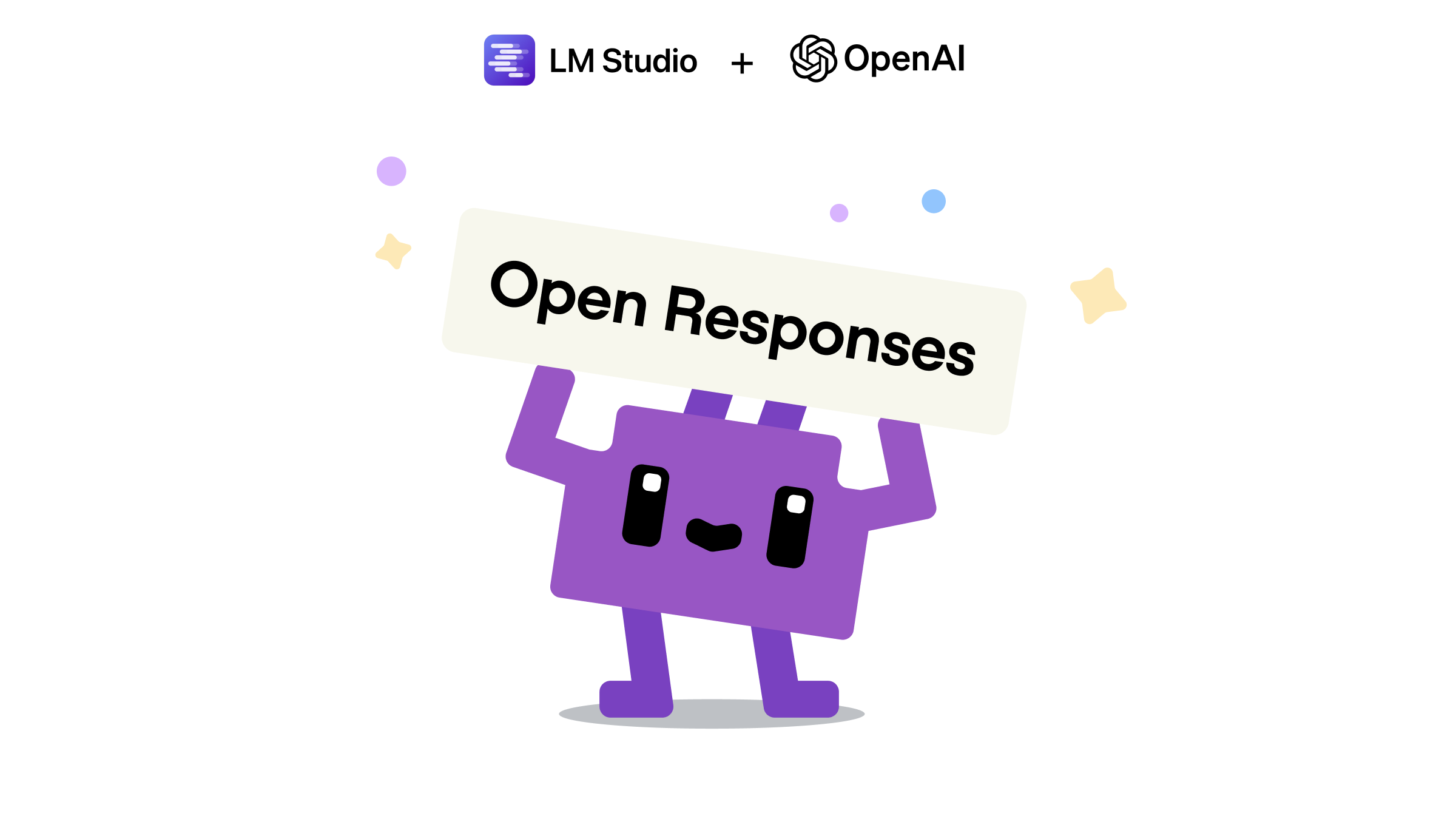
LM Studio is a desktop application built by a small team led by founder Yagil Burowski. The app first appeared in and has shipped more than thirty 0.3.x updates through 2025, with the latest release — 0.3.39 — landing on with Open Responses support for local models. Earlier 0.3 milestones added Model Context Protocol (MCP) Host support, built-in retrieval-augmented generation (RAG), structured outputs and a CLI for streaming server logs.
Instead of asking you to learn a CLI, LM Studio gives you a Hugging Face browser, one-click GGUF or MLX downloads, sensible defaults for GPU offload and quantization, and a familiar chat window. On Apple Silicon it ships an optimized MLX runtime; on x86 it leans on llama.cpp. The most strategically important update came on , when LM Studio dropped the commercial-license requirement and became free for use at work — no form, no contact, no sales call.

/v1/chat/completions, /v1/embeddings and the new /v1/responses on localhost:1234, so existing OpenAI SDK code points at LM Studio with a one-line base URL change.lms CLI streams server logs, loads/unloads models and powers the structured outputs API for JSON-typed responses.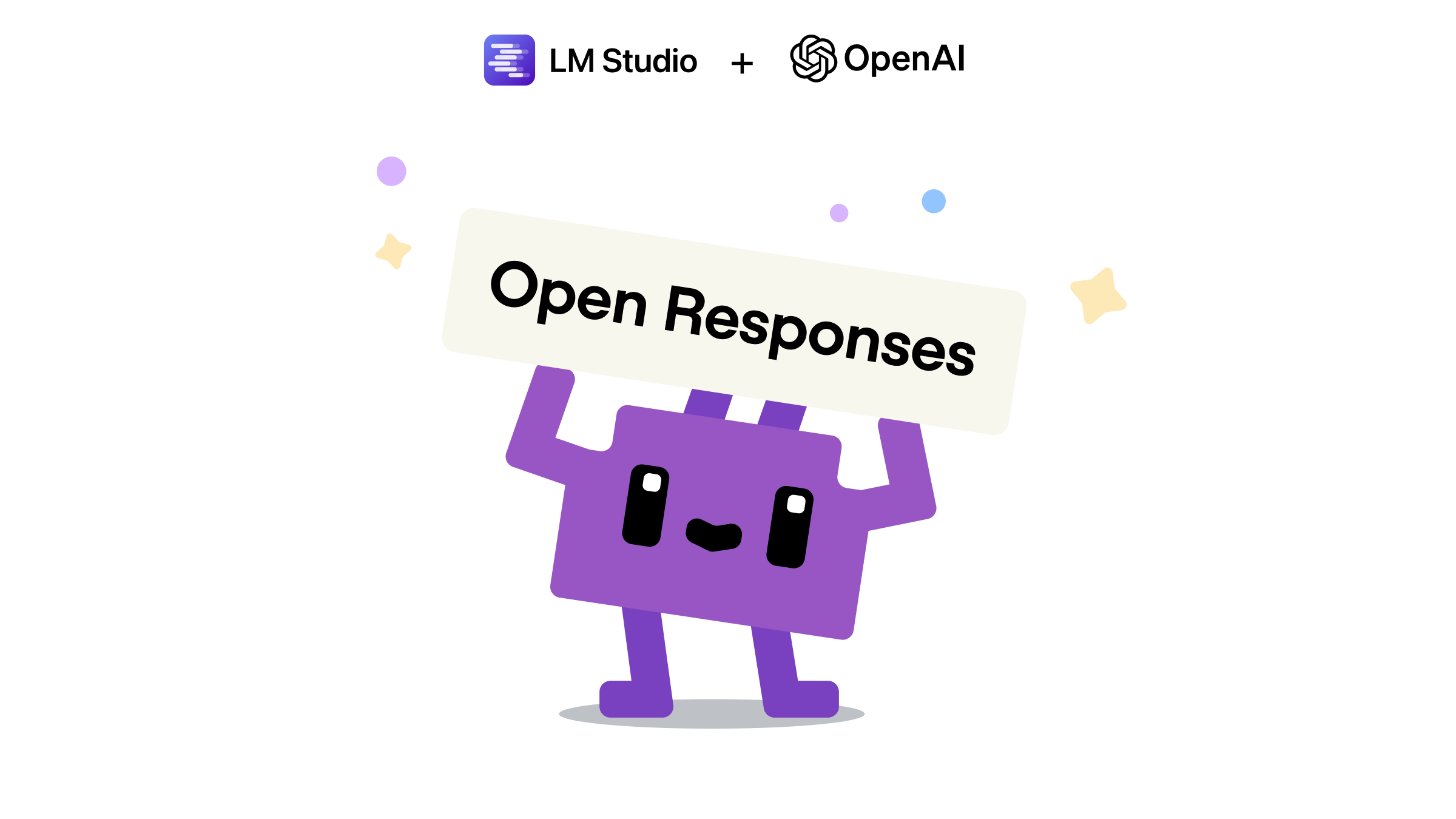
Sentiment is broadly positive with one persistent caveat. On r/LocalLLaMA, the most upvoted comparisons describe LM Studio as "the most polished local LLM interface" and "running in under five minutes" — the GUI is a clear differentiator versus Ollama for non-developers. XDA Developers' hands-on review concluded that LM Studio "proved" research-grade local LLMs are now viable.
The recurring complaint is that LM Studio is not open source. r/LocalLLaMA and Hacker News threads regularly note distrust around closed-source releases and fear of future paywalls. A second cluster of complaints concerns hardware: 7B models are comfortable on 16 GB of RAM, but anything past 13B unquantized starts to swap painfully. Multiple testers also note that local 8B models still trail GPT-5.2 or Claude on complex reasoning.
Pricing is the simplest part of the story: the app is free, the work license is free, and there is no metering. Revenue comes from the optional Enterprise tier.
| Plan | Price | Key Limits |
|---|---|---|
| Personal | $0 | All features, unlimited local usage, public Hub |
| Work | $0 | Same as Personal — no commercial license required since July 2025 |
| Enterprise | Contact | SSO, MCP/model gating, private team Hub, support SLAs |
Best for: developers, researchers and curious power users who want a friction-free way to evaluate open-weight models, point existing OpenAI SDK code at a private endpoint, or run RAG over sensitive documents that cannot leave the laptop. It is also the right pick for non-developers who want ChatGPT-style chat without the cloud bill.
Not ideal for: teams that require a fully open-source stack for compliance — Ollama or llama.cpp are the honest answers there. It's also a poor fit for budget hardware: anything under 16 GB RAM with no dedicated GPU will struggle past tiny 1B–3B models.
Pros:
Cons:
Ollama remains the developer-first, fully open-source alternative — better for scripted workflows, weaker as a GUI. Jan is the closest open-source clone of LM Studio's UX with a smaller model catalog. Open WebUI is especially strong as a multi-user front end on top of Ollama.
For a free desktop app, LM Studio's combination of polish, model catalog and developer features is hard to beat in 2026. The 87/100 reflects an app that does almost everything we want a local-LLM runtime to do — except be open source. If that single caveat is a deal-breaker, run Ollama or Jan; otherwise LM Studio is the most pleasant way to put a private GPT-class assistant on your own laptop.
lms CLI is also available for headless workflows.ServiceNow and Accenture Launch Forward Deployed Engineering Program to Scale Agentic AI in the Enterprise (May 6, 2026)
At Knowledge 2026, ServiceNow and Accenture announced a joint forward deployed engineering program that drops co-located engineer pods into customer environments to ship agentic AI workflows natively on the ServiceNow AI Platform — with access to 300+ pre-built agent skills and the AI Control Tower as the governance backbone.
May 7, 2026
ReFiBuy Raises $13.6M Seed to Help Brands Get Recommended by AI Shopping Agents (May 5, 2026)
ReFiBuy, the Raleigh-based agentic commerce platform from ChannelAdvisor founder Scot Wingo, closed an oversubscribed $13.6M seed led by NewRoad Capital Partners on May 5, 2026 — betting that the next billion-dollar e-commerce moat is being chosen by ChatGPT, Claude and Perplexity.
May 7, 2026
OpenAI Replaces ChatGPT's Default Model With GPT-5.5 Instant — 52.5% Fewer Hallucinations, 30% Shorter Answers (May 5, 2026)
OpenAI on May 5 swapped GPT-5.3 Instant for the new GPT-5.5 Instant as ChatGPT's default model, claiming 52.5% fewer hallucinated claims on high-stakes prompts and 30% more concise answers. The model also rolls into the API as chat-latest and adds personalization from Gmail and past chats for Plus and Pro web users.
May 7, 2026
Is this product worth it?
Built With
Compare with other tools
Open Comparison Tool →