 Productivity
Raycast
Powerful macOS launcher and productivity platform — 7.3K GitHub stars for extensions
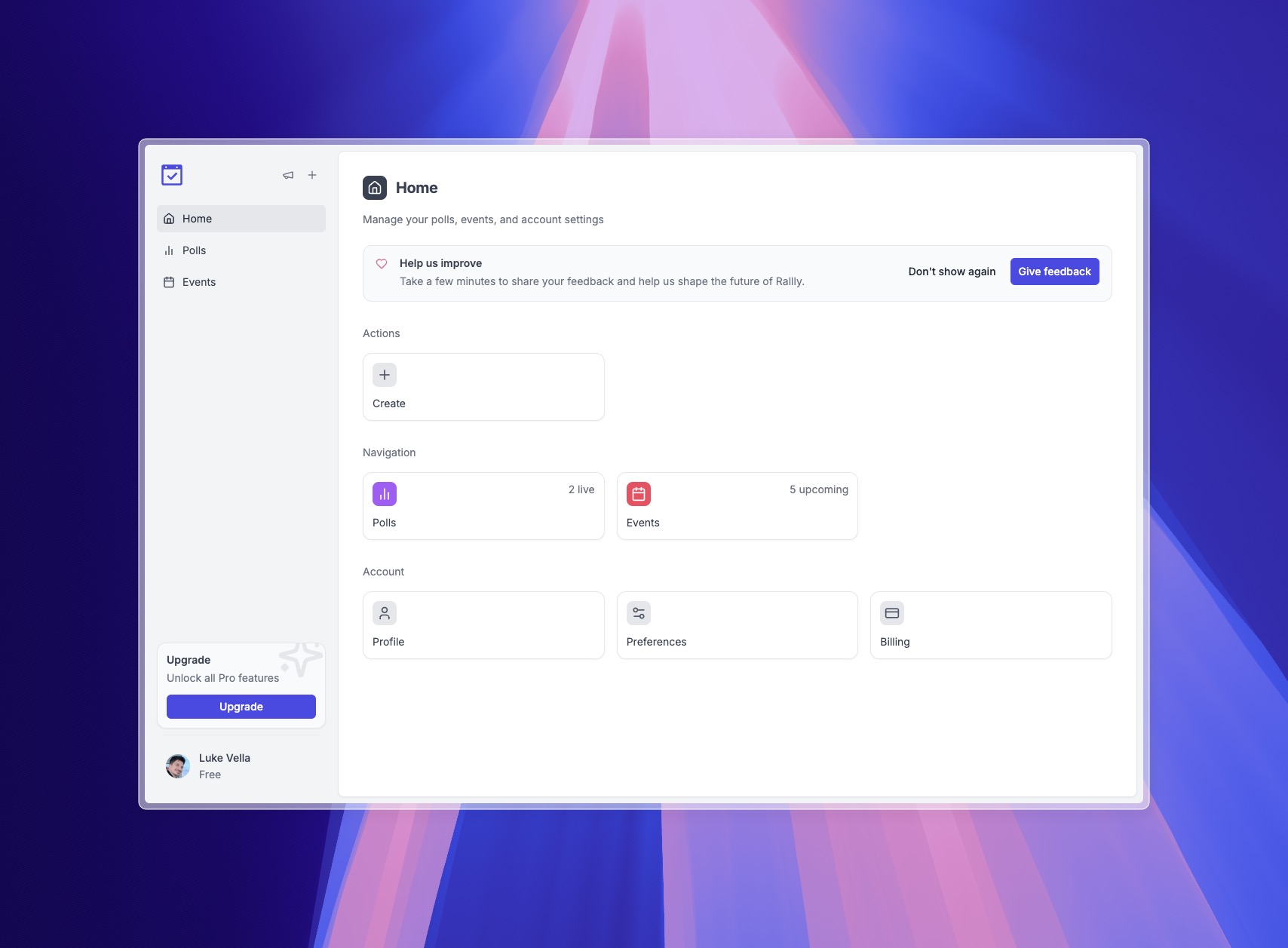
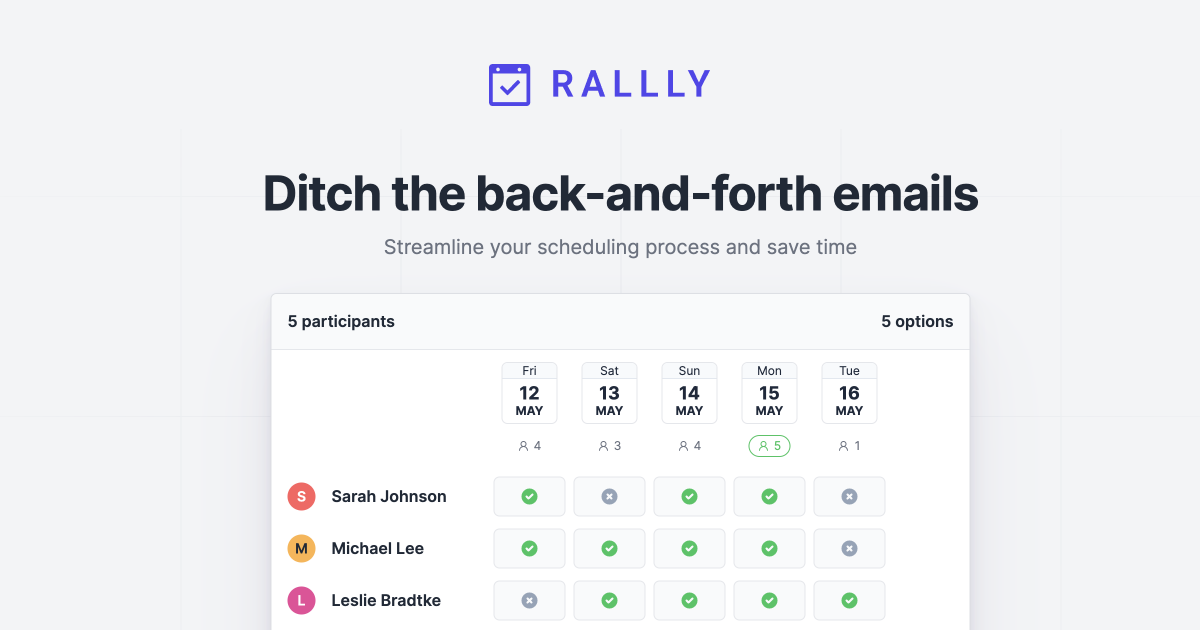
Rallly is a free, open-source group scheduling tool that replaces the now-paywalled Doodle. Create a meeting poll in seconds, no login required, and self-host if you want full control.
Rallly is the open-source group scheduling poll that does what Doodle used to do — paste in a list of dates, share a link, and let people vote on what works. We rate it 86/100: for anyone tired of the ad-clogged, paywalled state of legacy schedulers, Rallly is the cleanest, most honest alternative on the web in 2026.
Rallly is a free, AGPL-licensed scheduling tool built and maintained by indie developer Luke Vella (@imlukevella). The project landed on GitHub on and has grown to 5,071 stars and 512 forks by May 2026. The latest release, v4.10.0, shipped on .
The pitch is simple. Doodle, the original group scheduling poll, has slowly rotted under acquisitions: heavy ads on the free plan, $7+/month subscriptions to remove them, an account requirement on every new poll. Rallly does the original thing well — propose a few dates, share a link, watch a clear grid fill in with availability — and lets you choose between the hosted version at rallly.co or a self-hosted Docker deploy on your own server.
support.rallly.co/self-hosting. Deploys cleanly on Docker, Podman, Kubernetes or Cloudron.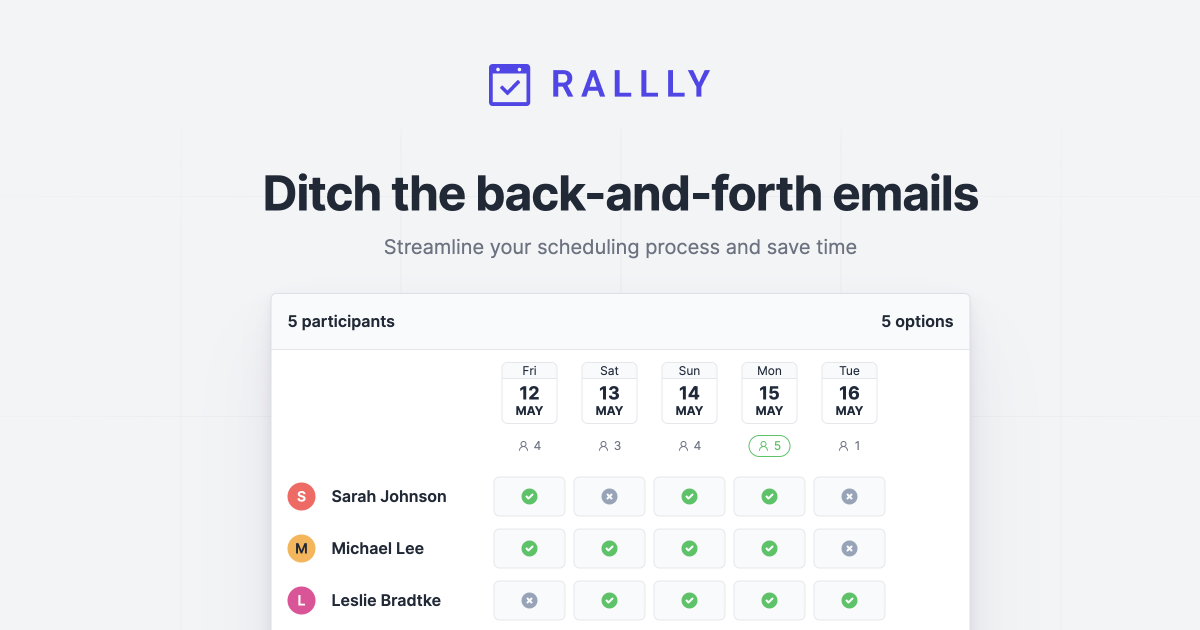
Sentiment is overwhelmingly positive on the basics — and frustrated only at the edges. On r/selfhosted, Rallly is repeatedly recommended as the "obvious Doodle replacement" and praised for being "actually pleasant to use." Trustpilot reviewers single out the clean grid UI and the absence of ads. By contrast, Doodle's Trustpilot sits at roughly 1.8/5 across 198 reviews — the contrast is hard to miss.
The recurring complaints are honest: power features like indefinite poll storage, recurring polls, and email reminders sit behind the Pro plan, and a handful of users on Hacker News note that AGPL can be a non-starter for some commercial self-hosters. A few self-hosters report friction setting up SMTP correctly the first time, but the docs at support.rallly.co have improved sharply in 2025–2026.
| Plan | Price | Key Limits |
|---|---|---|
| Hobby | $0 / forever | Polls auto-delete 30 days after all date options are in the past |
| Pro (monthly) | $7 / month | Indefinite poll retention, all features, early access |
| Pro (yearly) | $56 / year (~$4.67/mo) | 4 months free vs monthly, locked-in early adopter rate |
| Self-hosted | $0 / forever | AGPL-3.0 license, run on your own infrastructure |
The free hosted tier is genuinely useful — most people who run a couple of polls a month will never need to pay. Pro mostly makes sense for power users who run dozens of polls and need them to stick around indefinitely.
Best for: teams, clubs, indie makers and remote-first companies who need a clean meeting poll without ads, accounts or feature bloat. Self-hosters who want a tidy Docker stack to run inside a Tailscale or VPN-only intranet will love it.
Not ideal for: people who actually want full booking links and calendar integration — that's Cal.com's job. Rallly is a poll, not a Calendly clone.
Pros:
Cons:
The closest direct alternatives are Doodle (legacy, ad-heavy, paid to be useful), When2Meet (free, ugly but functional, no account needed), and Crab Fit (cleaner When2Meet clone). For booking links and 1:1 scheduling — a different problem — see our review of Cal.com, the open-source Calendly alternative we covered earlier.
Yes, especially the free tier. Rallly is the rare Doodle replacement that simply does the original job better — no dark patterns, no ads, no forced accounts. If you regularly need to poll a group on dates, bookmark rallly.co today; if you self-host, the Docker stack is one of the friendliest in the indie OSS world. The 86/100 reflects how well it executes its narrow scope, with a small deduction for the lack of native mobile apps and the AGPL friction for commercial self-hosters.
support.rallly.co/self-hosting. It runs on Docker, Podman, Kubernetes and Cloudron with a Postgres backend.ServiceNow and Accenture Launch Forward Deployed Engineering Program to Scale Agentic AI in the Enterprise (May 6, 2026)
At Knowledge 2026, ServiceNow and Accenture announced a joint forward deployed engineering program that drops co-located engineer pods into customer environments to ship agentic AI workflows natively on the ServiceNow AI Platform — with access to 300+ pre-built agent skills and the AI Control Tower as the governance backbone.
May 7, 2026
ReFiBuy Raises $13.6M Seed to Help Brands Get Recommended by AI Shopping Agents (May 5, 2026)
ReFiBuy, the Raleigh-based agentic commerce platform from ChannelAdvisor founder Scot Wingo, closed an oversubscribed $13.6M seed led by NewRoad Capital Partners on May 5, 2026 — betting that the next billion-dollar e-commerce moat is being chosen by ChatGPT, Claude and Perplexity.
May 7, 2026
OpenAI Replaces ChatGPT's Default Model With GPT-5.5 Instant — 52.5% Fewer Hallucinations, 30% Shorter Answers (May 5, 2026)
OpenAI on May 5 swapped GPT-5.3 Instant for the new GPT-5.5 Instant as ChatGPT's default model, claiming 52.5% fewer hallucinated claims on high-stakes prompts and 30% more concise answers. The model also rolls into the API as chat-latest and adds personalization from Gmail and past chats for Plus and Pro web users.
May 7, 2026
Is this product worth it?
Built With
Compare with other tools
Open Comparison Tool →