
 Productivity
Raycast
Powerful macOS launcher and productivity platform — 7.3K GitHub stars for extensions
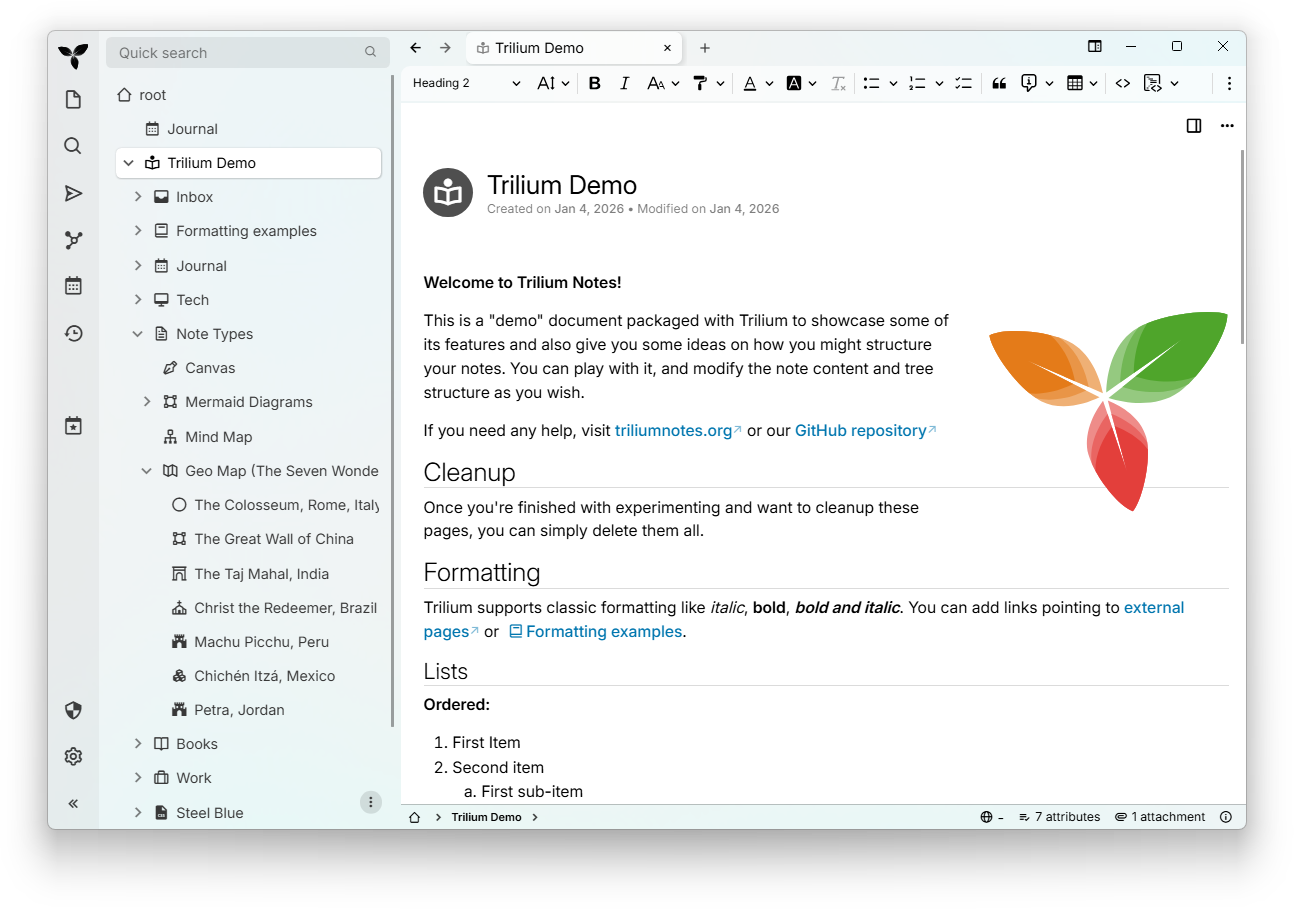
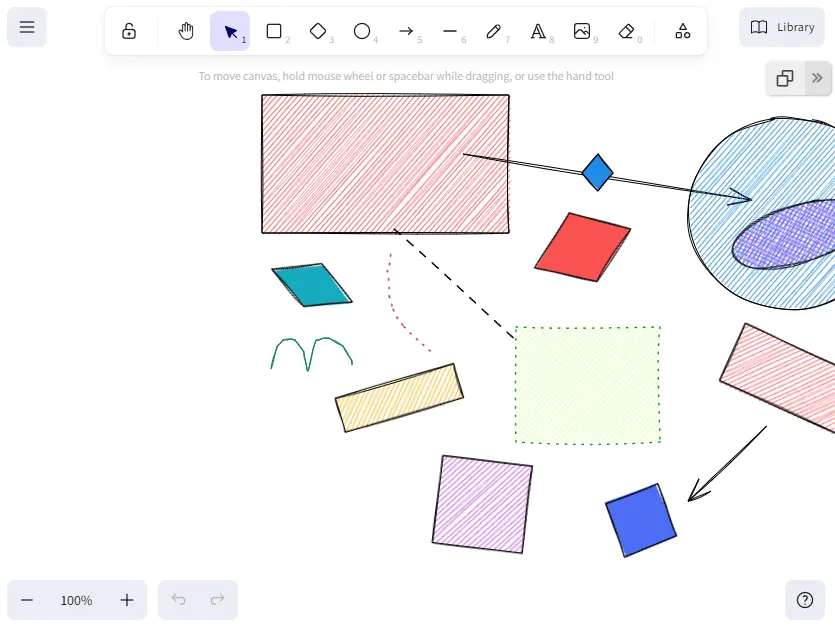
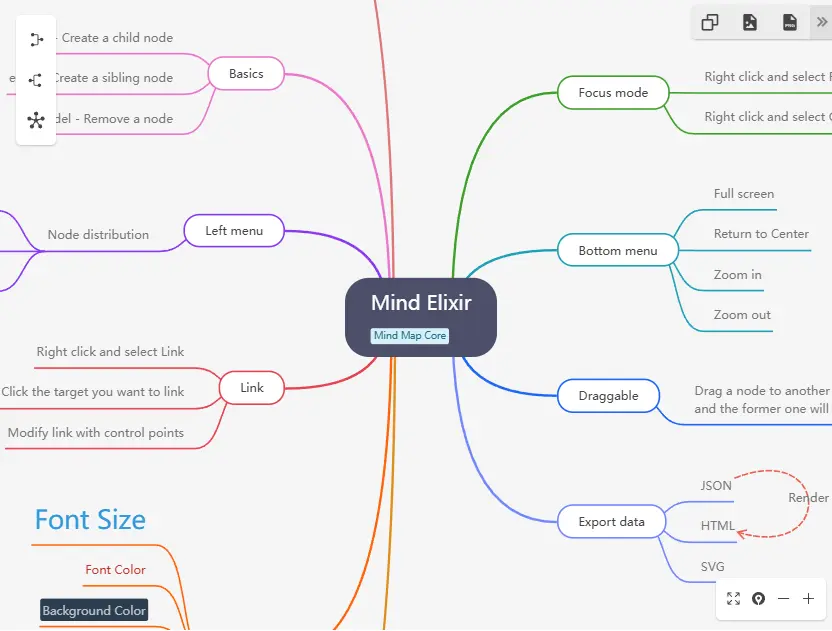
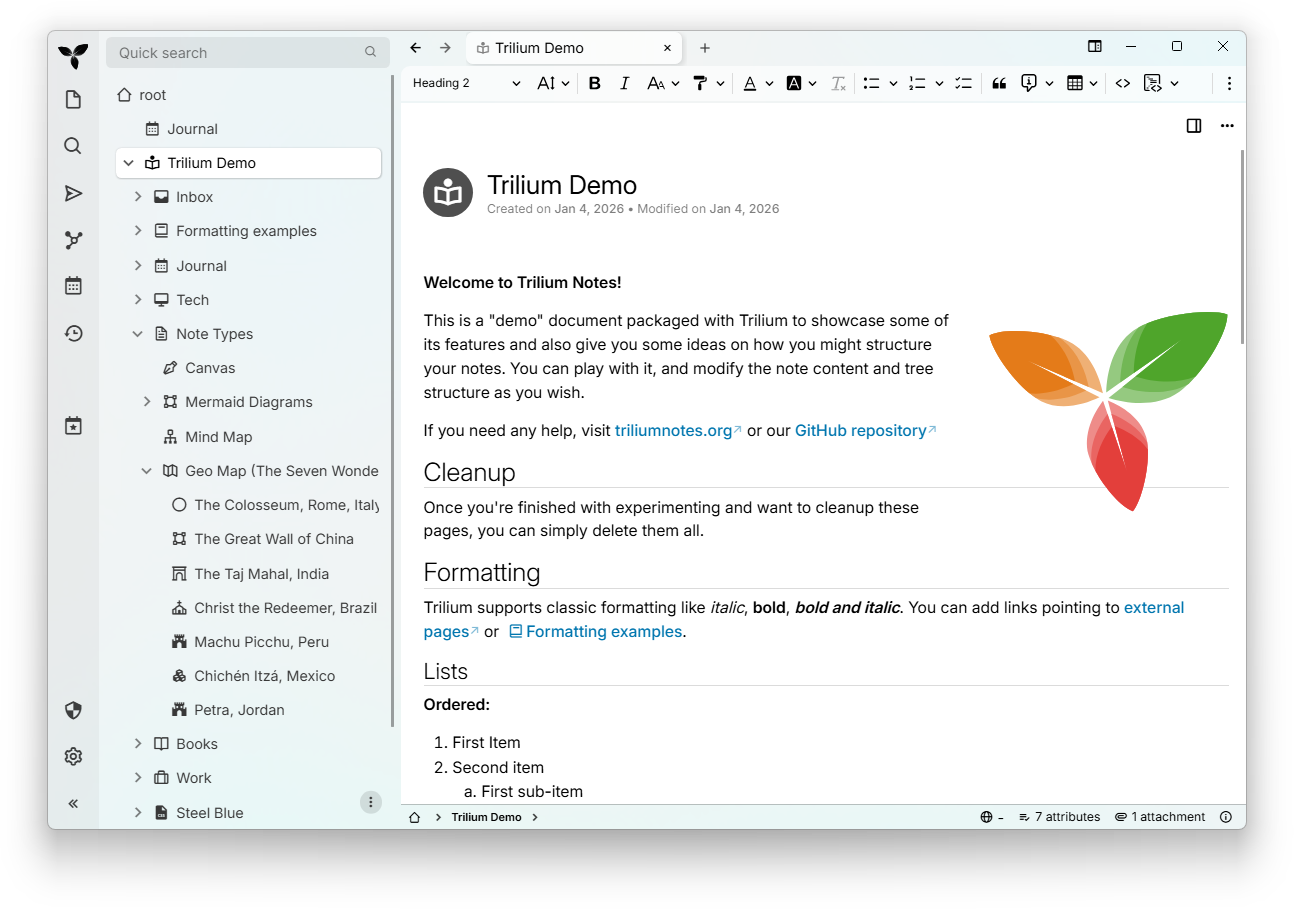
Trilium Notes (TriliumNext) is a free, AGPL-licensed knowledge base that pairs a deep tree structure with WYSIWYG, code, canvas, mind-map and geo notes. The community fork keeps every feature local-first and self-hostable.
Trilium Notes is a free, open-source hierarchical note-taking application designed for building large personal knowledge bases without any cloud lock-in. We rate it 83/100 — the most powerful self-hosted notes app for technical users who want local-first storage and unlimited customization, but with a learning curve and dated UI compared to Notion or Obsidian.
Trilium Notes is an open-source desktop and web application for organizing notes in an arbitrarily deep tree, with the unusual ability to clone a single note into multiple branches without duplication. It is licensed under AGPL-3.0 and runs entirely on your own machine or self-hosted server.
The project was originally created by developer Zadam in 2017 and gained a devoted community of power users on r/selfhosted. After Zadam stepped back from active development, the maintainer community formed TriliumNext in 2024, taking over the codebase and shipping regular releases. The latest stable, version 0.102.2, landed on , and the project sits at roughly 33,000 stars on GitHub.
#tag) and relations (~relation) drive a built-in query language and a JavaScript scripting engine that can run inside notes.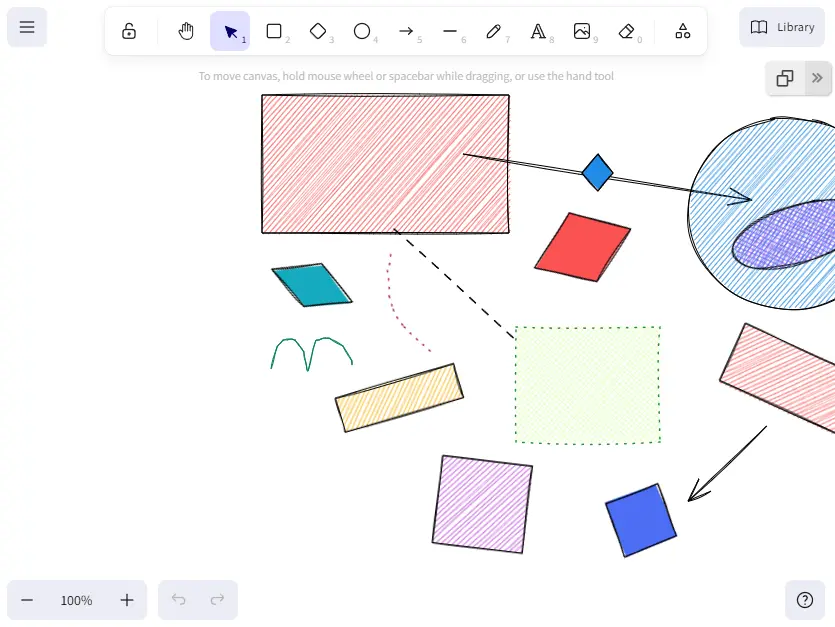
On r/selfhosted and r/TriliumNotes, the loudest praise focuses on the cloning feature and the JavaScript scripting hooks — multiple users describe Trilium as the only knowledge base that survived their move from Evernote, OneNote and Notion combined. SourceForge and AlternativeTo reviews highlight the same: it is the most flexible self-hosted notes app available and the maintainer team is unusually responsive on GitHub Issues.
The recurring complaints are also consistent. The interface looks like a 2018 Electron app and lags behind Obsidian and AppFlowy on visual polish. Documentation is rich but assumes technical confidence — non-developers report that mobile sync, scripting and the attribute query language take days to click. A long-running thread on Hacker News also notes that the official mobile experience is browser-based rather than native; the third-party TriliumDroid Android client is the de-facto answer.
Trilium is fully free and open source. There are no paid tiers, no premium plans, no upsell. You can fund the project via GitHub Sponsors or LiberaPay if you find it useful, but every feature is unlocked by default.
| Plan | Price | What You Get |
|---|---|---|
| Self-hosted (desktop + server) | $0 | Every feature, unlimited notes, unlimited devices |
| Optional sponsorship | From $5/month | Supports maintainers — no extra features |
Best for: Developers, sysadmins, researchers and self-hosting enthusiasts who want a single durable knowledge base they fully control. Especially strong for anyone with 5,000+ notes who has hit the limits of Notion, Obsidian or Joplin and wants real cloning, scripting and an attribute query language.
Not ideal for: Casual note-takers who want a polished, mobile-first experience and team collaboration. If you live on your phone, or if you want real-time multiplayer editing with teammates, look at AppFlowy, Notion or Anytype instead.
Pros:
Cons:
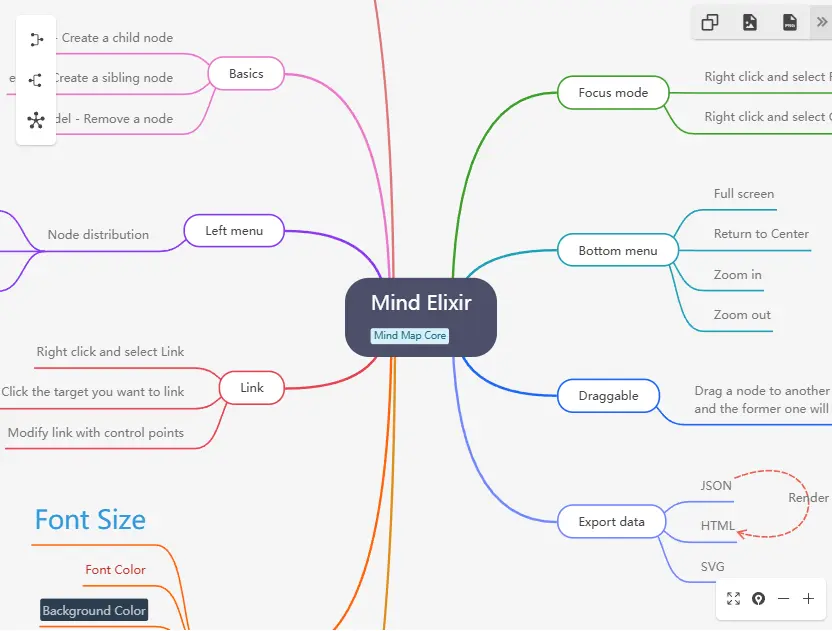
The closest alternatives are Obsidian for plain-text Markdown power users, Joplin for a simpler self-hosted Evernote replacement, AppFlowy for a Notion-style block editor, and Logseq for outliner-first knowledge graphs. Trilium beats all of them on raw flexibility and on the cloning model, but loses on visual polish and mobile experience.
Yes — if you are technical and you intend to live in your knowledge base for years. Trilium is the rare app that genuinely scales from a dozen notes to a hundred thousand without architectural compromise, and the AGPL-3.0 license guarantees you will never be migrated to a worse plan or held hostage by a pricing change. The 83/100 rating reflects a small but real ceiling: the UI lags behind 2026 expectations and the mobile story is awkward. For everyone willing to look past those rough edges, this is the most powerful free notes app on the market and the strongest self-hosted Notion alternative we have tested.
ServiceNow and Accenture Launch Forward Deployed Engineering Program to Scale Agentic AI in the Enterprise (May 6, 2026)
At Knowledge 2026, ServiceNow and Accenture announced a joint forward deployed engineering program that drops co-located engineer pods into customer environments to ship agentic AI workflows natively on the ServiceNow AI Platform — with access to 300+ pre-built agent skills and the AI Control Tower as the governance backbone.
May 7, 2026
ReFiBuy Raises $13.6M Seed to Help Brands Get Recommended by AI Shopping Agents (May 5, 2026)
ReFiBuy, the Raleigh-based agentic commerce platform from ChannelAdvisor founder Scot Wingo, closed an oversubscribed $13.6M seed led by NewRoad Capital Partners on May 5, 2026 — betting that the next billion-dollar e-commerce moat is being chosen by ChatGPT, Claude and Perplexity.
May 7, 2026
OpenAI Replaces ChatGPT's Default Model With GPT-5.5 Instant — 52.5% Fewer Hallucinations, 30% Shorter Answers (May 5, 2026)
OpenAI on May 5 swapped GPT-5.3 Instant for the new GPT-5.5 Instant as ChatGPT's default model, claiming 52.5% fewer hallucinated claims on high-stakes prompts and 30% more concise answers. The model also rolls into the API as chat-latest and adds personalization from Gmail and past chats for Plus and Pro web users.
May 7, 2026
Is this product worth it?
Built With
Compare with other tools
Open Comparison Tool →